Where you’ll be wearing the outfit decides which of these is yours: the black three-piece with a black turtleneck suits dinners and events, while the tiger-print shirt with white shorts belongs on a warm weekend or a vacation, and neither works at an office.
The list runs from easy two-piece formulas, like a green button-down over beige trousers, to a single loud piece such as a graphic print shirt with everything else kept quiet.
Fit stays constant across all of it, and the last 3 sections cover first impressions, building a style of your own, and keeping your wardrobe in shape.
1. Casual Look
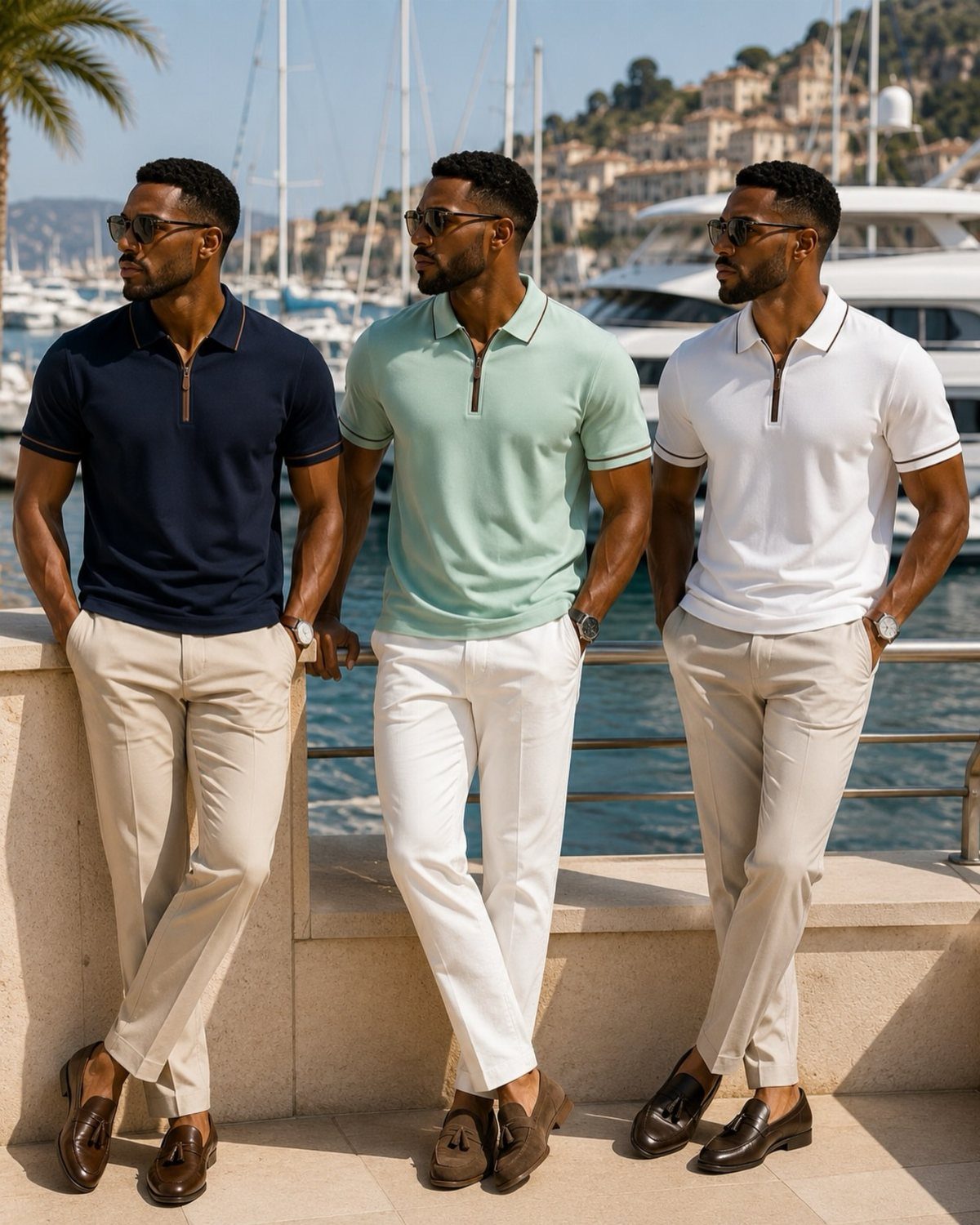
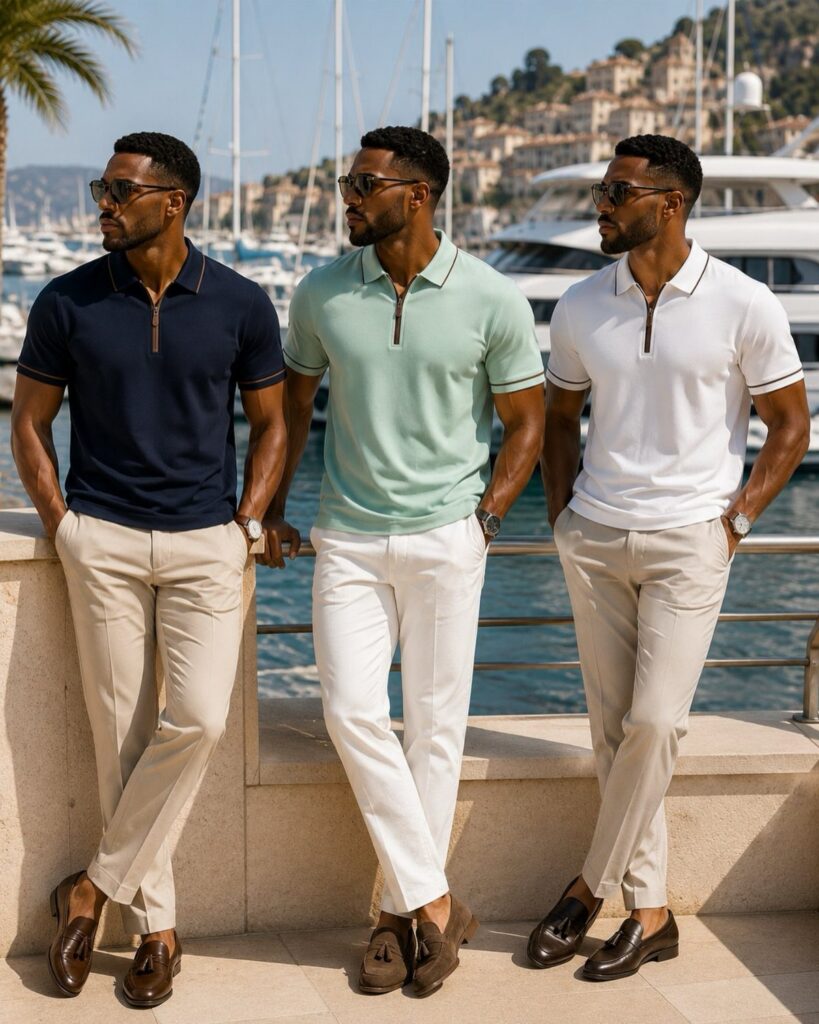
Zippered polos, light trousers and loafers make a uniform you can wear 3 ways without anyone looking dressed up.
A half-zip polo sits between a t-shirt and a dress shirt, so it works on a weekend and still passes for neat.
Keep the palette tight: one polo color, one trouser shade, and shoes that sit near the trousers. Sunglasses finish it without any extra effort.
I like this look for men who want a dependable formula. Pick the polo that fits across the shoulders, and the rest follows.
2. Well-fitted Suit for Men
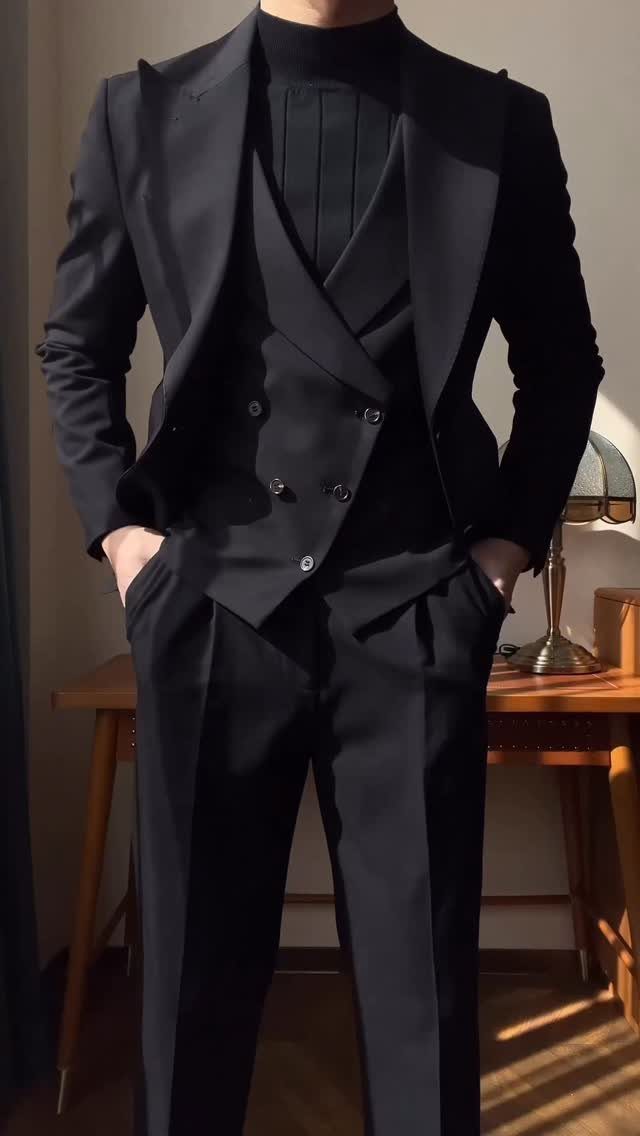
A black three-piece with a black turtleneck underneath drops the shirt and tie and keeps the sharpness. Because everything is one color, the eye reads a single clean column, and fit does all the work.
Fit decides whether it looks expensive.
A jacket fits when the shoulder seam stops at the edge of your shoulder bone and the front button closes flat, with no X-shaped creases radiating from it. Pay for tailoring before you pay for a pricier suit.
The trade-off: all black shows lint and fades unevenly, so give it a brush and a rest between wears. Solid black also reads as evening wear, so it suits dinners and events more than a morning meeting.
3. White Henley with Brown Trousers
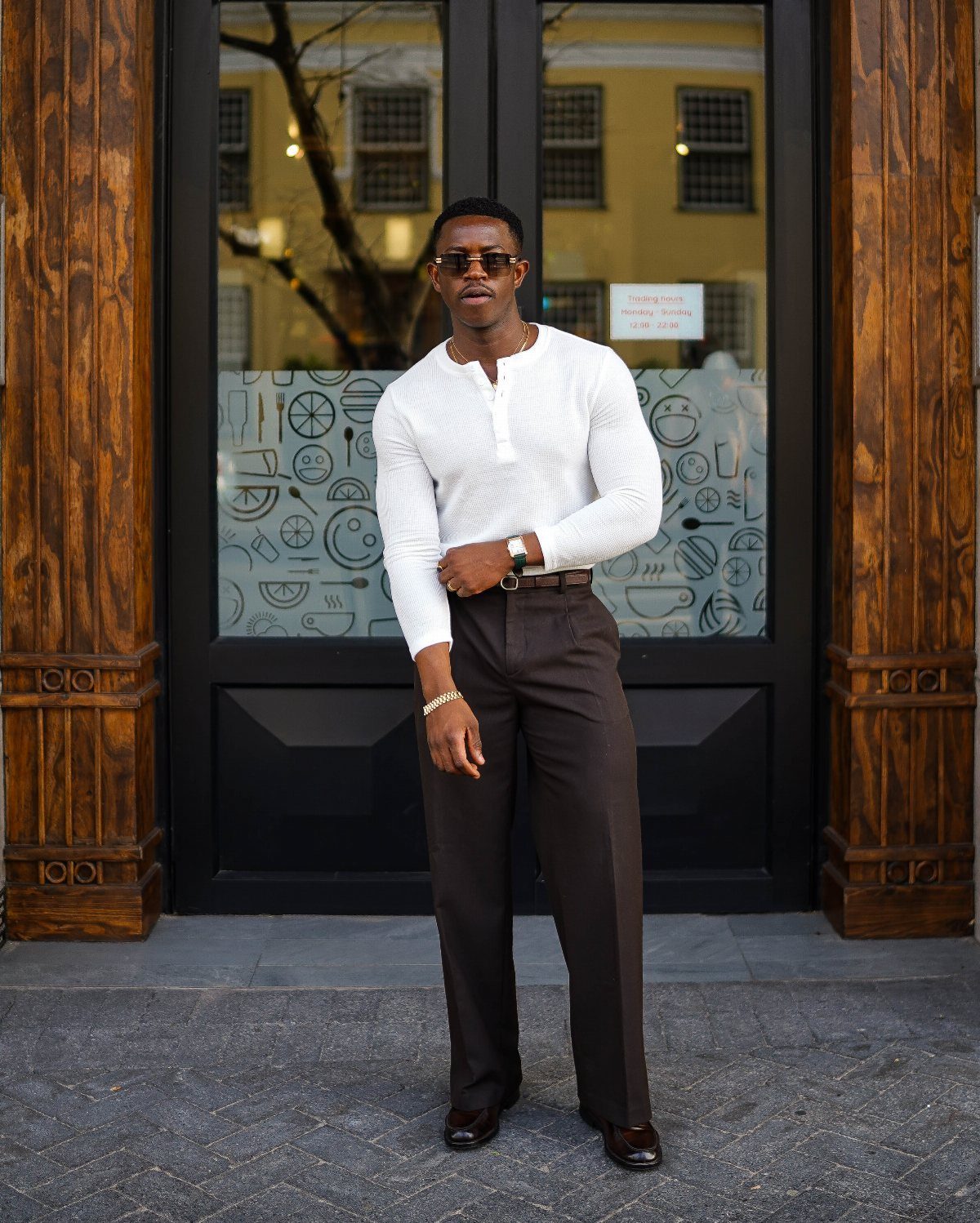
White against dark brown is a combination that looks richer than a white tee and jeans, and it costs about the same. A long-sleeve henley gives you a placket and some structure without a collar.
Tuck the henley in and add a leather belt in a shade close to your shoes; it turns a casual knit into a finished outfit and gives the brown trousers a clean break at the waist.
Choose a henley that fits close through the chest and arms, since a loose one looks like loungewear once it’s tucked. I’d match the belt to the shoes and keep both in a brown or darker tone.
On a date, this pairing works because it looks like you tried without looking like you tried too hard. Sunglasses are optional, but they suit it well.
4. Plaid Shirt with Wide-leg Jeans
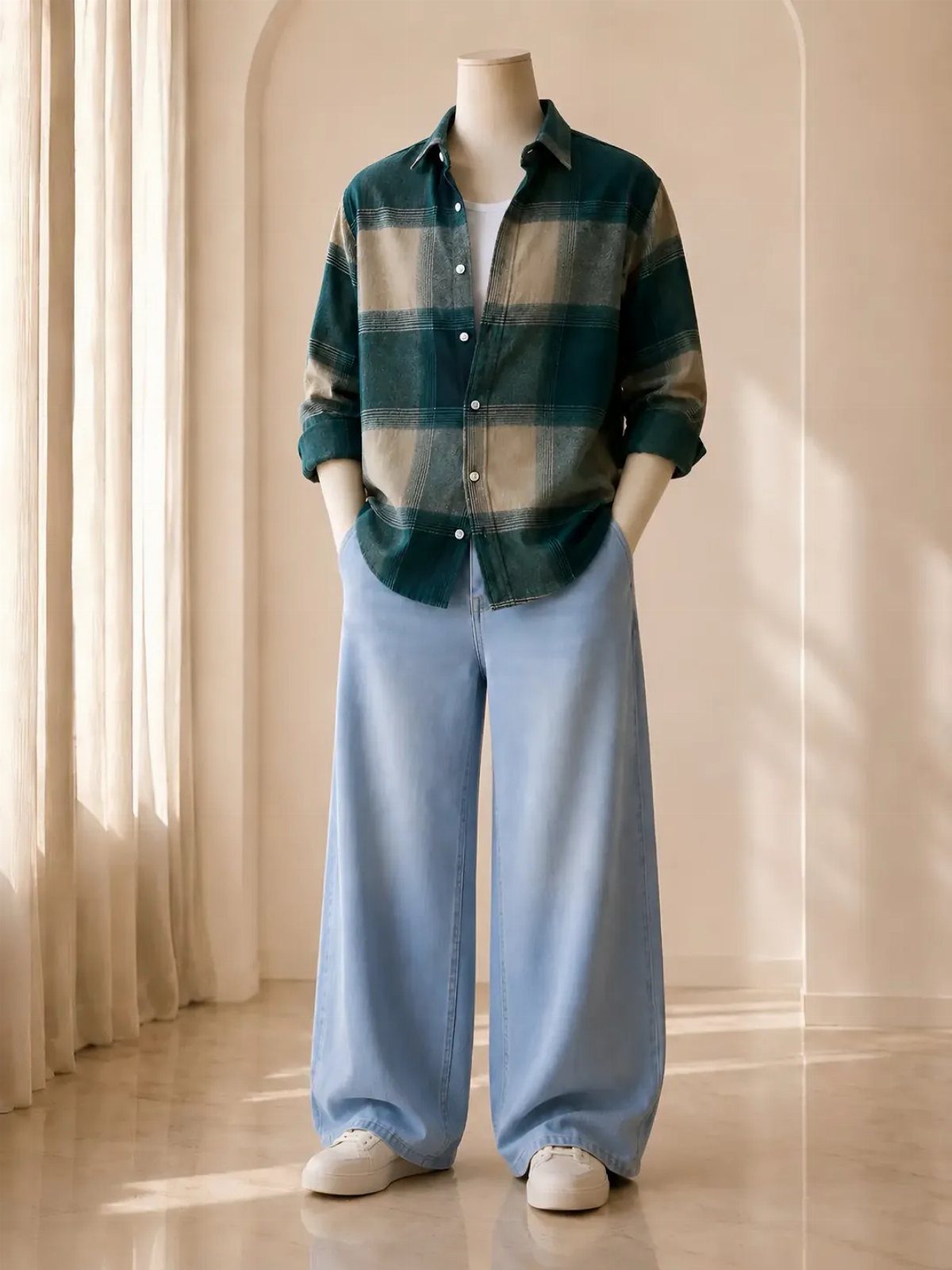
Wide-leg jeans balance a plaid shirt better than slim ones, because the loose leg answers the roominess of the shirt. Roll the sleeves to the forearm and the whole outfit reads relaxed on purpose.
Wear the shirt open over a white undershirt, as here, and finish with clean white sneakers. A green and beige plaid stays muted, so it pairs with light-wash denim without fighting it.
One caution: wide legs can swallow shorter men. Hem the jeans so they just touch the top of the shoe, and avoid a break that stacks fabric at the ankle.
5. Black T-shirt and Tailored Trousers
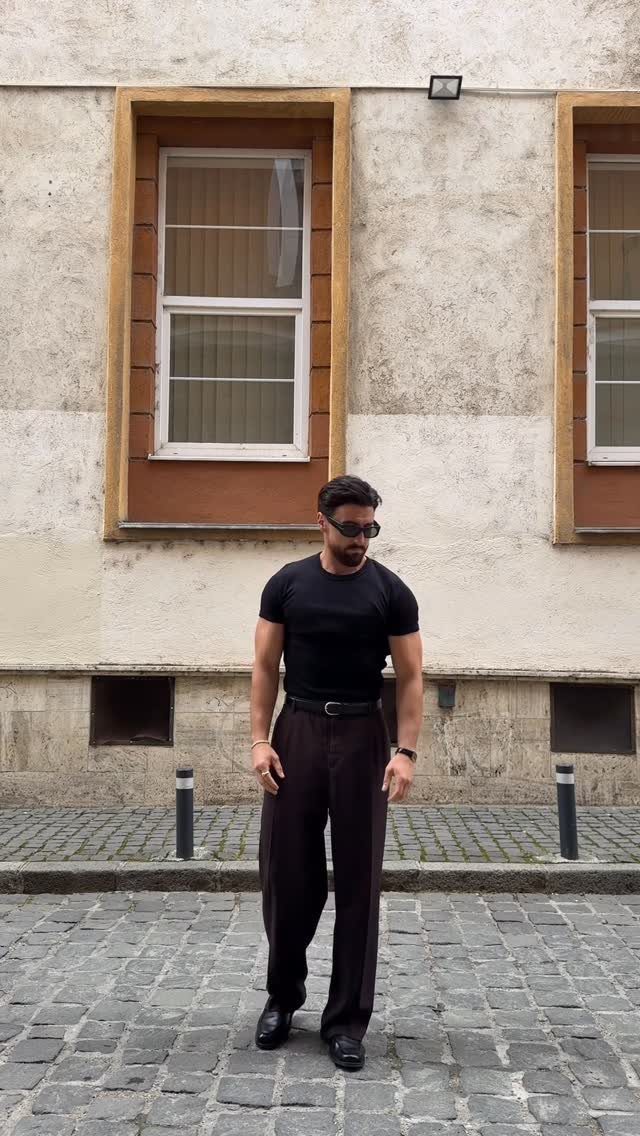
Black tee, tucked in, with wide-leg tailored trousers is the easiest way I know to look put together without a collar.
The tee has to be fitted and free of fading or logos, or the trousers will make it look sloppy.
Dark brown trousers with black is a pairing many men avoid, but it works when the browns are deep and the shoes are dark too. Add a belt, since the tuck puts the waist on display.
This is a good outfit for a casual dinner or a creative office. Sunglasses help it along on sunny days.
6. Short-sleeve Floral Button-down Shirt
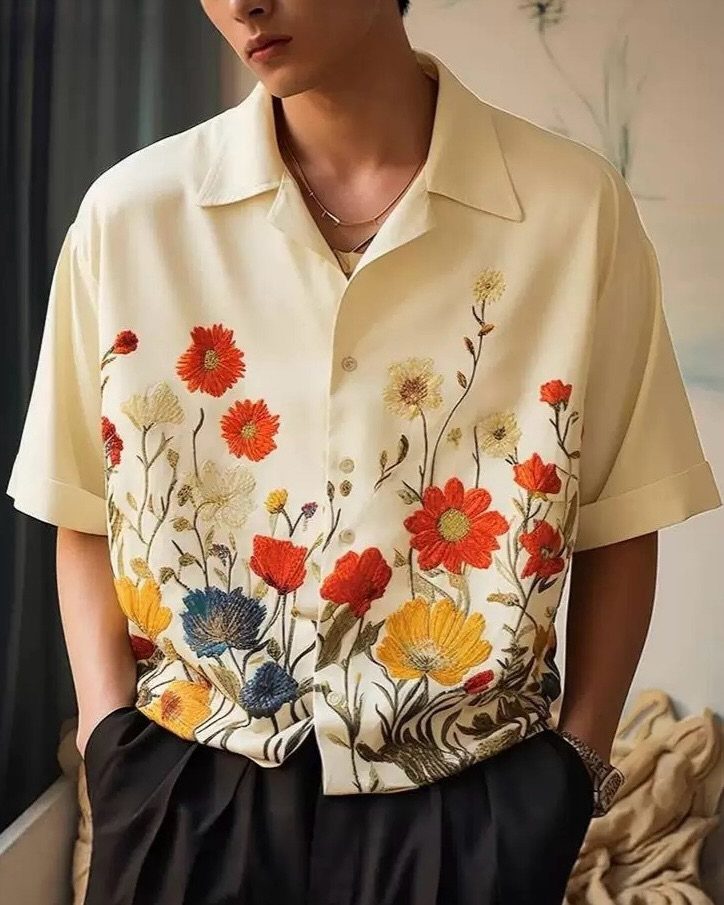
A cream short-sleeve shirt with embroidered flowers is a statement piece, so everything else should be quiet. Black pleated trousers do that job and give the loud shirt a dressy anchor.
Choose a shirt with a straight hem you can wear untucked, or tuck it neatly if the trousers sit high. A simple necklace is enough jewelry; anything more competes with the embroidery.
Colorful prints suit warm evenings and parties more than offices. If you’re new to pattern, start with a shirt that has a cream base like this one, since it’s gentler than a dark floral.
7. Green Button-down with Beige Trousers
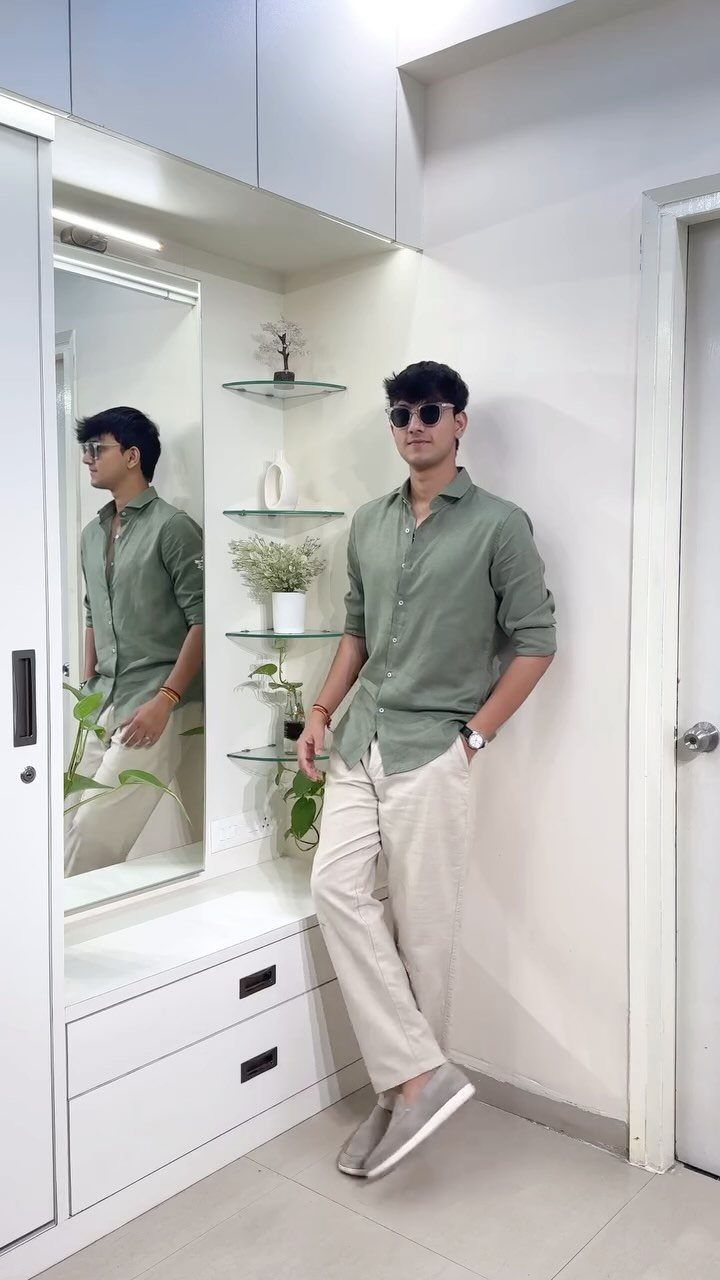
Sage green is muted and beige is soft and warm, so the outfit reads calm, with no single piece fighting for attention.
A button-down in a muted green is easier to wear than a bright one, and relaxed beige trousers keep it soft.
Keep the shirt’s fit clean across the shoulders and let the trousers hang loose. Slip-on shoes finish it without fuss, and they make the outfit quick to put on when you’re short on time.
I’d wear this for a casual lunch or a weekend out. It’s a two-piece formula you can repeat in other shades.
8. Geometric Polo with Tan Trousers
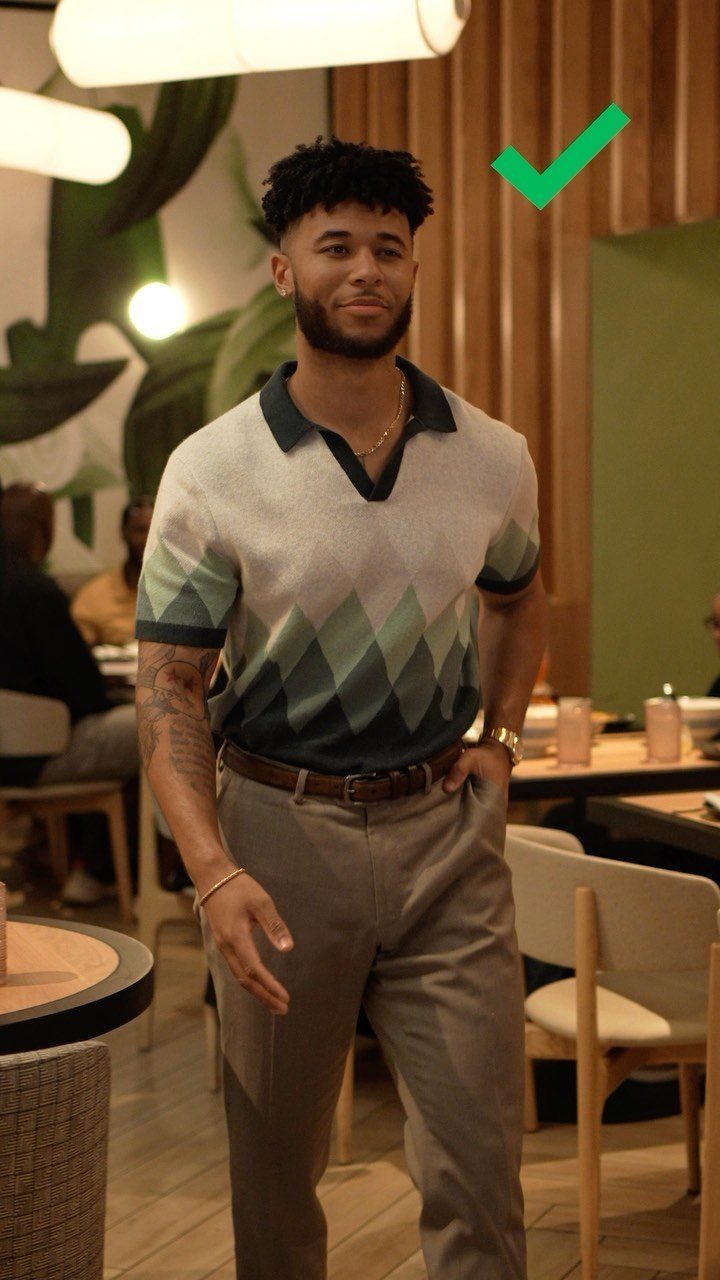
A patterned knit polo tucked into tan trousers gives you a pattern without any loudness, because the tan gives it a quiet base. Pick a polo with a small geometric print so it reads as texture from a distance.
A tucked polo needs a leather belt, because once the hem goes in, the waistline is what people see first. Short sleeves keep the look light, and the knit gives it more character than a flat cotton shirt.
I like this for dinners where a t-shirt looks too casual and a dress shirt feels like too much. The tan trousers do the dressing up, so the polo can stay relaxed.
9. Graphic Print Shirt and Shorts
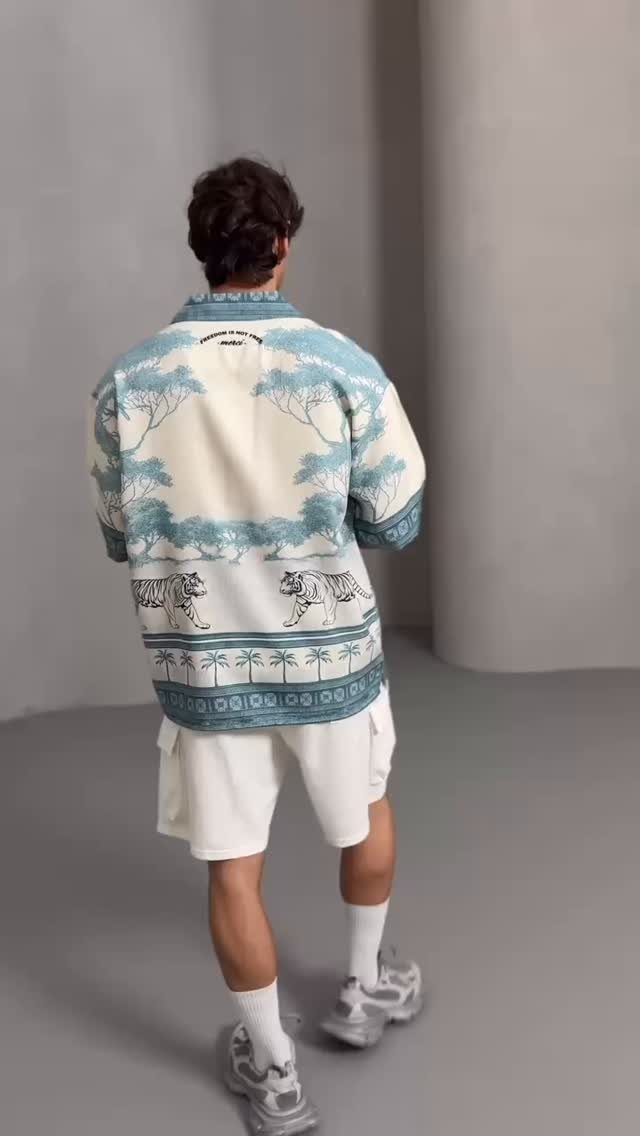
A busy print shirt works when the bottom half stays plain. White shorts and gray sneakers hand the blue-and-white tiger print all the attention, and nothing else competes with it.
Choose a short-sleeved shirt with a print in two or three colors, and pull the shorts and shoes from those same shades. A print like this is the whole outfit, so skip patterned socks and extra accessories.
The trade-off: a graphic this loud suits a warm weekend or a vacation, not an office. Wear it once or twice and see if it feels like you before buying a second.
10. Black Short-sleeve Shirt and Cap
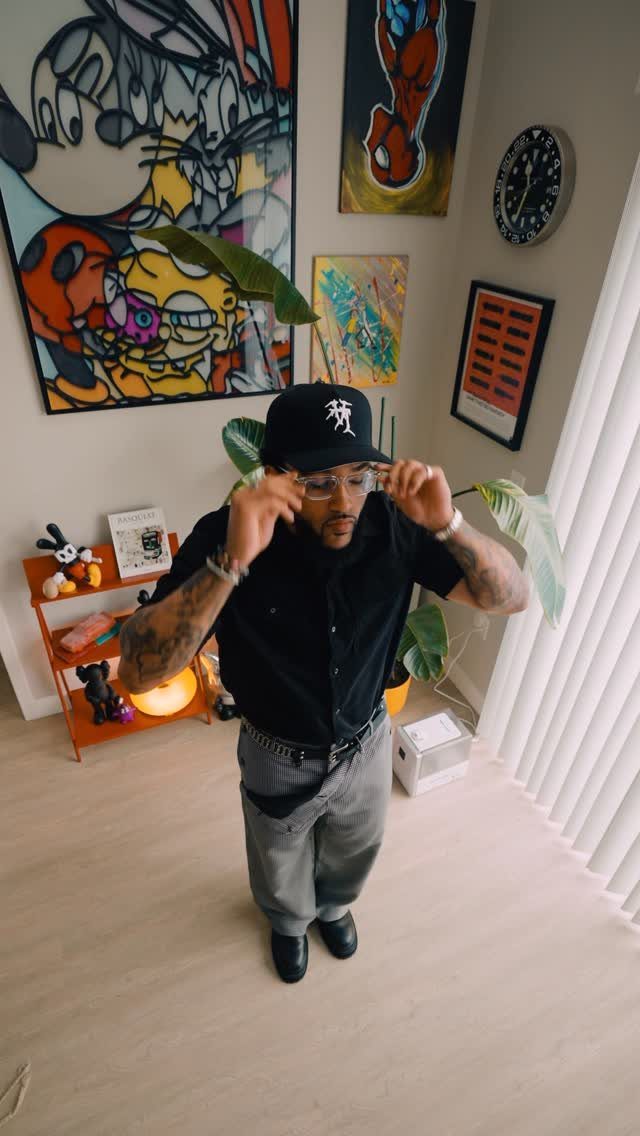
Black on top, gray below and a black cap on your head makes a tonal outfit that takes almost no thought. A short-sleeved collared shirt is the detail that lifts it above a plain tee.
Let the cap match the shirt so the dark color carries up to your face, and keep it a clean baseball cap with no loud logo.
Glasses sit well with it. Gray trousers soften the black without adding a new color to manage.
I’d treat this as an easy errand-to-evening look. Check that the black shirt isn’t faded, because worn black is the first thing the eye catches.
Importance of First Impressions
People decide quickly what they think of you, and they decide on very little information. What you wear is a big part of that information, and it is the part you control.
Clothing doesn’t prove you’re competent or trustworthy. It does shape how others read those qualities, and that can affect a date, a promotion or a client meeting.
The first read also sets the tone for everything after it.
A sharp outfit tells people to expect care from you; a careless one tells them to expect the average. Fixing a bad first impression takes far more effort than making a good one.
So dress for the person you’re about to meet. Before you head out, decide what you want that person to think, and check whether your outfit says it.
Building a Personal Style
Start with words, not clothes.
Pick 3 or 4 adjectives for how you want to come across, such as sharp, relaxed, charming or sophisticated. Those words give you a measuring stick for every piece you consider.
Next, look at your own closet. Start with the pieces you reach for first on a normal morning, because the ones that make you stand a little taller are your style in practice.
Which outfits get you compliments? Buy more of what answers both questions.
If you can’t answer, borrow a method. Follow a style icon or a brand you admire, since plenty of people have already solved these problems and you don’t have to reinvent them.
Then try on a range of styles in a store and get a second opinion from someone honest. A friend who tells you a jacket looks off is worth more than a dozen product reviews.
Maintaining Your Wardrobe
Buy for the long run. A piece that still looks right years from now costs less per wear than a trend that looks dated quickly, and your budget feels the difference.
I lean toward classic menswear: suits, blazers, sport coats, and dress and casual trousers. These have stayed dependable for generations, and a good suit from your grandfather’s day would mostly still pass today.
Pass on loud trends and whatever is being pushed hardest this season.
Think of huge lapels, ultra-skinny ties and padded shoulders; each was everywhere once, and now they look dated. This year’s version will age the same way.
Go through your closet on a set schedule and pull out whatever you no longer wear. Keep what fits and what you actually wear, and let go of the rest so the good pieces are easy to find.
Frequently Asked Questions
How do I improve my clothing style for men?
Start with fit, then quality, then the occasion. Check 2 things before you spend: the shoulder seam should sit right where your shoulder bone ends, and the front should lie flat when buttoned, with no pulling or X-shaped wrinkles.
A $40 alteration on a modest jacket usually looks better than a pricey one left as it came. Buying classic pieces that last also costs less per wear than chasing trends.
What are the latest fashion trends for men?
Loud trends are the ones I’d treat with caution. Oversized lapels, pencil-thin ties and heavily padded shoulders all had their moment and now date a photo instantly, which is a fair warning about whatever is loud this season.
If a trend appeals, adapt it to pieces you already wear, and build the bulk of your closet on classics like suits, blazers, sport coats and trousers.
How do I find a personal style that suits me?
Start with 3 or 4 adjectives for how you want to come across, such as sharp, relaxed, charming or sophisticated.
Then open your closet and pull out what you wear most and what people compliment, and let that pile guide your next purchases. Trying clothes on in a store with an honest friend along helps you catch what looks off.
Do first impressions really depend on what I wear?
They do, in part. People judge quickly on little information, and clothing is the part of that information you control.