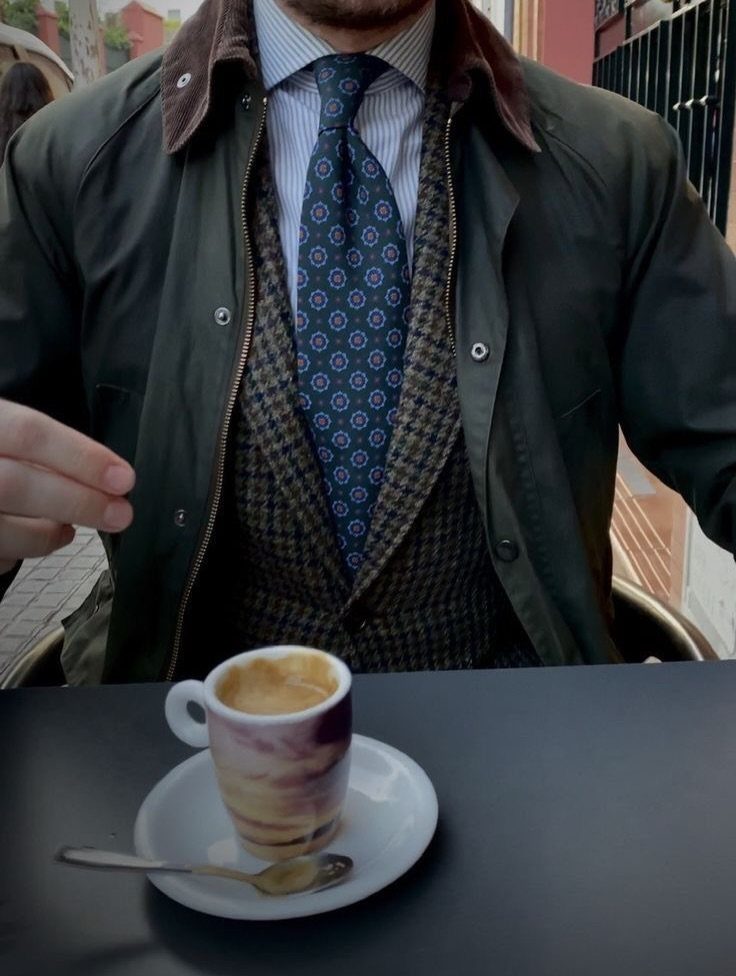
The ideas here run from a single quilted jacket you can wear in a city to tweed tailoring with tall boots, and a belted tweed coat sits somewhere in between.
Where you’ll actually wear it decides which one is yours: a city sidewalk calls for a quilted or waxed jacket over ordinary clothes, while wet grass and mud call for wellies and tweed that can take rough ground.
Dark olive is the waxed jacket shade I’d pick first, and it works in both places.
1. Quilted Jackets
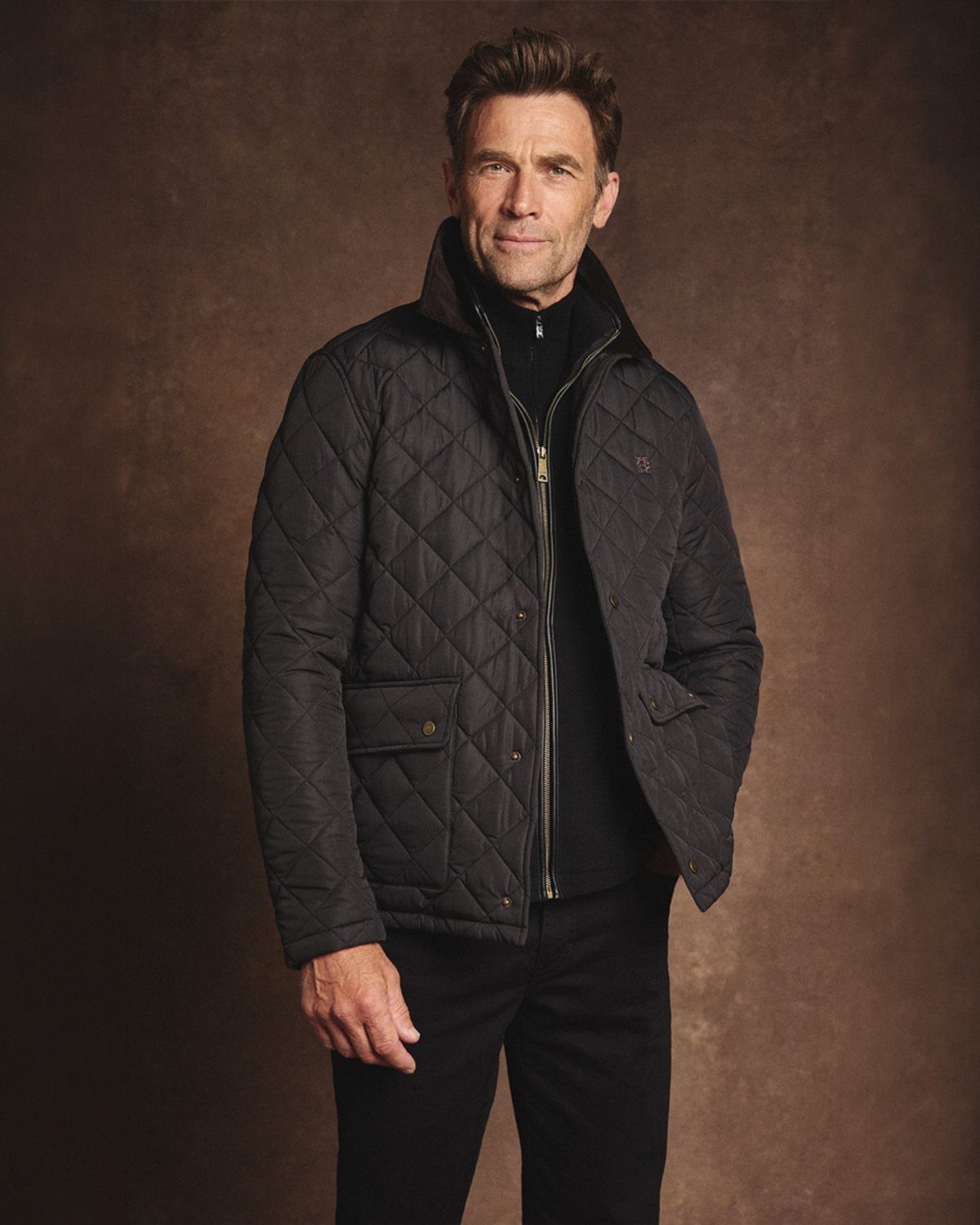
A diamond-quilted jacket gives you country outerwear that sits happily in a city wardrobe. The stitched pattern adds texture without any extra color, so a black quilted jacket pairs easily with a turtleneck and dark trousers.
I prefer it as the outer layer over a thin knit, since the quilting already supplies the visual interest. Keep everything beneath it plain.
2. Flat Caps
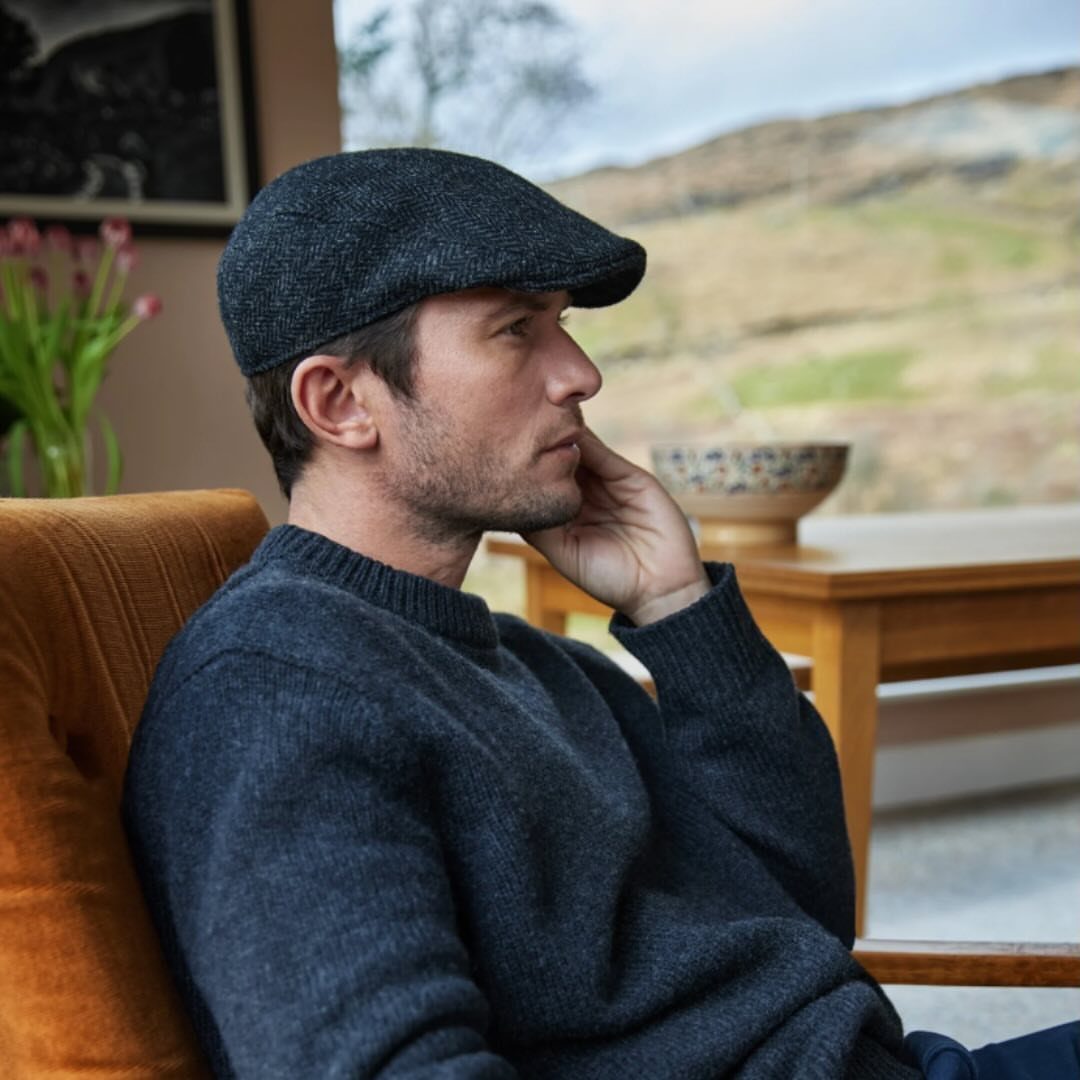
Dark tweed does the work in a flat cap, and a charcoal or gray version keeps it from looking like a costume. Worn with a knit sweater, it reads as relaxed rather than theatrical.
I’d choose a muted, textured cloth over anything loud, because the cap sits right next to your face and should calm the outfit down. Try it on in a mirror before buying; a cap that perches too high looks borrowed.
3. Waxed Jackets
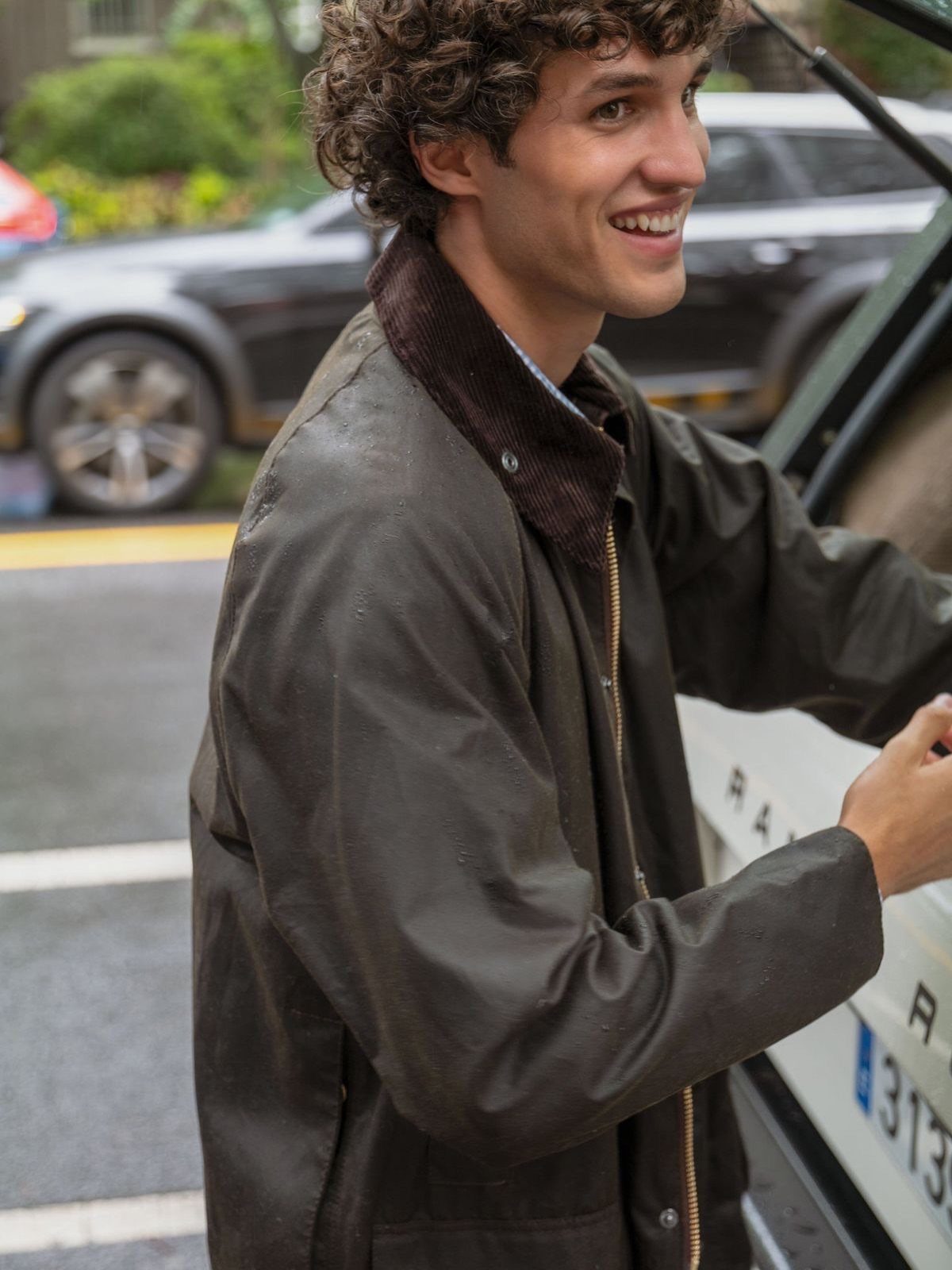
Few jackets move between a muddy lane and a city sidewalk as easily as a waxed one. Dark olive is the shade I’d pick first, and a corduroy collar adds a softer finish than plain cloth around the neck.
Wear it open over a sweater or a casual shirt with jeans. The jacket carries the country reference, so everything under it can stay ordinary.
4. Tattersall Shirts
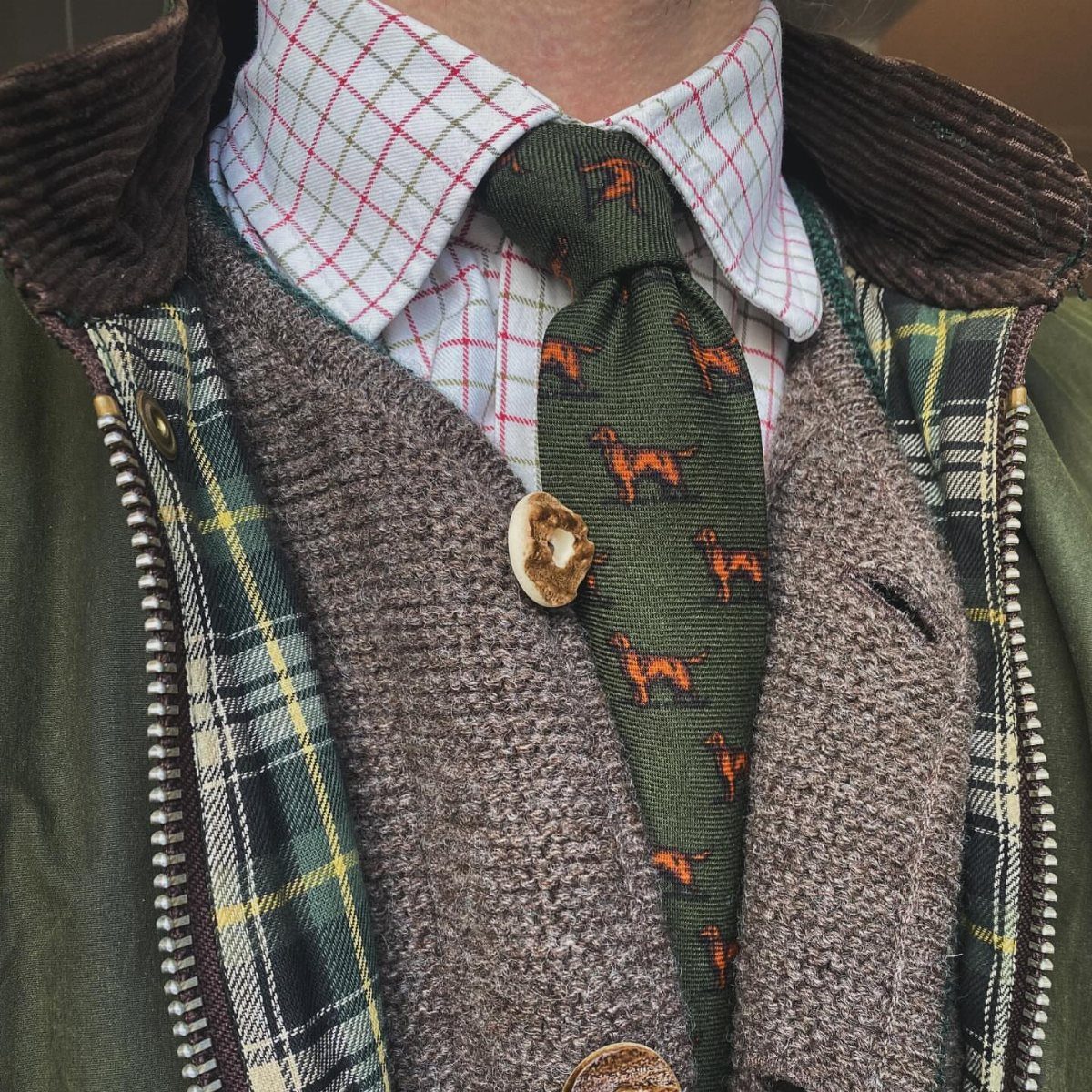
A Tattersall shirt, with its grid of thin lines on a pale ground, is the quiet backbone of country dressing.
Keep the tie plainer or more playful than the shirt, never equally busy. A small novelty motif like the dogs here is fine if the shirt check stays fine.
5. Brogues
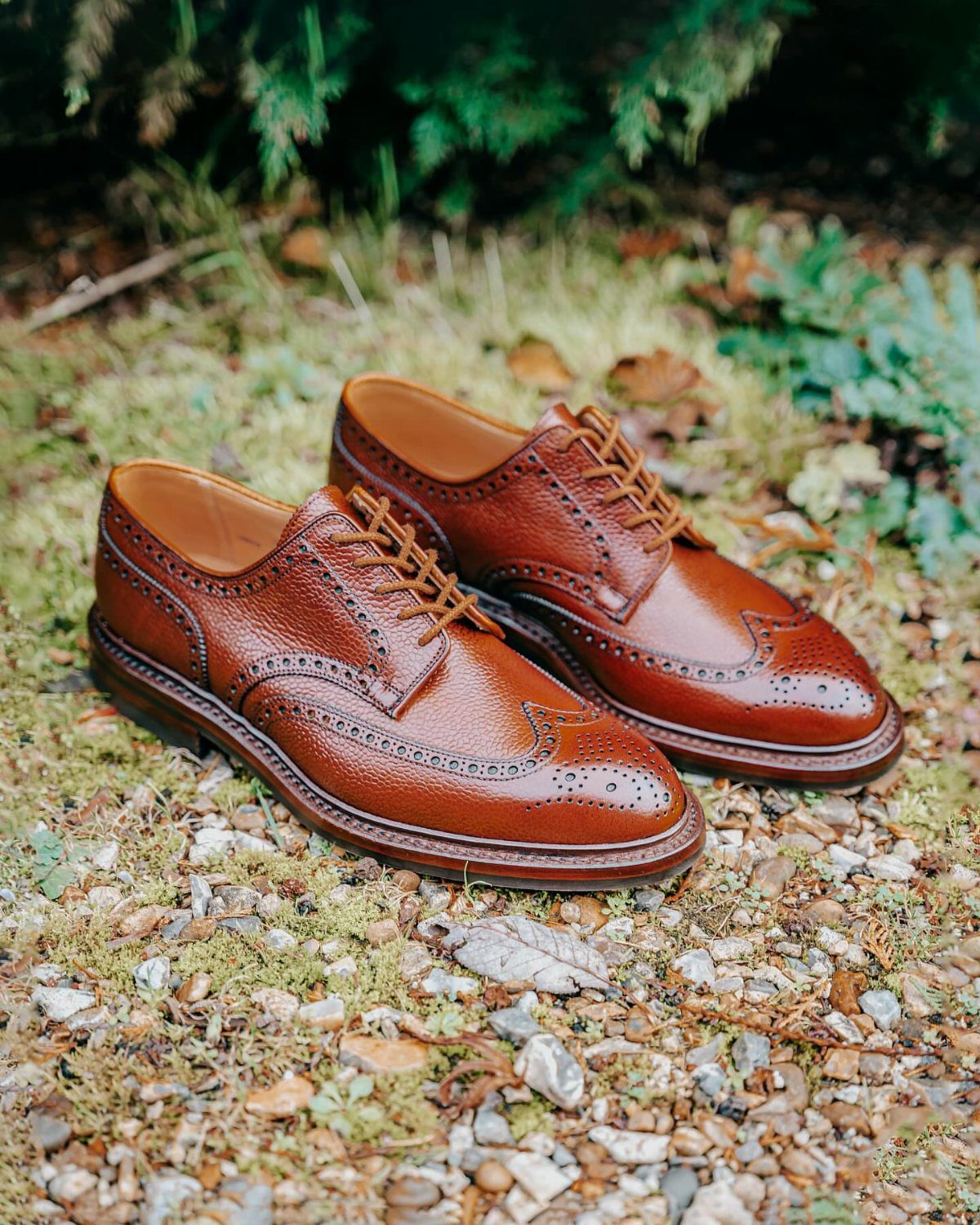
Brown leather brogues, with their perforated wingtip toe, are the shoe I’d buy for country wear before anything else. A pebble-grain finish hides scuffs, which matters when your path crosses moss and gravel.
They suit tweed, cords and wool trousers, and they look right with a slightly rumpled hem. Polish them, but never to a mirror shine; some wear belongs here.
6. Wellies
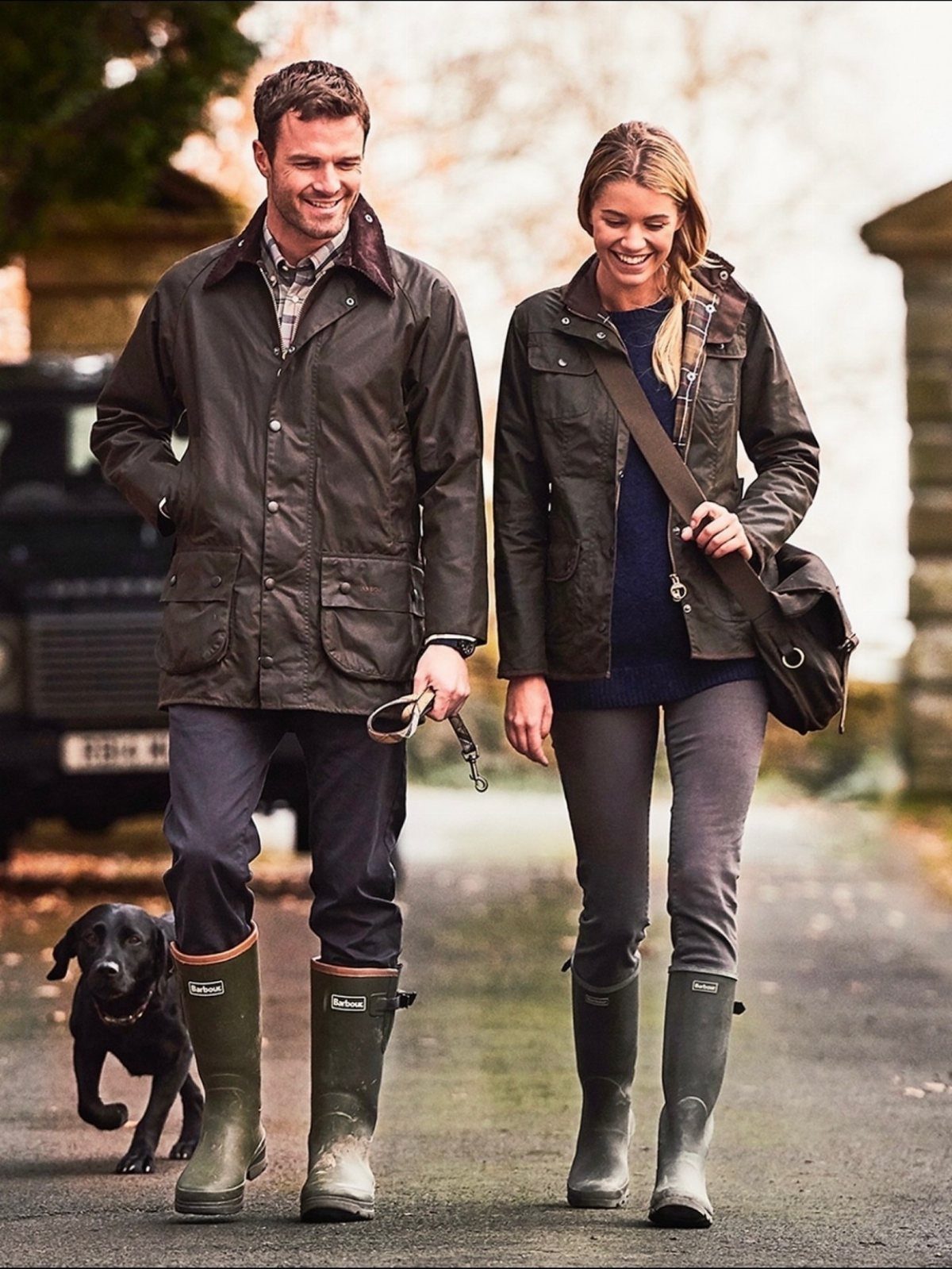
Tall green rubber wellies are the answer when the ground turns to mud, and nothing else really competes. Tuck or leave your trousers over the shaft, depending on how wet the lane is.
Wellies work best under a waxed jacket, with a thick sock inside for comfort. They are practical first and stylish second, so save them for the walk rather than the pub table.
7. Layering Various Garments
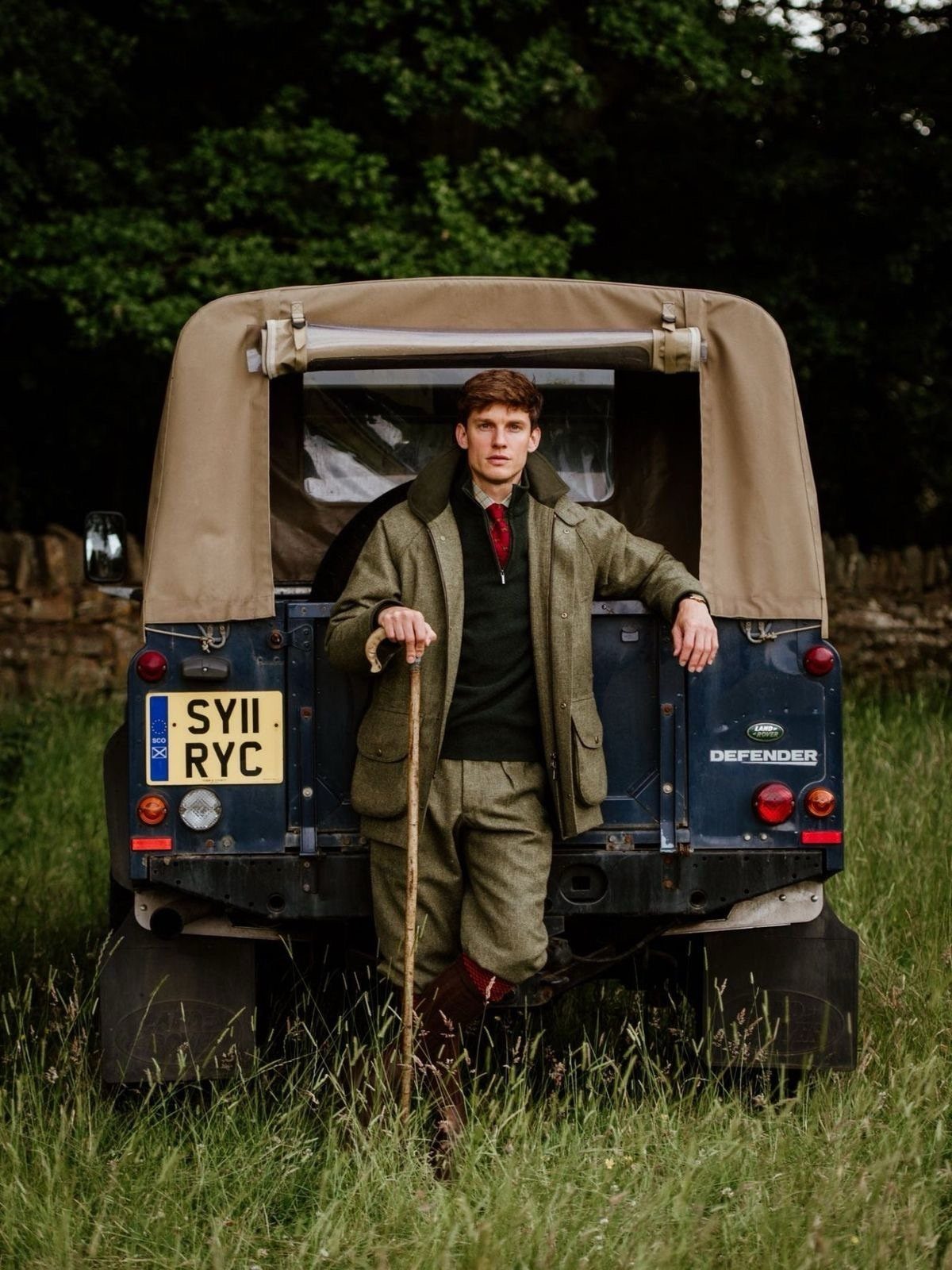
Layering works in British country dressing when each piece sits one step darker or heavier than the one beneath it: a pale shirt, a mid-tone knit, then a tweed jacket in the deepest shade.
Keep the colors in the same earthy family so the textures can differ without arguing.
I’d start with a plain shirt, add a knit or vest, and finish with a tweed jacket. 3 layers is plenty before the outfit turns bulky.
8. Men’s British Country Clothing: the Essentials
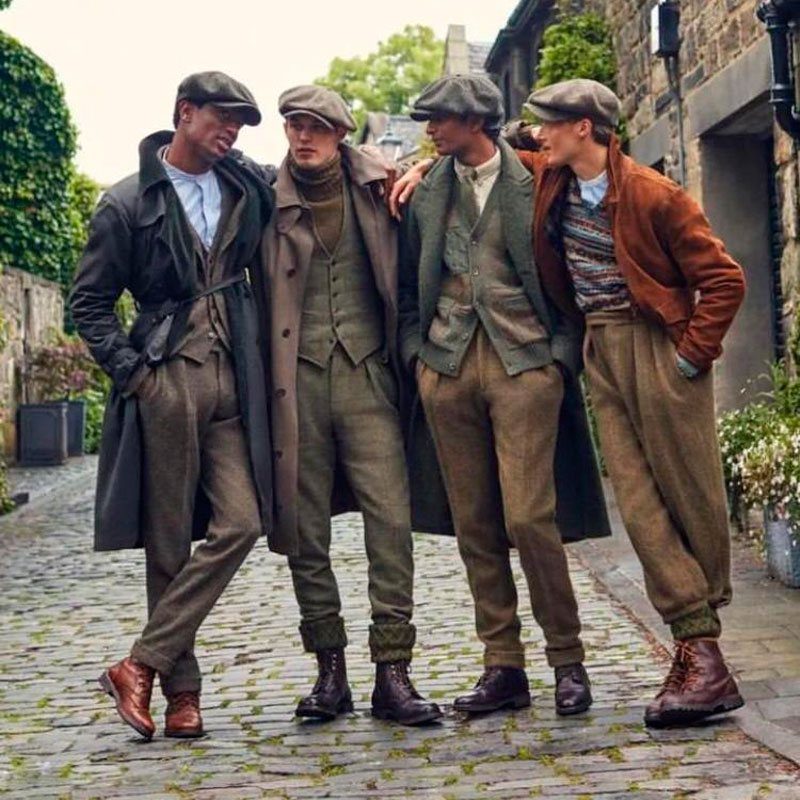
Four men in flat caps, overcoats, tweed and leather boots make the essentials list easy to read: a cap, a tweed layer, a long coat and sturdy boots.
I’d buy in that order, starting with the boots and coat because they do the most work.
Stay with muted browns, grays and greens so any piece you own mixes with any other. Skip anything that shines.
9. British Country Vests
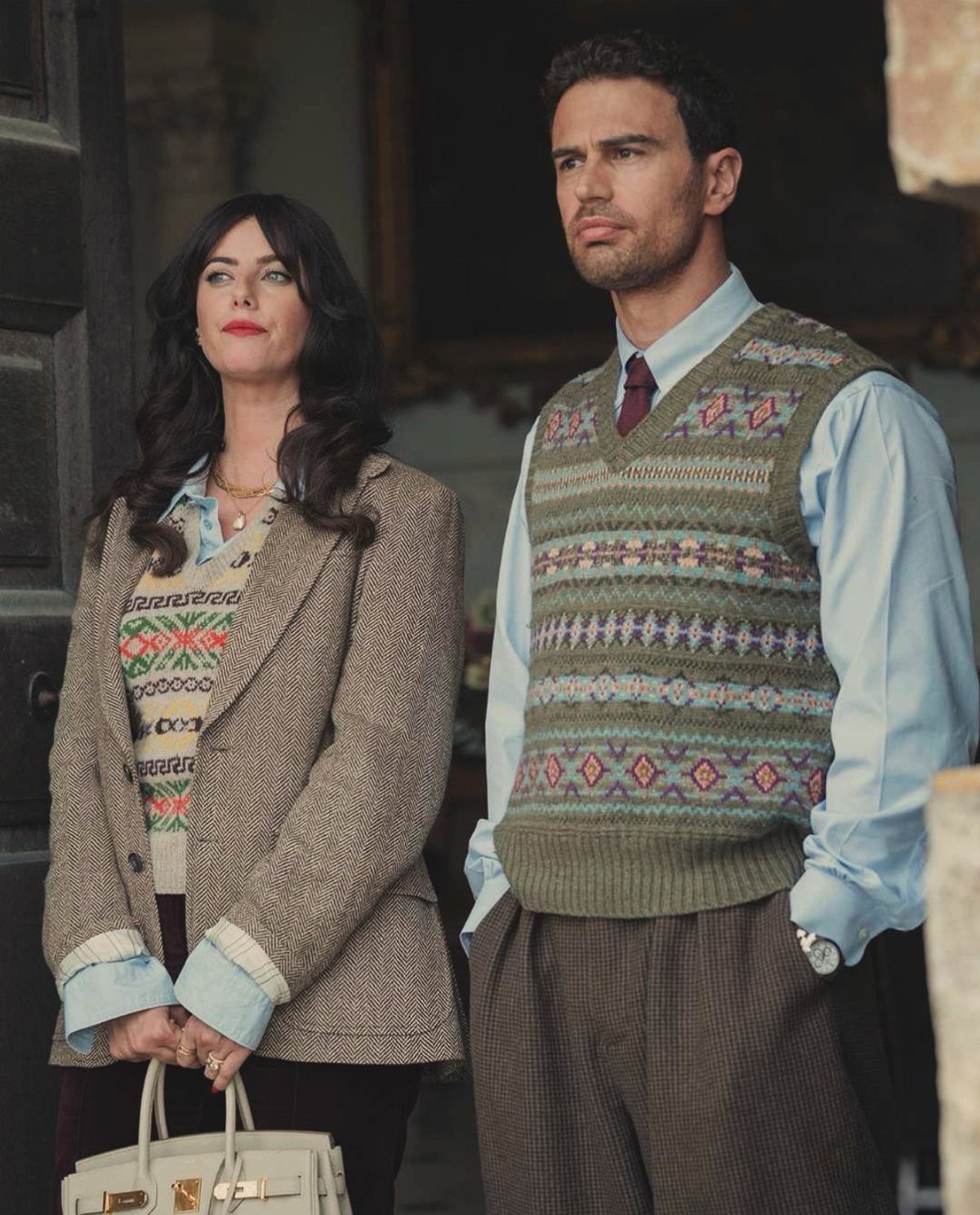
Like Le Chameau wellies and Barbour jackets, a Fair Isle knit vest is part of the uniform for many people. The olive green pattern here sits over a shirt and tie, which keeps the sleeves clean and the chest warm.
I’d pick a vest with a small, muted pattern and wear it under a tweed blazer. Keep the shirt and tie quieter than the knit.
10. Tweed Capes and Tailoring
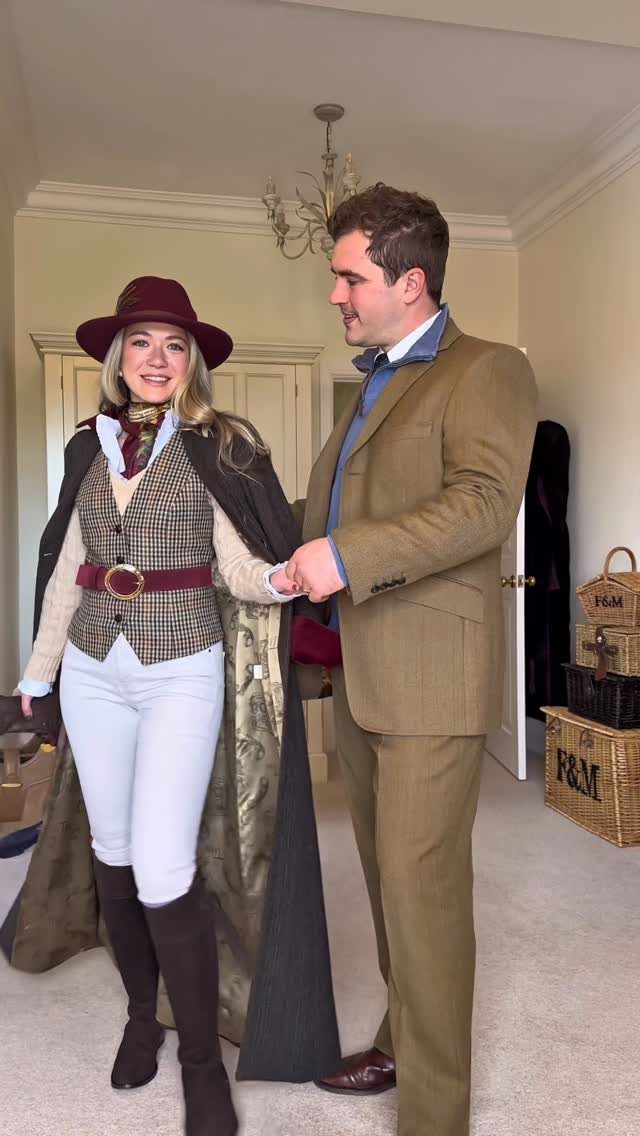
A tweed suit is the plainest way into country tailoring, and a matching jacket and trousers read as deliberate rather than dressed up. A cape, hat and patterned vest, as worn by the woman here, are the bolder options.
For a man, I’d keep the suit in one muted tweed and let a vest or tie carry any pattern. Add only one extra layer or accessory at a time.
11. Belted Tweed and Wool Coats
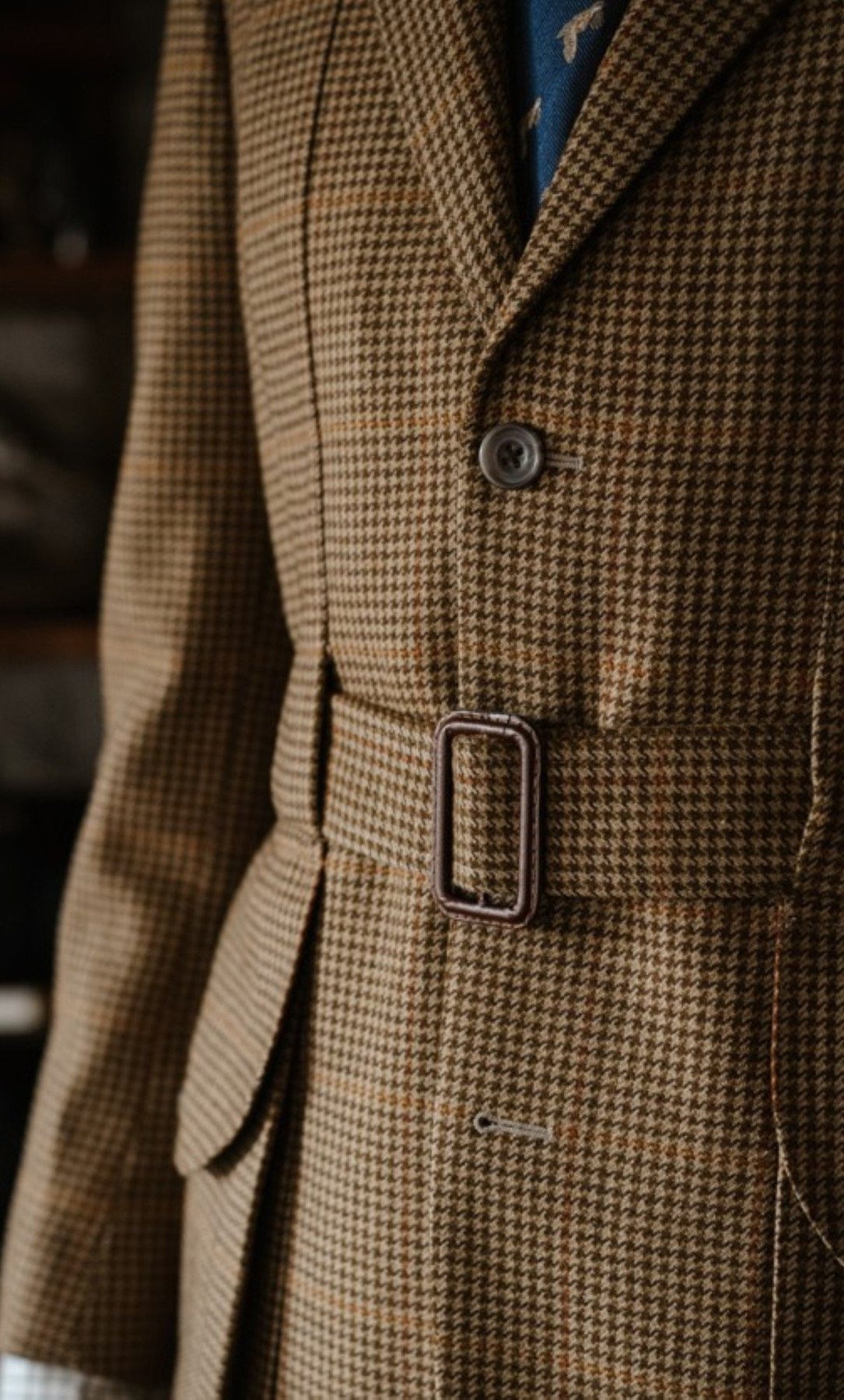
A belted coat in earthy brown houndstooth gives a long wool shape some definition at the waist. The matching fabric belt cinches it so the coat doesn’t hang like a box.
I’d wear it with a solid blue tie or a plain knit, since the check already supplies the pattern. Choose a brown and tan houndstooth over anything high-contrast; the quieter version looks more established.
12. Tweed Blazers with Tall Boots
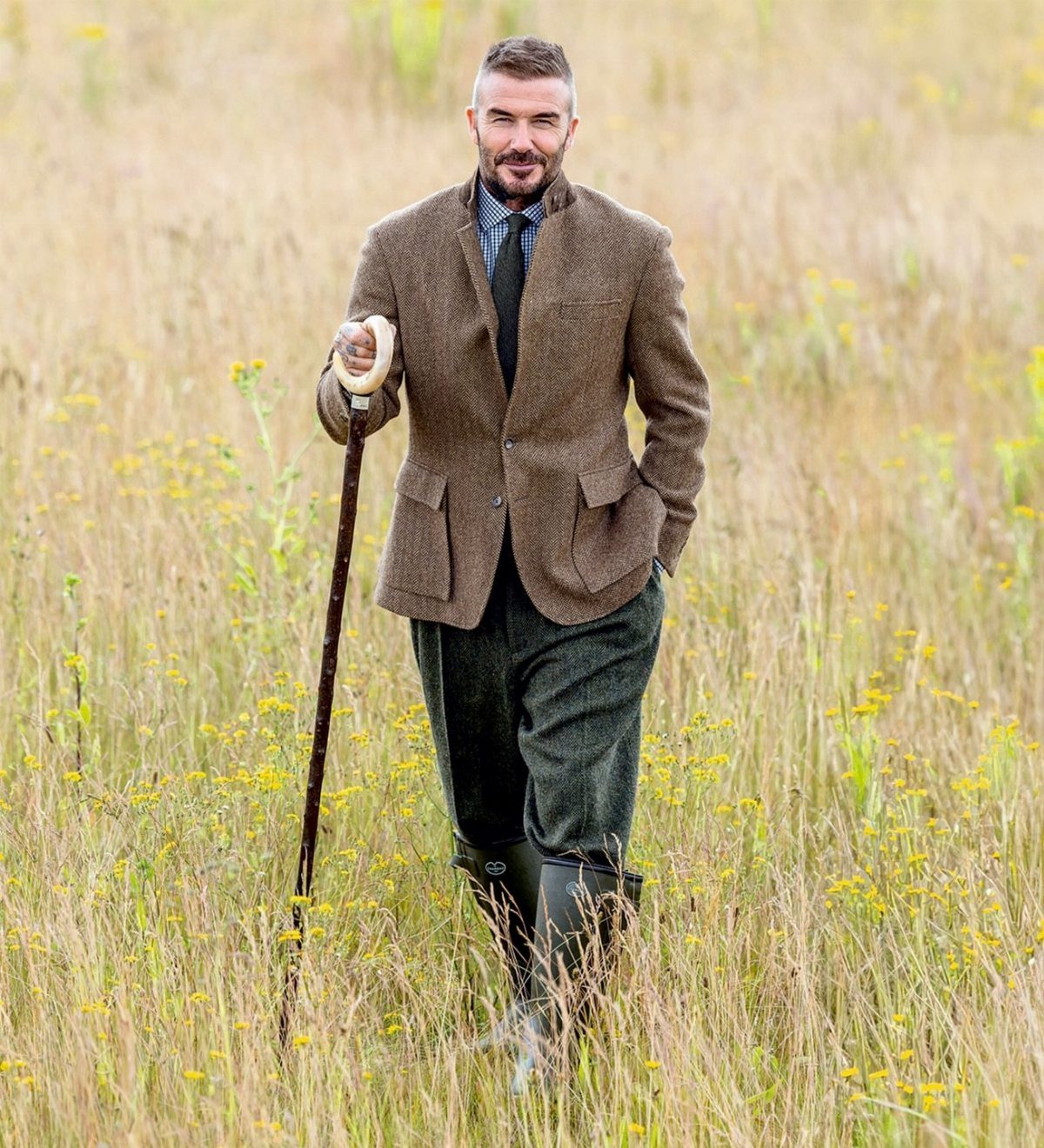
A brown tweed blazer with matching tweed trousers and tall dark rubber boots is country dress at its most traditional. Add a tie and a walking stick and the outfit is complete.
Trouser length depends on the ground: let the hem fall over the boot shafts on dry paths, and tuck it in once the grass is wet and tall.
I’d keep the blazer and trousers in the same brown family so the boots read as the only contrast.
13. Corduroy Trousers for Casual Wear
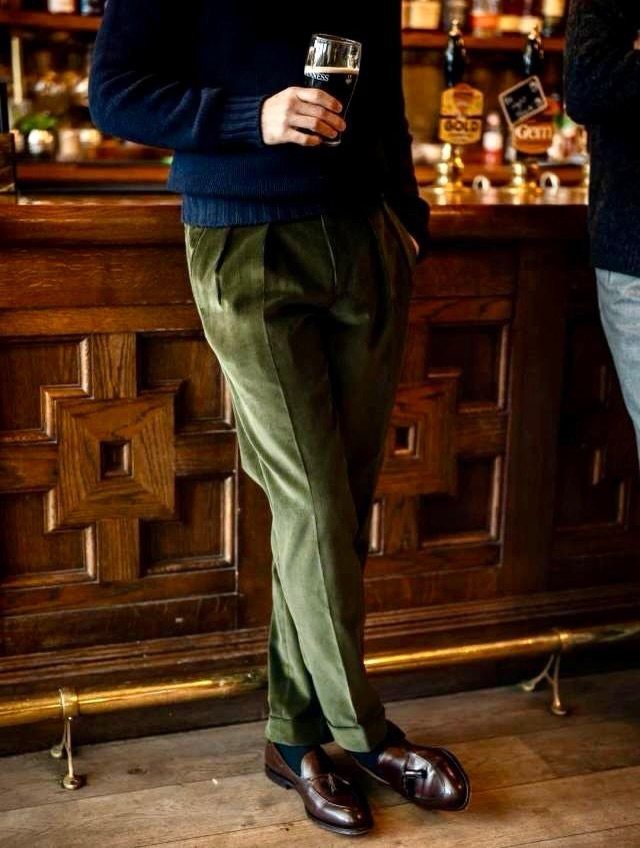
Olive corduroy with a navy sweater is an easy pairing: two deep, muted colors that sit close enough to look planned.
The pleated front gives the trousers some room and a relaxed drape, which suits a pub afternoon better than a flat-front pair would.
Brown leather loafers keep the outfit casual and let the cords stay the main texture.
I’d leave the shirt collar out or choose a plain one, and skip any extra pattern. Wear the trousers with a knit and the outfit needs nothing else.
Practicality in Country Wear
Country clothing is built differently from city clothing, and the difference shows in what it prioritizes: waterproofing and durability come before sharp cuts or fine materials.
Judge a piece by how it handles rain and rough ground, not by how it looks on a hanger.
The palette is muted on purpose.
Brands are different too. The labels that make good city clothes are rarely the ones to buy for the field, so look at makers that started in the countryside and design for people who live and work there.
Traditional country wear is for riding, shooting, fishing, walking, picnics and gardening. It also turns up at country weddings, horse races, festivals and fairs, so one well-chosen outfit can cover a lot of occasions.
There’s a lot to be said for the practicality and hard-wearing nature of these countryside threads. For wearers, according to fashion psychologist Dr Dion Terrelonge, country style "implies that the person wearing it appreciates things that are built to last and traditions".
— BBC
Influence of British Royalty
Royal habits explain a lot about why this look keeps coming back.
Royal wardrobes did a lot to keep country dress in view: King Charles III turns up in it at the races and around Balmoral and Highgrove, and Queen Elizabeth II spent her time at Balmoral in barn jackets, tweed skirts and wellies.
Copy the attitude rather than the costume. Royals wear these clothes because they work outdoors, so a worn, practical piece looks more convincing than a brand-new outfit assembled all at once.
Demand follows what people see. After Helen Mirren pulled on a waxed jacket in The Queen, New York shops saw sales jump, and I can’t think of a cleaner example of one image sending people to the store.
Historical Roots of Country Style
This style began as working gear for sport. Wealthy landowners and visitors to English country houses needed durable clothing for shooting parties and other outdoor events, and specialist outfitters grew up to supply it.
Some of those makers, including Cordings and Barbour, still exist, and some hold a royal warrant. Buying from an old outfitter gets you a design that has been refined over generations.
The look also crossed the Atlantic. Much of this style crossed the Atlantic through Ivy League dressing in the early 1900s and later through American preppy clothes, so a lot of it will look familiar in your own closet.
Designers keep borrowing from it too, using Harris tweed and Ventile cloth.
Frequently Asked Questions
What is British country style?
British country style is traditional rural clothing built for work and leisure outdoors, so practicality comes first.
Think tweed blazers, waxed jackets, wellies and brogues in muted browns, grays and greens. It began as working gear for shooting parties and country house visitors, which is why durability beats sharp cuts.
How to dress in the British countryside?
Start with boots and a long coat, then add a tweed layer and a flat cap.
A waxed jacket in dark olive, brown leather brogues or tall green wellies handle rain and mud best. Keep the colors earthy so every piece mixes with the others, and stop at 3 layers before the outfit gets bulky.
What makes a woman look wealthy?
In country dress, it comes from worn, practical pieces in muted colors rather than a brand-new outfit bought all at once.
A tweed skirt, a waxed barn jacket or a pair of wellies that shows some wear reads as more genuine, because that is how the people who actually live in the countryside, royals included, wear them.
Skip anything shiny or high-contrast, since quieter versions look more established.
How to dress for a British themed party?
Go with a tweed blazer, a flat cap and a Tattersall check shirt, which together read as British country at a glance.
Choose a dark charcoal or gray cap and a muted brown tweed so it looks like clothing rather than a costume. A Fair Isle vest over a shirt and tie adds one more traditional touch.