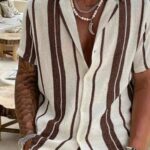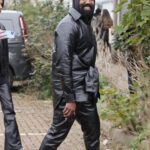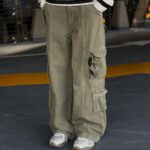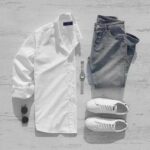
The outfits here run from a cream ribbed polo with black trousers to a maroon button-down, the one bold color I’d give a beginner, so the right pick depends on how much color you’re willing to wear.
If loud shades make you hesitant, start with neutrals like brown and cream or sage and beige, where every piece sits in the same quiet range.
For a single statement piece, wear black or dark neutrals everywhere else and let that one item carry the look, as the all-black outfit with the draped sweater does.
1. Neutral Colors
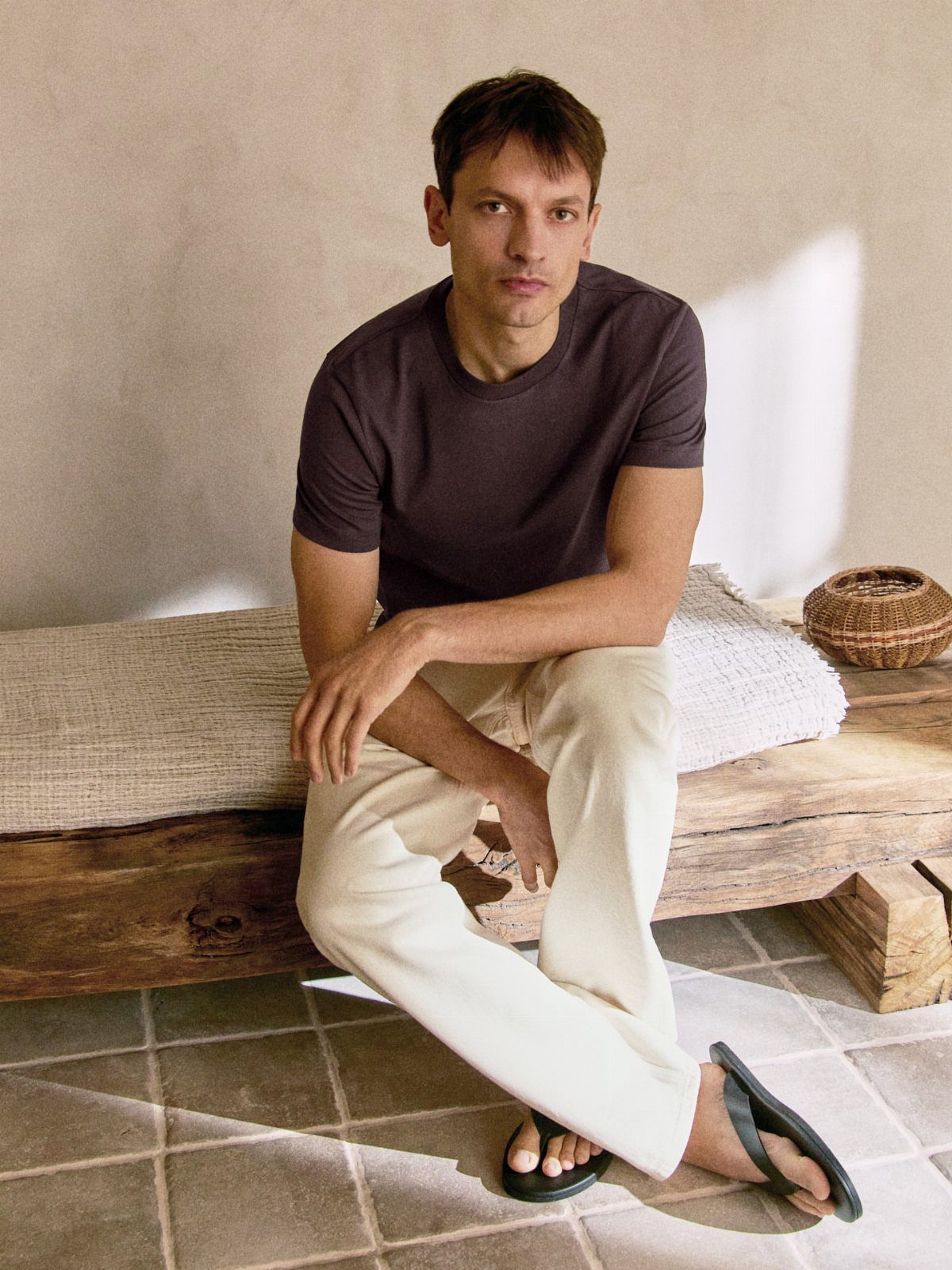
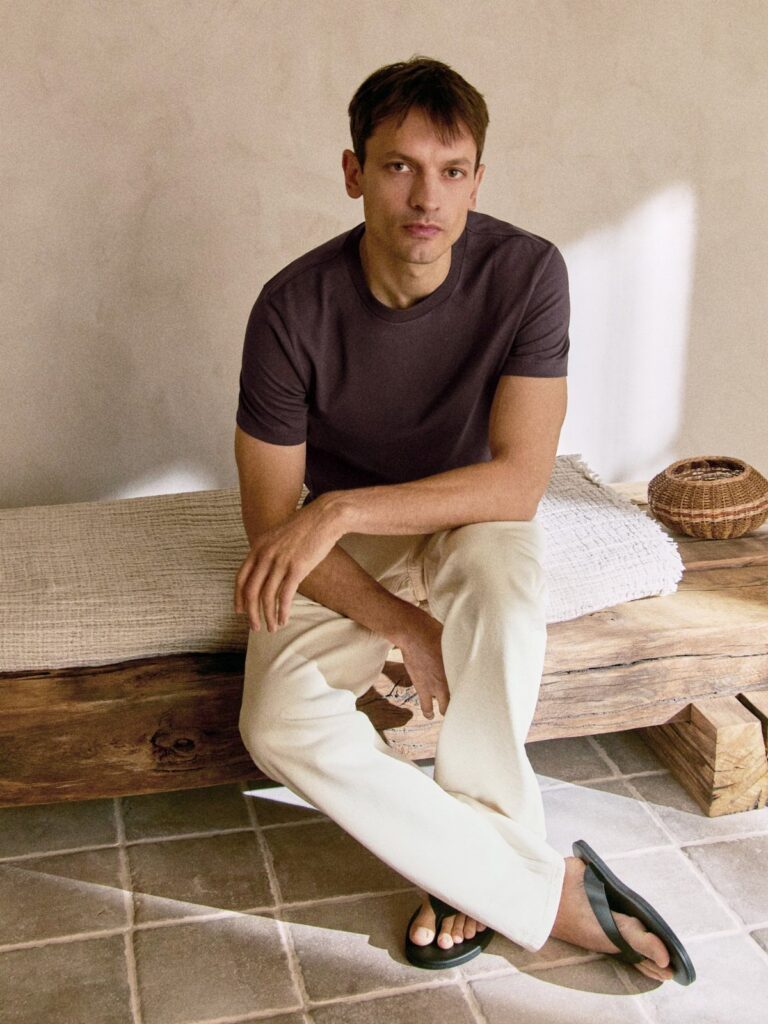
Brown and cream are both neutrals, so the outfit reads as one calm block, which is why neutrals are the easiest place to start. A dark brown tee with off-white trousers gives you contrast without a single loud color.
Buy the trousers first.
Off-white goes with nearly any dark top you already own, so one pair multiplies your options. Keep the shoes simple too; plain sandals like these work for warm days at home, and a clean leather pair covers everything else.
2. Stylish People
Copying someone who already dresses well beats guessing.
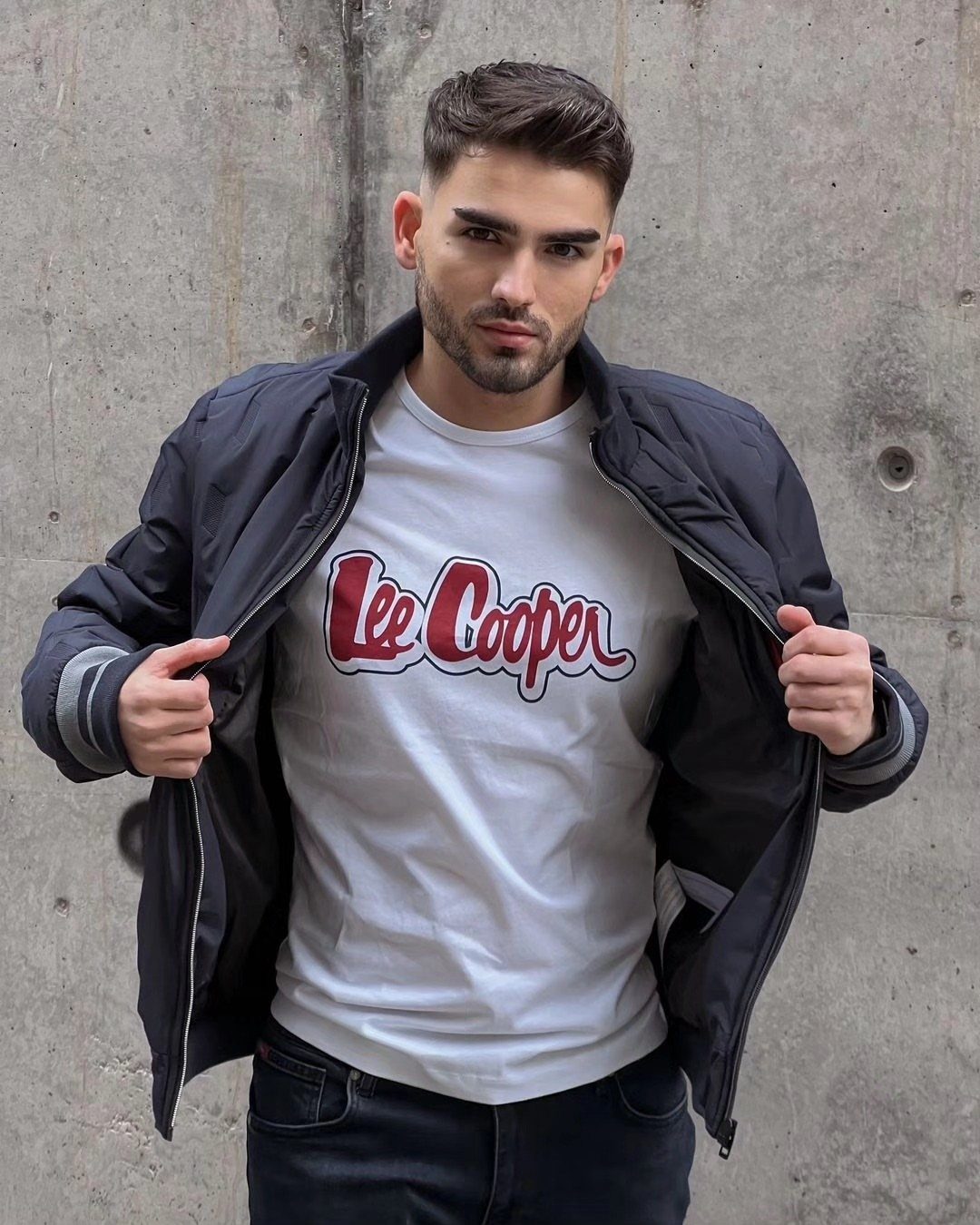
A dark bomber worn open over a white graphic tee and dark jeans is a formula that works because the only loud piece sits in the middle, framed by darker layers. 3 pieces, all easy to find cheap.
The jacket does the work. Leave it unzipped so the tee shows, and keep the tee’s graphic to one color so it doesn’t fight the outerwear.
I’d pick one person whose style fits your budget and rebuild their outfit from pieces you own, rather than buying the whole look at once.
3. Maroon Button-down with Black Trousers
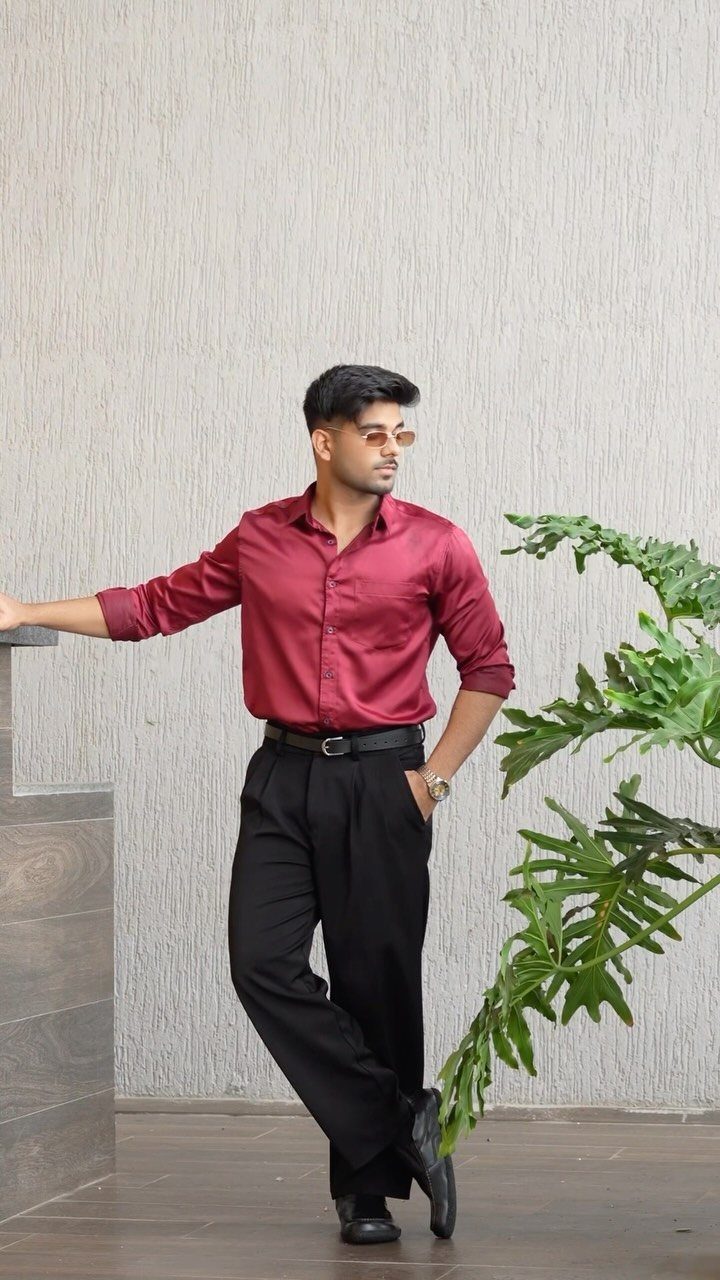
Maroon is the one bold color I’d trust a beginner with, as long as everything below it is black. A fitted button-down tucked into black trousers, with a black belt tying the two together, looks planned without trying hard.
Tuck it in and match the belt to the shoes.
Pick a shirt that sits close through the shoulders, since a boxy maroon shirt looks like a uniform. Sunglasses are optional but they suit the dressier mood.
4. Denim Shirt with Rolled Sleeves
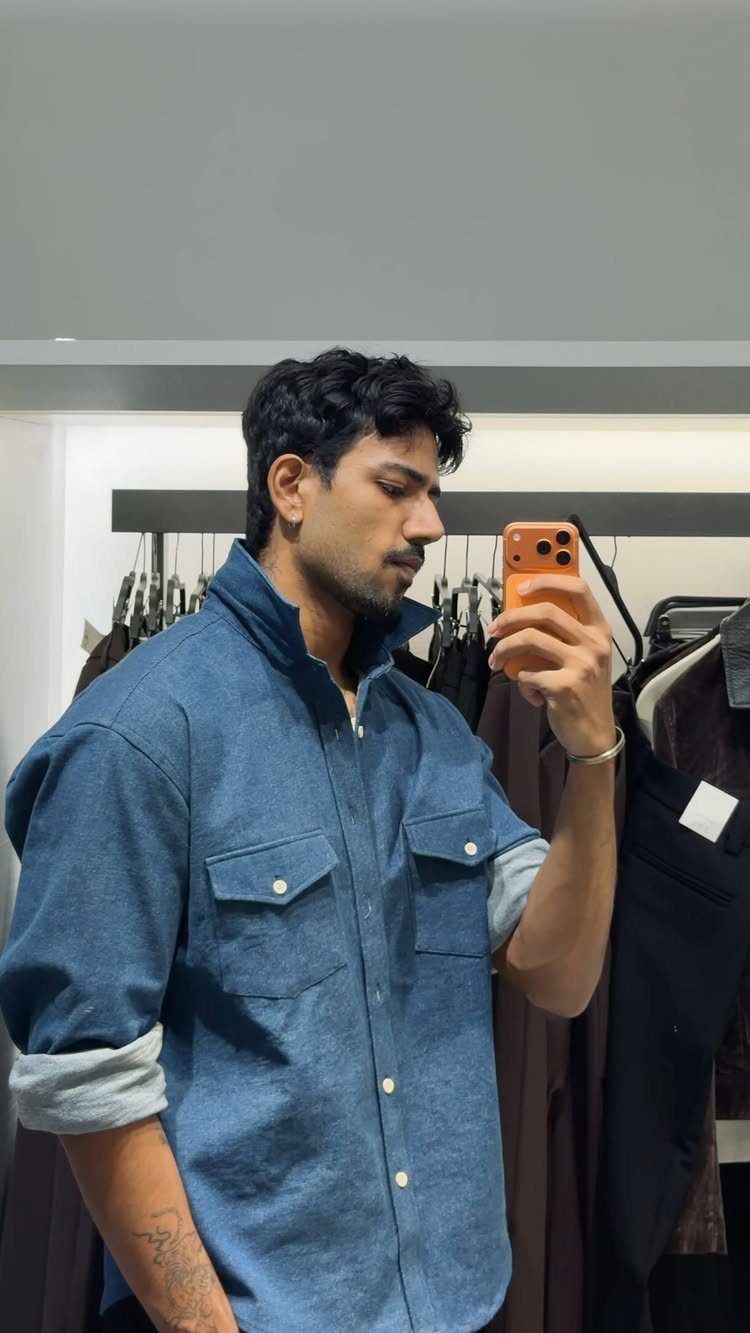
A denim shirt with rolled cuffs is about the cheapest way to look relaxed and put together at once. An oversized cut like this one works open or buttoned, and the rolls keep the sleeves from swallowing your hands.
Fold the cuff over twice, to just below the elbow, and keep the fold tidy instead of bunched.
Mid-blue denim goes with almost any pants you own. If the shirt is very big, size down before you buy it; oversized should look chosen, not borrowed.
5. All-black Outfit with Draped Sweater
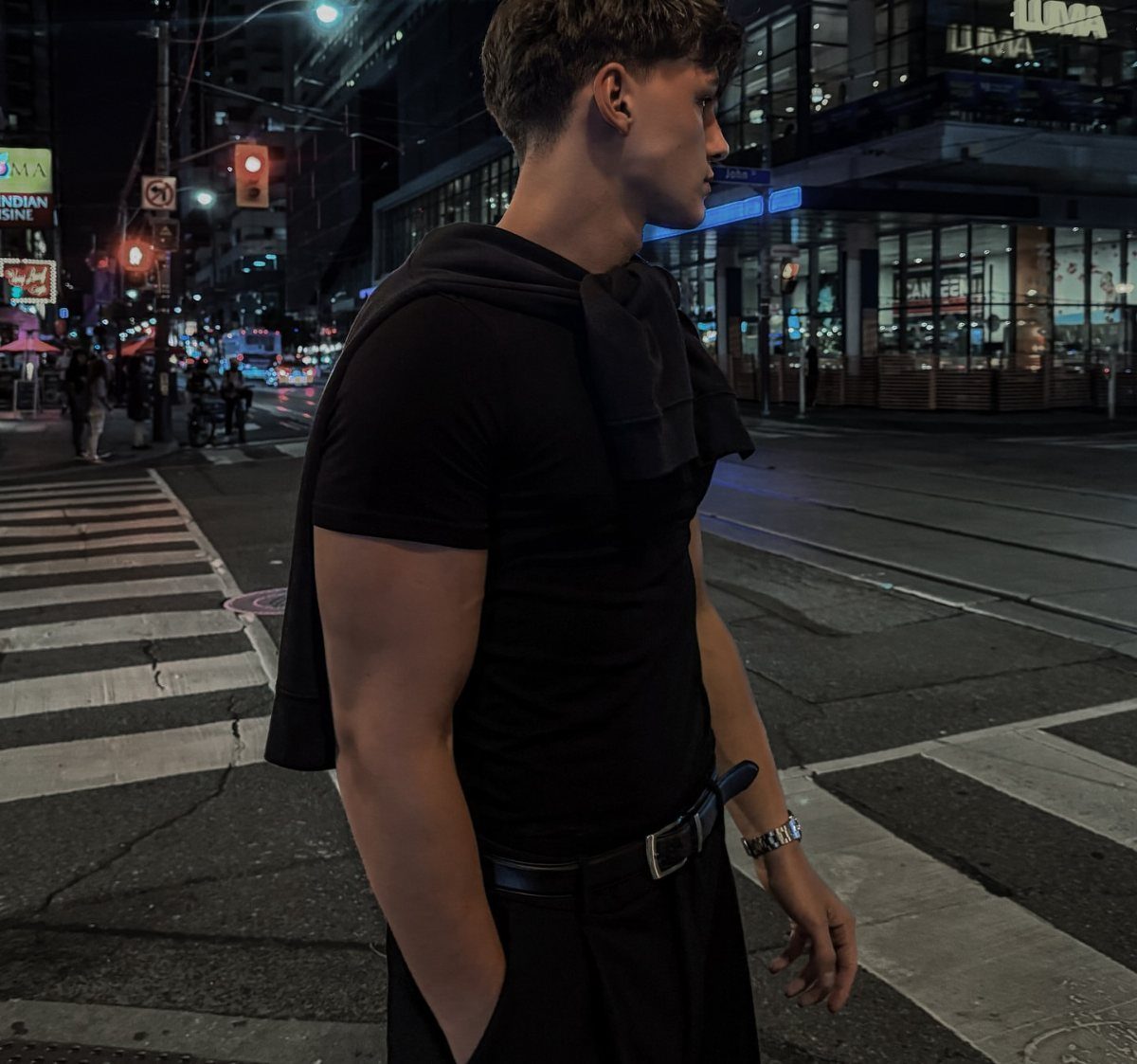
Black on black looks sharp, but it can go flat. A sweater slung over the shoulders breaks it up and adds a second texture to the plain tee and trousers.
Choose a sweater a shade lighter or softer than the black underneath, so it reads as a layer and not a blob.
Keep the tee fitted and wear a belt; with this much black, the small details carry the look. It also gives you something warm for cool nights.
6. Graphic Long-sleeve with Black Trousers
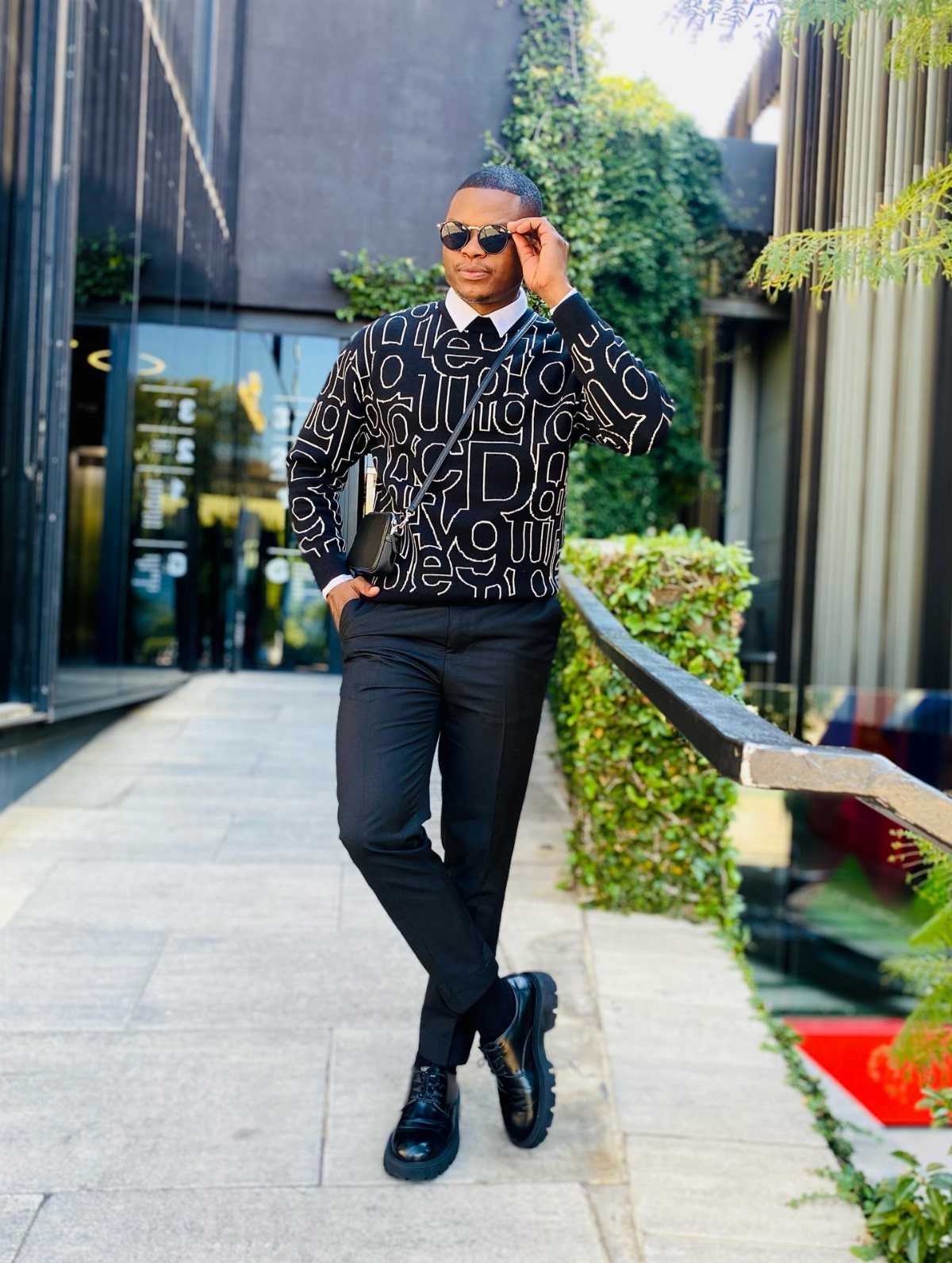
A black top with white graphics can look streetwear or smart depending on what sits below it. Pair it with tailored black trousers, as here, and the print looks deliberate instead of casual.
Keep the graphic small or text-based, so the trousers carry the dressing up.
Chunky dress shoes add weight that balances a loose top. A collared shirt layered under the long-sleeve gives a neat neckline, though a plain crewneck on its own is simpler and still works.
7. Navy Tee with Wide-leg Jeans
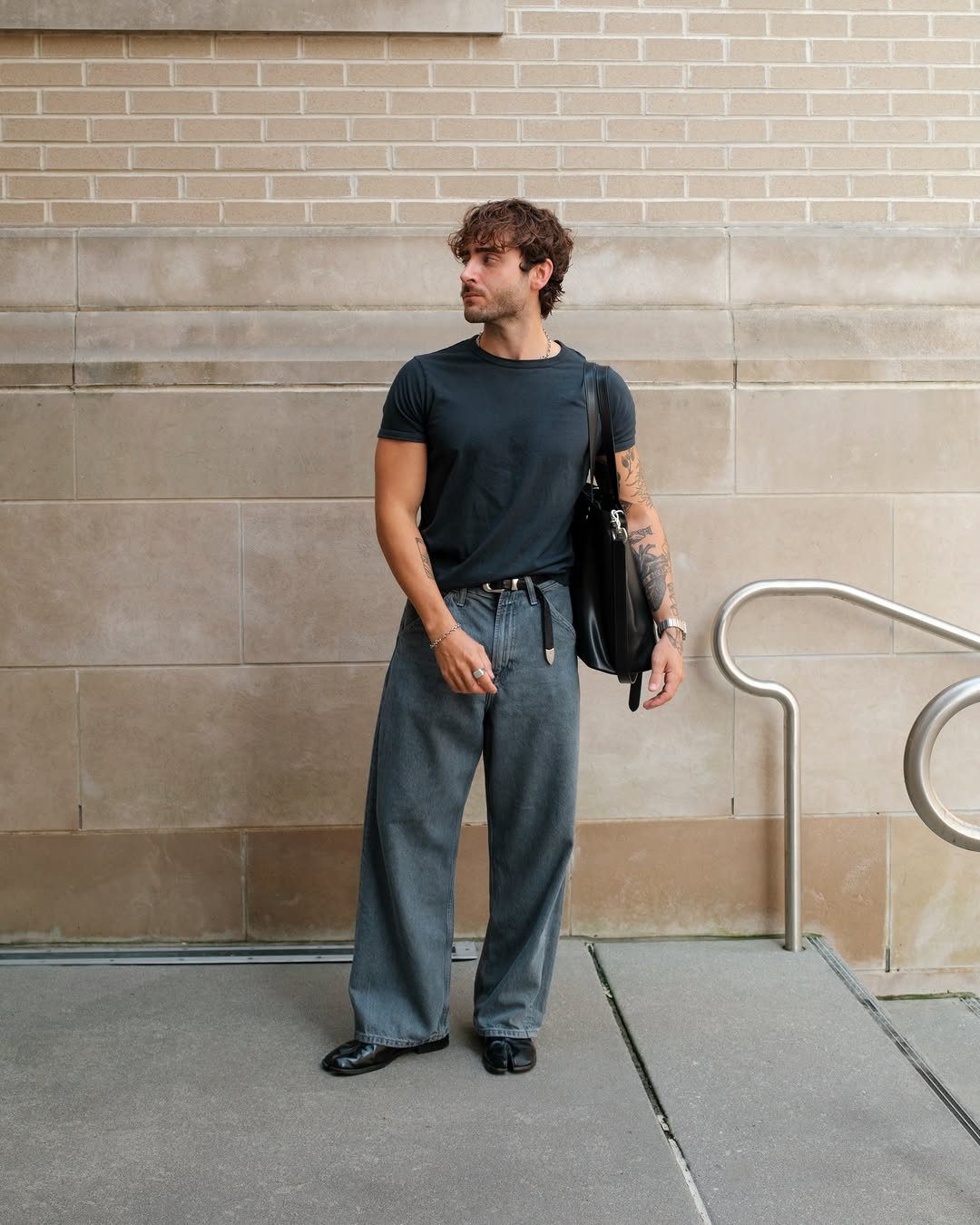
Wide-leg jeans get easier when the top stays plain and fitted. A dark navy tee tucked in defines the waist, so the legs read as a deliberate shape instead of extra fabric.
A tucked tee with a belt gives the jeans a defined waist, which keeps the wide leg from swallowing your frame.
Black shoes keep the line clean, and a black leather shoulder bag adds one structured piece to a casual outfit.
If the jeans are very wide, I’d choose a tee that fits close through the chest, since a loose top over loose pants loses your shape completely.
8. Sage Green Shirt with Beige Trousers
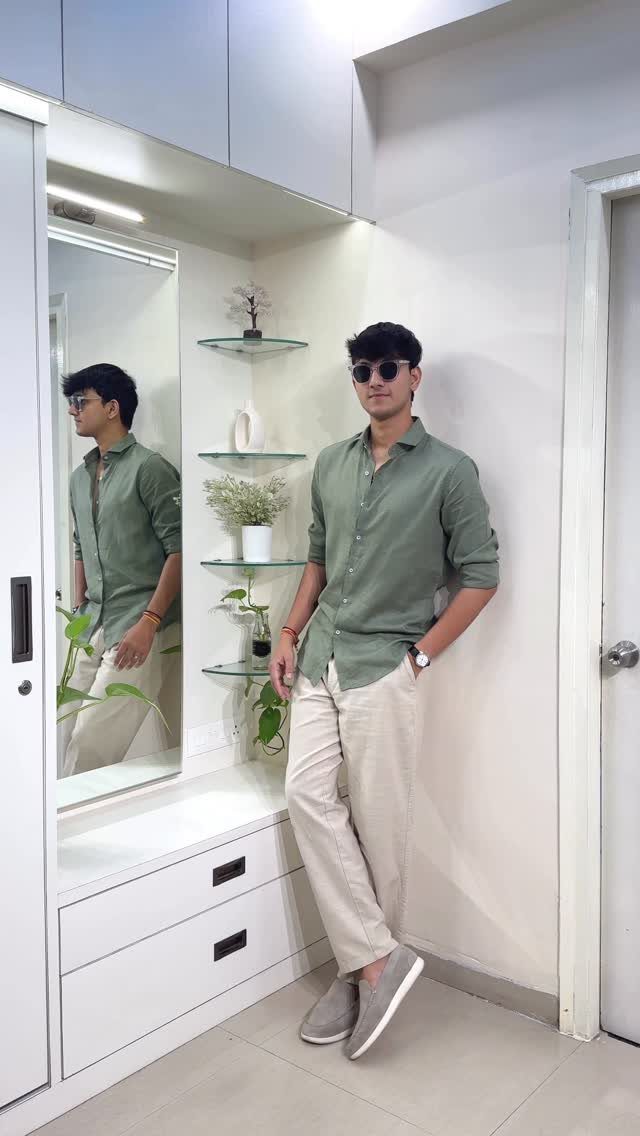
Sage green and beige sit in the same soft, earthy range, which makes this a low-risk pairing for a man who dislikes loud color. Wear the button-down untucked and open at the collar, and it looks relaxed without looking sloppy.
Beige trousers do the heavy lifting, so buy those first; they also work with the dark tops you likely own.
Slip-on shoes in a muted gray keep things quiet. Sunglasses add a little polish, though they are optional.
9. Cream Ribbed Polo with Black Trousers
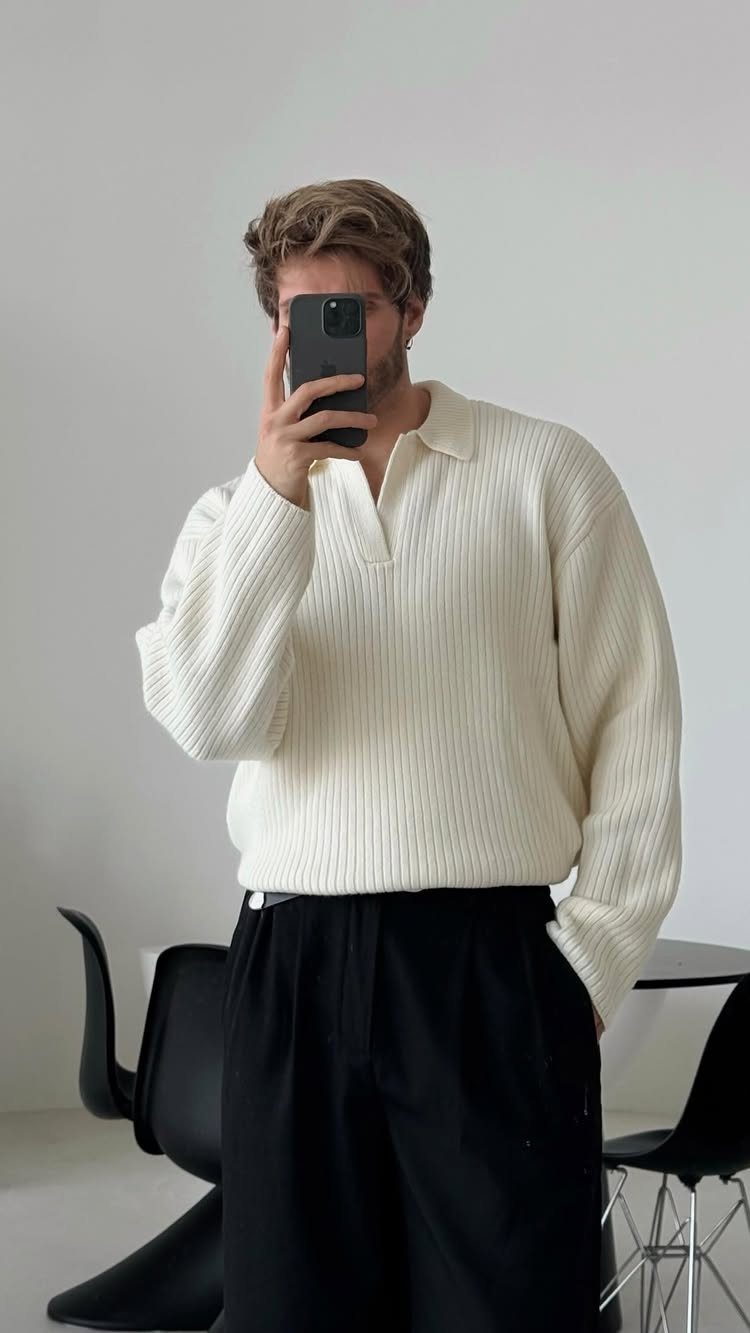
A cream ribbed polo sweater tucked into black pleated trousers looks dressier than its comfort suggests. The knit adds texture on top, and the black below keeps the outfit sharp.
Tuck it in so the trousers’ pleats and waistline show.
Go oversized in the sweater only if the trousers are tailored, because that contrast is what makes the look work. Cream shows marks more easily than darker knits, so check the collar and cuffs before you wear it.
Building a Versatile Wardrobe
Navy, gray, white and black tees, knits and trousers make the base, since nearly any two of them can share an outfit without a fight.
These colors mix with each other and with almost anything you add later, so the wardrobe grows without clashing.
After that comes footwear plus 2 or 3 layers, like an unstructured jacket or a heavy overshirt, which carry the same base across work, dinner and a weekend.
Run a simple test on every purchase: it should pair with at least 5 things you already own. A piece that only works with one outfit is an orphan, and orphans sit in the closet.
Settle on a shirt and pant fit you like before you buy more. Once those two are fixed, building outfits is just matching, and you can add something new on top of a base that already works.
If you want variety, keep the base plain and bring it in through one piece at a time. A pattern on top with a solid, neutral bottom is the easiest version.
Common Style Mistakes
Before anything else, check the fit, because it does more damage than any other mistake I see.
Clothes that are too big or too small look careless no matter what they cost, so check the shoulders and sleeve length before anything else.
Colors that clash through laziness come next.
Grabbing whatever is on top of the pile usually gives you a pairing nobody chose. Take 30 seconds to check that the top and bottom actually belong together.
A work day, a date and a family event each call for a slightly different outfit, even if you only change the shoes or the outer layer.
Maintenance matters more than most people expect.
A wrinkled shirt, scuffed shoes or a frayed hem will read as sloppy faster than a questionable purchase will. A steamer, a shoe brush and a quick hem repair cost little and fix all three.
Frequently Asked Questions
How do I dress well as a man?
Start with fit, then keep your colors cohesive, then match the outfit to the occasion.
Shoulder seams that sit past your shoulder bone, or sleeves that cover your knuckles, tell people the clothes were not chosen for you, and no price tag fixes that.
Navy, gray, white and black basics mix with each other, which keeps the whole wardrobe from clashing.
What clothes look good on a guy?
Plain, well-fitted basics in navy, gray, white and black look good on nearly everyone. Add a couple of layers, such as an unstructured jacket or a heavy overshirt, to carry the same base from work to a weekend.
What makes an outfit actually work?
Good fit, colors that belong together and balanced proportions.
Fit through the shoulders and in the length does the most work. Pair wide-leg jeans with a closer-cut top and your frame stays visible; put loose over loose and the shape disappears.
What should I wear to evening events?
For an evening out, I’d go with a blazer, tailored trousers and leather shoes that are clean and in good shape. If the invitation names a dress code, follow it, since a formal event may call for a suit.