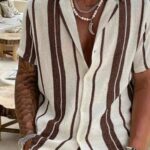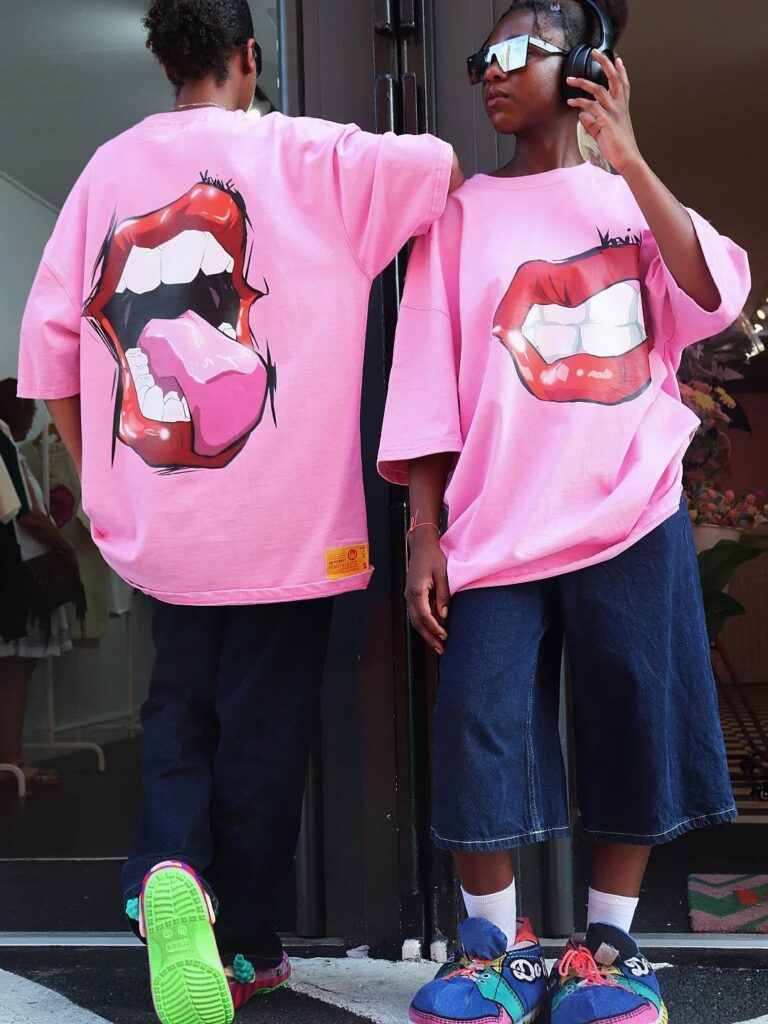
The ideas here run from a bandana to a single luxury piece, and the rule that picks one is how much you want to spend and how loud you want to be: one statement piece per outfit, whether that’s a logo, a pattern, or a color.
Pick the idea whose loud part you can afford, then let everything else around it stay quiet.
1. Vibrant Hip Hop Apparel
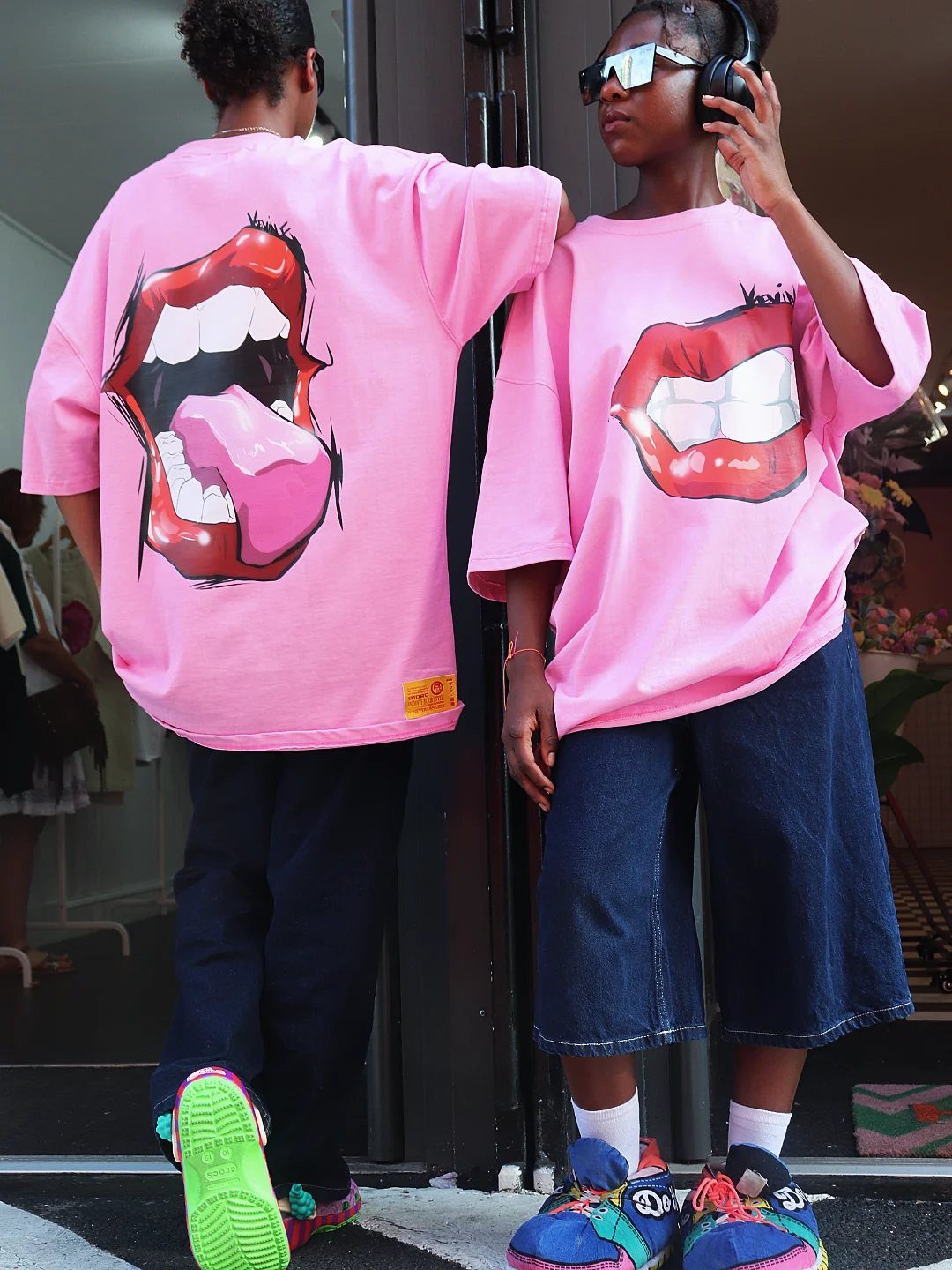
Color does the work here. A bright graphic tee in an oversized cut needs very little around it: dark baggy denim, in pants or shorts, keeps the color from looking like a costume.
I would match the loudness of the shirt with quieter sneakers or let the sneakers be the second color moment, but not both at once.
2. Loose-Fitting Jeans and Shirts
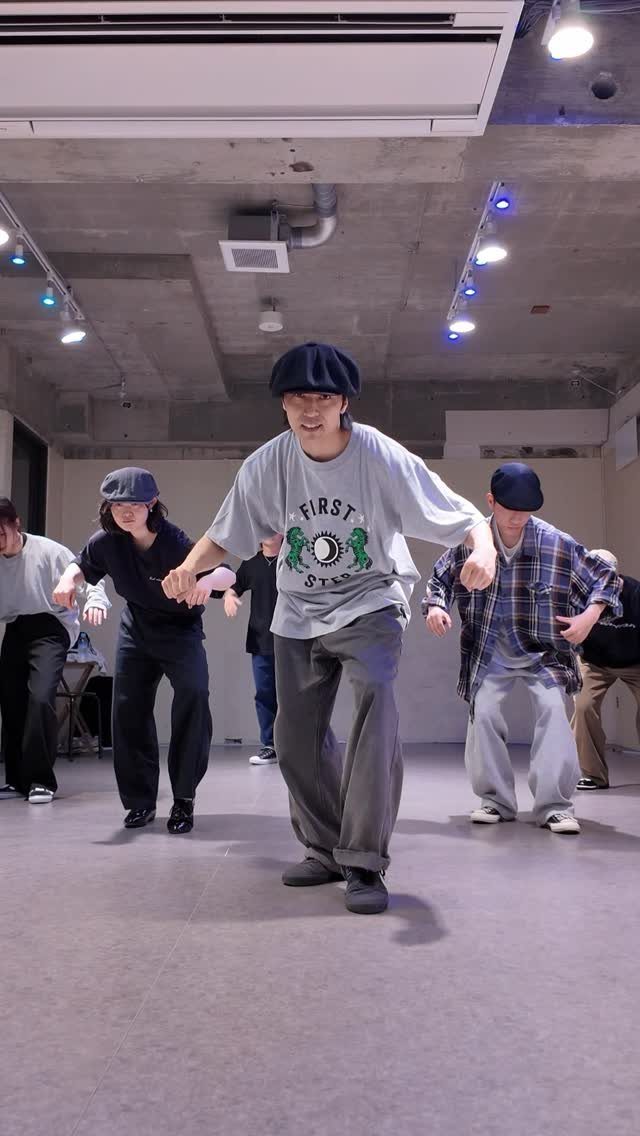
A plain gray tee with a short graphic on the chest, baggy gray pants and a dark newsboy cap make a full outfit from 3 pieces.
Staying in one color family is what lets the loose shapes look planned rather than sloppy.
Choose a tee that hangs past the belt line and pants with room through the thigh.
Wide on both top and bottom reads as intentional; wide on top and tight below does not. For a first try, I would keep everything in one tone and add the cap last.
3. Track Suits
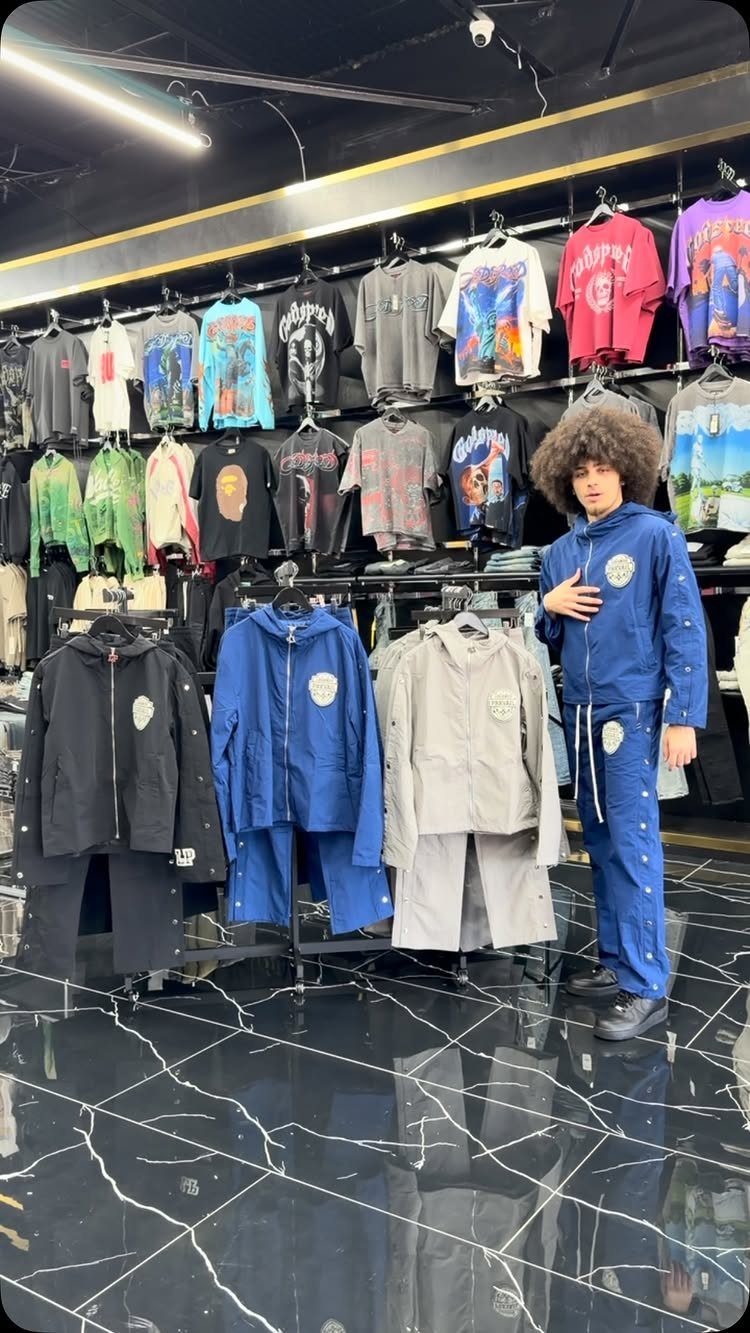
A tracksuit is one of the easiest ways into hip hop style, since the jacket and pants arrive already matched. A hooded blue set with snap-button details shows the appeal: one color, no styling decisions.
I prefer wearing a set together at first, then splitting it later.
The jacket works over a plain graphic tee with jeans, and the pants work with a basic hoodie. Pick a color you would wear on its own, because the set does all the talking.
4. Luxury Brands in Hip Hop Fashion
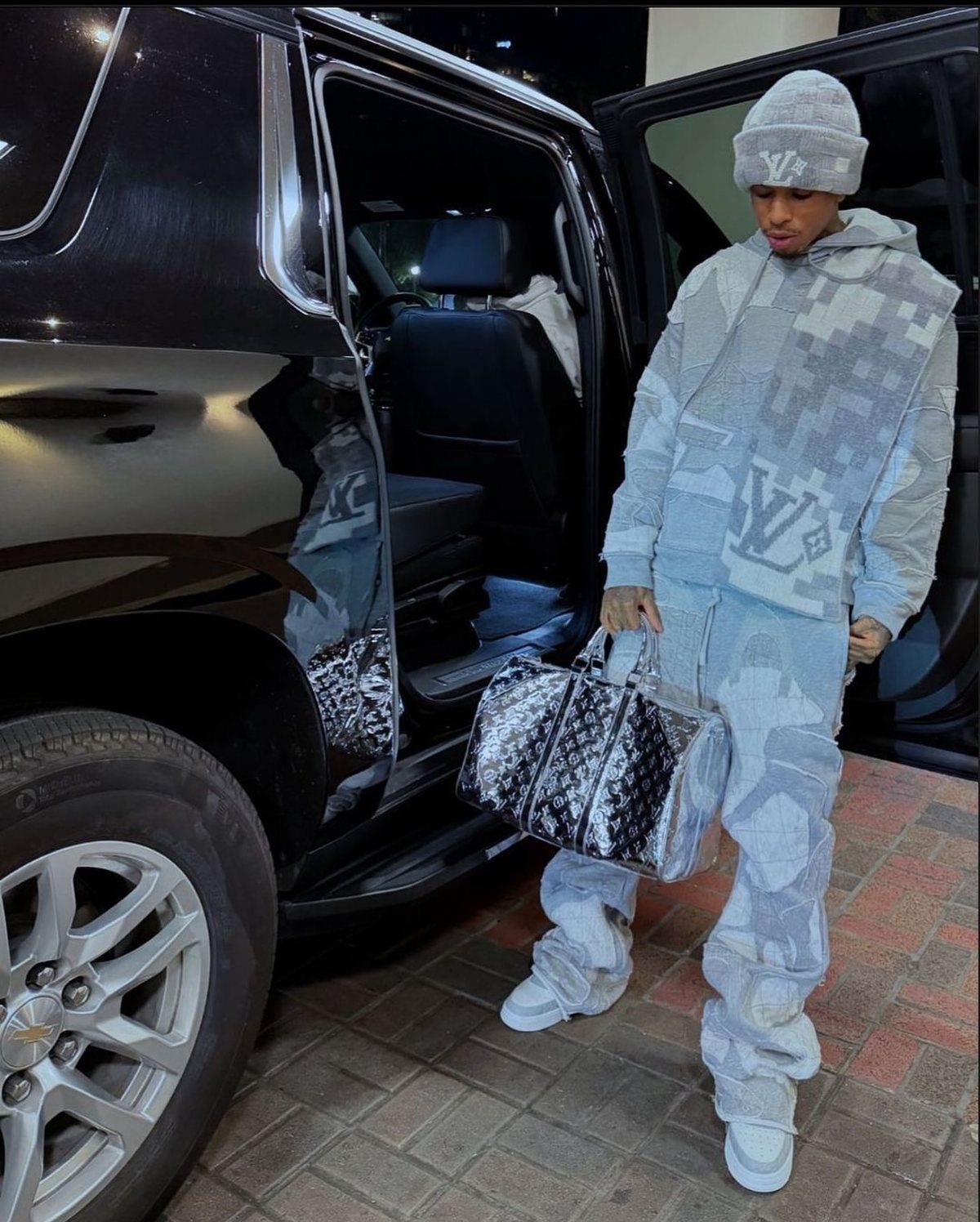
Luxury shows up in hip hop fashion as a single loud accessory, not a head-to-toe label. A metallic monogram duffle carried with a grey patterned hoodie, matching stacked pants and a beanie is the model: relaxed clothes, one expensive piece.
On a casual budget, I would spend on the bag or the shoes and keep everything else simple. A tonal, matching set lets one statement item stand out without competing with it.
5. Camouflage Shorts with Denim Jacket
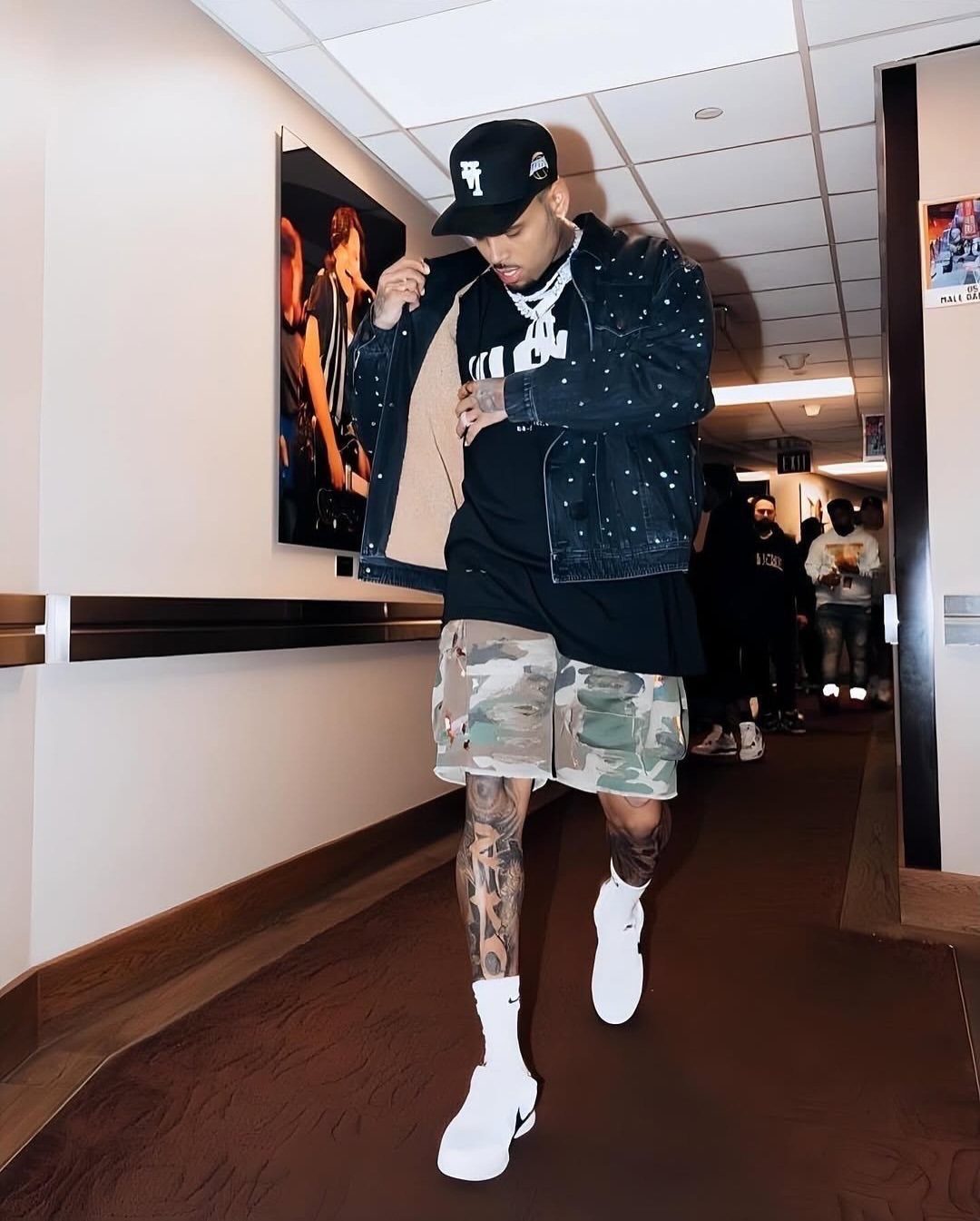
Camouflage shorts with a black denim jacket is a good pairing because the jacket and tee stay dark while the shorts carry the pattern. Graphic camo gets even more attention, so the rest should be plain.
Tall white socks and white sneakers are the detail I like most: they break up the black and give the legs a clean line.
A black cap completes it. Keep the tee solid, and let the shorts be the only pattern.
6. Patterned Bandana Headwear
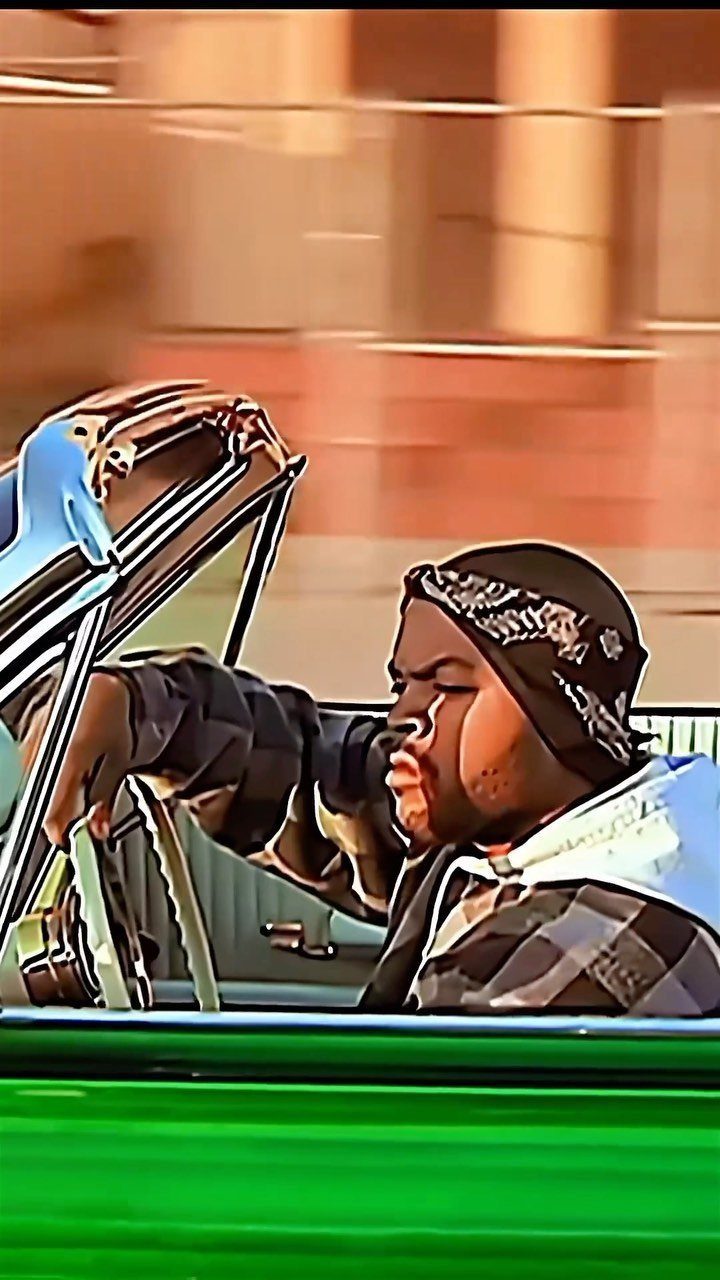
A folded, patterned bandana tied around the head is the cheapest piece in hip hop style and one of the most recognizable. Fold it into a band, tie it at the back, and the pattern sits across the forehead.
Black with a pattern pairs well with a dark patterned jacket, as it does here, but I would keep the jacket quieter if the bandana is busy. One patterned item is enough; two need to share a color.
7. Streetwear Hoodie and Baseball Cap
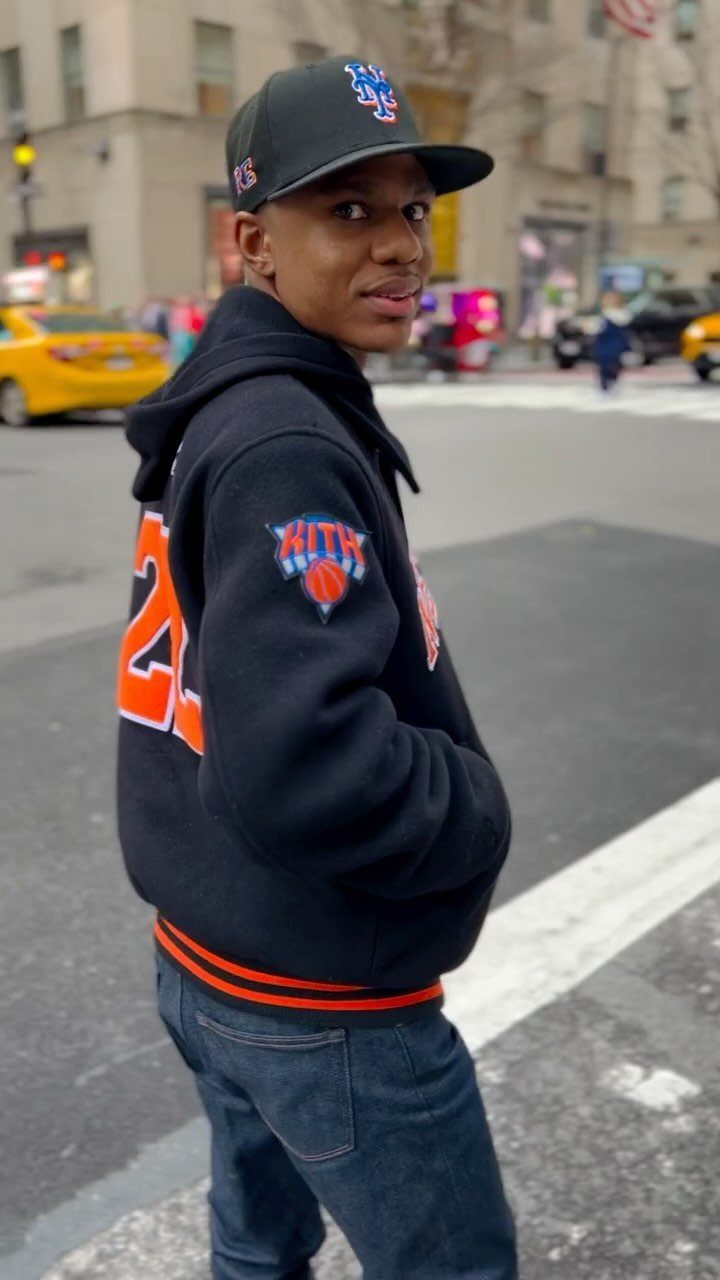
A black hoodie with a loud chest patch and a plain baseball cap is about as small as a streetwear outfit gets.
The hoodie carries the brand, so the cap stays black and the jeans stay blue, with nothing else competing.
Medium-wash denim suits a dark top like this because it adds contrast without adding pattern.
If the hoodie has color details, as the orange here, I would keep the cap solid and skip any logo on it. One branded piece per outfit reads as a choice; two start to look like advertising.
Evolution of Hip Hop Fashion
The blend of influences in hip hop fashion, from streetwear and sportswear to luxury labels and thrifted finds, is why the style has no single uniform, and why you can borrow from it without copying one look.
By the 1980s, designers had noticed, and street-level style started showing up on runways. Designers such as Tommy Hilfiger brought rap artists into their ad campaigns in the 1990s, and the clothes moved from the street into stores for everyone.
For you, that means baggy fits and high-end labels are both fair game. Choose one era that fits your build and your budget, and commit to it from head to toe instead of blending decades.
Impact of Hip Hop Artists
Tupac and Aaliyah are the two names I would study first, because both showed how street clothes and high fashion can share one outfit.
Neither dressed in a costume; they wore relaxed pieces with confidence and let one detail stand out.
That is the lesson worth copying. Take one dressed-up item, such as a sharp jacket or a clean pair of shoes, and set it against everyday basics.
The reverse also works.
A tailored piece looks fresher next to a plain tee and loose pants than it does with a full suit’s worth of polish. Start with one swap and see how it sits on you before changing more.
Cultural Significance
Hip hop fashion grew out of the lives of urban communities, and it still works as a way to say who you are.
The clothes match the attitude of the music, which is why the style reads as personal rather than formal.
These days it shapes mainstream fashion around the globe, and people of every background wear it. Wearing it well starts with respect for where it came from: learn the history behind a piece before you buy it.
Then make it yours. Choose the cut, color and details that fit your own life instead of copying someone else’s look piece by piece.
Author and journalist Sowmya Krishnamurthy explores the history of this relationship in her definitive new book, Fashion Killa: How Hip-Hop Revolutionized High Fashion (Gallery Books), out today.
Frequently Asked Questions
What are the main styles of hip-hop?
Hip hop grew into several forms of expression: rapping, DJing, breakdancing and graffiti art. Hip-hop started at block parties in the South Bronx during the 1970s, built by African American and Latino kids who made it up as they went.
Because the clothes pull from so many places, including team jerseys, workwear, designer labels and secondhand racks, no single outfit counts as the uniform.
What is Snoop Dogg’s style of rap?
Snoop Dogg’s rap style is laid-back in delivery and shaped by West Coast influences.
That relaxed feel carries into hip hop fashion, where loose tees, baggy pants and a tonal set look easy rather than staged. Keep the pieces simple and let one item do the talking.
What is the hip-hop dance style called?
Hip hop dance covers several styles, including breaking, popping and locking.
Breaking is the original dance form; DJ Kool Herc stretched the instrumental breaks of records at 1970s Bronx parties, and that extra time gave dancers room to build their moves.
People who danced to those breaks were called breakers, and the men and women among them went by B-boys and B-girls.