The list runs from a single embroidered snapback to a full 2-piece tracksuit, and how much volume you’re comfortable carrying decides where you start.
If baggy bottoms and oversized tops feel natural on you, start with the baggy jeans and track pants; if you want the least planning, the 2-piece tracksuit comes already paired.
1. Baggy Jeans and Track Pants
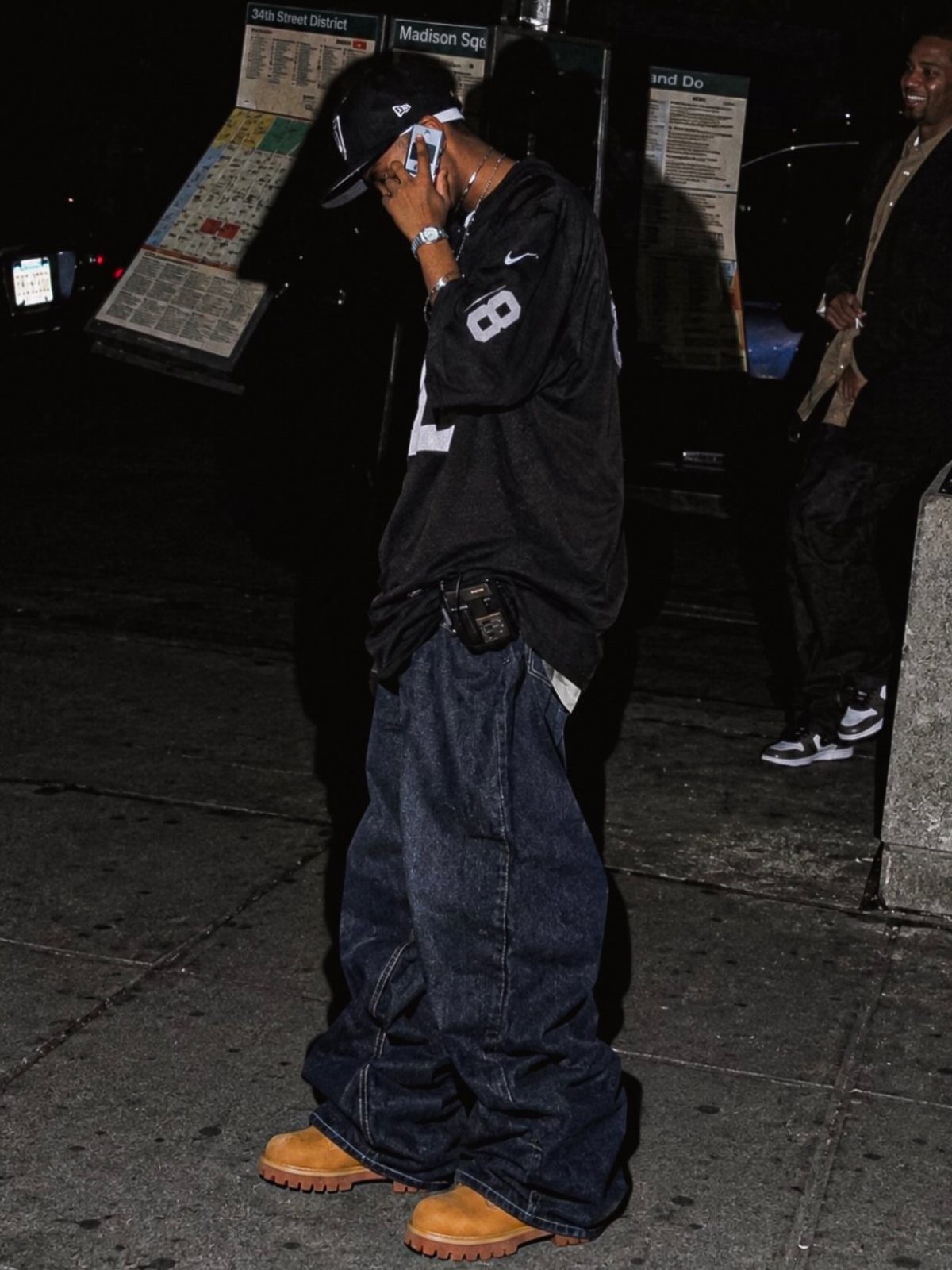
Loose bottoms carry this whole look, and the cut matters more than the label. Dark denim that stacks over the boot reads cleaner than a faded wash, and wheat-colored pairs show the stack best.
Keep the top simple. A plain black shirt lets the volume below do the talking, and a tan or wheat boot gives the hem somewhere to land.
Track pants follow the same rule: go relaxed through the leg, not tight at the ankle.
2. Oversized Fits
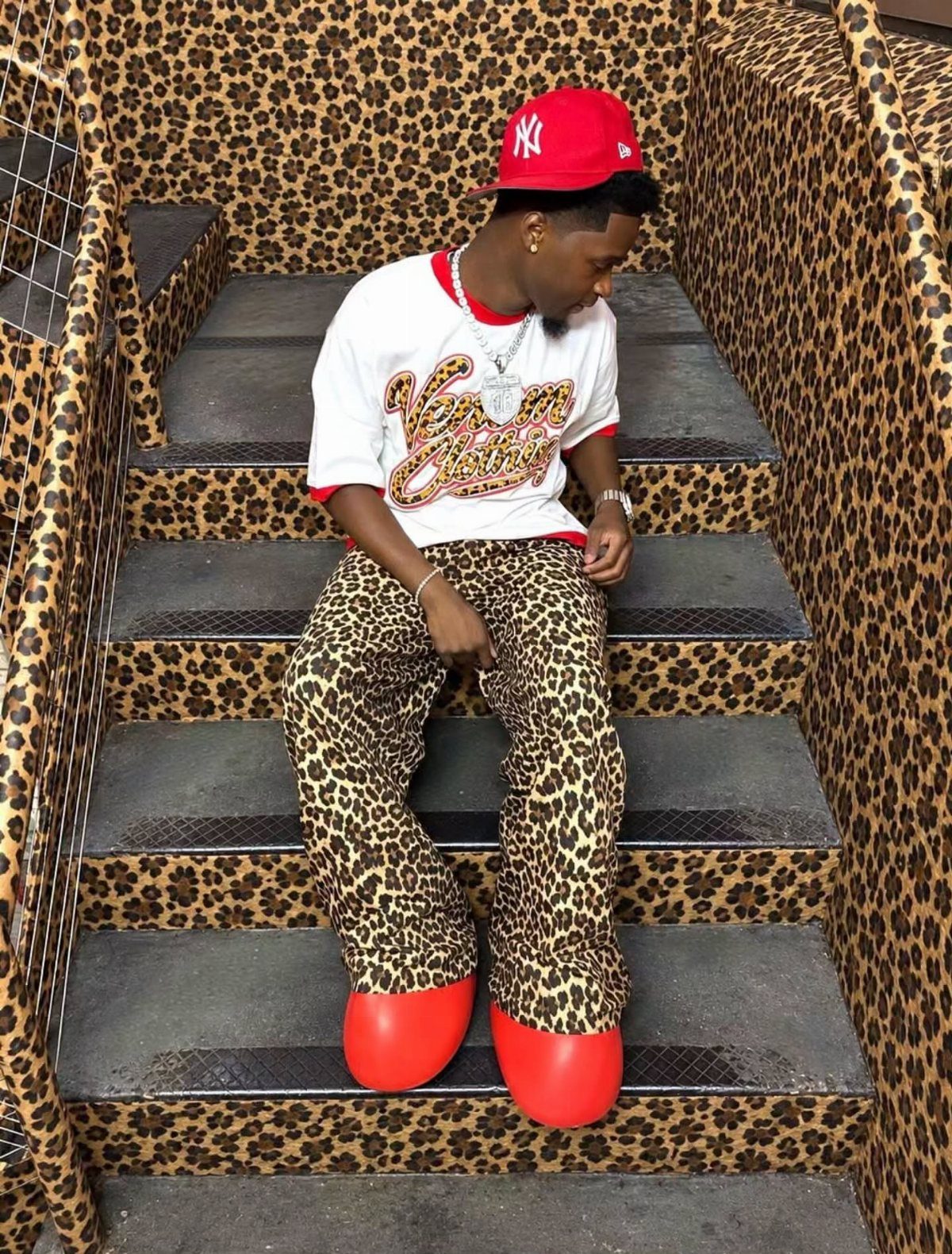
Size up on the top and the bottom together, or the proportions fall apart. A big graphic tee over baggy trousers looks intentional because both halves share the same looseness.
Pick one loud element and let the rest settle. If the pants carry a pattern, keep the shirt white or graphic-only, and the cap in one solid color.
Chunky shoes balance all that fabric. Slim ones look lost under it.
3. 2-piece Tracksuit
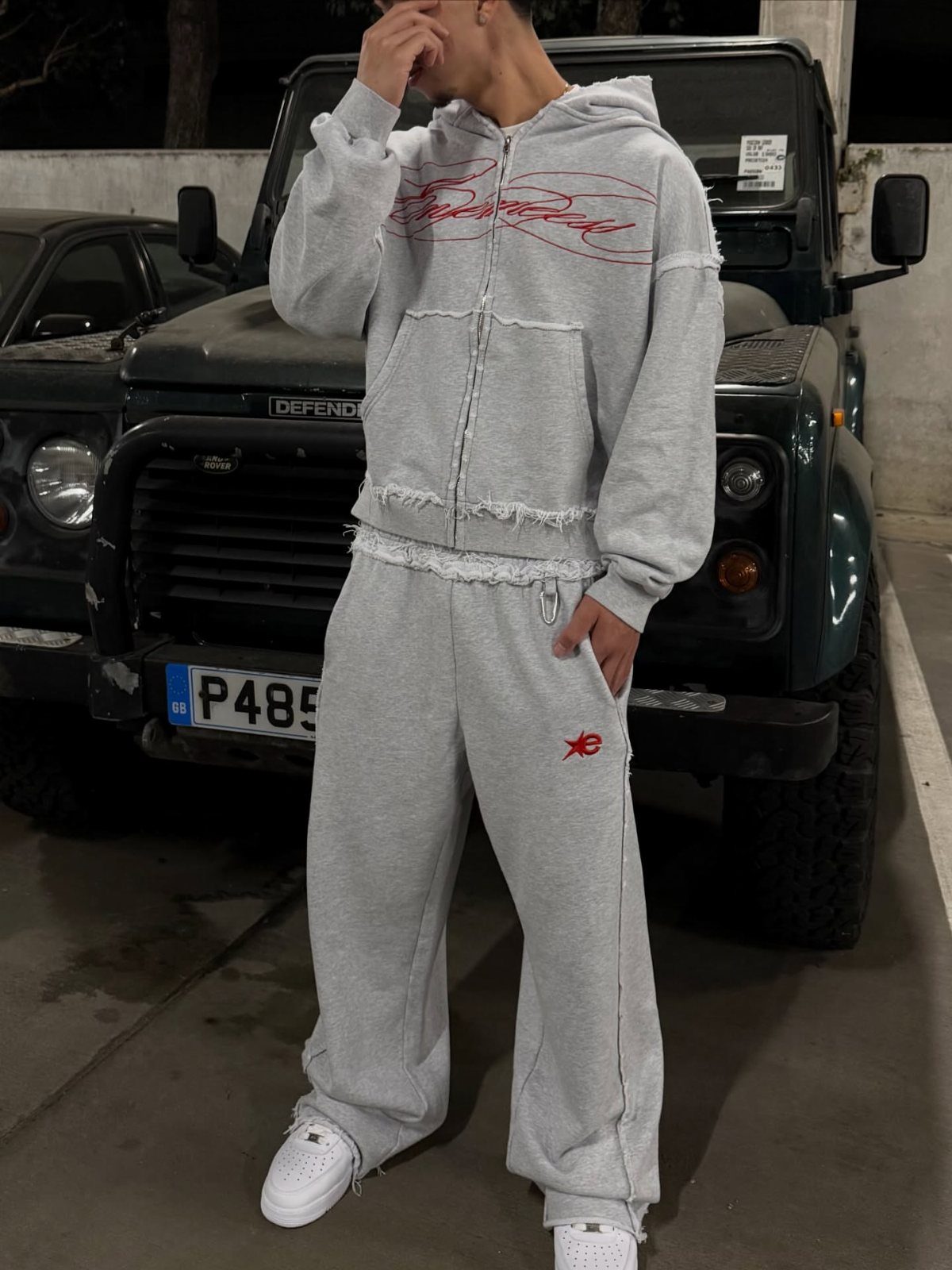
A matching zip-up hoodie and sweatpants is the easiest outfit on this list, since the pairing is already done.
Wear the set as a pair. Splitting it up works, but the full set is what makes the look.
A distressed finish adds texture without adding any pieces, so you can skip the accessories.
4. Basketball Jersey Streetwear Outfit
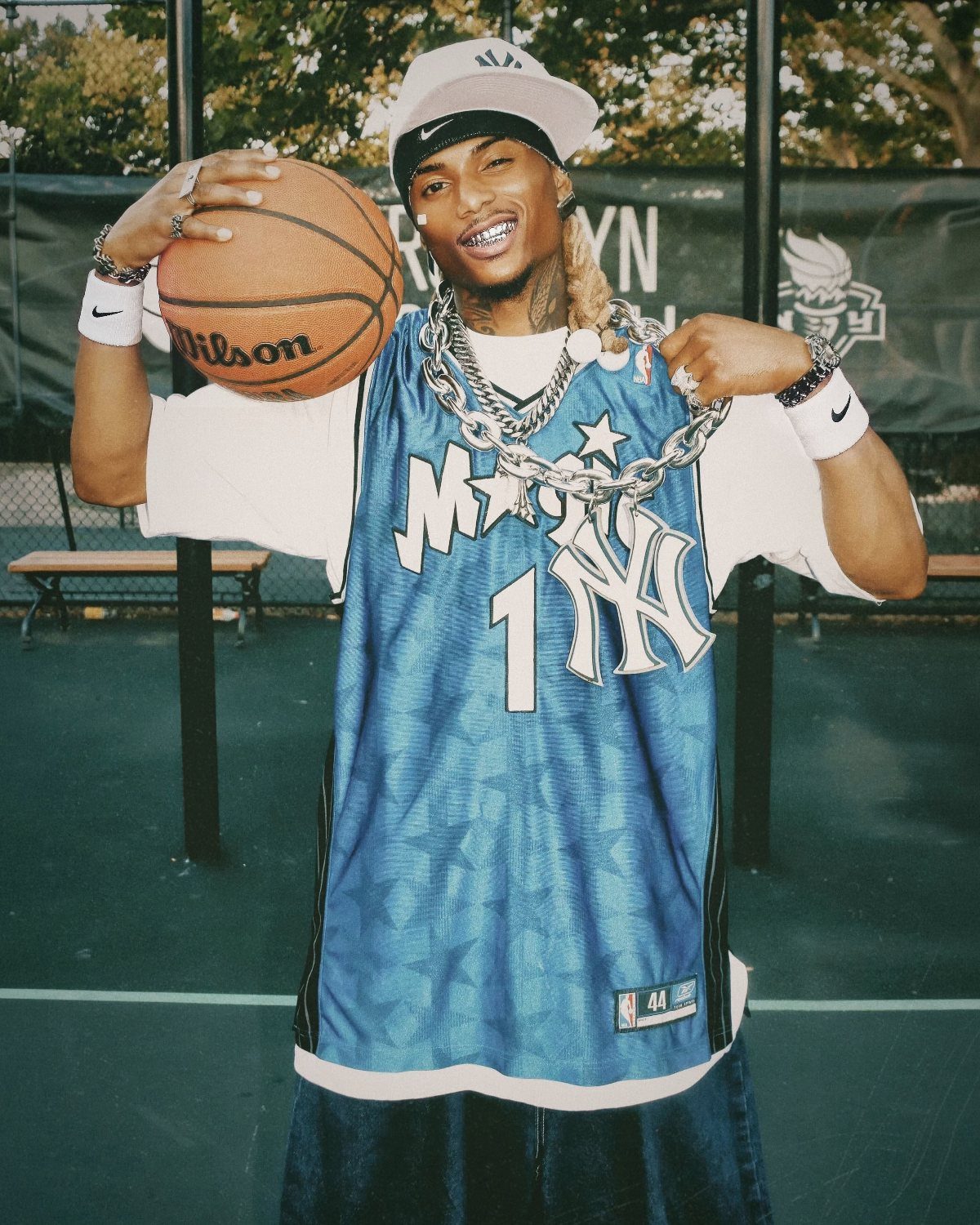
Throw the jersey over a white tee, not on bare skin. The extra sleeve underneath gives the oversized armholes some structure, and the jersey still works well off the court.
Baggy jeans suit it better than shorts. Heavy chains and a cap finish the look, but I would stop at one cap or headband, not both.
Choose a team jersey you like; the blue Orlando Magic one works because it pairs easily with denim.
5. Graphic T-Shirt Streetwear Look
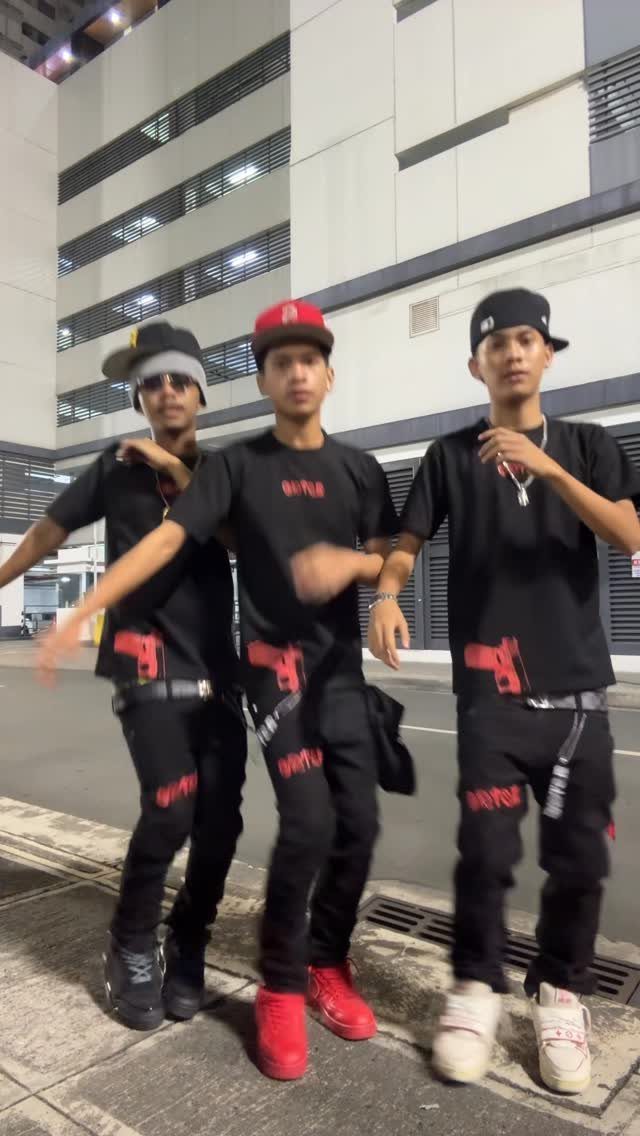
Matching black tees and pants with red graphics make a group look instantly coordinated, and it takes almost no planning. Black bases keep the graphics doing the work.
Vary the headwear. Caps and beanies give each person their own touch inside the uniform.
For a solo version, one red-graphic black tee with black pants and sneakers is enough. Keep the color count at two.
6. Layered Short-Sleeve Over Long-Sleeve
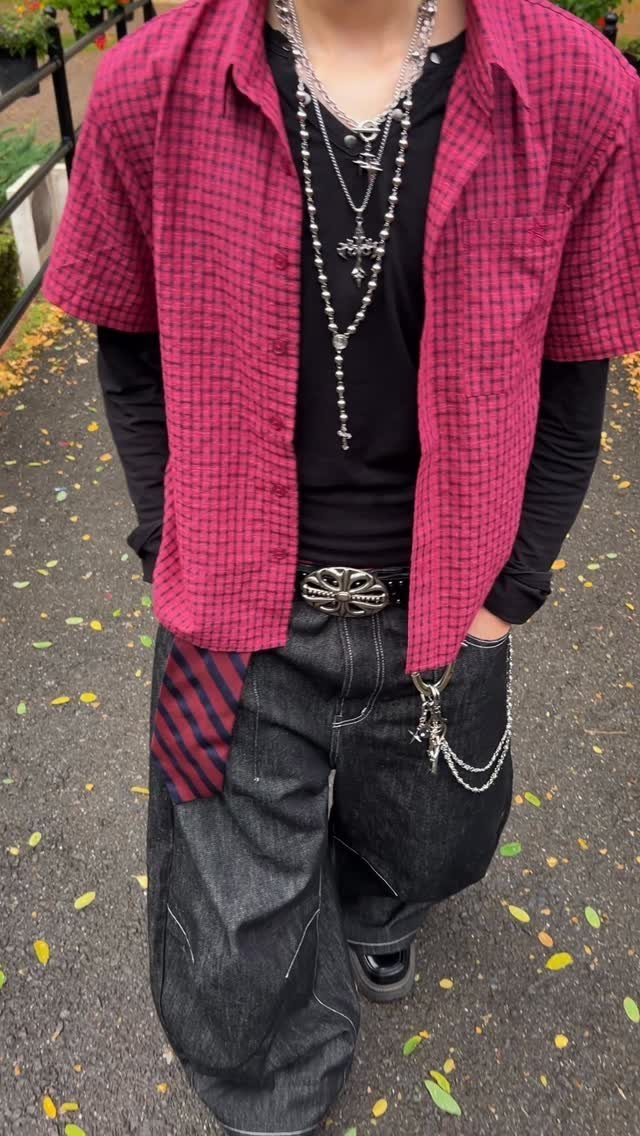
Wear the short-sleeve shirt open, over a black long-sleeve top. The 2 sleeve lengths create a layered line at the arm, and a checkered pink piece brings color against all that black.
Baggy dark jeans keep the bottom half quiet. Leave the shirt unbuttoned, or the layering disappears.
7. Embroidered Snapback Baseball Cap
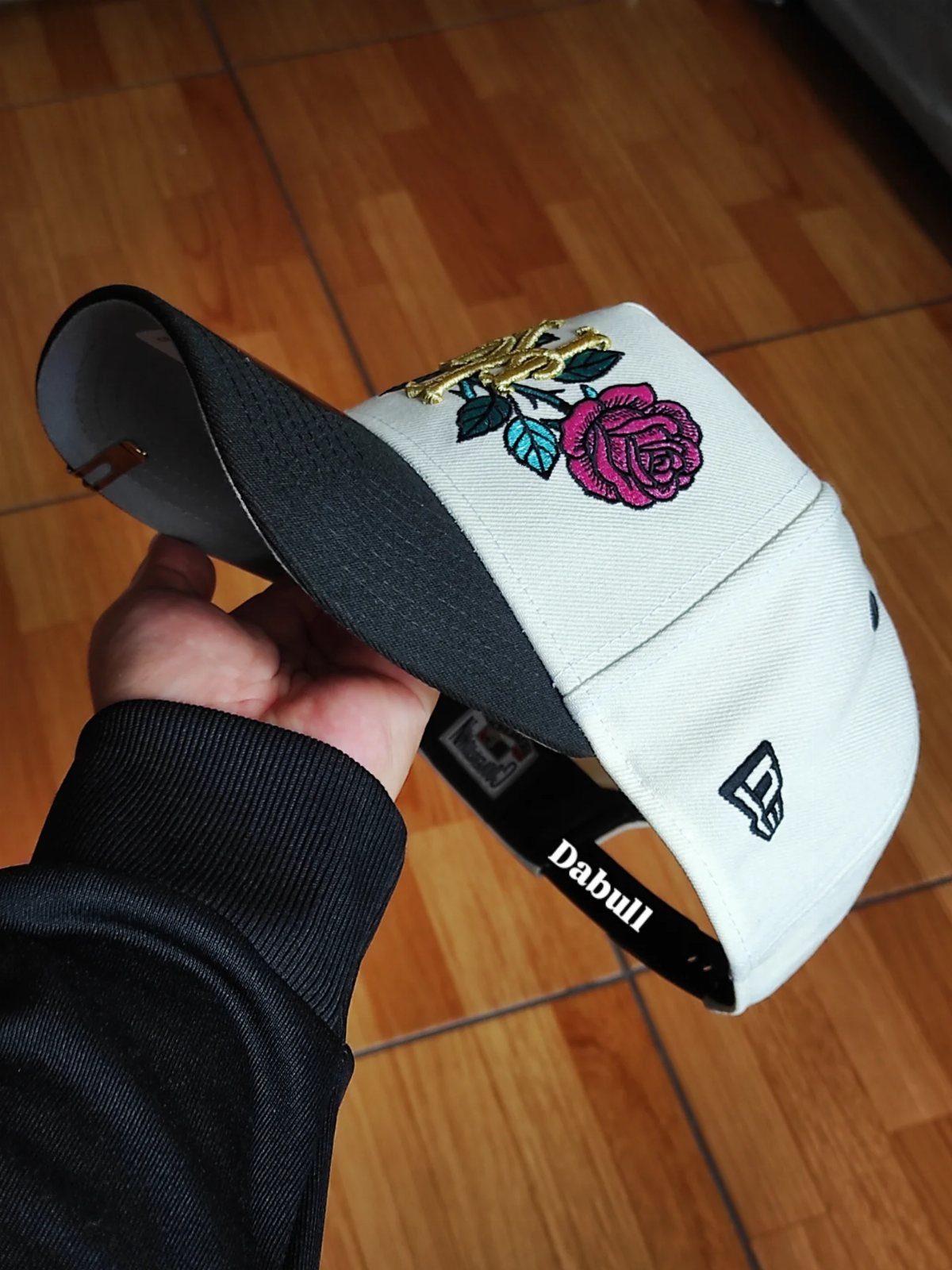
A white cap with a black brim gives a loud embroidered detail a clean place to sit. The pink rose and gold lettering stand out against the white crown, so the cap becomes the focal point of the outfit.
Keep everything else quiet. A plain black or white tee and baggy dark jeans are enough, and I would skip a second logo piece.
Wear it straight, brim forward, so the embroidery faces the camera. Bending the brim too hard hides the rose.
8. Velcro Strap High-Top Sneakers
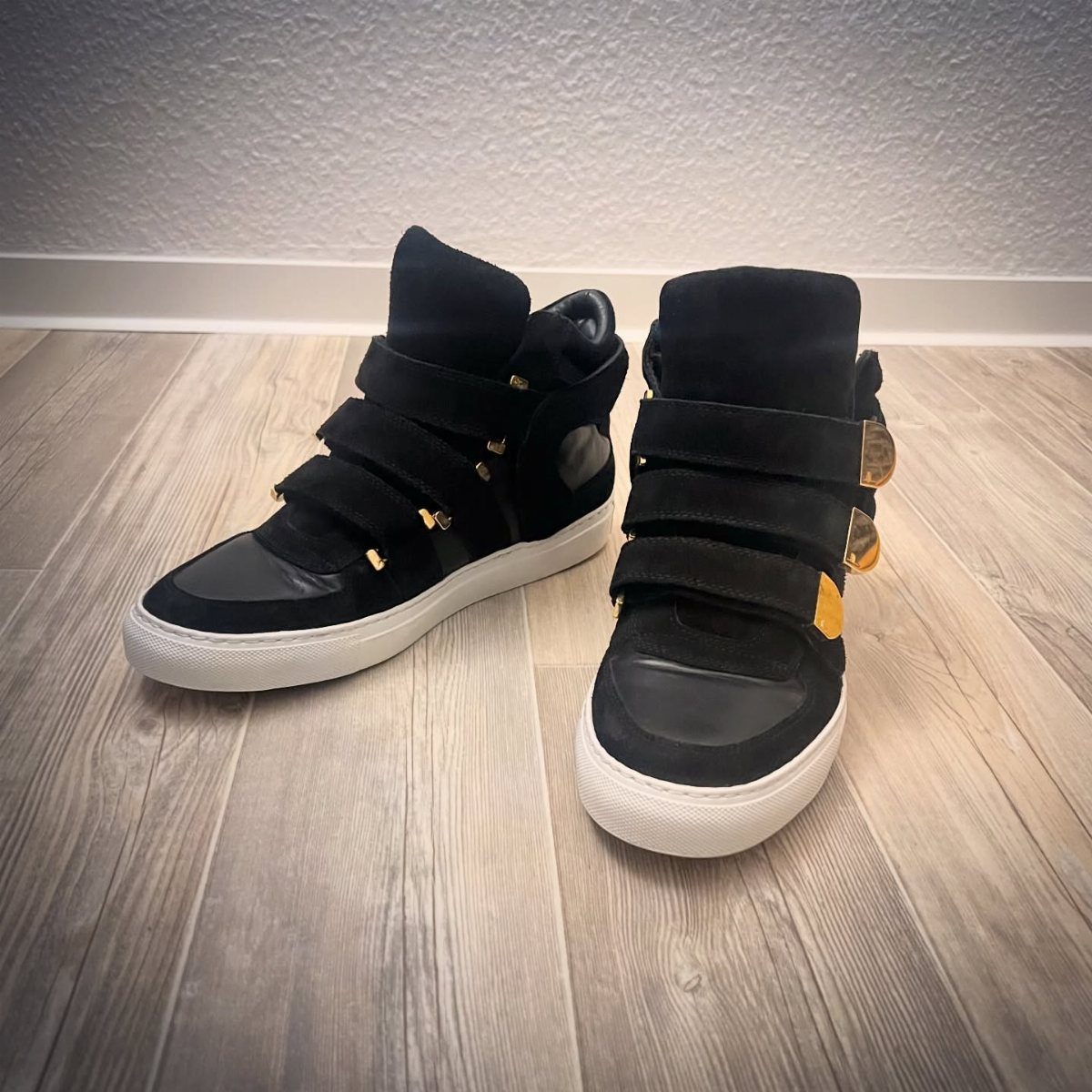
Three wide velcro straps across a black high-top make the shoe the statement, and the gold-tone metal accents add a little shine without any extra pieces.
Black keeps it easy to wear with baggy jeans or track pants. Let the hem stack over the ankle, or rest it just above the top strap so the hardware stays visible.
Fasten all 3 straps. A loose one looks sloppy on a shoe this bold.
A solid white or black T-shirt is all I would wear with them, and I would keep every other piece quiet.
Influence of Hip Hop Artists
Hip hop moved from outside fashion to the front row. Rappers now front campaigns for major fashion houses, and that shift is why skate brands and couture can share a look today.
The practical lesson for your closet is that the old rules of what goes with what are loose. Menswear used to default to suits in grey and navy; hip hop pushed it toward color, pattern, silk and chiffon.
You can borrow that without copying anyone.
Pick one piece with real color or an unexpected fabric, like a rust corduroy jacket or a satin bomber, and let everything else stay plain so the outfit reads as a choice and not a costume.
Hip hop style took shape in New York City during the 1970s and 80s, where making your own look mattered more than matching anyone else’s. Treat that as the standard: wear what suits you, not what a list says.
And fashion would be a worse place for it, these best-dressed lists still populated by actors in suits in varying shades of grey and navy. Instead, thanks to hip-hop fashion, menswear is everything, colour and pattern, silks and chiffon, a riot of fun and individuality.