Your body decides which of these cuts works, and the section on choosing the right fit is where I’d start, since the size on the tag says less than how the jeans sit on you.
The list runs from relaxed, loose and wide leg cuts to tapered, high-rise and barrel shapes, then closes with fit advice, care tips and a rundown of denim fabric types.
Raw denim is the one outlier: it arrives stiff with sizing and wants 2 or 3 months of wear before its first wash, so it rewards patience more than any other pair here.
1. Relaxed Fit Jeans
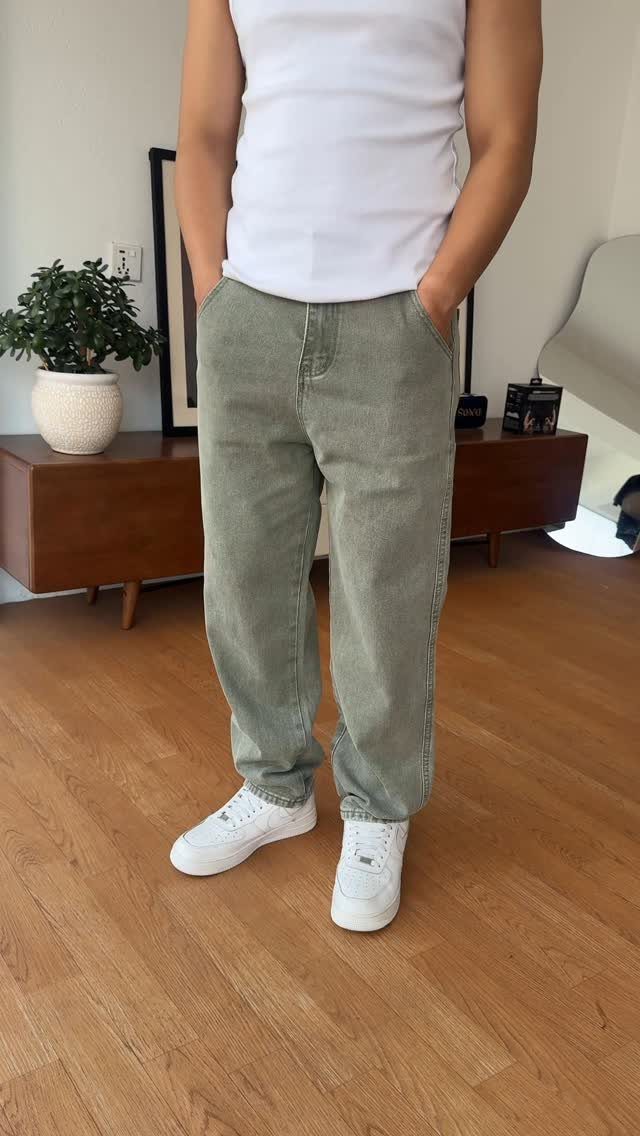
Comfort is the whole reason to pick a relaxed fit: extra room through the seat and thigh, with a leg that hangs instead of hugging. A sage or olive wash keeps all that volume looking deliberate rather than baggy.
A fitted top like a plain tank or tee works best here, since it leaves the jeans as the only loose piece.
White sneakers keep the hem clean. I’d pick this over a skinny cut for a normal weekend, since it forgives a lot of body types.
Relaxed doesn’t mean sloppy: the 550s are, in fact, tactfully shapedL plenty of airspace, but no messy hems pooling over your shoe tops. There are plenty of wider jeans out there, but few that are as universally flattering.
— GQ
2. Loose Fit Jeans
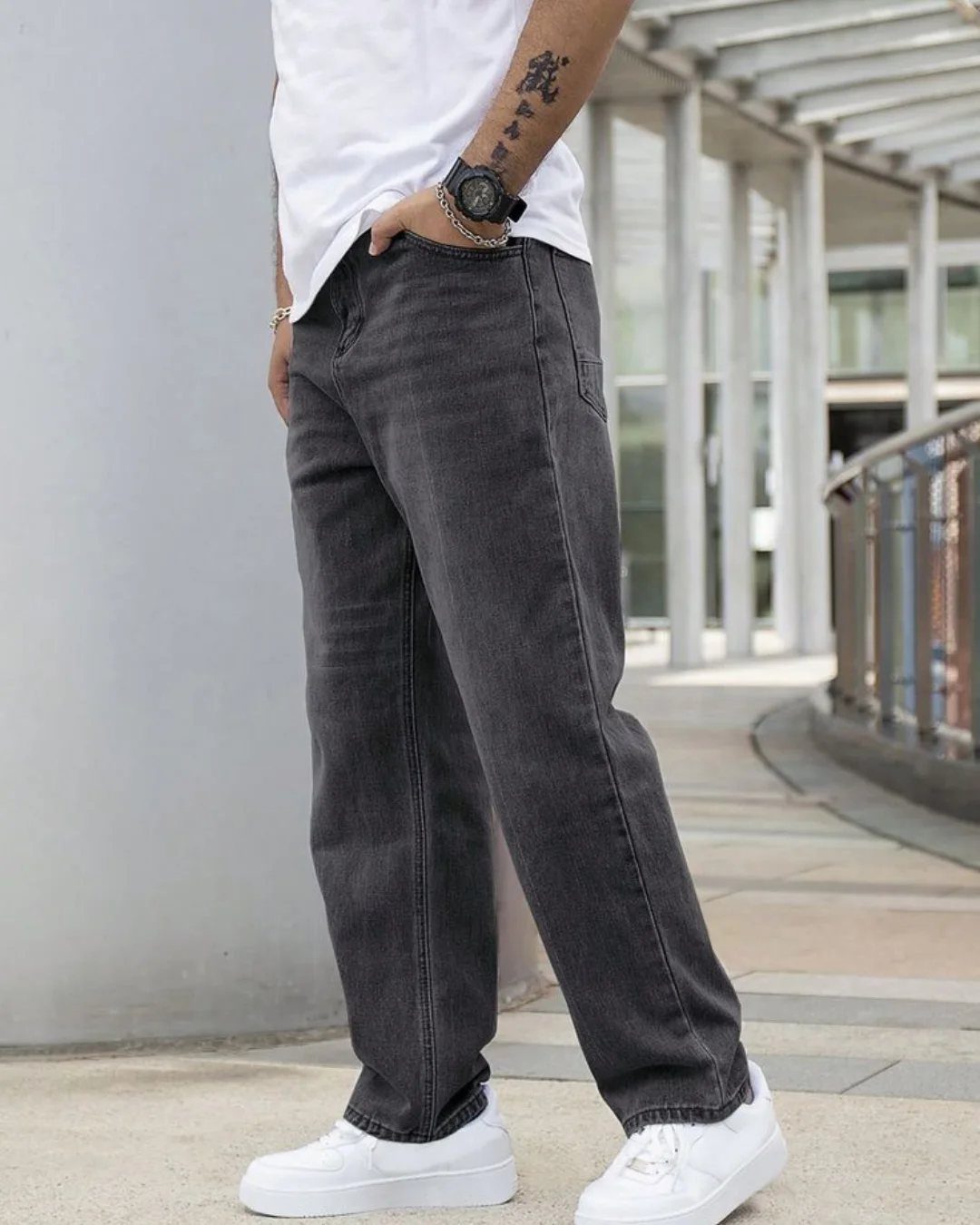
Baggy jeans give you the most room of any cut here, and that is the appeal. Washed black or dark grey keeps the volume from looking sloppy, because the darker color reads as one clean shape.
A simple tee in white or another solid color lets the jeans carry the outfit.
Let the hem sit on the shoe with a slight stack, not drag on the ground. The cost is that baggy denim swallows a slim frame, so shorter guys should watch the length.
3. Straight Leg Jeans
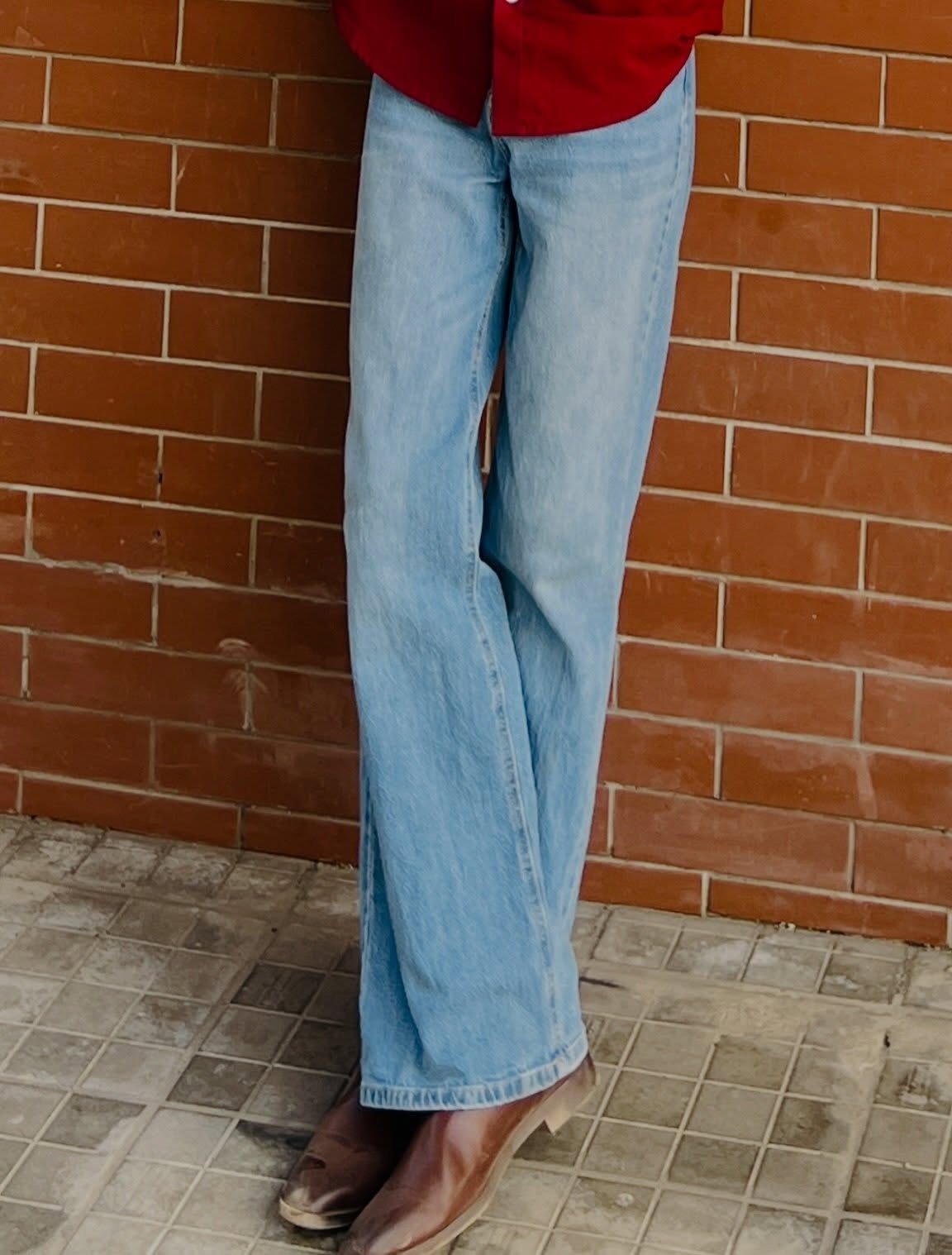
Straight leg jeans hold the same width from hip to ankle, so the line stays clean without clinging or ballooning. That makes them the easiest cut to wear with almost anything.
A light wash looks relaxed, and brown leather shoes or boots dress it up a notch. Choose a size that fits at the hip and seat first; the leg will follow.
Wear it with a solid shirt and the outfit is done. If you can only own one pair, I’d make it this one.
4. Tapered Jeans
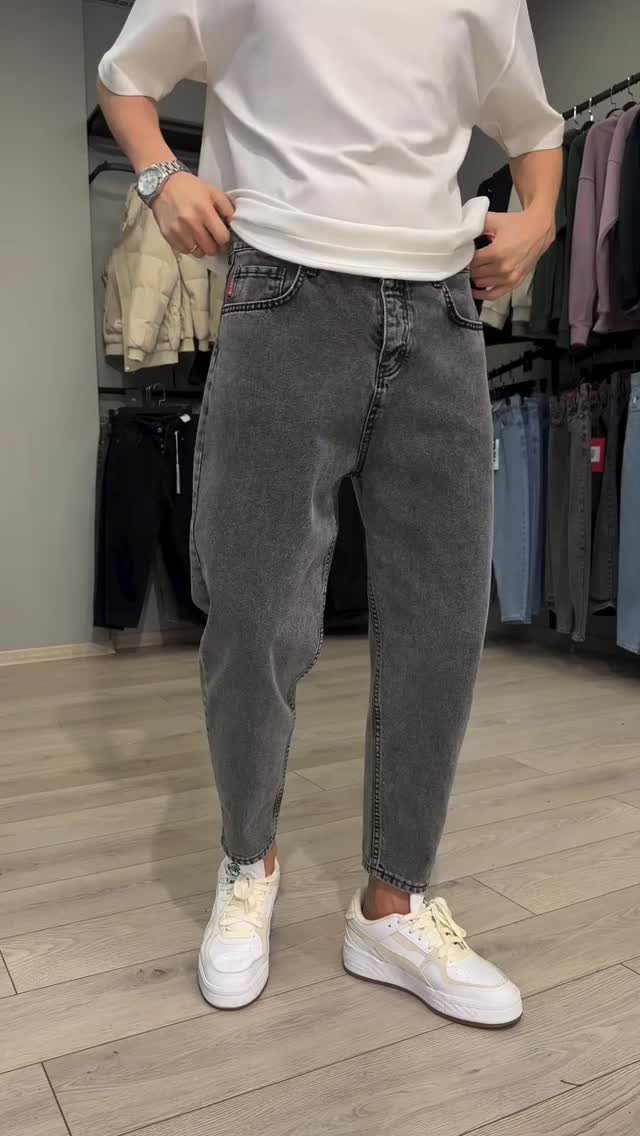
Tapered jeans are roomy through the thigh and narrow toward the ankle, which shows off your shoes. That shape suits men with muscular legs or a bigger seat who still want a sharp finish.
Gray is an easy first color, and clean low-top sneakers in white show up well because the narrow opening leaves them in view.
Check that the hem isn’t so tight it bunches at the shoe. A plain tee on top keeps the shape the focus.
5. Bootcut Jeans
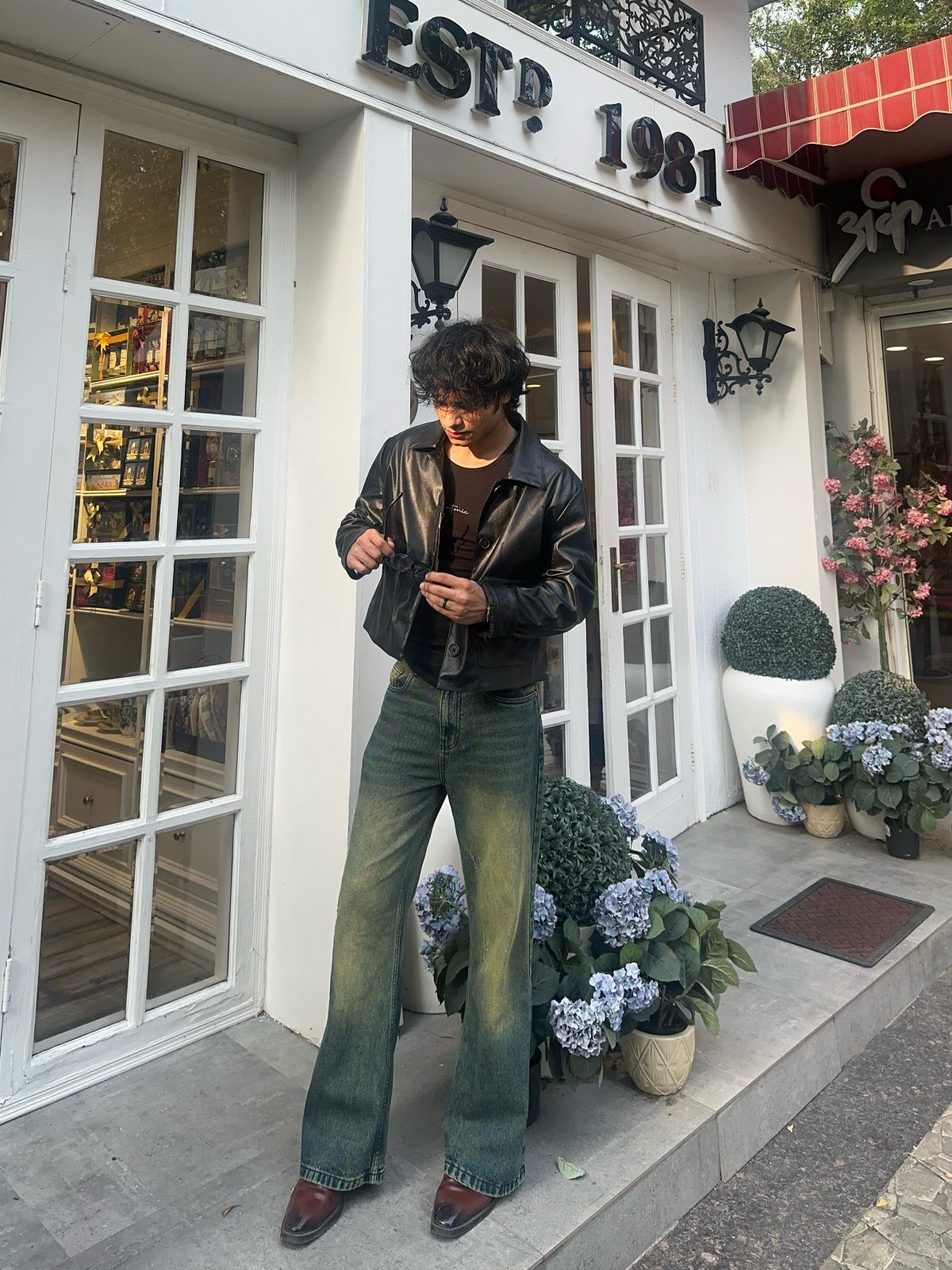
Bootcut jeans fit close through the thigh, then flare a little at the ankle so the hem can drape over a boot or a chunky shoe.
Dark green is a good way to wear a cut with a retro feel, since the color keeps it from looking like a costume.
Balance the width at the hem with a structured top, like a leather jacket.
Length matters most: the hem should skim the top of your shoe, not pool around it. Slim sneakers can get lost under the flare, so go with something with a bit of heft.
6. Ripped Jeans
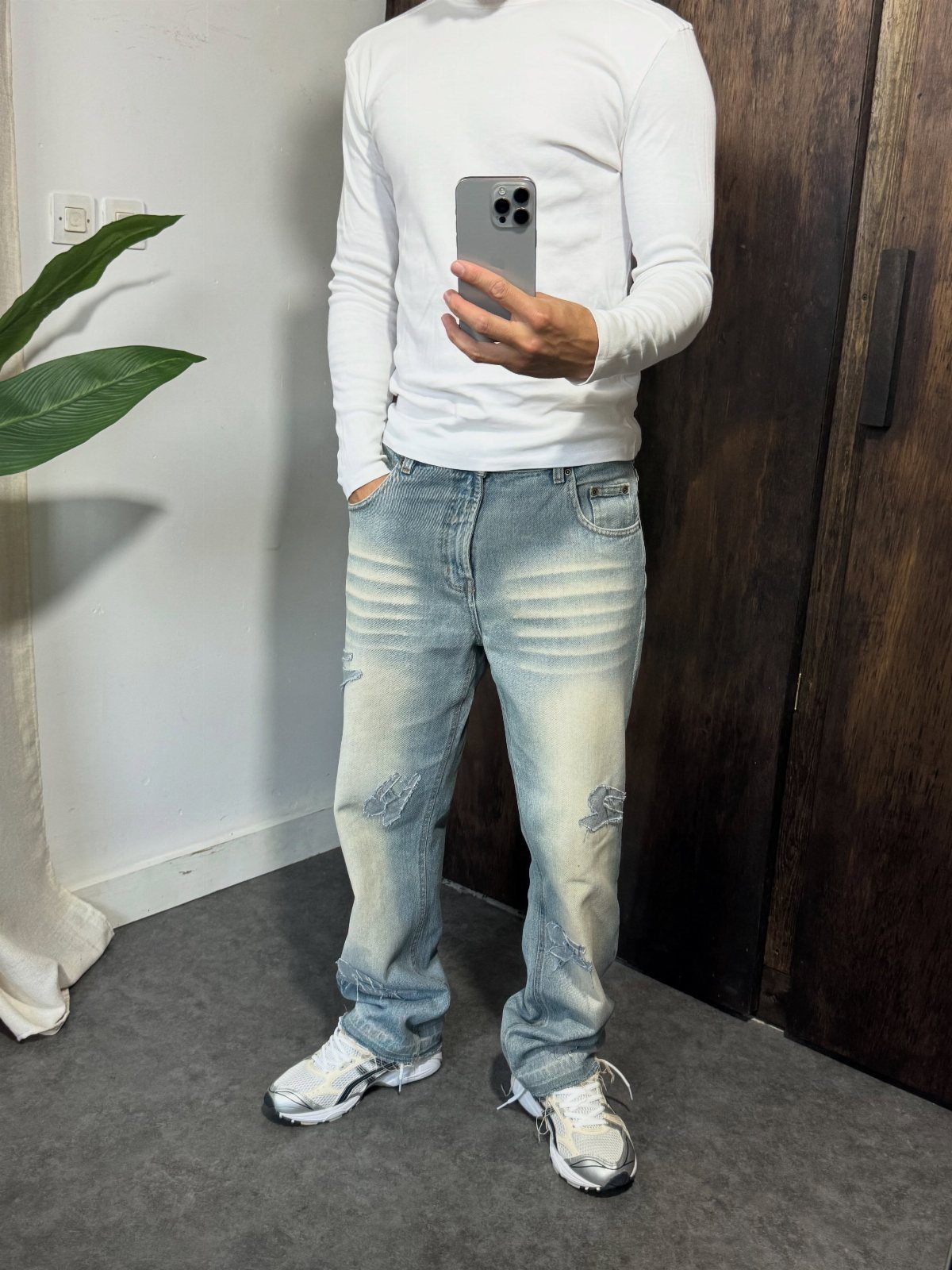
Ripped jeans carry intentional tears, usually at the knee or thigh, and they work best in a light wash where the damage looks natural.
Everything else you wear should stay clean, such as a white long-sleeve shirt with no graphics, so the rips are the only loud part.
Holes keep growing with each wear and wash, and ripped jeans don’t suit formal settings.
Skip them for work. For weekends, choose a few small tears over heavy shredding; they hold up longer and look less costume-like.
7. Regular Fit Jeans
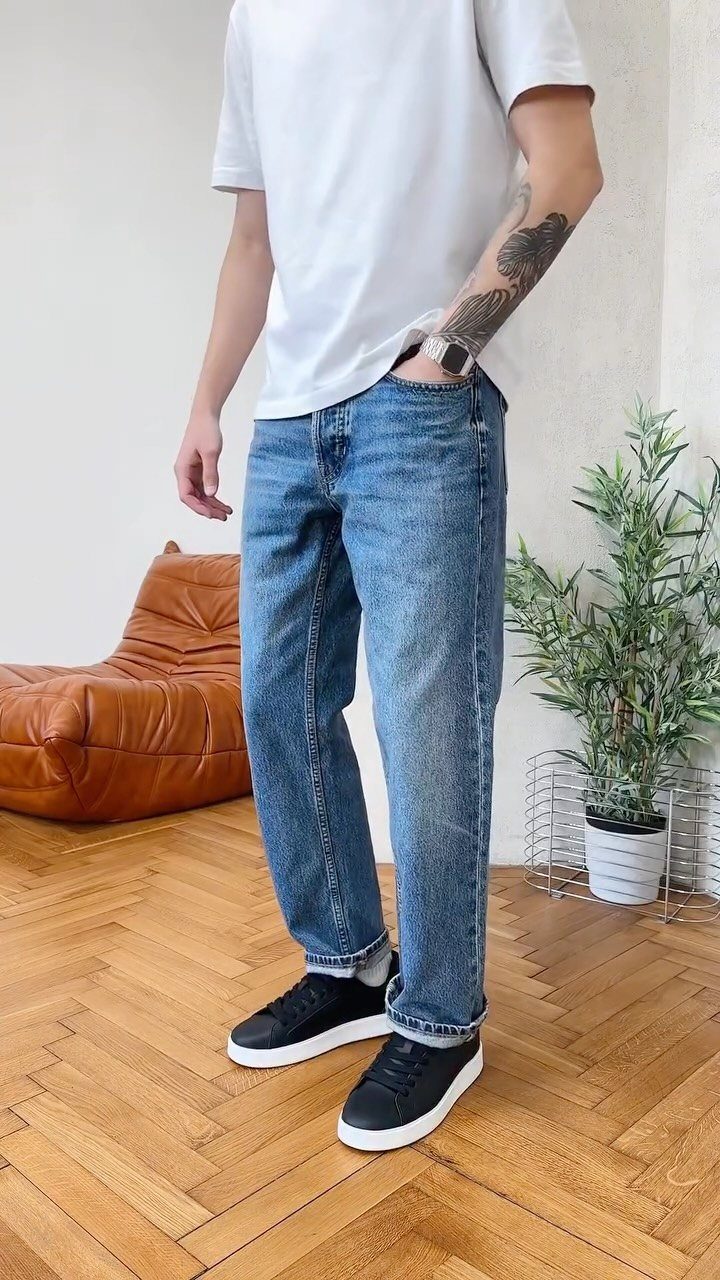
Regular fit sits in the middle: it follows your hip and thigh without hugging them, and the leg runs down without tapering hard or kicking out.
Classic blue denim is the right color for it, and it suits average builds without any tailoring.
A single cuff at the hem works well, since it shows off the shoe and fixes a leg that runs a bit long.
Regular fit rarely stands out. That makes it dependable, and I’d choose it for days when I don’t want to think about the outfit.
8. High-Rise Jeans
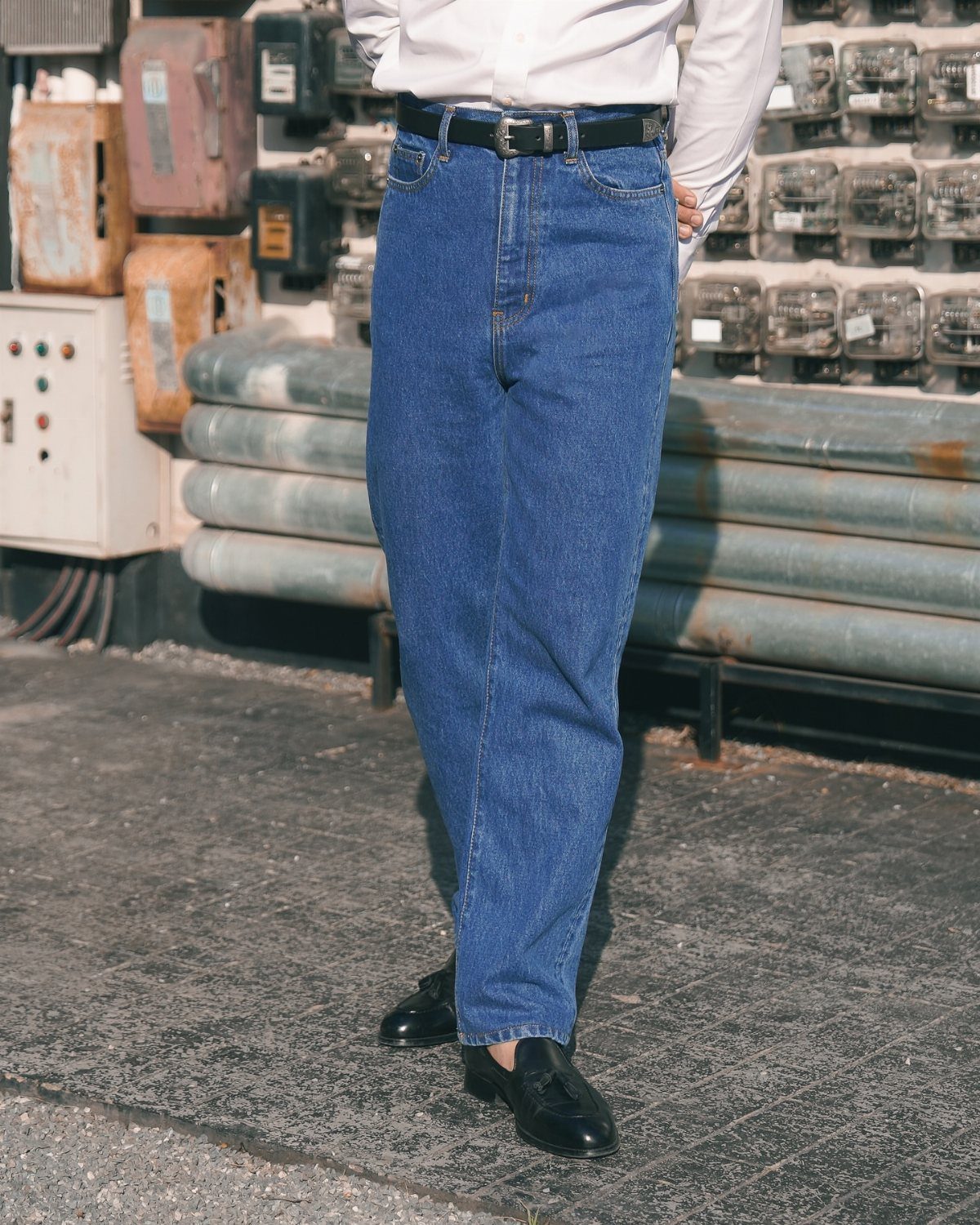
High-rise jeans sit at or above the natural waist, which makes the legs look longer and gives a tucked shirt a clean place to land.
A white dress shirt tucked in, a black belt and black loafers turn the pair into a sharp look without a jacket. Tucking is what makes the rise work, so don’t leave the shirt out.
The cost is that a high waist can feel stiff when you sit. Sit down in a pair at the store, and if you want them to look sharper, go with a dark or mid-blue wash.
9. Barrel Jeans
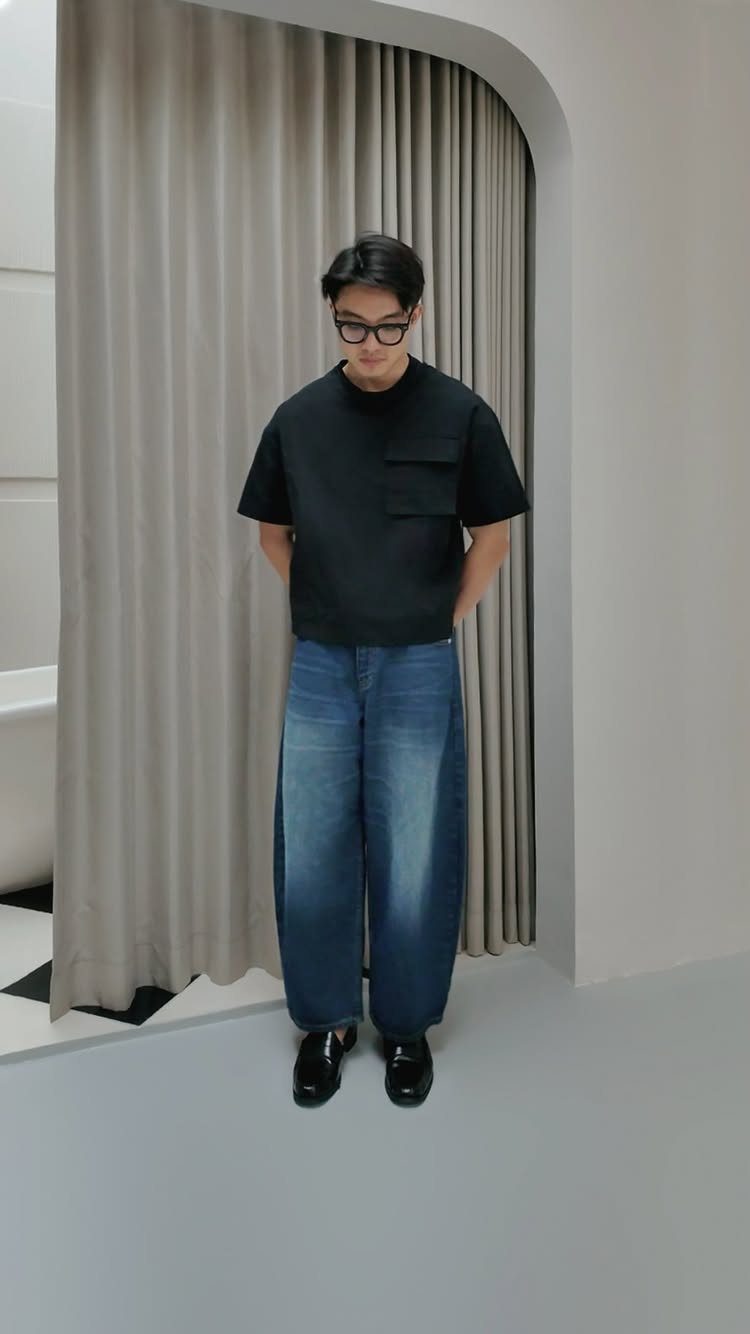
Barrel jeans curve outward from the waist, widest around the knee, then pull back in at the ankle. The shape is round and rather bold.
Keep the top plain, like a black tee, so the legs are the only statement. Shiny black dress shoes sharpen the look, and the narrow ankle opening leaves them fully in view.
Length decides whether the curve works: let the hem end at the shoe, not past it. If you want to test the trend, I’d try this cut in a mid-blue wash before anything louder.
10. Wide Leg Jeans
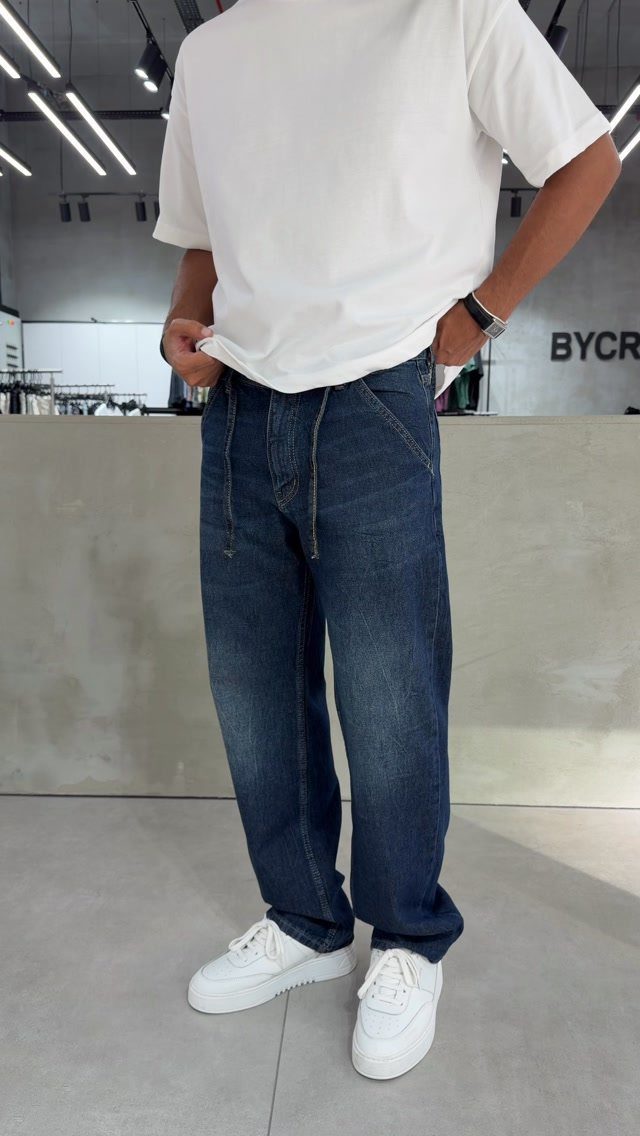
Wide leg jeans stay full from the thigh all the way down, with far more fabric than a straight cut. A dark blue wash keeps all that width looking tidy.
Balance it with an oversized white tee, which matches the relaxed volume instead of fighting it.
A white sneaker gives the hem something to sit against, so the shoe stays visible. A drawstring waist adds comfort, and I like it for casual days.
Because wide denim covers the line of your legs, shorter men do best hemming it so the cuff lands right at the top of the shoe.
Choosing the Right Fit
Before anything else, check how the jeans feel from your waist down through your thighs, since that is where a bad fit shows up first.
A pair that feels right there will get worn, and a pair that pinches will sit in the drawer no matter how good it looks.
Body type narrows the choice fast.
Most men do well in slim or regular fit with a straight or tapered cut. Big thighs call for an athletic cut, which gives that area extra room without forcing you to size up at the waist.
Skinny guys do best in slim or skinny jeans. For shorter men, inseam length matters more than the cut name.
Unsure which cut suits you? Try on 3 or 4 fits and washes during a single store trip, then buy the pair you stop noticing once it’s on.
Jeans Care Tips
Turn jeans inside out before washing and use cold water. That protects the color and keeps the shape from breaking down.
Wash them less often than you think you should. Fading happens naturally as denim ages, and honeycomb lines behind the knee look better with less washing.
If you want a worn look, I’d let the jeans fade on their own or buy a pair with slight fading already built in.
Skip stack fade, where the hem is cut a few inches long so denim piles on the shoe: the extra material looks sloppy.
Denim Fabric Types
Denim is a heavy cotton twill woven with indigo-dyed warp threads, while the weft stays undyed. That’s why the outside is blue and the inside stays mostly white, and it’s also why denim fades.
Raw denim comes straight off the loom with no wash and no pre-shrinking, so the only color in it is the indigo.
Mills usually coat it with a sizing agent that feels like starch, so a new pair stays board-stiff until you’ve worn it in.
Give it 2 or 3 months of regular wear before the first wash, and the creases at your knees and hips settle into fades that are unique to you. It molds to your body over time.
The cost is that stiff break-in stretch, which can feel uncomfortable for the first few weeks.
If you want comfort on day one, choose a pair that’s already softened. If you want a pair that records how you live, raw is the better pick.
Frequently Asked Questions
What is the difference between regular fit and straight fit jeans?
A regular fit skims the hip and thigh without clinging, then drops to the hem in a fairly even line, with no hard taper and no flare.
Regular fit describes how the thigh feels, while straight describes the line of the leg, so a pair can be both. Classic blue denim suits regular fit on an average build without tailoring.
How do you measure your jeans size?
A jeans size is just 2 measurements: the waist in inches and the inseam, which runs from crotch to hem.
Start with the waist, and pick the pair that sits right across your hips and seat; the leg width follows from that choice.
What type of jeans look best on men?
Fit wins over any cut name, so pick the pair that sits comfortably from waist to thigh and looks right on you in the mirror.
Most men do well in slim or regular fit with a straight or tapered cut. If you can only own one pair, I’d make it straight leg, since it goes with almost anything.
Which jeans are best for men with big thighs?
I’d go with an athletic cut here: it adds room through the thigh, so the waist can stay at your real size.
A tapered cut is my second pick for muscular legs or a fuller seat, since the thigh stays roomy while the leg narrows toward the ankle. That narrow finish keeps the look sharp and shows off your shoes.