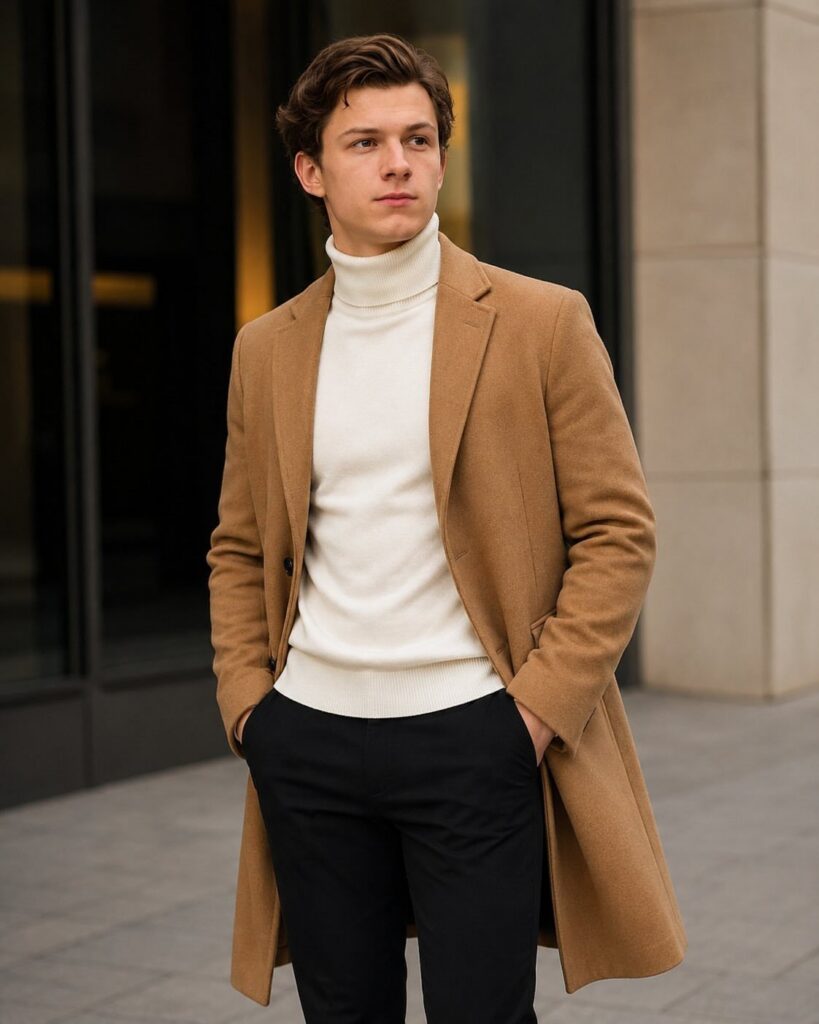
A turtleneck style is decided by how much bulk your neck and chest can carry: a full fold-over collar suits the man who runs cold and wants a stand-in for shirt and tie, while a short mock neck suits the one who finds a roll collar too warm around the chin.
Below are 10 ideas, from a classic turtleneck and a mock neck to layers under blazers, long winter coats, denim jackets and open cardigans, plus sections on fit, material and occasion.
Thin knits do the most work, because they let lapels lie flat and tuck without bunching at the waistband.
1. Classic Turtleneck
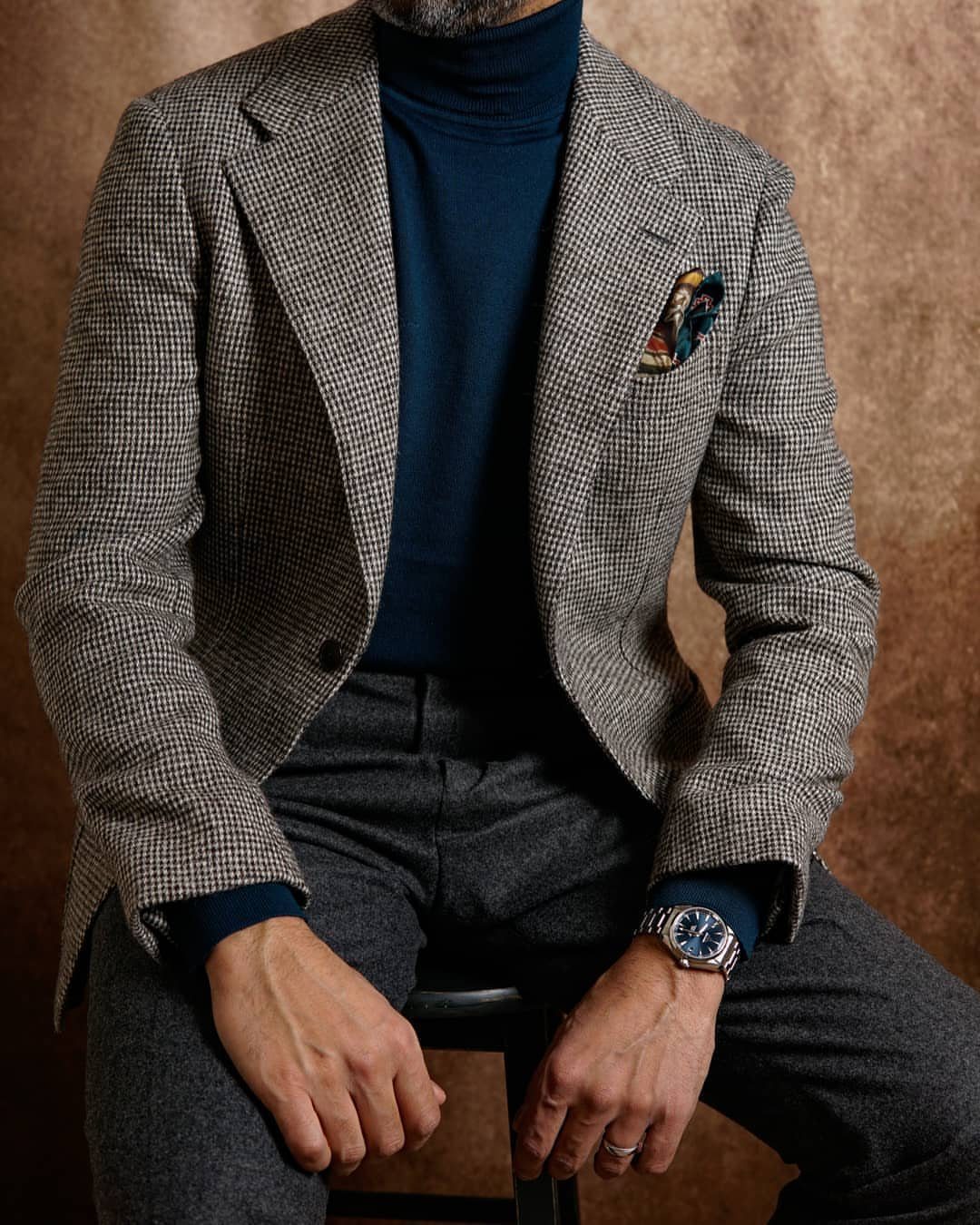
A full fold-over collar gives a turtleneck its weight, and it works as a stand-in for a shirt and tie.
Here it sits under a patterned blazer with charcoal trousers, a combination I like because the blue sweater gives the busy houndstooth a quiet base.
Keep the jacket pattern as the loud piece and the knit solid. A pocket square is optional, but it ties the look together.
2. Mock Turtleneck
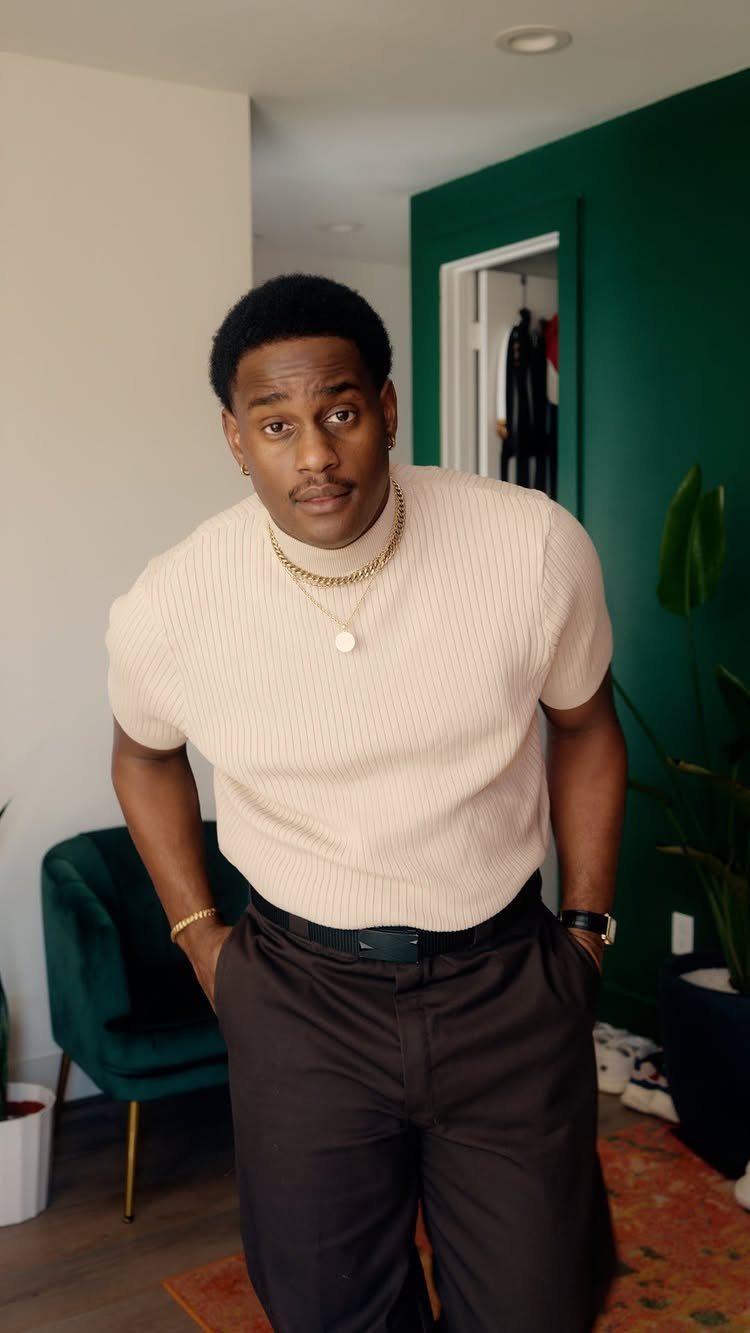
Mock necks suit the man who finds a full roll collar too warm or too bulky around the chin. The collar stands up short and does not fold, so the neckline stays clean and flat.
A ribbed cream mock neck works well with brown trousers and gold chains, and the chains stay visible because nothing crowds the throat. I would keep jewelry thin and limited to one or two pieces.
3. Layering Under Blazers
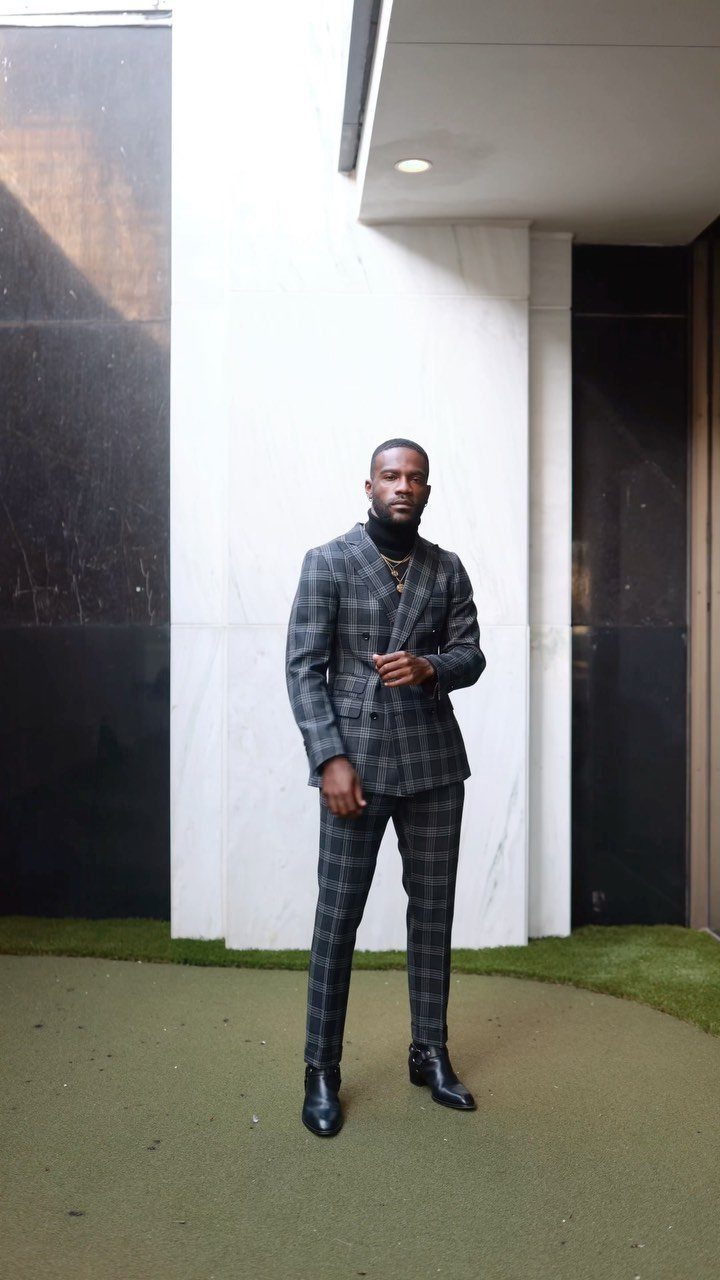
With a double-breasted plaid suit, a thin black turtleneck can stand in for both the dress shirt and the tie. It reads sharper than a casual sweater and calmer than a full business outfit.
Choose a thin, fine-gauge knit so the jacket lapels lie flat over it. Black boots keep the look dark and sleek, and a plain solid under a patterned suit lets the suit do the talking.
4. Turtleneck Under a Long Winter Coat
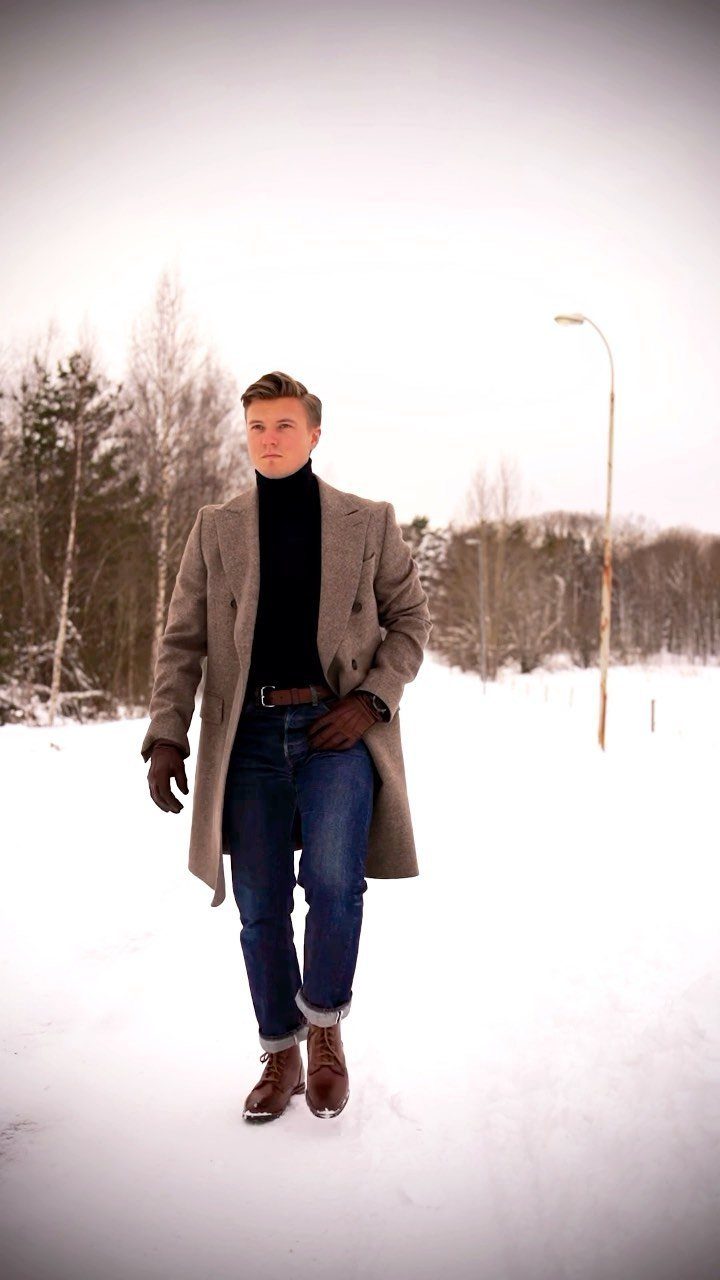
Snow calls for a long tailored overcoat, and a black turtleneck beneath it handles the neck without needing a scarf. Grey over black is an easy pairing under a long coat, and blue jeans make it feel relaxed.
Leather gloves and brown boots finish it. I like that the coat hem falls well below the sweater, so the layers stay tidy.
Pick a coat that closes over the knit without pulling across the chest.
The turtleneck is winter’s unsung hero—a workhorse that makes cold-weather dressing not just tolerable, but actually a bit more fun.
— Vogue
5. Layered Under a Denim Jacket
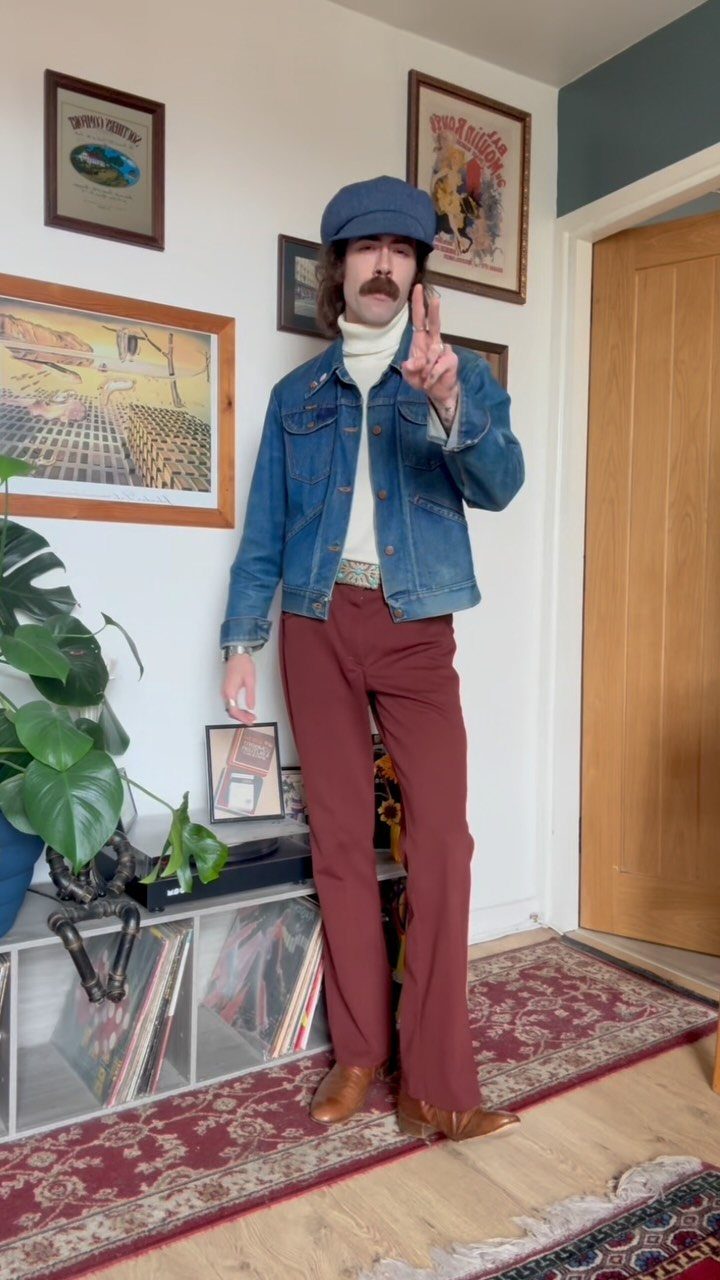
Denim jacket plus white turtleneck is a casual pairing that looks more considered than a tee. The pale knit brightens the blue, and reddish-brown trousers add contrast without clashing.
Stick to one strong color against the denim, as the trousers do here. A newsboy cap and brown boots work, though the cap is the piece I would skip if hats feel like a stretch.
6. Turtleneck Tucked Into Cream Trousers
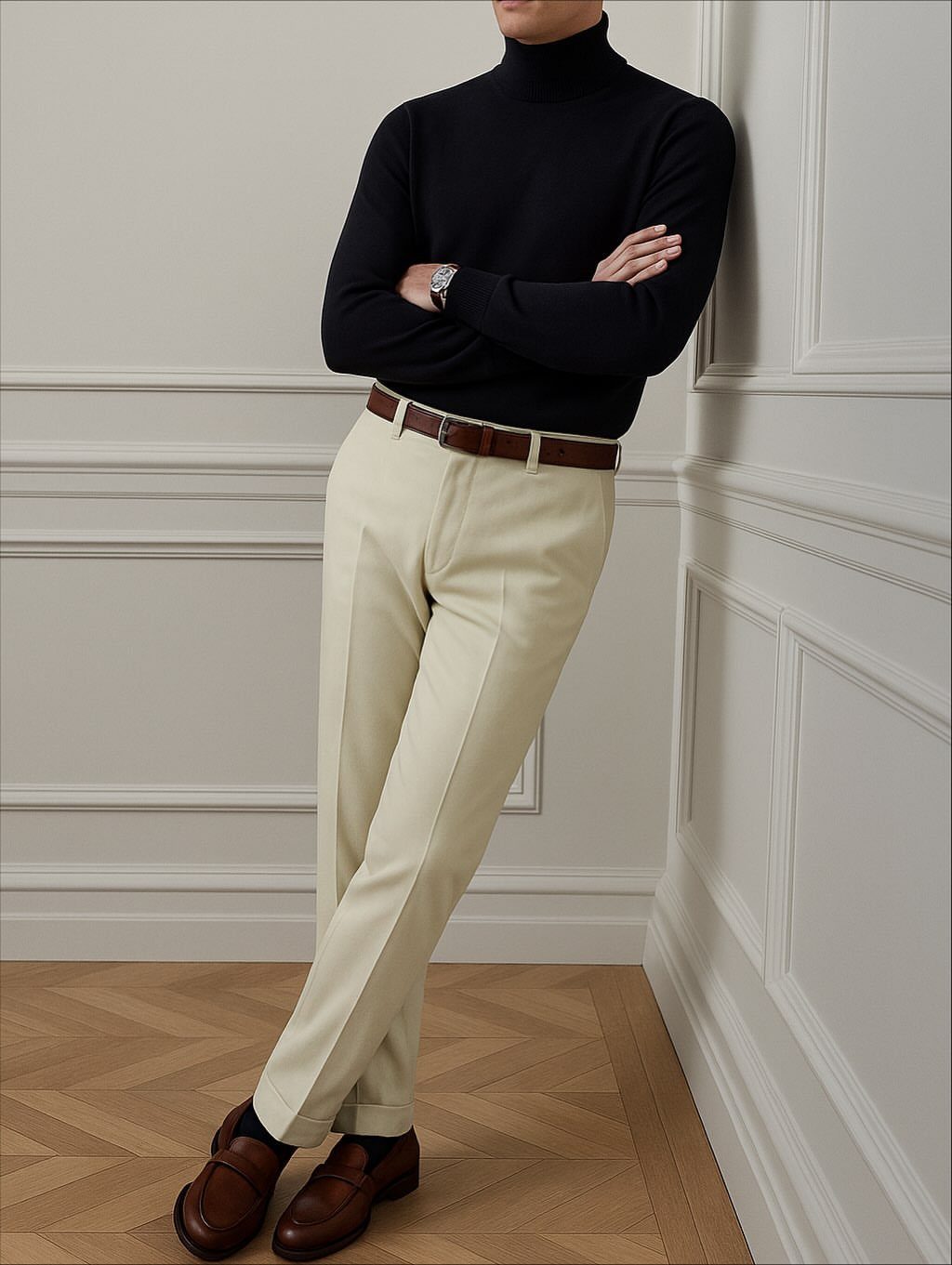
Tucking a black turtleneck into cream trousers draws a clean line at the waist and shows off the belt. Black against cream is high contrast, so the outfit needs little else.
Match the belt to the shoes, as the brown belt and loafers do here. Choose a knit thin enough to tuck without bunching; a chunky sweater will bulge at the waistband.
7. Layered Under an Open Cardigan
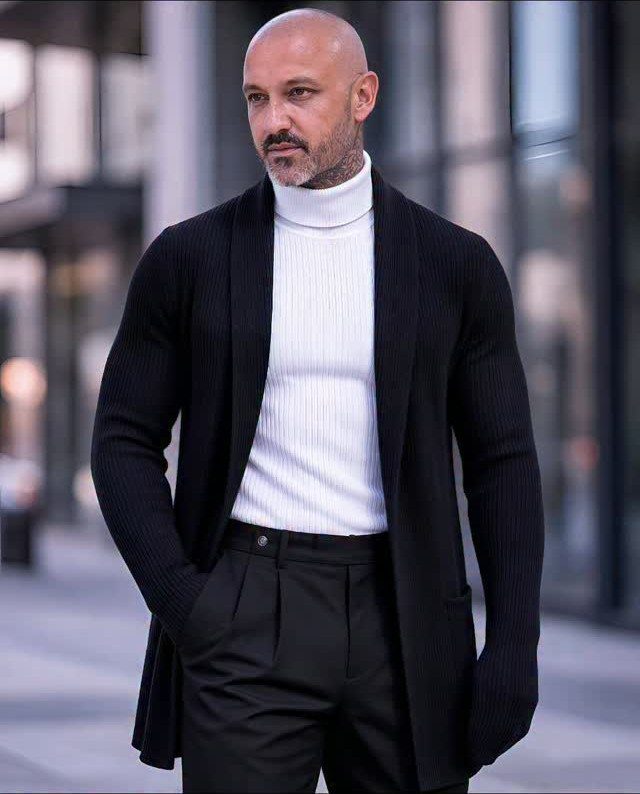
A long open cardigan works like a light coat indoors, and a white ribbed turtleneck underneath gives it a bright center line. Black over white with black trousers makes a tall, narrow shape that suits almost any build.
Tucking the knit into the trousers keeps that line clean, so choose a thin rib that sits flat at the waist. Let the cardigan hang open and long, past the hips.
Skip the scarf here, because a turtleneck collar already does the job of keeping your neck covered, and adding one just makes a crowded stack under the cardigan.
Choosing the Right Fit
Start with the shoulder seam. It should land right at the natural shoulder point, because a seam that droops or climbs ruins the lines no matter how good the knit is.
If the collar presses on your throat when you turn your head, go up a size or look for a wider opening.
If you have a broad chest, look for a roomier neck opening so the knit doesn’t pull tight across your shoulders and pecs. Slimmer men look sharpest in a more fitted cut that stays streamlined without turning baggy.
Check the sides with your arms lowered. When fabric bunches at your sides or hangs in folds, the body runs too wide for you.
Material Choices
For cold weather, wool is the pick I’d make first. It comes in dense weaves, merino, and soft cashmere, and nothing else I own keeps me as warm.
In spring and fall, cotton works better because wool gets too warm.
It breathes and reads casual. Pima or Egyptian cotton costs more but feels softer and holds up through repeated washing, so it keeps looking good.
A little synthetic in the blend adds stretch and wear resistance, and that helps the sweater hold its shape longer. They’re a fair choice for a knit you wear weekly.
Pick by season first, then by how dressy the day is. Fine merino or cashmere looks better in formal settings, and cotton looks better on a relaxed one.
Occasion Suitability
Under a sharp suit, a solid, well-fitted turtleneck works, and black under a navy or charcoal suit is the pairing I trust most. Choose fine-gauge cashmere or merino for the right texture and drape, and wear dress shoes.
For black-tie-style events, a silk or fine cashmere turtleneck under a dinner jacket, with dress trousers and monk straps, gives a James Bond look. Daniel Craig’s 007 made that pairing acceptable where it once wasn’t.
Stick to a solid color and a clean fit. A turtleneck only passes as formal when nothing about it looks casual.
Frequently Asked Questions
What are the different types of turtlenecks?
The two I’d start with are the classic and the mock neck. The traditional version has a tall, folded collar cut from a heavier knit, which is what lets it pass for dress-up clothing.
A mock neck has a short collar that stands up without folding, so it’s cooler and less bulky around the chin. The notes from other pages also mention chunky and bodysuit styles.
What is the proper way to style a turtleneck?
Keep the knit thin and solid, and let another piece carry the pattern or color. A fine-gauge turtleneck sits flat under a blazer, tucks cleanly into trousers, and brightens a denim jacket.
If the outer layer is patterned, like houndstooth or plaid, a plain turtleneck lets it do the talking. Match belt and shoes, and skip a scarf, since the collar already covers your neck.
Can I wear a turtleneck with a suit?
Yes.
Stick with a thin cashmere or merino knit so the lapels sit flat, and finish the look with leather dress shoes. A chunky knit crowds the collar of the jacket and bunches up behind your neck.
Are turtlenecks out of style?
No.
A turtleneck only looks dated when the fit is wrong: a drooping shoulder seam, a bulky knit, or a collar that presses on your throat. Thin, solid and well fitted keeps it current.
How do I care for my wool turtleneck sweater?
Cold water and a mild detergent in the sink works fine, and so does a trip to the dry cleaner.
Dry it on a flat surface, never on a hanger or in the dryer, so the shape holds. Fold it for storage instead of hanging it, because hanging can stretch the collar.