Fabric decides how hard a sewing project is more than the pattern does.
Pick by what your machine and your patience can handle today: the knit shorts and the elastic waist linen shorts forgive mistakes, while the satin tie-front top and the tiered denim mini punish a rushed hand.
1. Simple Pleated Skirt
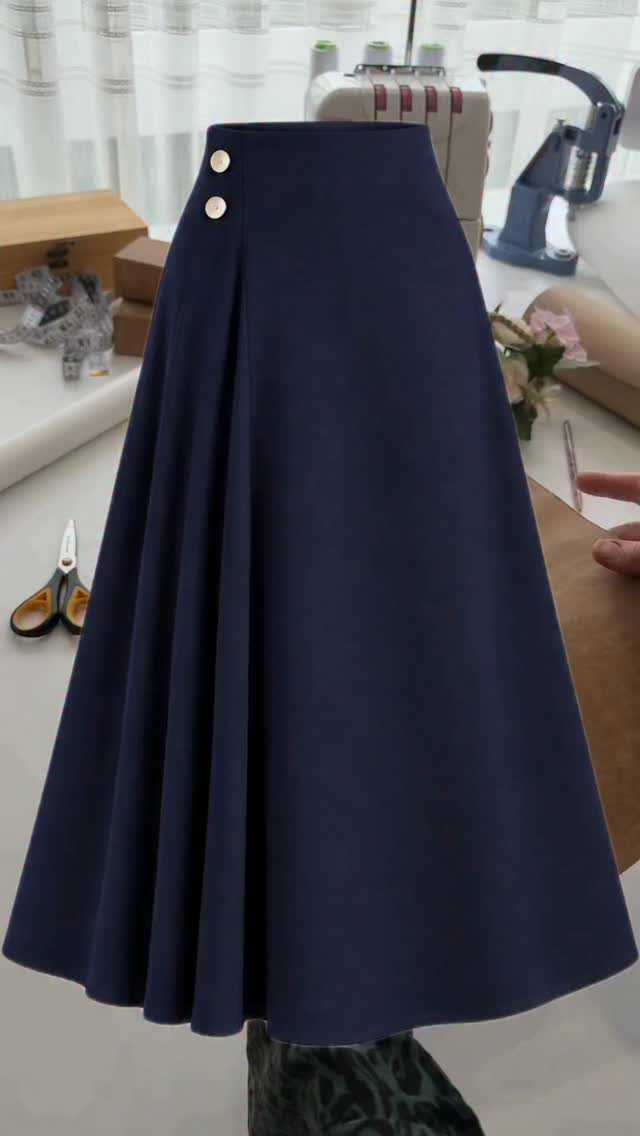
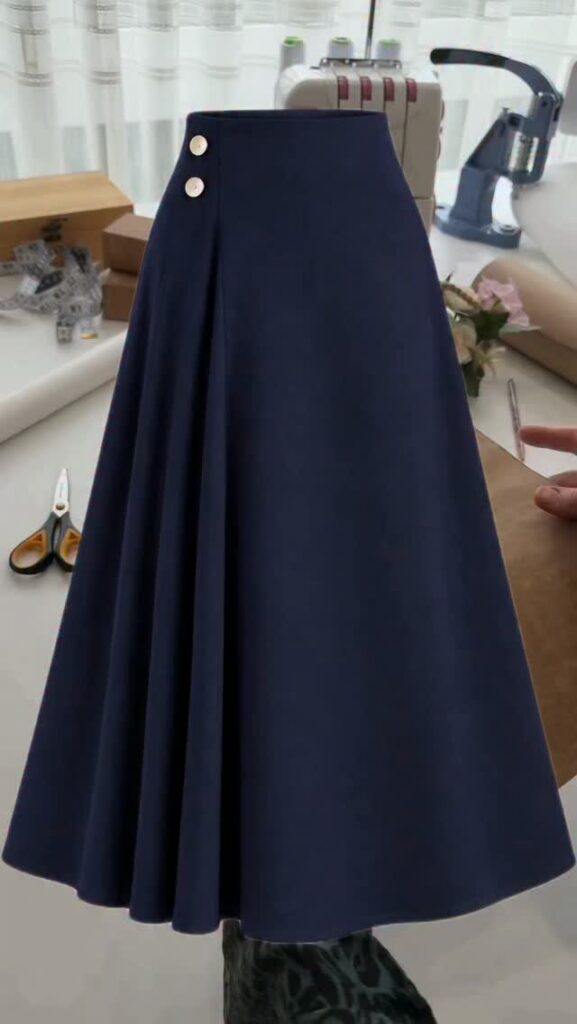
A pleated skirt in navy with gold buttons at the waistband is the kind of piece that goes with nearly everything already in a closet. Plain white tees, striped knits and sandals all work with it.
Pleats are the hardest part, so I’d mark them with chalk and press each one before stitching.
Pick a mid-weight fabric that holds a crease. Sew the buttons on last, since they are decoration and can wait.
2. Tiers Maxi Skirt
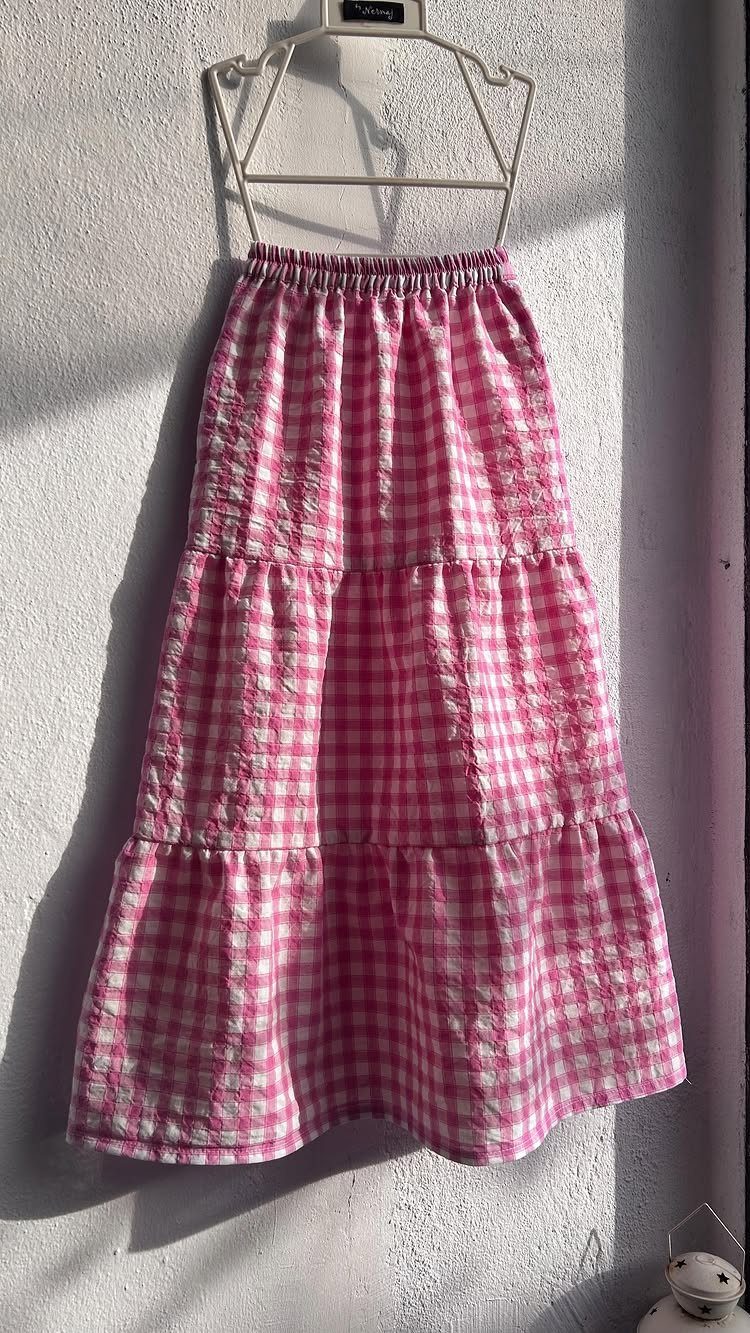
Gingham makes a tiered maxi skirt easier than it looks, because the checks give you a built-in guide for cutting straight and matching seams. An elastic waistband means no zipper and no fitting headaches.
Each tier is a rectangle gathered onto the one above it, so the project is mostly straight lines. I’d cut the pieces along the check lines and gather with a long machine stitch.
The cost is fabric: a maxi uses a lot of it, so choose something cheap while you learn.
3. Satin Tie-Front Top
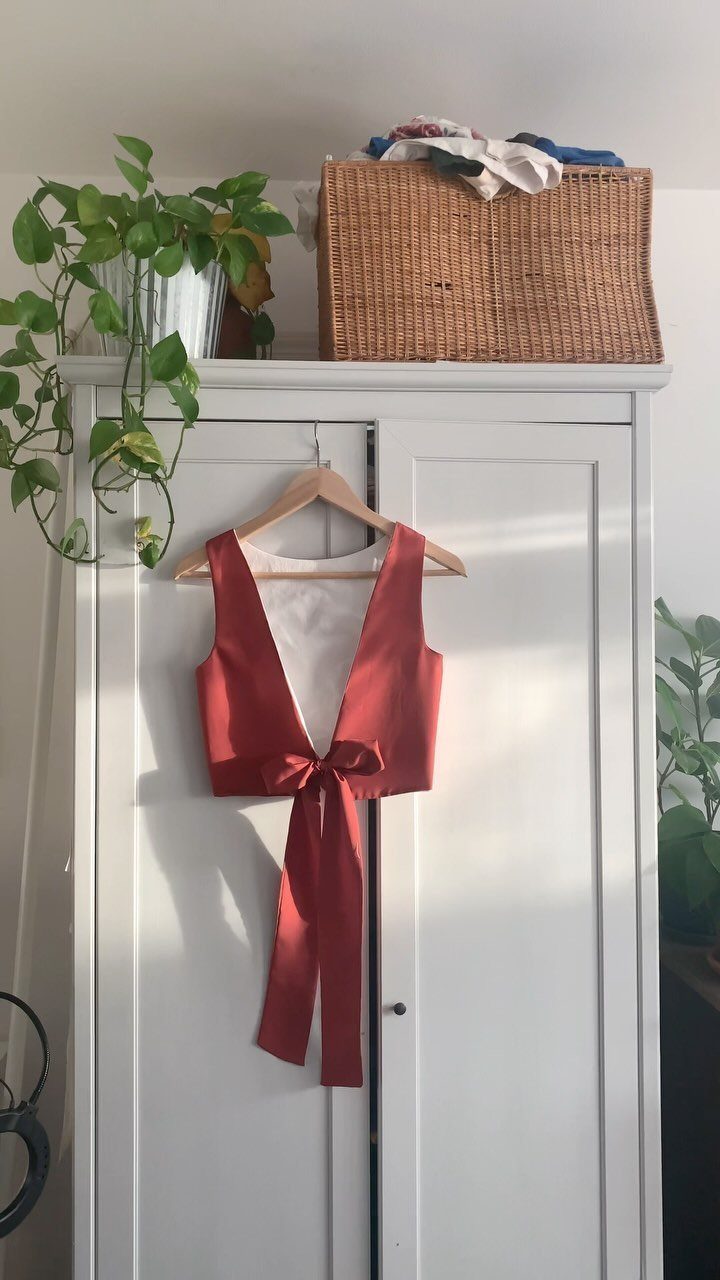
Long ties do the work of closures here, but satin punishes a rushed hand, so a tie-front top asks for slow cutting and careful pressing before it counts as an easy first garment.
No buttons, no zipper, only a few seams and 2 strips to turn and stitch.
Satin slips under the needle and frays at every cut edge, so use fine pins, a sharp needle and a shorter stitch. I’d finish the seams before anything else.
Terracotta is a forgiving color, and it pairs well with plain denim or a linen skirt.
4. Tiered Denim Mini Skirt
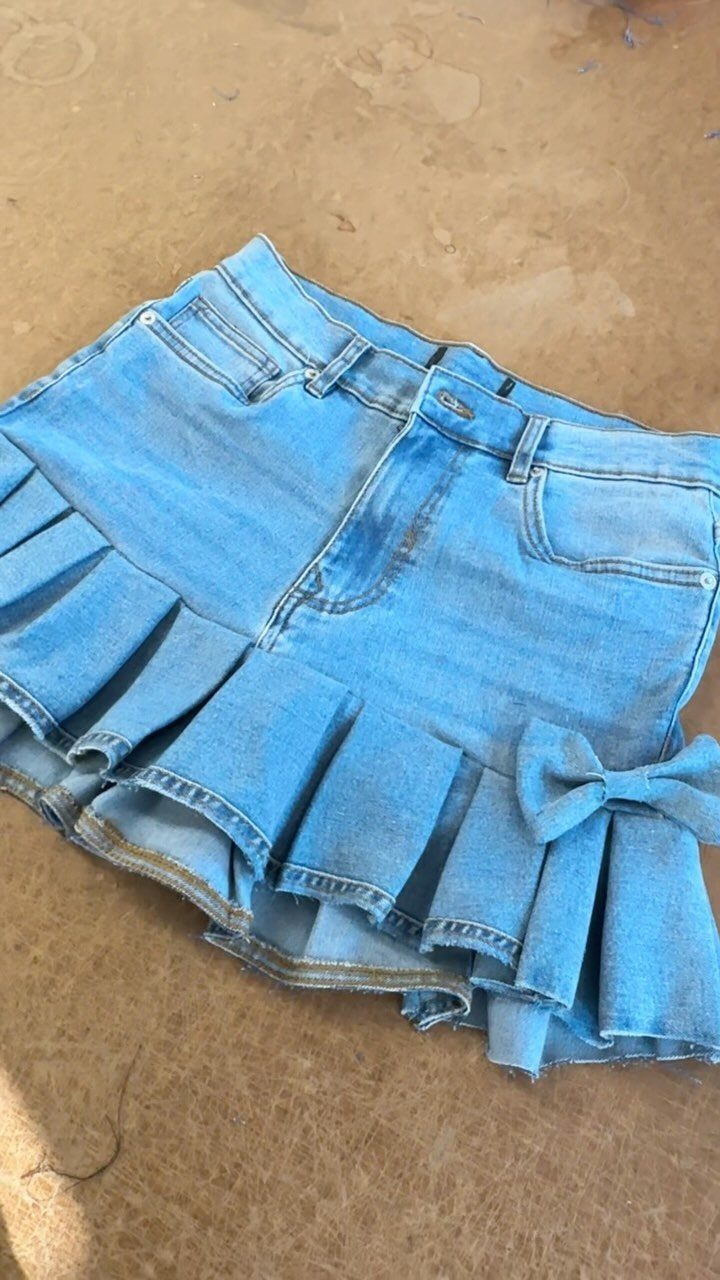
Denim carries a ruffled tiered hem better than most fabrics, since it holds its shape instead of drooping. Light wash keeps the mini skirt casual, and a small bow adds detail without much effort.
Each tier is a wider rectangle than the one above it, gathered with a long basting stitch and sewn on, so the skirt gets fuller toward the hem. Cut the bow from scraps left over from the hem.
Denim is thick, so I’d use a denim needle and go slowly through the layered seams. That is the one place beginners get stuck.
5. High-Waisted Knit Shorts
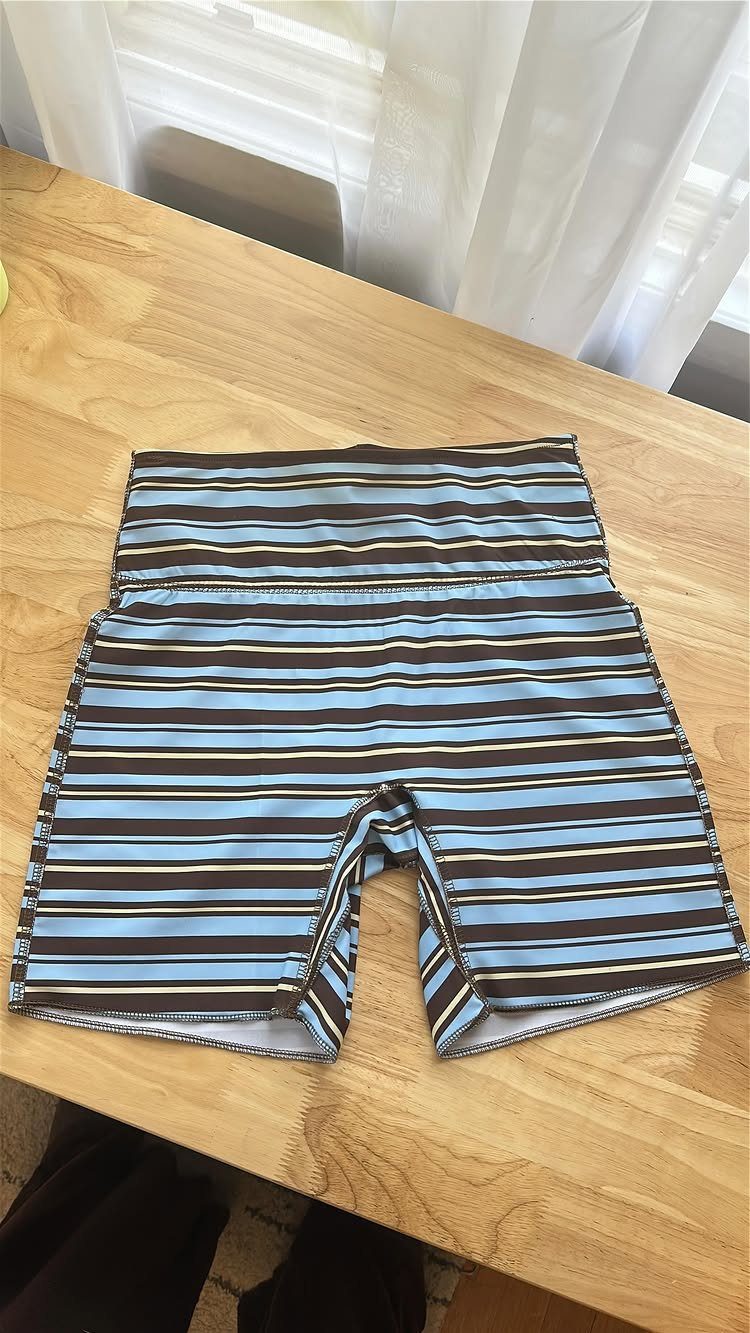
Stretchy knit shorts with a high waist are among the quickest things to sew, since there is no closure and the fabric gives.
Stripes ask for patience: match them at the side seams and cut each leg piece in the same direction, or the lines will drift out of line at the hip.
Use a ballpoint needle and a stretch stitch, or a narrow zigzag, so seams don’t pop when you pull them on. I’d line up the stripes at the side seams before you sew.
A strip of knit folded into a waistband finishes the top.
6. Elastic Waist Linen Shorts
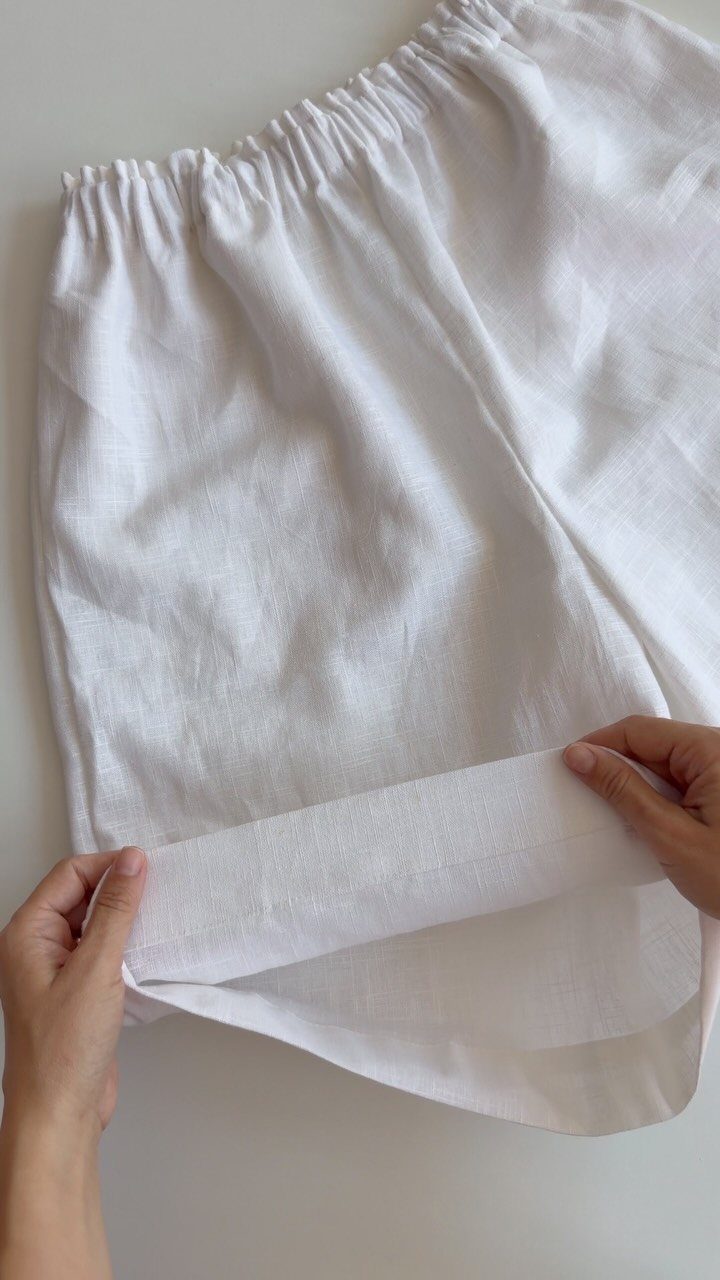
White linen shorts with an elastic waist take a couple of hours at most, and the pattern is basically 2 leg pieces. That makes them one of the best first pants projects for a beginner on a budget.
Fold the waist over to make a casing, leave a small gap, and thread elastic through.
Linen frays and wrinkles, so press the seams as you go. A wrinkled pair still looks right, which I count as a point in its favor.
7. Fabric Headbands
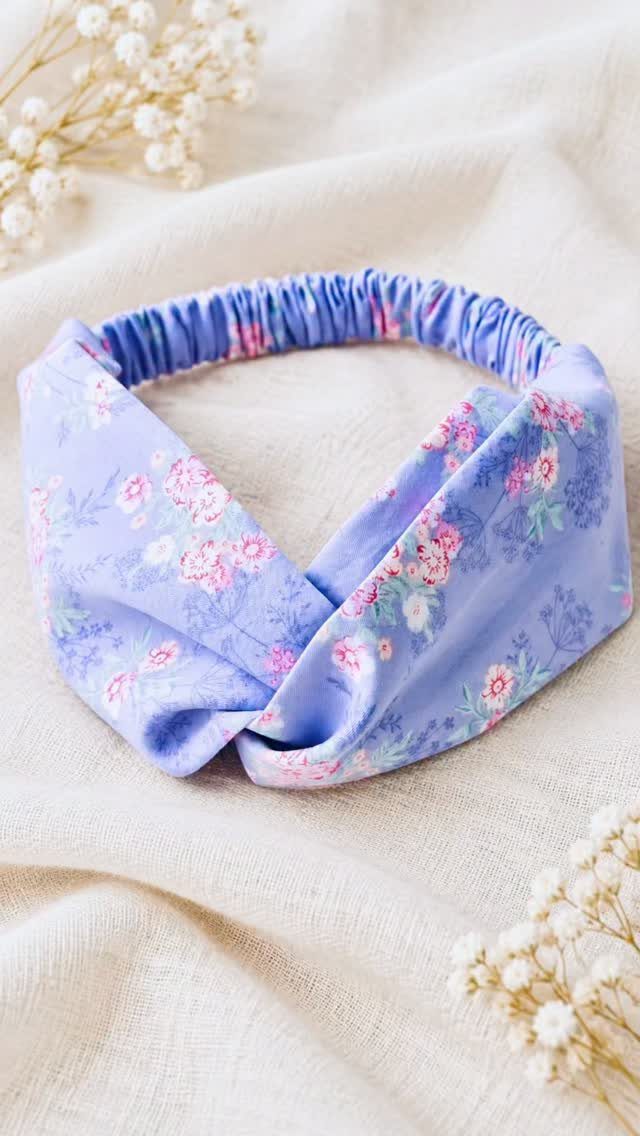
Headbands are about as small as a sewing project gets: one strip of fabric, a few seams, and a twist at the front to make the knot.
A light lavender floral on a cream background is a soft pattern that reads well even in a small piece.
A scrap from an earlier project is enough, so the cost is close to nothing. I’d pick a fabric with some stretch or softness so the twist sits flat instead of poking out.
Sew the strip into a tube, turn it right side out, and press before you twist. Pressing is what makes the knot look neat.
Make three in an afternoon and you have gifts.
Beginner Sewing Tips
A seam ripper belongs within arm’s reach of the machine, because you’ll want it sooner than you expect.
Ripping out stitches is a normal part of sewing, nothing to apologize for, and my own seam ripper still gets used more than I’d like to admit.
A straight seam takes practice, and the first few will wander. Your presser foot works as a built-in ruler: run its edge along the fabric edge and keep that gap steady the whole way down the seam.
Cotton is the forgiving choice for a first garment. Skip complex closures until your seams run steady, and slow down instead of chasing speed.
Sewing Project Ideas
Old clothes and linens can become your fabric, and so can the scraps sitting in a drawer. Bags and toys are good first projects because small errors don’t show.
Be honest about what upcycling is.
Cutting up a wearable thrift find for one project and dumping the leftovers isn’t sustainable. Buying only the yardage a project calls for makes more sense to me than sewing a full garment that nobody is going to wear.
Use clothes that are worn out, stained or never going to fit again. Save every leftover piece for the next small project.
Choosing Patterns
Look for patterns labeled beginner. They teach the basics: straight and curved seams, hemming, and simple shaping like darts and gathers.
Most beginner patterns leave out closures, which suits a first make. Zippers can be finicky, so skip them in your first projects and give yourself more time to get comfortable with the basics.
Pick a pattern with minimal fitting too. Fitting a pattern to a body is a skill beyond basic sewing, so let it wait until your seams are reliable.
Frequently Asked Questions
What are some easy sewing projects for clothes?
Elastic-waist linen shorts, knit shorts with a high waist, and a tiered maxi skirt in gingham are good first makes.
Each is mostly straight seams with no zipper or buttons to fuss over. A satin tie-front top also works, since the ties replace closures, though satin frays and slips, so cotton is easier to start on.
What are some unique sewing projects I can make?
Fabric headbands are a small, unusual place to start: one strip sewn into a tube, turned, pressed, and twisted at the front into a knot.
Leftover fabric from a past project covers it, which puts the price near zero. A tiered denim mini skirt with a small bow cut from hem scraps is a step up when you want something more distinctive.
What should beginners look for in a sewing pattern?
Look for a pattern marked beginner, one that skips heavy fitting and avoids tricky closures. Projects like these build practice with straight seams, curves, hems, and small shaping steps such as darts and gathers.
Adjusting a pattern to your measurements is its own skill and zippers can fight back, so leave both until you have a few finished pieces.