Which of these outfits suits you depends on how much color you’re willing to wear, because the list runs from a solid same-color look and a white shirt with grey trousers to a green hoodie with wide jeans and a leather jacket with a red tie.
A man who wants the fewest decisions should start with the black-on-black looks, where texture such as leather, knit and wide-leg trousers does the work color would.
1. Solid Same Color
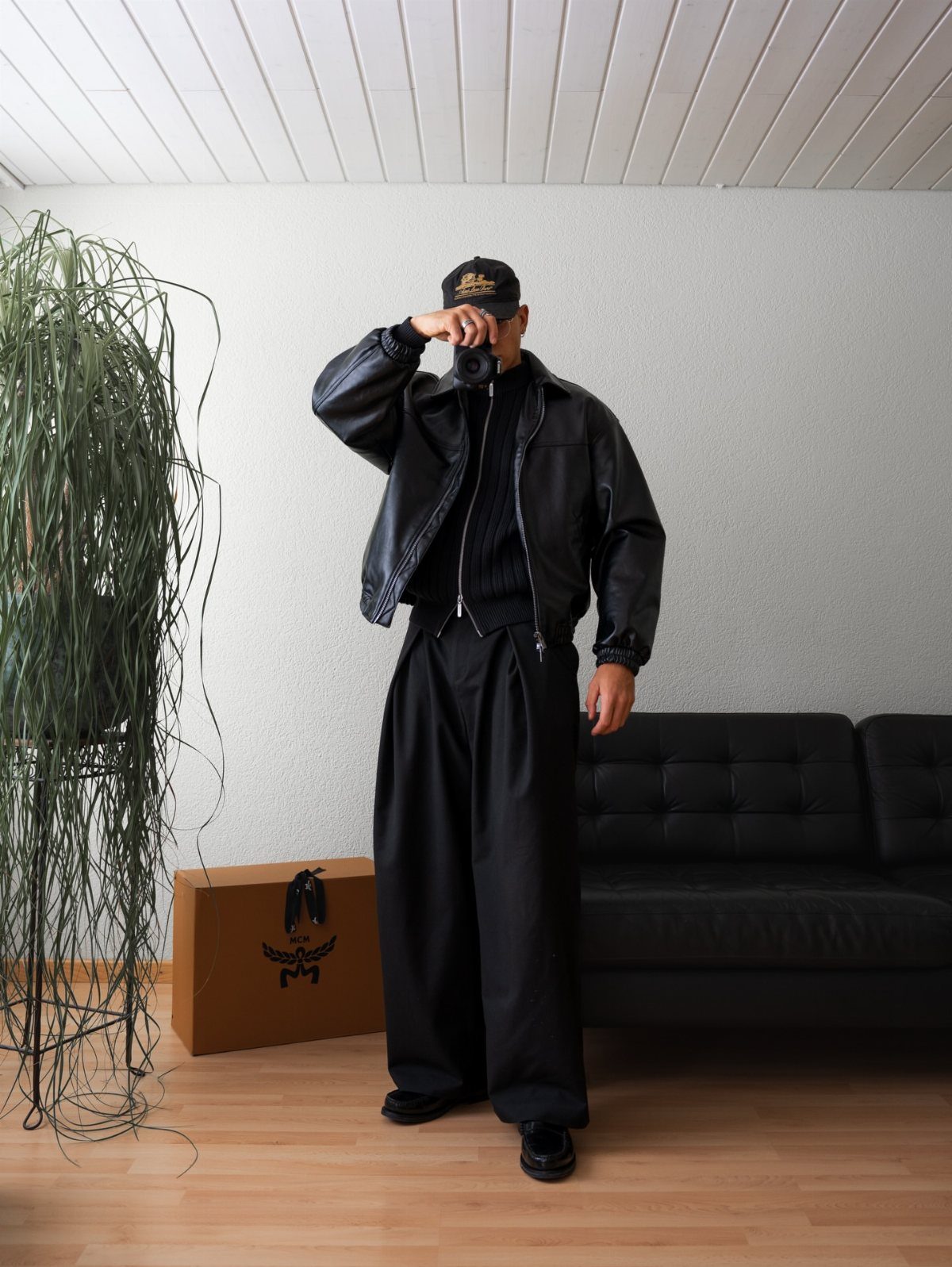
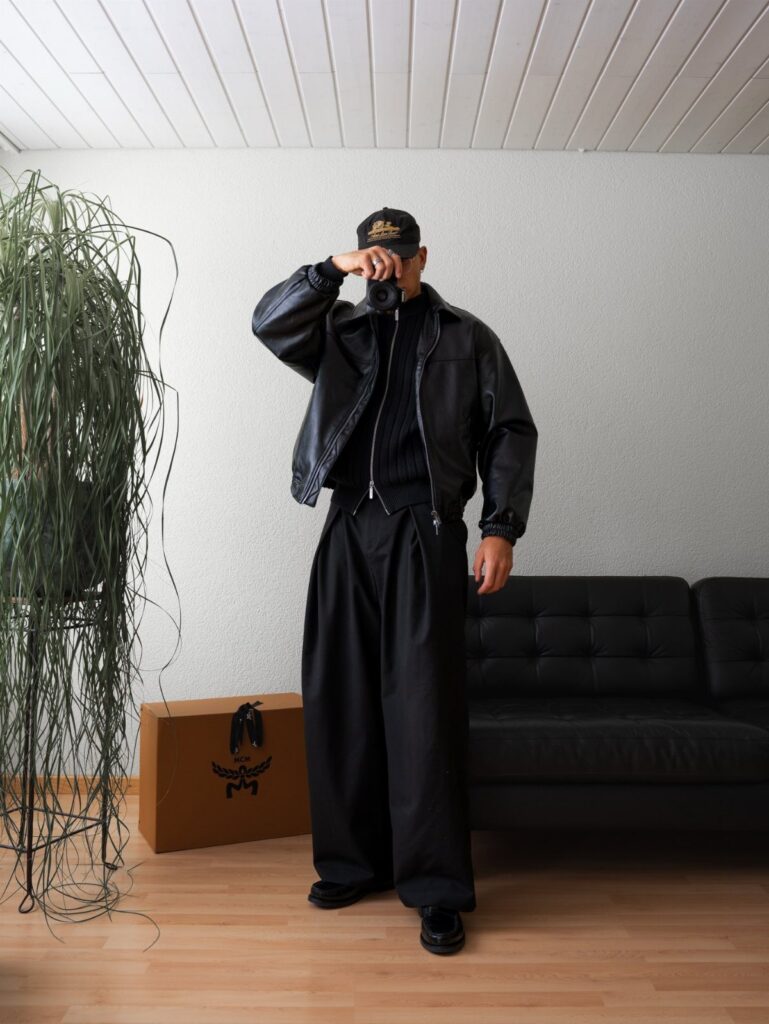
Head-to-toe black is the easiest way to look taller and more put together with the fewest pieces. One unbroken color means the eye travels top to bottom without stopping at a waistband or a hem.
Texture keeps it from going flat. Leather, knit and a wide-leg trouser each catch light differently, so the outfit has depth even though the color never changes.
I would pick black shoes and a cap to match, since one mismatched piece breaks the line.
2. Pattern on Top
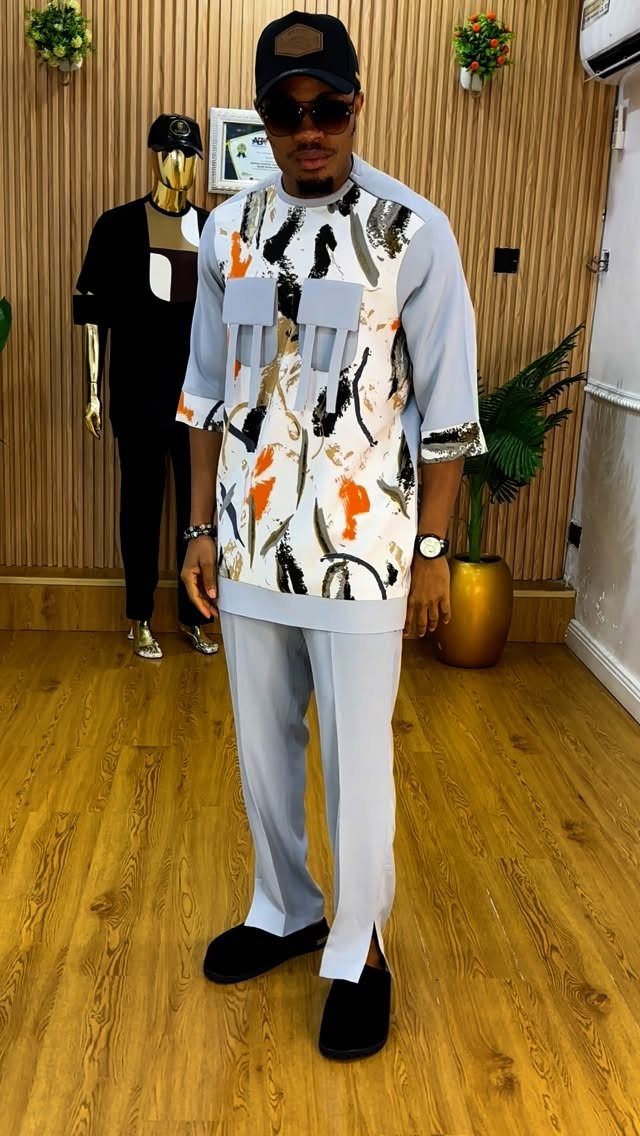
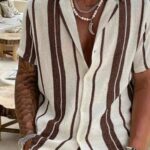
Patterned pieces work best when only one part of the outfit carries them. Here the print lives on the top, and everything else stays quiet so the pattern does the talking.
A matching set in a single tone is the simplest route. Grey trousers under a busy tunic let the colors in the print stand out without any competition from below.
Keep the accessories plain.
Accessories should stay quiet when the top is loud, so a plain black cap and simple sunglasses are enough; anything more starts competing with the pattern. If the print feels loud, choose a muted palette first.
3. White Shirt and Grey Trousers
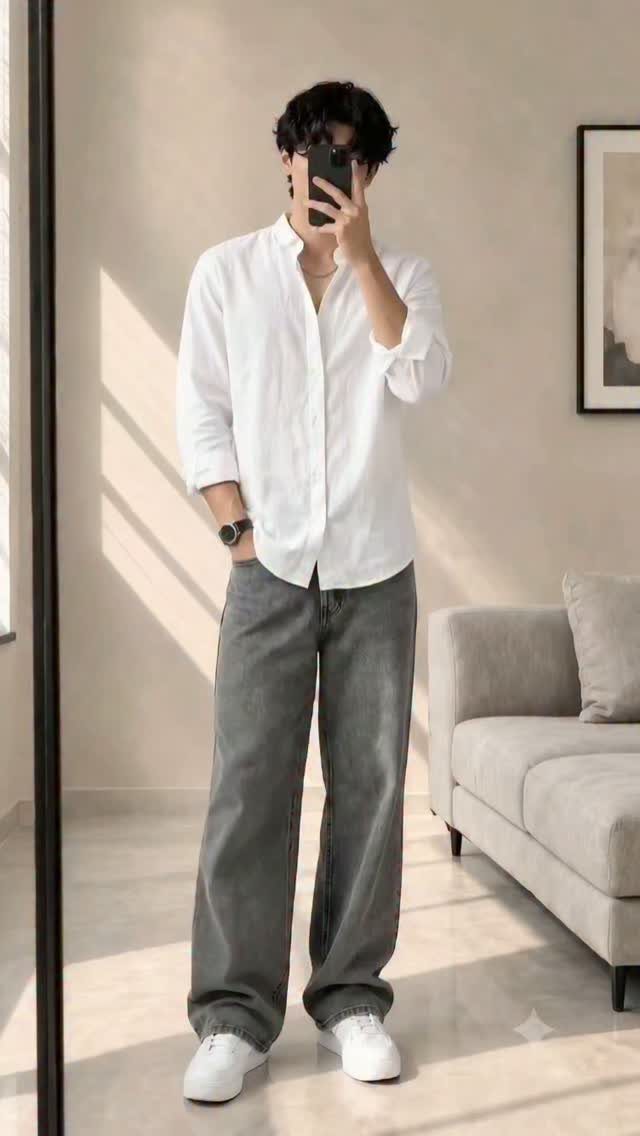
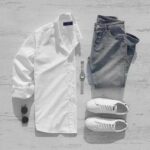
Crisp white above, soft grey below: this pairing asks almost nothing of your closet. A button-down and one pair of trousers cover work, a casual date and a weekend lunch.
Wide-leg grey pants give the outfit its relaxed shape, so the shirt can stay clean and simple. White sneakers pick up the shirt and tie the outfit together.
I like the shirt worn loose and a little untucked here. Press it before you wear it, because the whole look depends on that crispness.
4. Brown Jacket Over Dark Layers
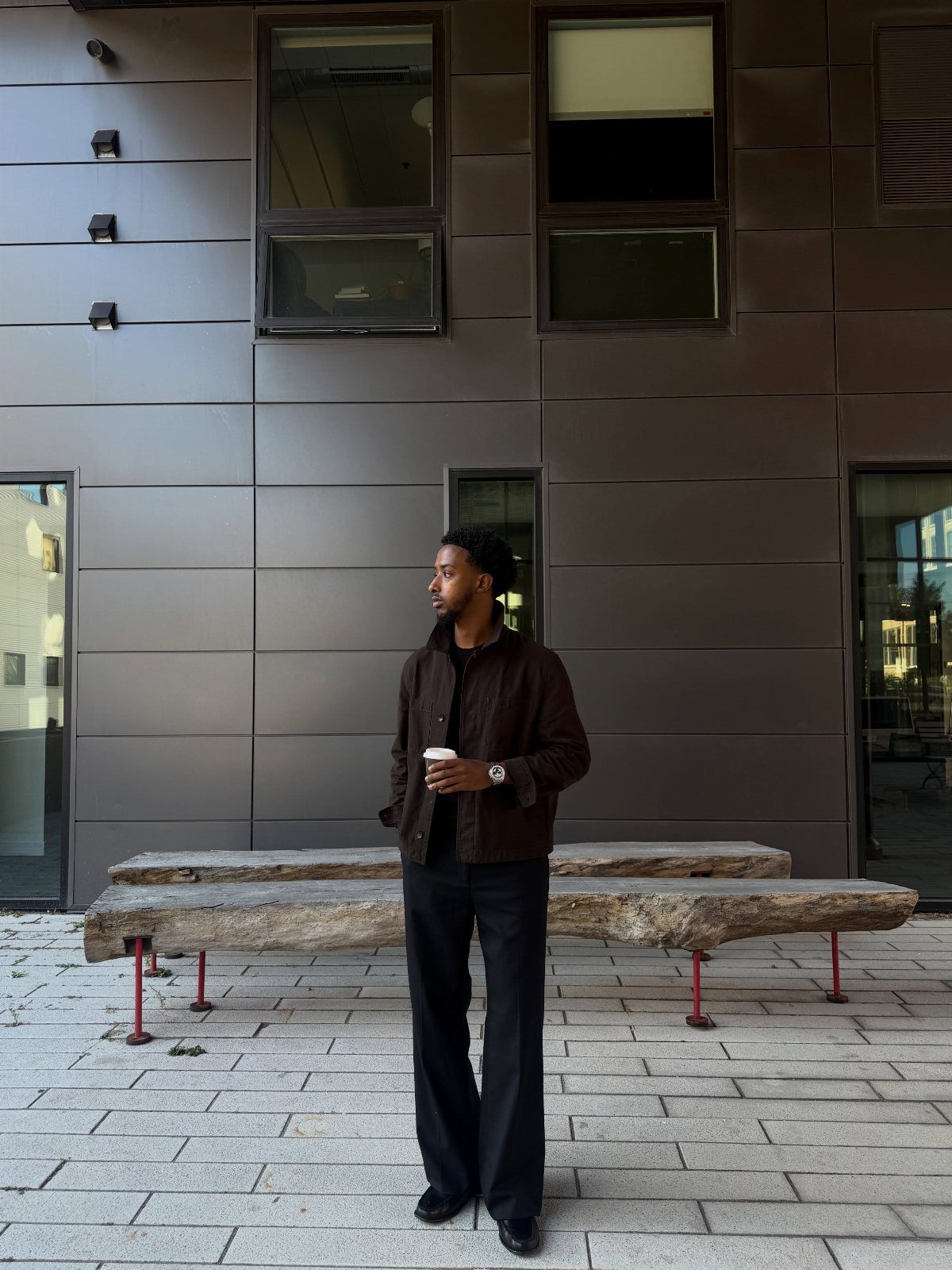
A dark brown jacket softens black in a way another black layer can’t. Worn over a black shirt and black trousers, it adds warmth while keeping the palette tight.
This works well for a normal day out: coffee, errands, a casual meeting. Nothing needs to match exactly, because brown and black sit comfortably together.
I would choose a jacket in a deep chocolate shade rather than a light tan, which cuts the contrast too sharply. Keep the shirt and trousers in the same black so the jacket is the only thing that stands out.
5. Brown Suit with Black Shirt
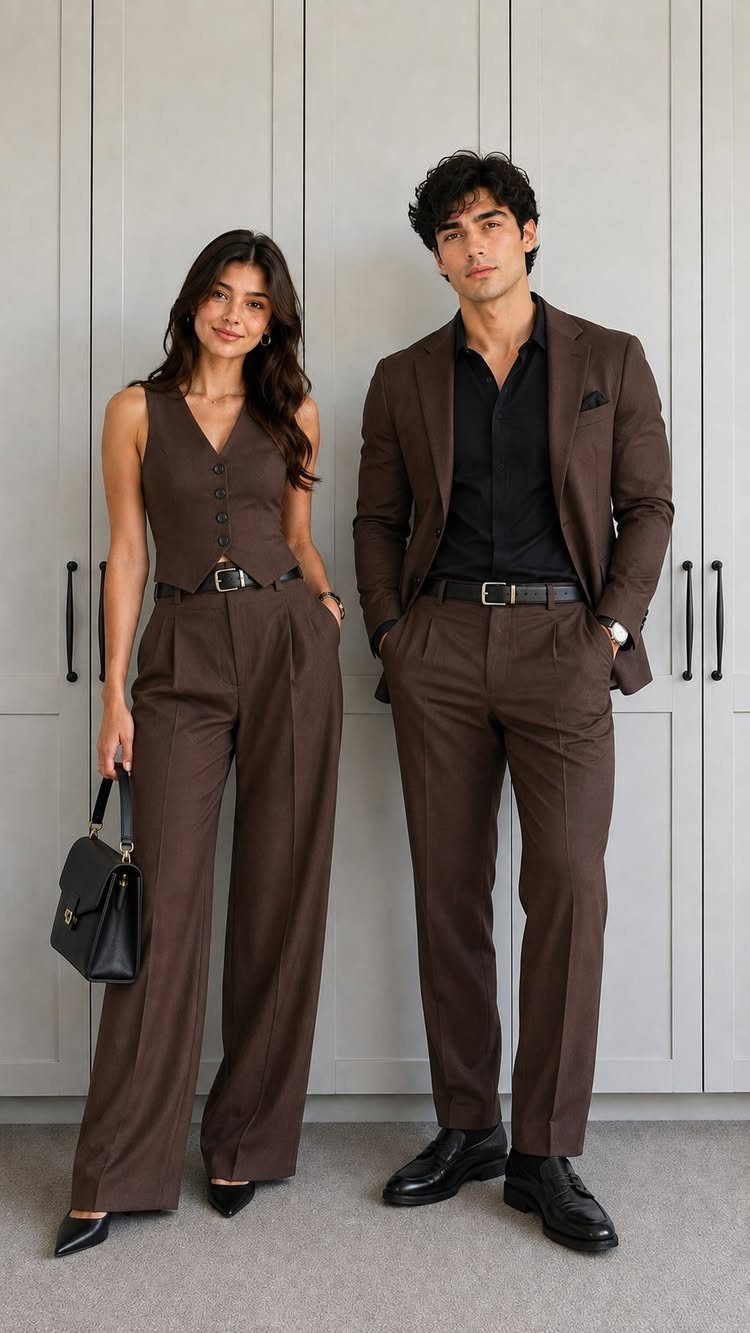
A brown suit worn with a black shirt feels less expected than navy or grey, and it needs no tie. Leave the top button open and the outfit reads as relaxed but still formal.
Tailoring matters more than color here. A suit that fits at the shoulders and ends cleanly at the ankle will look sharp, while a loose one looks borrowed.
Dress shoes finish it. I would go dark, and I would skip the tie and the pocket square so the black shirt stays the point of contrast.
6. Black Bomber and White Tee
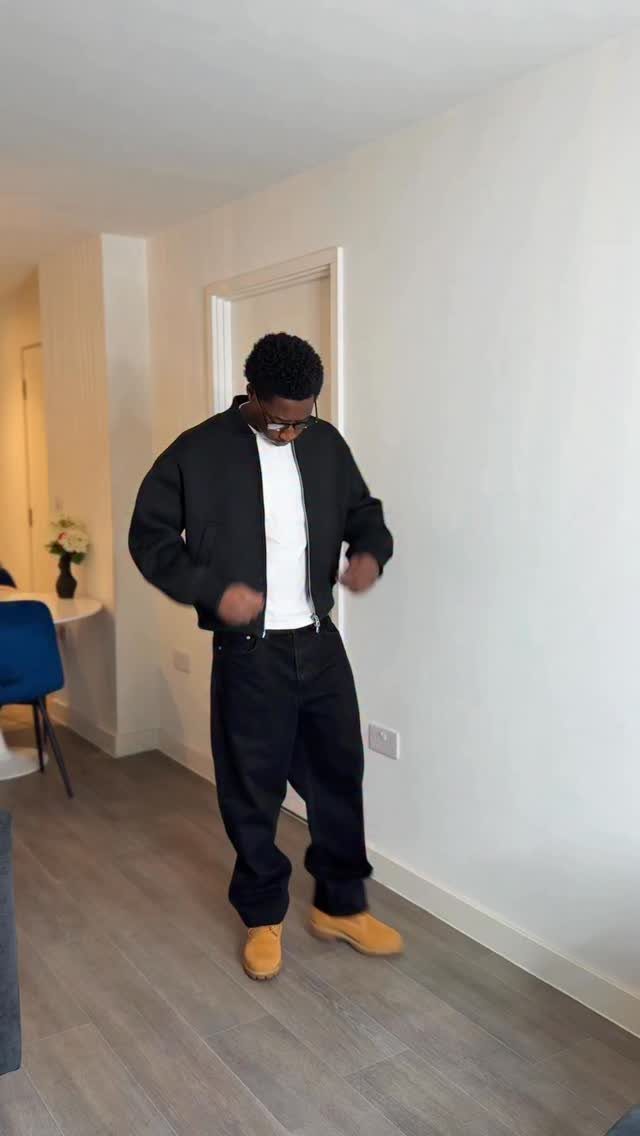
Black bomber, white tee, black pants: 3 pieces, and the contrast does all the work. It is the kind of outfit you can put on without thinking and still look like you tried.
Tan boots are what keep it from feeling like a uniform. The warm color breaks up all that black and white, and suede adds texture.
Wear the tee untucked with a baggy trouser for a relaxed shape. If the pants are loose, keep the tee fitted enough that you don’t drown in fabric.
7. Leather Jacket with Red Tie
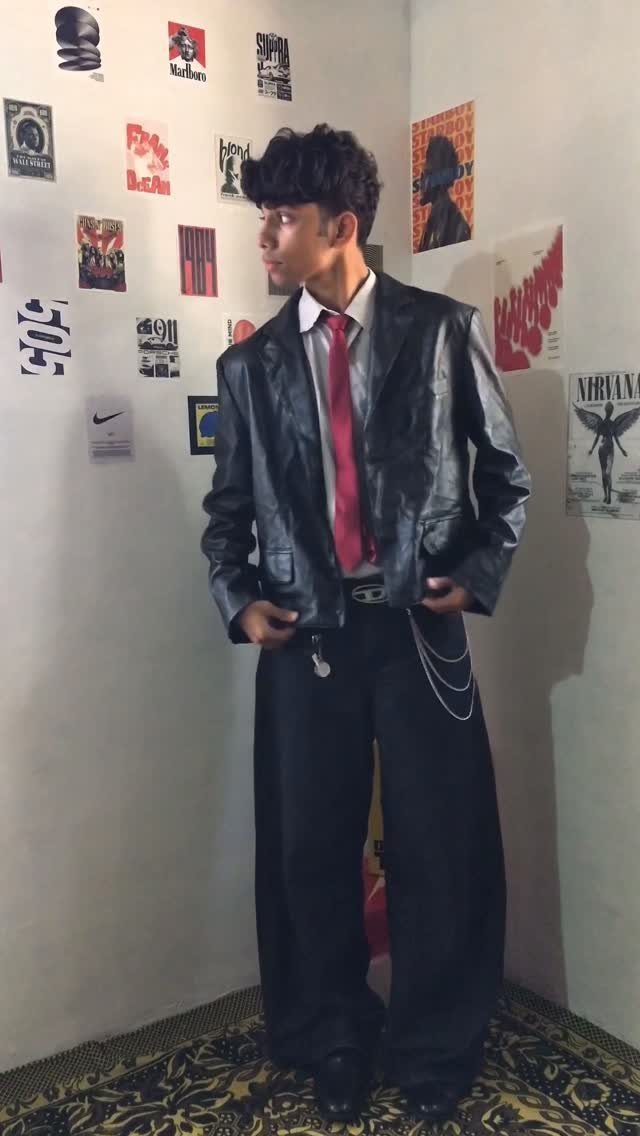
A red tie is the only color in an otherwise black and white outfit, which is why it works. Black leather jacket, white shirt, black wide-leg trousers: the tie is the one place the eye lands.
Knot it normally and button the shirt to the top, then let the jacket stay open. The sharp collar against rough leather is the contrast I like best here.
A wallet chain adds a little attitude, but it is optional. Keep the tie plain, with no pattern, so the red reads as one clean stripe down the middle.
8. Green Hoodie and Wide Jeans
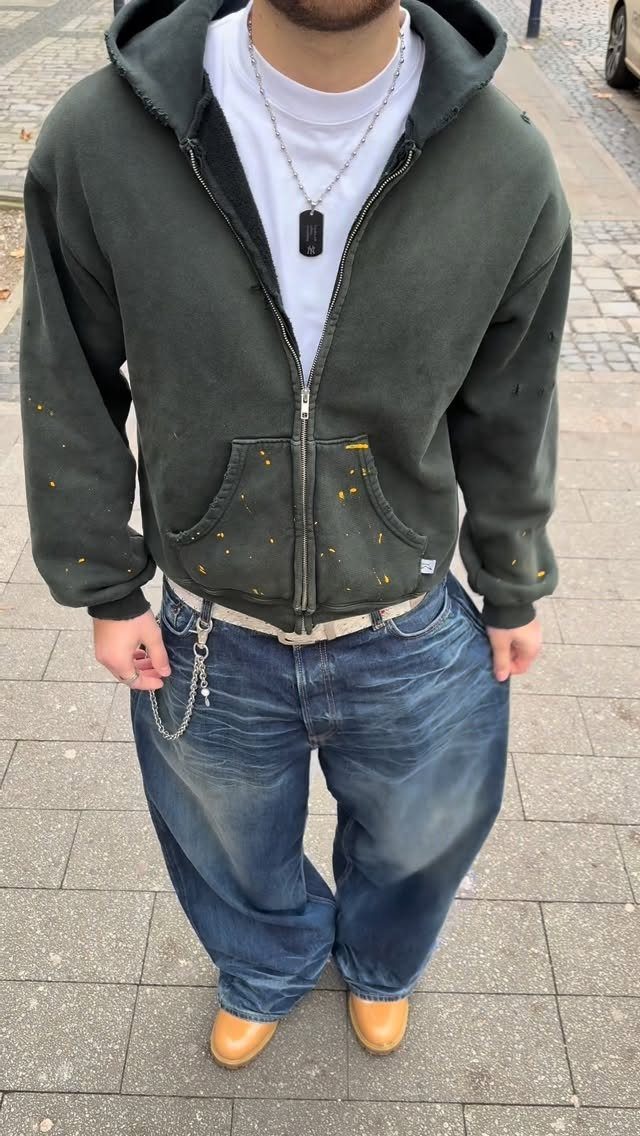
Dark green hoodies sit between black and olive, so they pair with blue denim without a clash. Worn zipped partway over a white tee, this is a weekend outfit that asks almost nothing of your closet.
With the jeans cut full through the leg, a plain hoodie on top is all the outfit needs. Tan boots or shoes warm up the green and keep the blue from looking flat.
I would let the jeans break slightly over the shoe rather than cut them short. A distressed hoodie is fine, but one worn-in piece is plenty.
9. Black Turtleneck and Grey Trousers
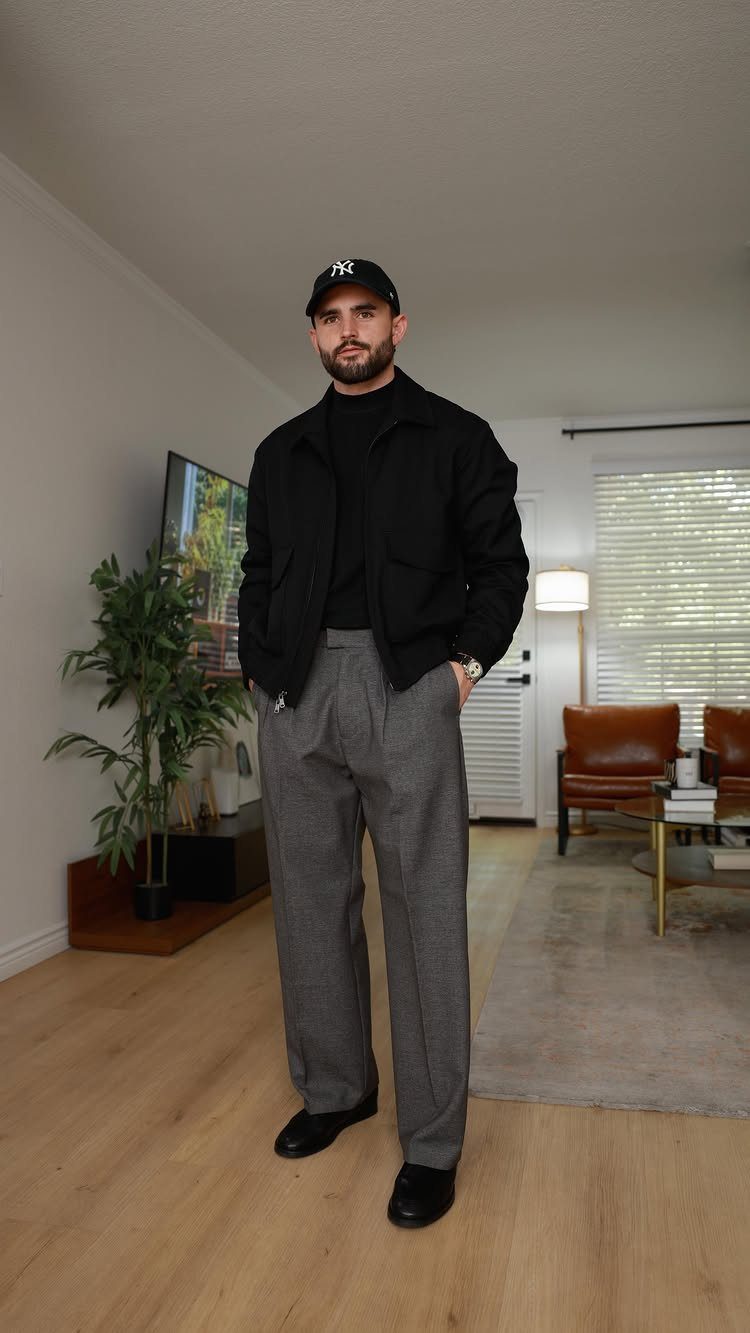
Black on top, grey below: a turtleneck under a jacket gives you a clean column without a collar or tie. It suits a man who wants to look dressed up on a normal day.
Pleated, wide-leg grey trousers stop the outfit from feeling severe. A subtle pattern in the grey adds interest, though solid grey works just as well.
Black shoes keep the line unbroken, and a black cap makes it casual. I would skip the cap for work and keep it for weekends.
10. Black Leather Jacket and Shirt
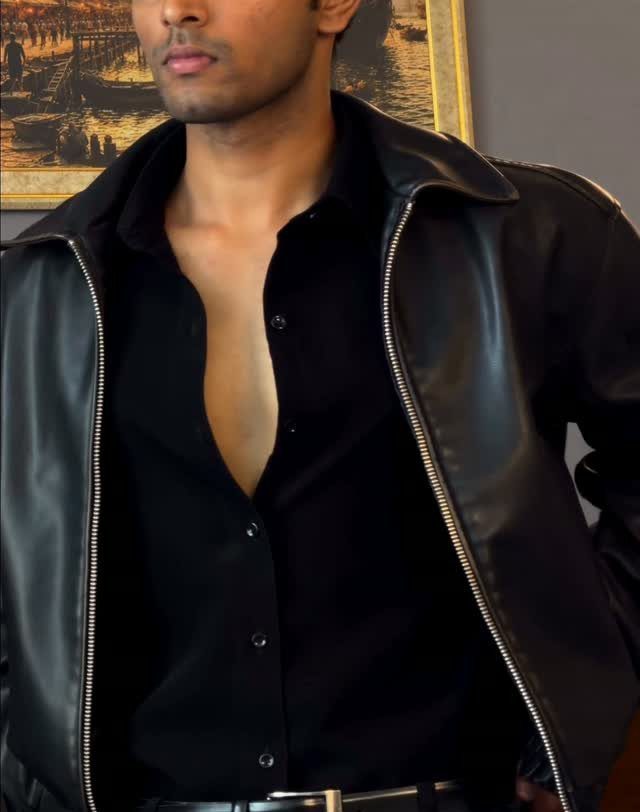
Black shirt under a black leather jacket is the simplest evening outfit I know. Leave the shirt unbuttoned a couple of buttons and the jacket open, and the dark layers read as relaxed rather than stiff.
Choose a shirt with a collar that lies flat; it frames the neckline without needing a tie. Keep the trousers dark too, so nothing interrupts the line.
One caution: all black can look heavy if everything has the same finish. A matte shirt against glossier leather gives the outfit some depth.
Comfort Is Key
Soft, breathable fabric is the first thing to check on the tag. Cotton, linen and jersey knits let air move, and they stay comfortable through a full day of sitting, walking and commuting.
Avoid anything that pinches when you move. Raise your arms, sit down and bend over in the fitting room; if a shirt pulls across the back or a waistband digs in, put it back.
Comfort is also what makes you wear a piece again. A jacket that feels good gets worn twice a week, and one that doesn’t stays on the hanger.
Fit Matters
Comfort and style stop fighting once the fit is right.
Many men’s brands sell athletic fit cuts, which give extra room through the chest, shoulders and thighs while tapering toward the waist. If you lift weights or have a broader build, start there.
Tall and short sizes are also common now. If sleeves or trouser legs never land where they should, try those before assuming the brand is the problem.
Then tailor the pieces you wear most.
A tailor can shorten sleeves, take in a waist or fix a hem, and the work usually costs far less than a new garment. Start with trousers and jackets, since those show a bad fit fastest.
Mix and Match
A wardrobe that mixes well beats a big one. When each piece goes with most of the others, you get plenty of outfits without a crowded closet.
Start with basics: a few shirts and a few pants in styles and fits you already like. Once those are settled, dressing is just a matter of pairing them.
Keep the base simple and add novelty in small amounts, or stick with classics if that suits you. A set of 21 interchangeable pieces can cover 30 days of outfits, which shows how little you need.
Before buying anything new, check that it works with at least 2 or 3 things you already own.