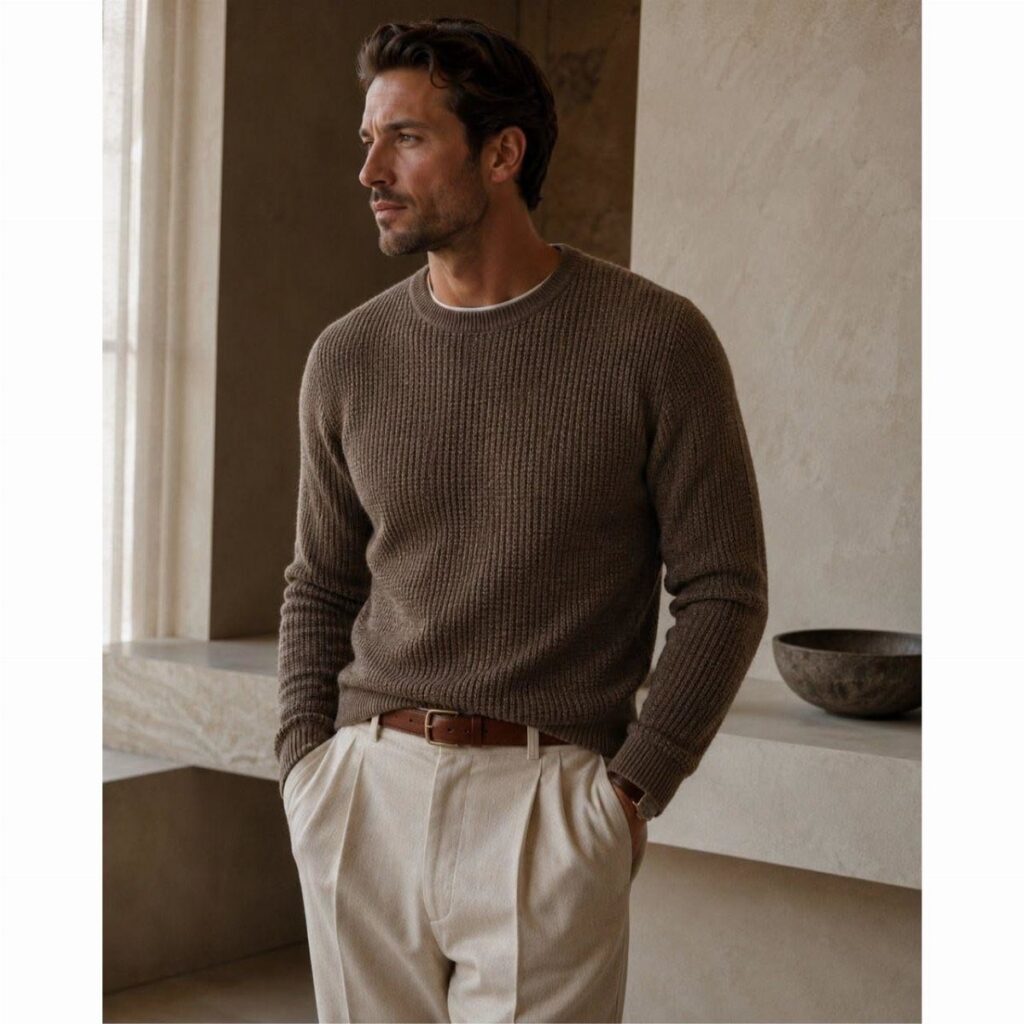
How cold your day gets and where it takes you decides which of these outfits to wear. If your day ends in a heated train or a café, wool and cotton knits keep you warm without trapping sweat.
1. Cashmere Sweater with Wool Trousers
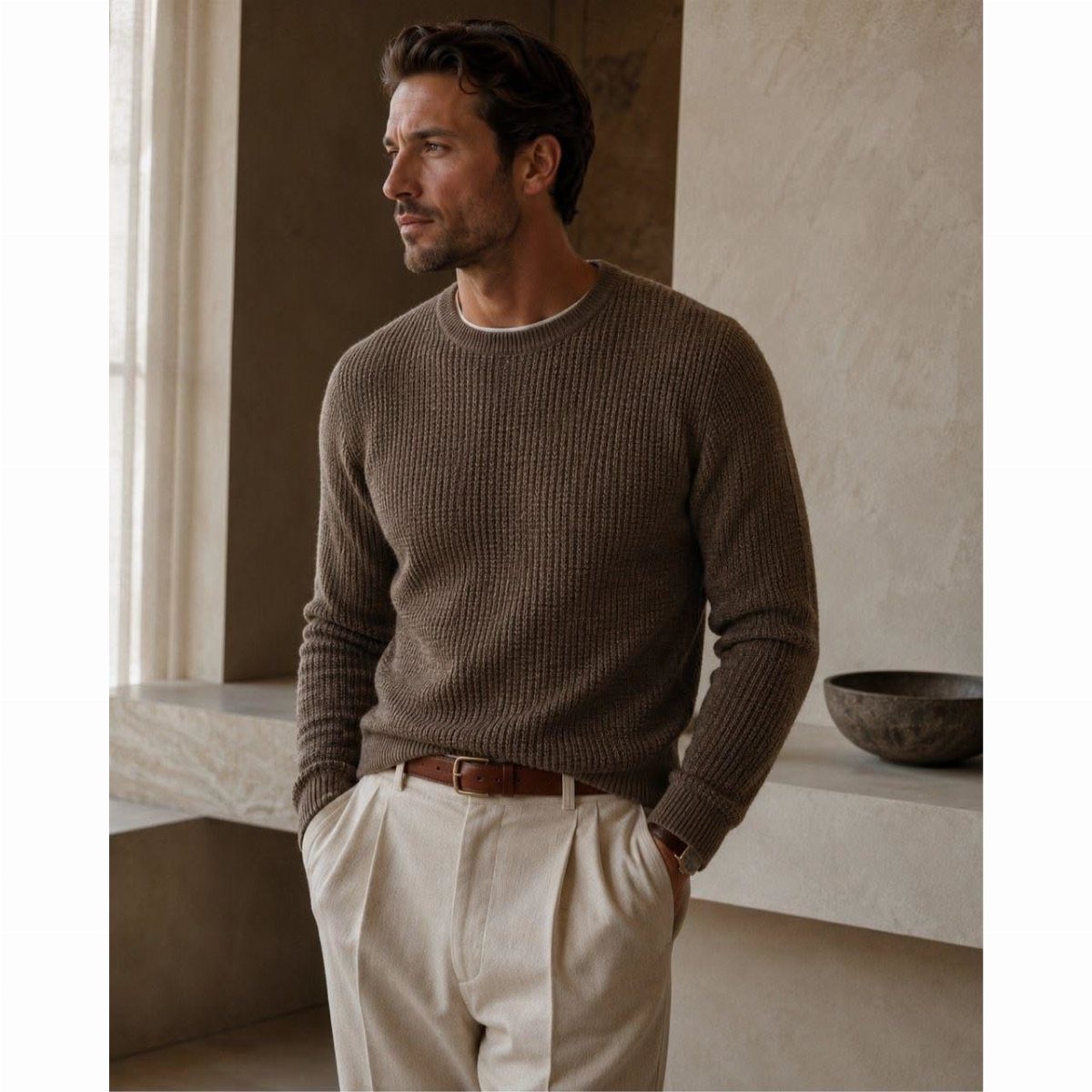
Brown knit over cream trousers is a low-contrast pairing, and that is why it works. Both pieces sit in the same warm family, so the outfit reads calm and put together without any pattern.
A crewneck keeps the neckline clean, and a brown leather belt that matches the sweater ties the top to the trousers. Pleats give a wide-leg trouser room to hang, and that is why I like them with a cashmere sweater.
Cashmere is the softer, warmer pick for the sweater, though a ribbed knit holds its shape well too.
2. Camel Coat with Wide-Leg Pant
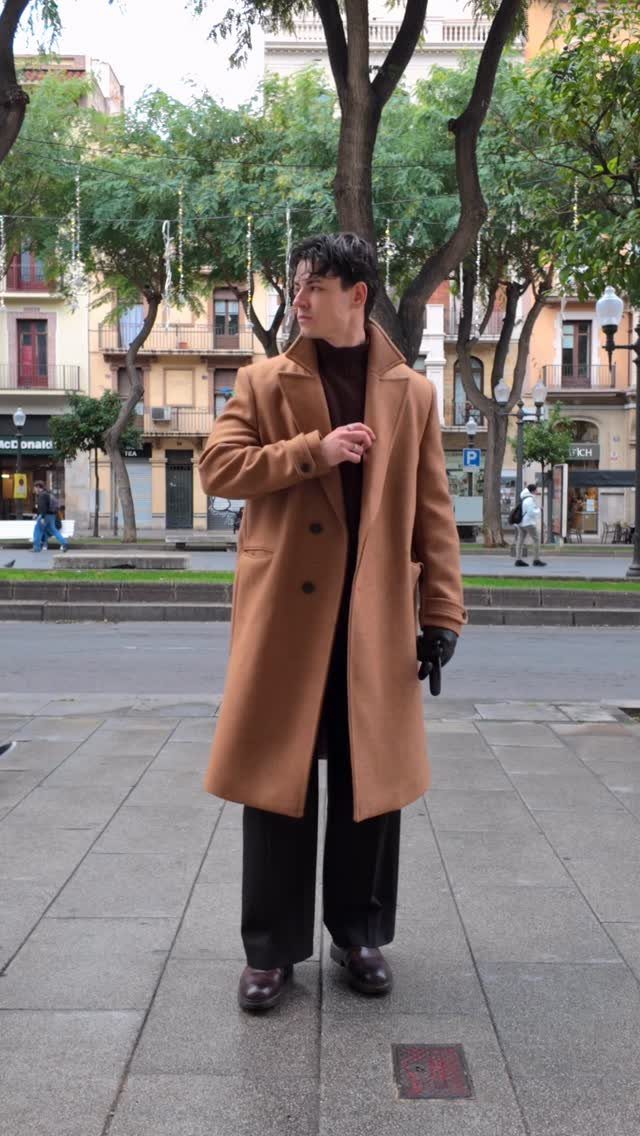
Long camel coats look best when everything under them is dark. Black wide-leg trousers and a turtleneck give the coat a clean column to sit against, and the camel does the talking.
Choose a coat that reaches below the knee so the trouser line isn’t broken at the hem. Wide legs need a shoe with some weight, so leather shoes beat sleek sneakers here.
Camel is a light color and will show dirt on a city street, which is the cost of wearing it.
3. Puffer Coat with Monochrome Basics
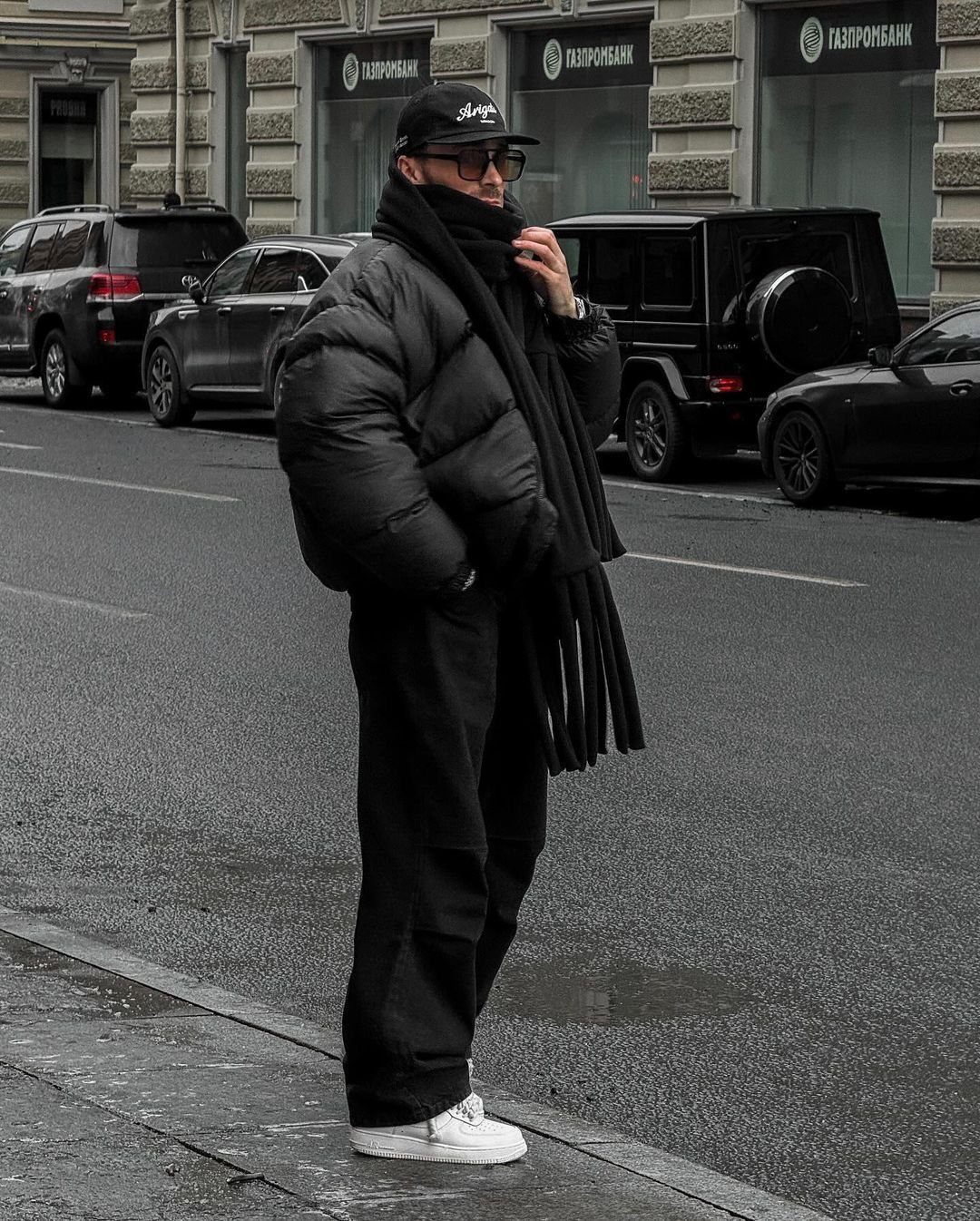
All black with a puffer on top is hard to get wrong in cold weather, because nothing can clash.
The scarf matters more than it seems. It seals the gap at the neck where a puffer’s collar often leaves air in.
Keep the trousers slim enough that the bulk stays up top.
4. Men’s Wool Coat and Knitwear
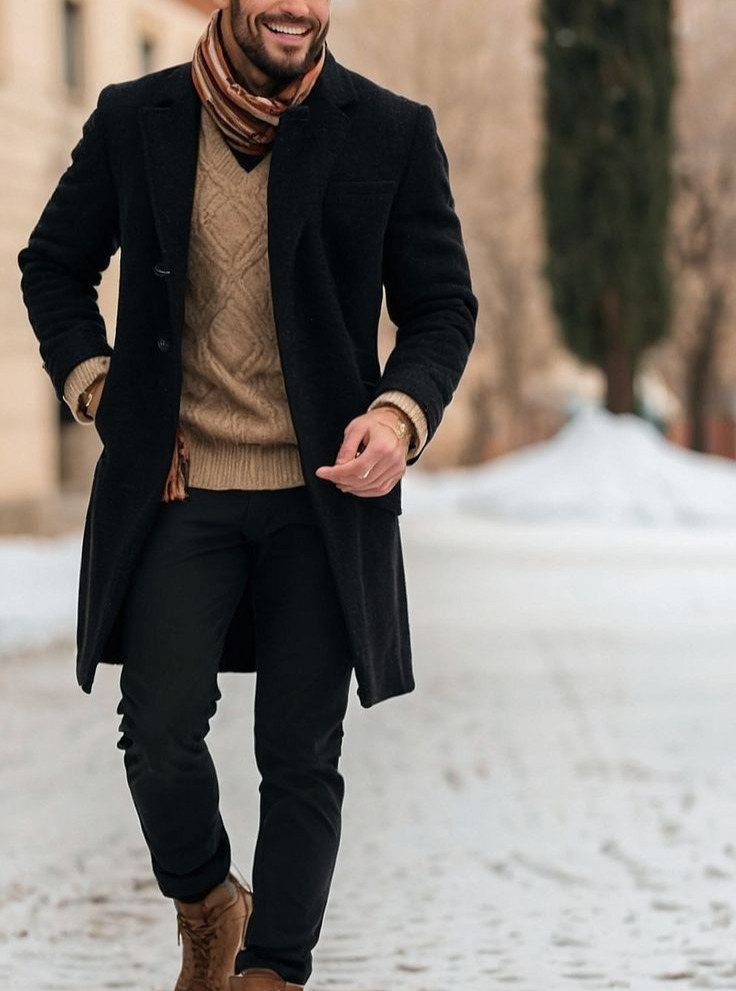
A black wool overcoat over a tan cable-knit is a pairing I’d pick over almost any other for a cold walk. The coat gives structure, and the chunky sweater gives warmth and texture underneath.
Size the coat with the sweater on, so the shoulders and sleeves don’t pinch once you layer. A patterned scarf adds interest against the plain black and tan.
Dark trousers and brown boots keep the lower half quiet, and brown boots handle snow better than dress shoes do.
5. Formal Black Coat and Trousers
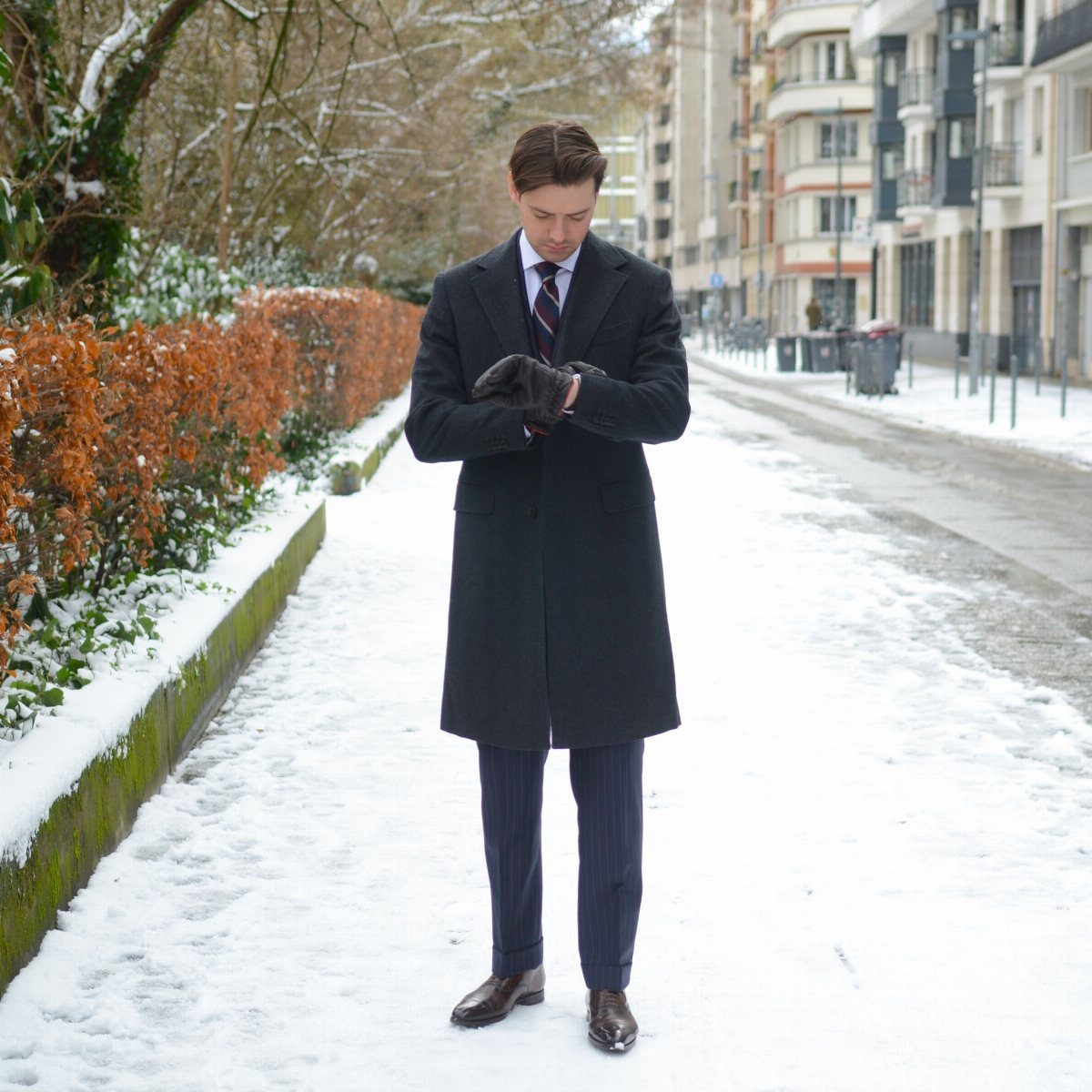
Black wool, tailored sharply, reads as formal even in a snowbank. Worn over a collared shirt and tie, with gloves, it suits an office commute or an evening out.
Pinstriped trousers add a little detail under a plain coat, so the outfit isn’t one flat block of black. Leather gloves are worth buying in black so they match the coat.
This is the dressiest option on the list, and it asks for a good fit through the shoulders. A boxy coat spoils it.
6. Puffer Jacket and Cargo Pants
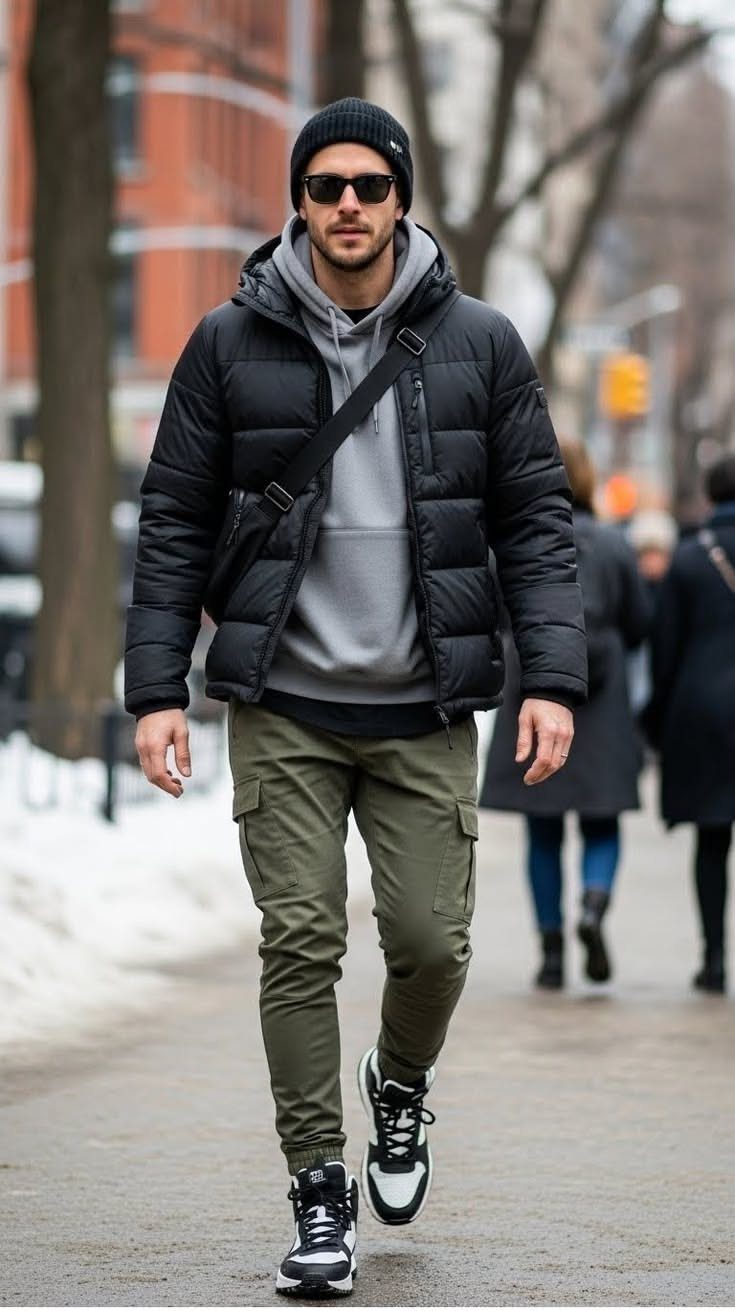
Streetwear handles cold better than people expect, and this version proves it: a black puffer over a grey hoodie gives 2 insulating layers with no fuss.
Olive cargo pants break up all the black and grey, and pockets are a real bonus when your hands are cold.
A beanie finishes the top half. Sneakers are fine on dry sidewalks, but patchy snow means you should check the grip on the soles.
This is the casual pick. Skip it for anywhere that expects tailoring.
7. Winter Parka with Orange Scarf
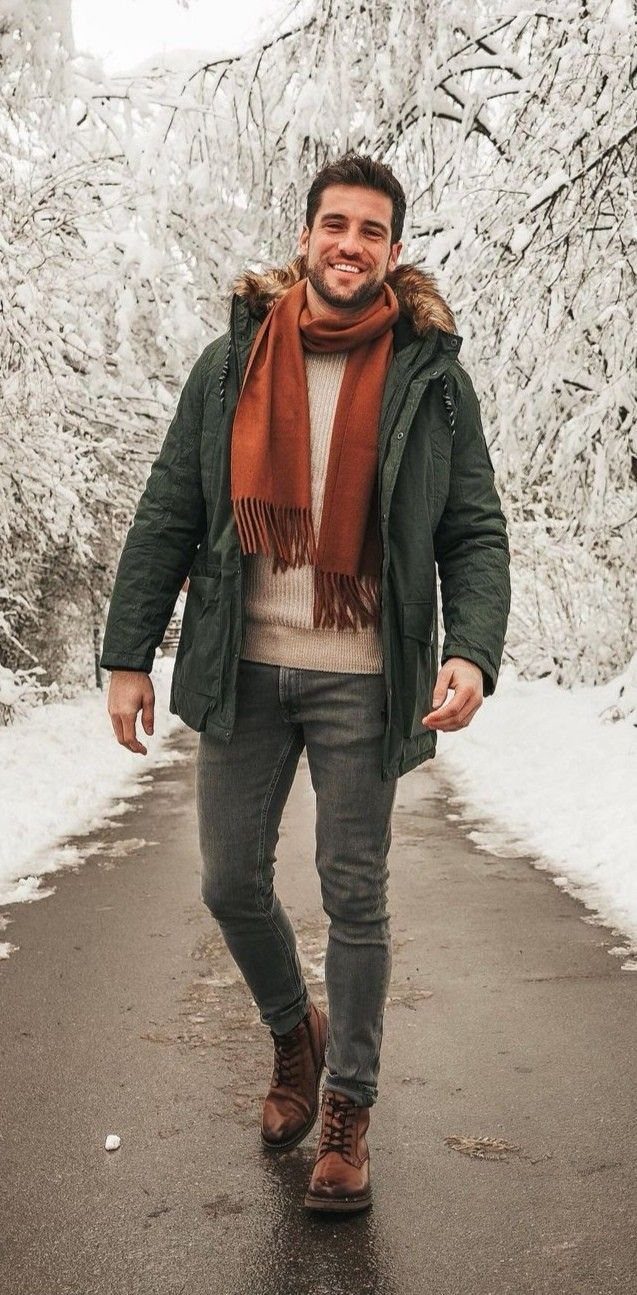
A dark green parka with a fur-lined hood looks like the warmest option in any winter wardrobe, and an orange scarf keeps it from reading as plain outerwear.
Green and orange sit well together because the green is deep and the orange is the only bright spot.
Wear a knit sweater underneath, then stay simple with jeans and brown boots so the scarf does the talking. Boots with real tread matter on wet snow.
If orange feels loud, a rust or burnt shade does the same job at lower volume.
8. Leather Jacket with Turtleneck Sweater
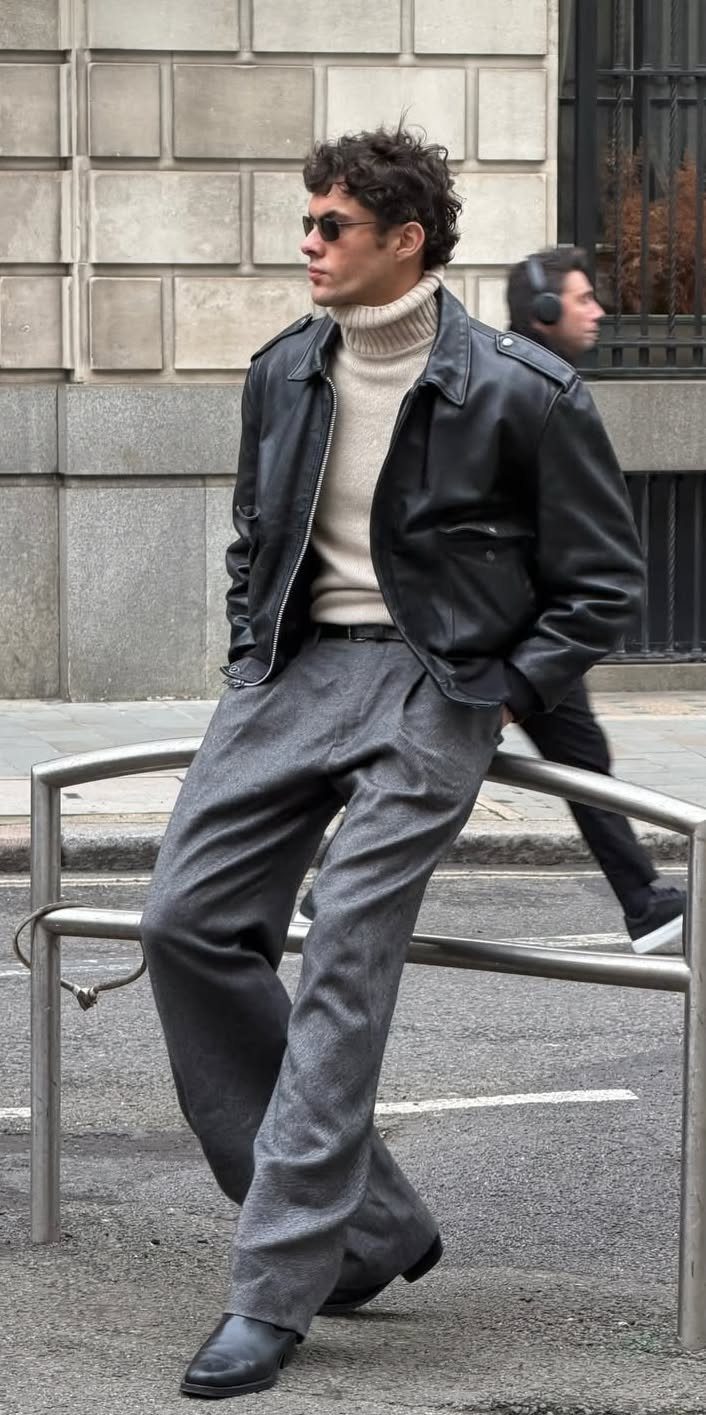
Cream under black is the sharpest contrast in a winter outfit, and a turtleneck gives a leather jacket a clean, warm collar to sit on.
Wide-leg grey trousers keep the look relaxed, so the jacket doesn’t come off as too severe.
Pick a jacket cut close enough that the turtleneck doesn’t bunch at the shoulders. Black boots tie the bottom to the jacket.
A leather jacket alone won’t carry you through a hard freeze. Take a scarf, or swap in a heavier coat when the temperature drops well below freezing.
Choosing Breathable Fabrics
Fabric decides whether a winter outfit works for a full day. Wool and cotton knits breathe, so they hold warmth without trapping sweat on a heated train or in a café.
Pick shoes you can walk in for hours before you worry about how they look. Comfortable soles and room for a thicker sock keep your feet warm and let you move easily.
I’d choose a breathable base layer over an extra bulky one. You can always add a coat, but you can’t unsweat a shirt.
Accessorizing for Style
A scarf, a belt, or a watch can take a simple daytime outfit to dinner faster than changing a single garment. A simple base can handle both if you change one or two small things.
A belt buckle and a watch in the same silver or gold do this quietly.
Keep the palette limited: black, cream, navy, white, brown, silver, or gold. Pieces from that group look like they belong together, so a small swap reads as a decision, not clutter.
Practical Outfit Testing
Before you commit to an outfit, sit down in it, then walk for 10 minutes. Sitting shows you where a waistband digs or a layer rides up, and walking shows whether you run cold or hot.
Try the extra layer you’d actually carry when the weather swings, whether that’s a packable puffer or a wool overcoat over your arm. If it’s awkward to hold or stuff in a bag, swap it for something lighter.
Last touches matter: press out the wrinkles with a steamer, wipe down your shoes, tidy your hair, and pick a bag that fits the proportions of what you’re wearing.
Frequently Asked Questions
What do people wear in winter in Europe?
Layers in a tight palette: black, cream, navy, brown, and camel. A long wool or camel coat over a knit and dark trousers is the classic city look, and a puffer over black basics works on the coldest days.
Wool and cotton knits let heat and moisture escape, which matters once you step from a freezing street into a packed, overheated train car or café.
How to dress in Europe to not look American?
Stick to a limited palette and plain, well-fitted pieces. A palette of black, cream, navy, white and brown works because every shade sits well beside the others, so the whole outfit looks planned.
A coat that fits through the shoulders, leather shoes or boots instead of bulky athletic gear, and a scarf for a finishing touch get you most of the way.
What shoes are best for Europe winter travel?
Brown or black boots with real tread are the best pick.
They handle wet and patchy snow better than dress shoes or sleek sneakers. Pick shoes with enough room for a heavier sock, and make sure they hold up through a full day of walking.