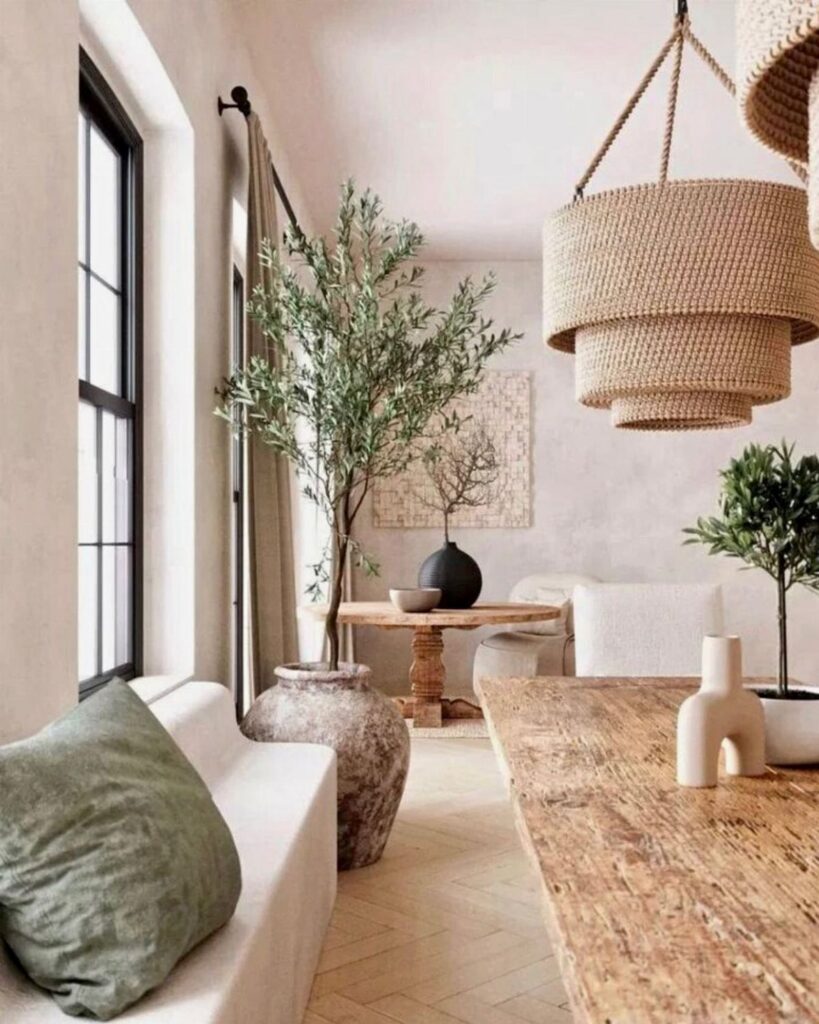
These ideas range from a fresh coat of color on a chair to a kitchen with open shelving, and most can be done one piece at a time.
Start with what you already own: a neutral sofa takes a macrame hanging or layered rugs well, and bare walls are a good spot for a gallery wall.
1. Vibrant Colors in Boho Style Design
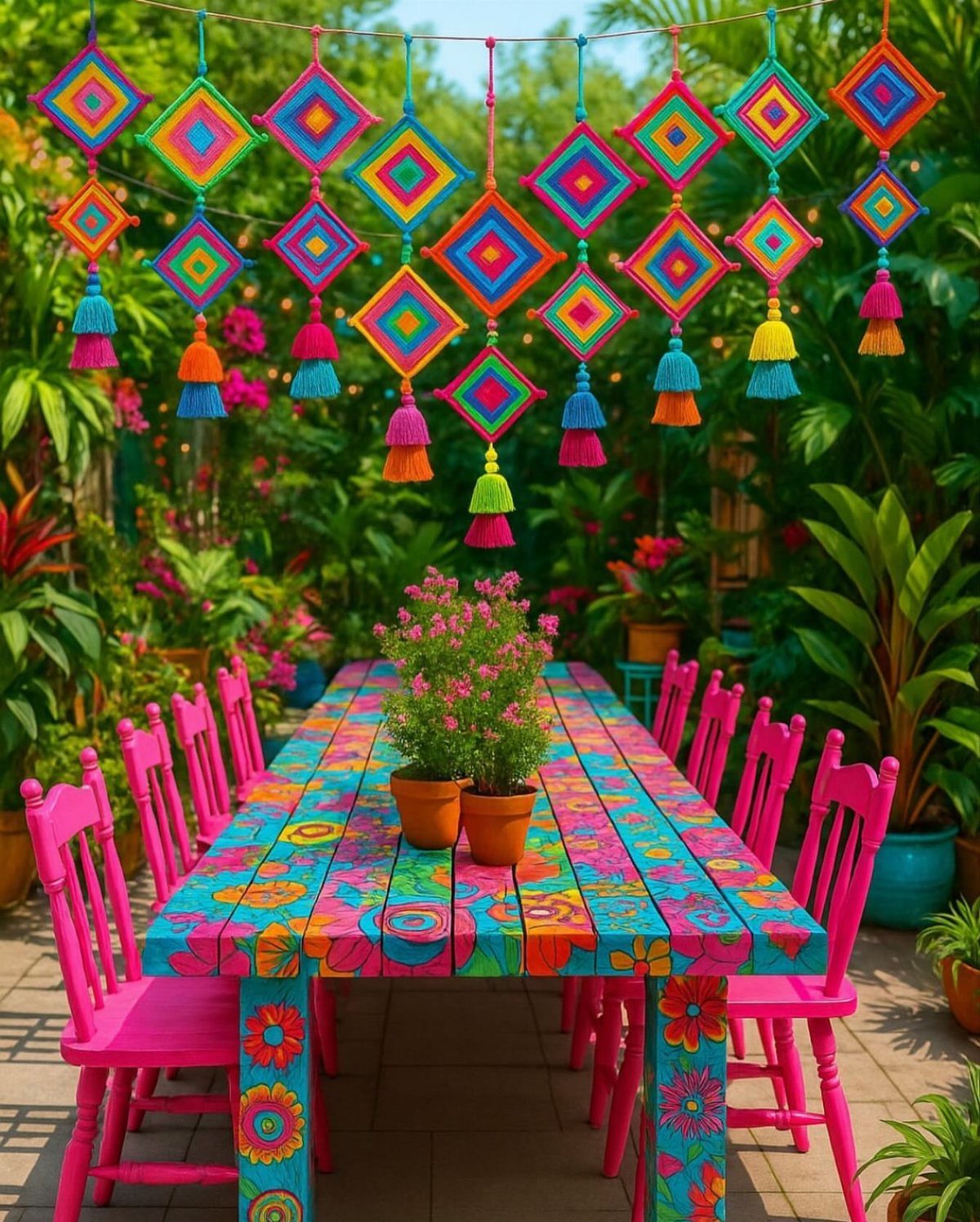
Paint does the work here. A table covered in florals and a set of hot pink chairs turn a plain patio into the loudest spot on the block, and a can of paint costs far less than new furniture.
Pick one saturated color for the chairs and let the table carry the pattern.
Thrifted wood takes paint well, so start there. Yarn ornaments overhead repeat the palette without crowding the table, and they are easy to make yourself.
Keep the greenery as the calm part. Potted plants give the eye somewhere to rest.
2. Macrame and Fringe Textiles
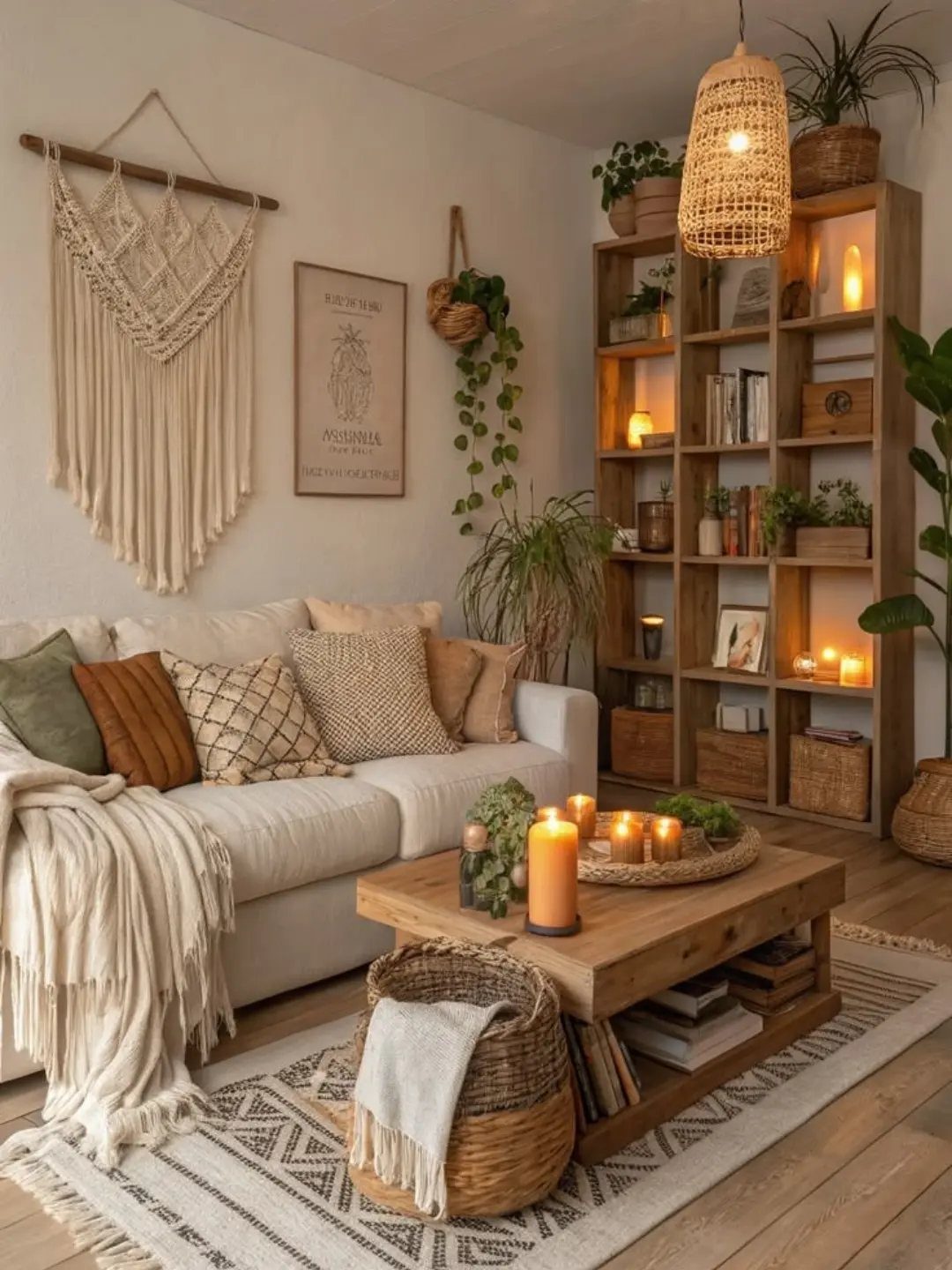
One large macrame hanging over a sofa does more for a room than a dozen small accents; aim for a piece about two-thirds the width of the sofa, hung a hand’s width above the back cushions.
I like it best against a plain wall, where the knots and cords read clearly.
Fringe is the cheaper, easier second step.
Drape a fringed throw over the arm of the sofa and let the edge hang loose. Pair both with patterned pillows, and keep the sofa itself neutral so the textures stand out.
If you knot your own hanging, cotton cord is the usual place to begin.
3. Rattan and Wicker Furniture
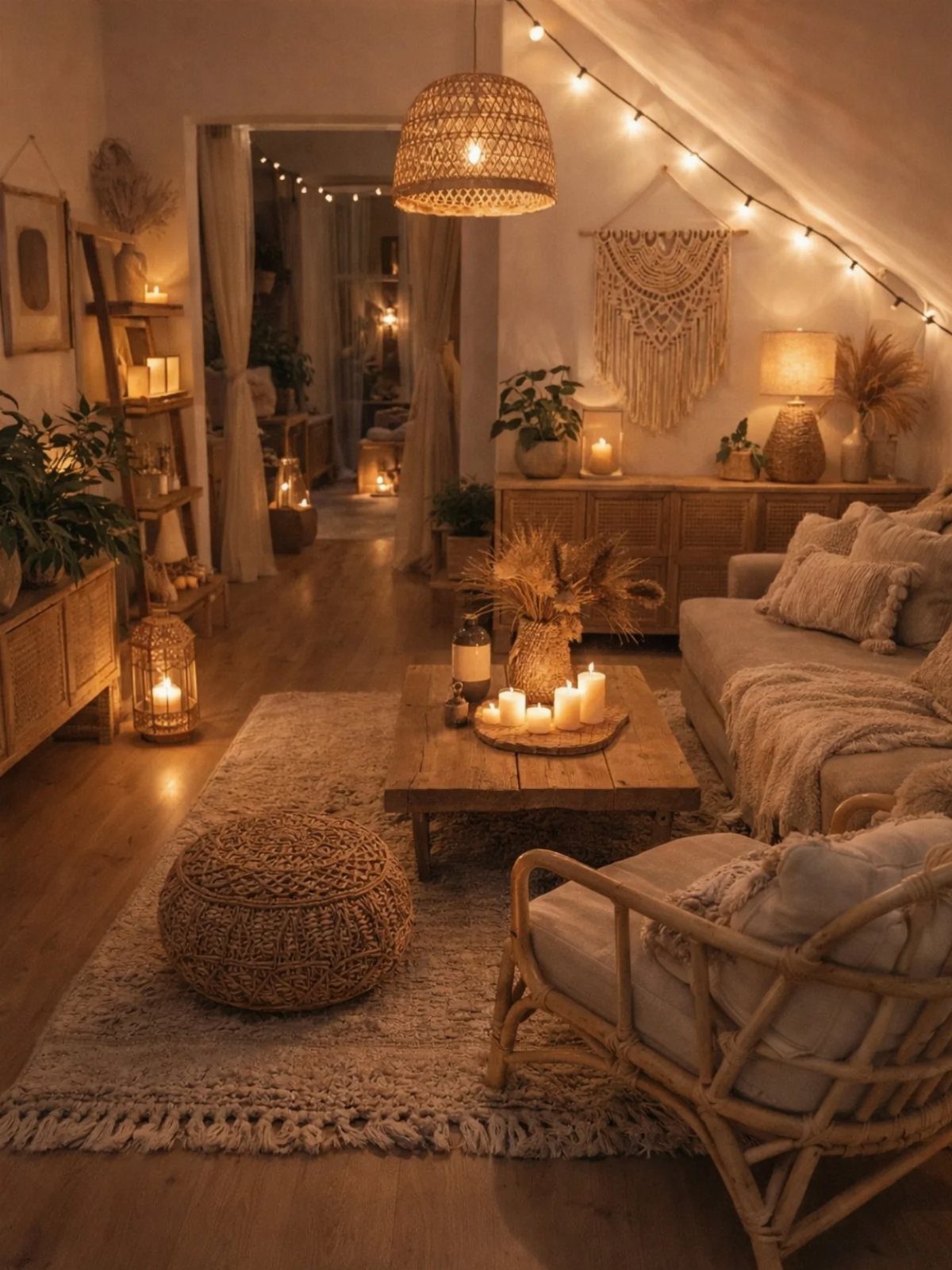
Rattan brings a warm, open weave that softens wood and fabric, and one armchair is enough to start. A woven pouf beside it gives you a footrest and extra seat in one piece.
Add a wicker lampshade and the same texture reaches eye level. I would stop at 2 or 3 woven pieces so the room reads layered, not like a basket shop.
Secondhand rattan is common and usually cheap, so check thrift stores and online listings before buying new.
4. Moroccan Lanterns and Rattan Pendant Lights
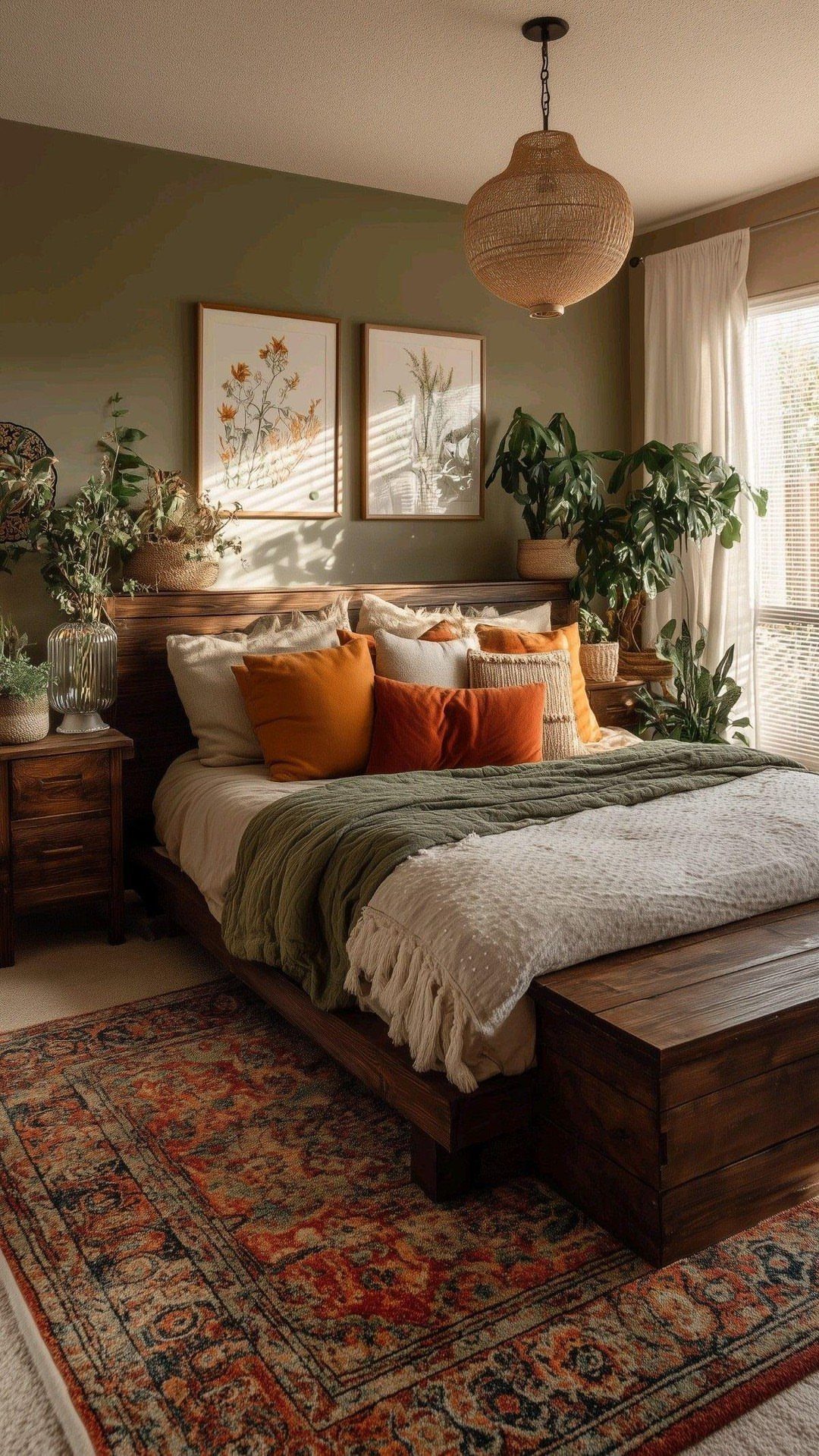
Look up before you buy another lamp. A woven rattan pendant hanging over a bed gives the ceiling its own texture, and it replaces a plain fixture without touching the rest of the room.
Choose a shade whose weave is open enough to throw patterned shadows once the bulb is on. Moroccan lanterns do the same job with metal and pierced patterns, and they suit a bedside table or a corner.
Pick one or the other per room. 2 competing fixtures will fight each other.
5. Boho Kitchen with Open Shelving
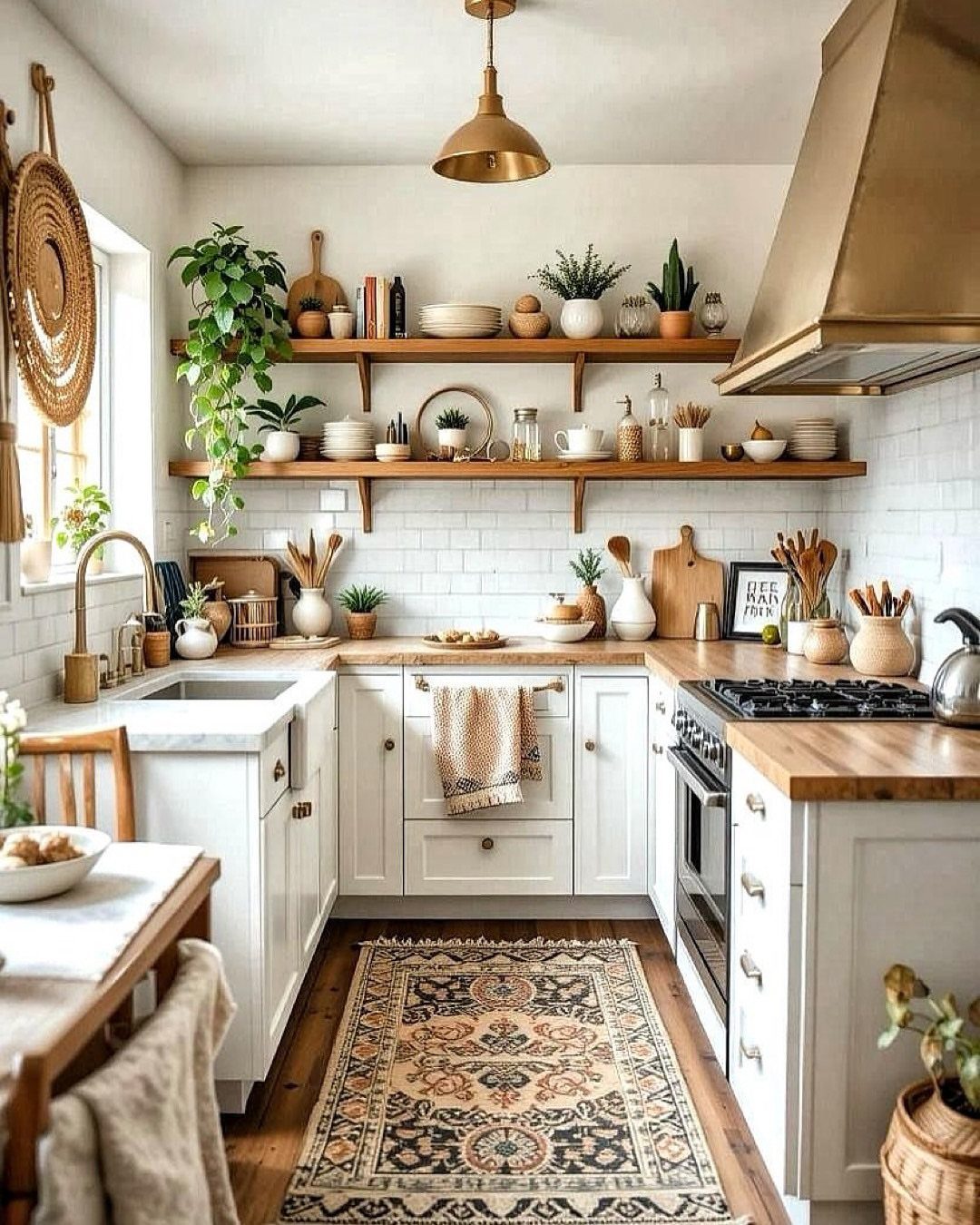
Open shelving lets a kitchen show its personality without a full remodel.
Open wooden shelves stocked with plants and everyday dishes soften white cabinets and tile, and they cost far less than new cabinetry; I’d keep to 2 or 3 shelves so the wall still has room to breathe.
Mix the two on each shelf: a few plants, then stacked plates and bowls you actually use. Anything dusty or greasy belongs behind a door, since open shelves need regular wiping.
A vintage runner on the floor and brass fixtures add warmth. Both are easy to swap in later, one at a time.
6. Layered Rugs
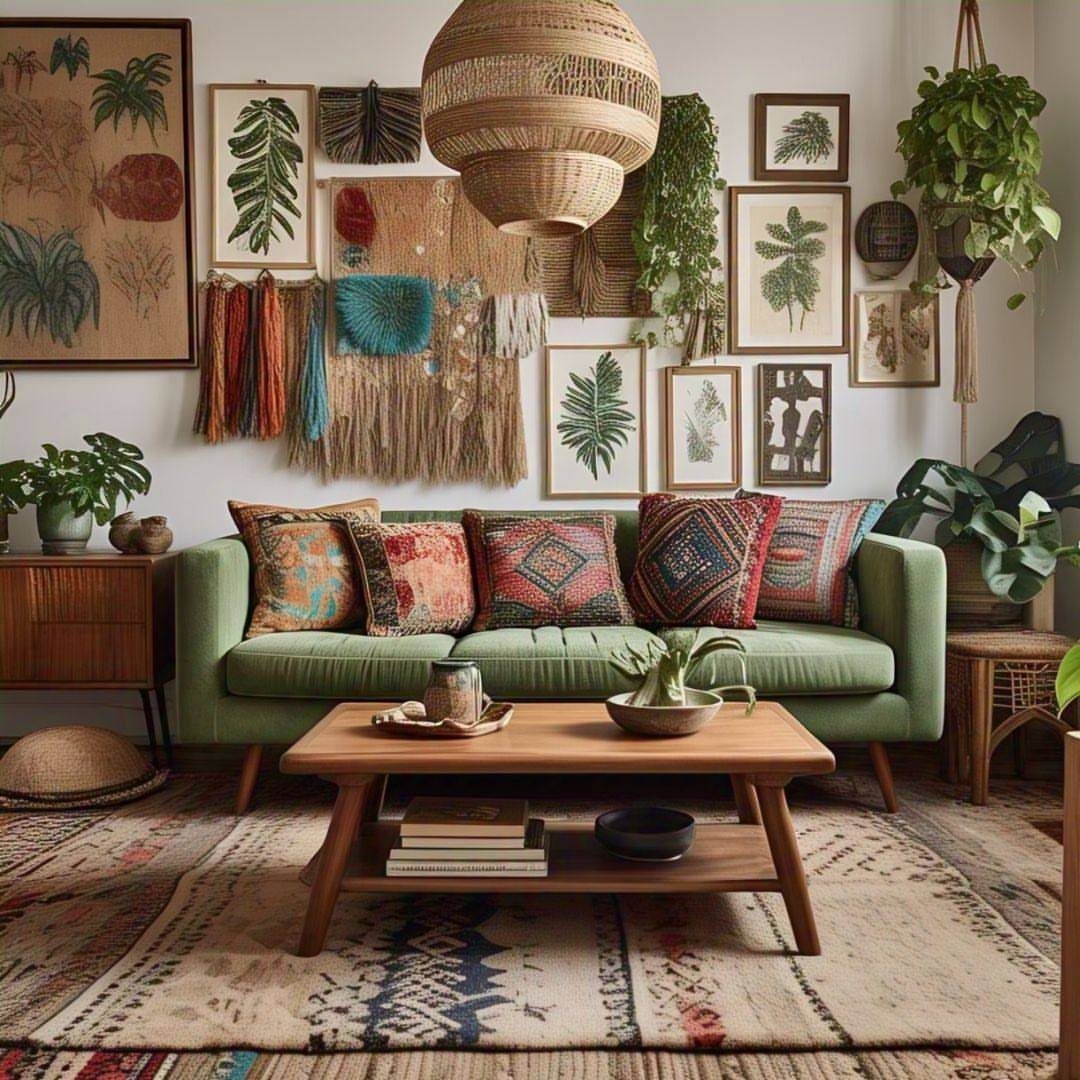
Stack a smaller patterned rug on top of a larger one and the floor gains depth right away. The bottom rug sets the base, and the top one adds the pattern.
Pick a larger, plain or low-contrast rug for the bottom layer, then center a bolder piece over it so a border of the first still shows. Make sure the patterns share at least one color, or the layers will clash.
A green sofa handles this well. Rugs are among the easiest things to find secondhand, which keeps the cost low.
7. Mismatched Vintage and Modern Furniture
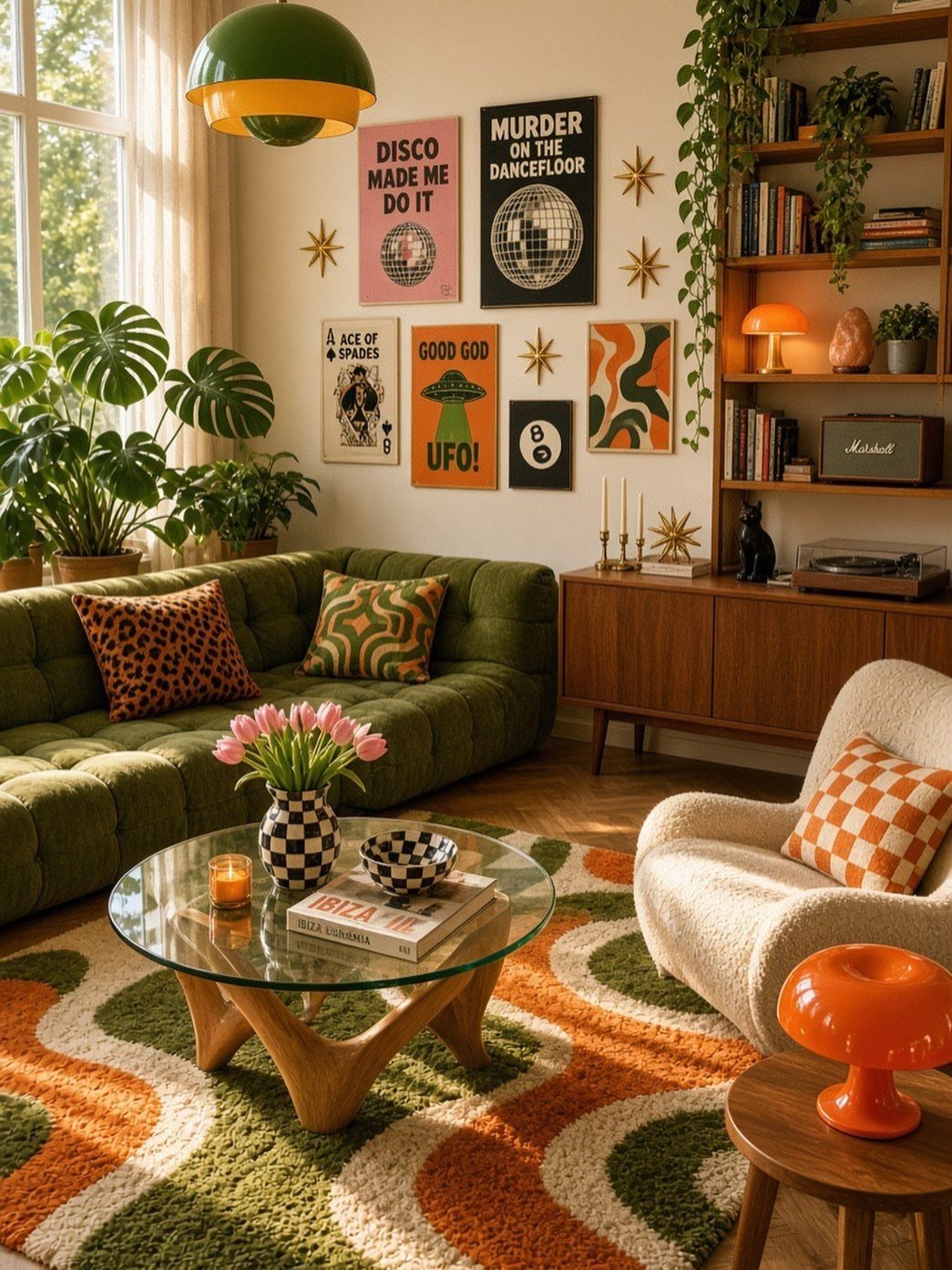
Two pieces can sit far apart in era, color and texture and still agree, as long as they share a scale and one quiet thread, like a similar tone or a soft finish.
The sofa brings color and a tufted, older shape; the chair and glass coffee table bring a cleaner, newer one.
Anchor the room with one large piece and let the others contrast with it in material or era. Posters on the wall tie the mix together, so frame a few that match your taste.
Skip the matching set. Thrift one piece and buy one new.
8. Outdoor Rugs
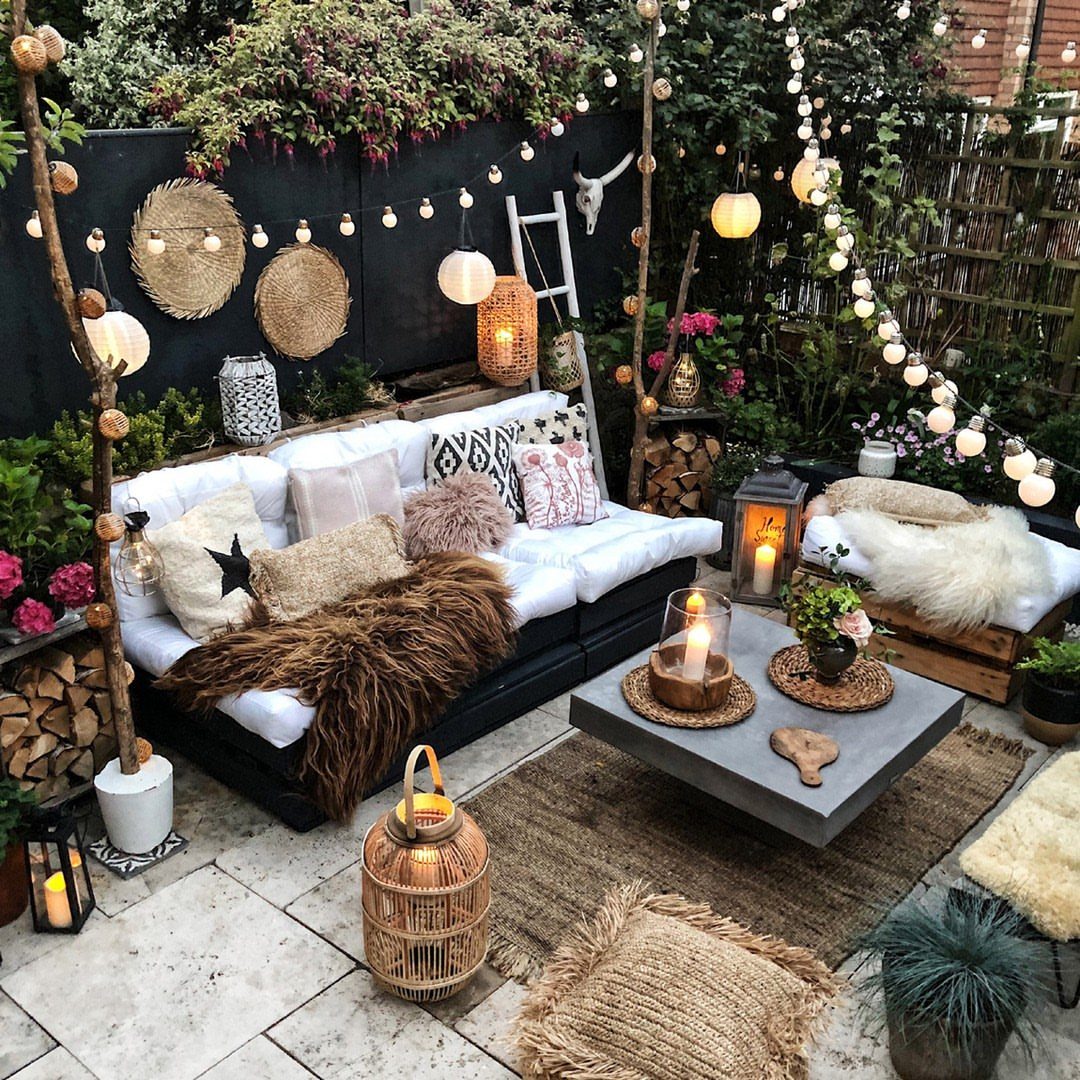
A natural woven rug on stone tiles marks off an outdoor lounge and makes bare ground feel like a room.
Size it so the front legs of the seating rest on the rug, which keeps the group looking connected. Cushions and throw pillows then add the comfort, and string lights and lanterns finish the evening look.
Cold stone is a hard surface to sit near, so a rug is the cheapest fix.
9. Mirrors
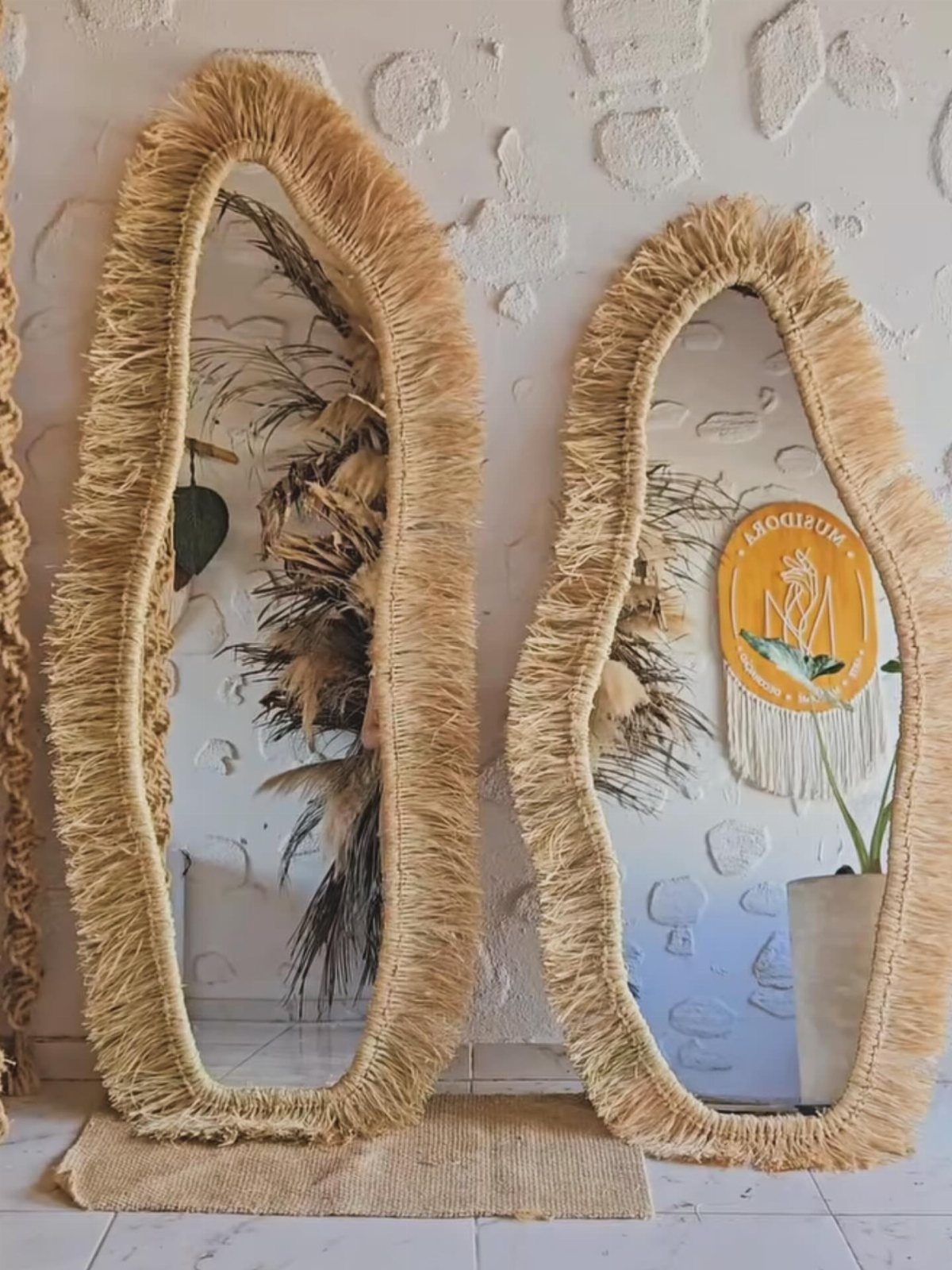
Fringed raffia mirrors turn a reflective surface into a textured one.
Lean 2 mirrors of different sizes against the wall instead of hanging them; it looks relaxed and skips the drilling. Oval or uneven shapes suit boho better than a sharp rectangle.
I’d place them opposite a window or a few dried stems, so the reflection has something worth repeating.
10. Comfortable Seating
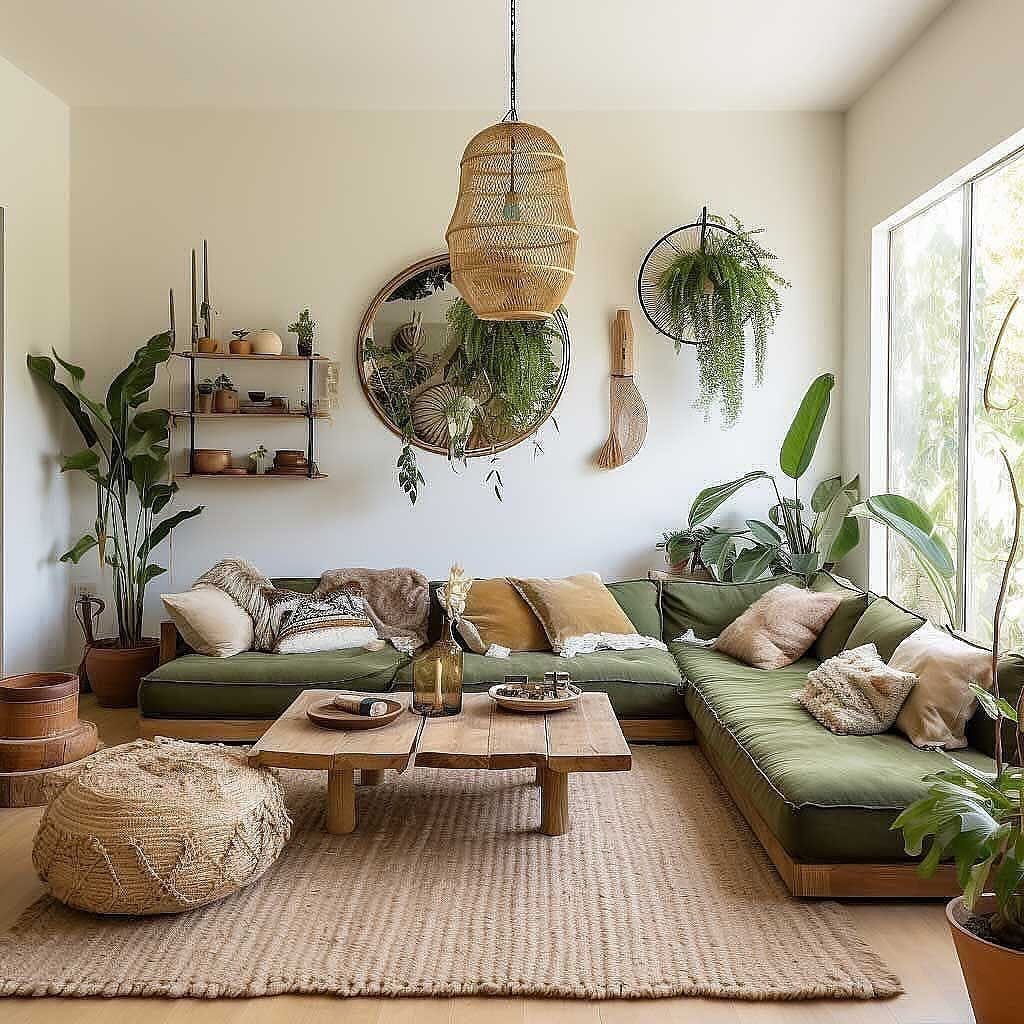
Low, deep seating sets the tone for the whole room. A green sectional with soft accent pillows invites people to sink in, and a woven pouf adds a spare seat or footrest.
Choose a sofa that sits low and add pillows until you want to lie down on it. Keep a wooden coffee table within arm’s reach so drinks and books have a place.
Comfort beats symmetry here. If everyone ends up on the floor, the seating needs more cushions.
11. Boho Bathroom with Plants
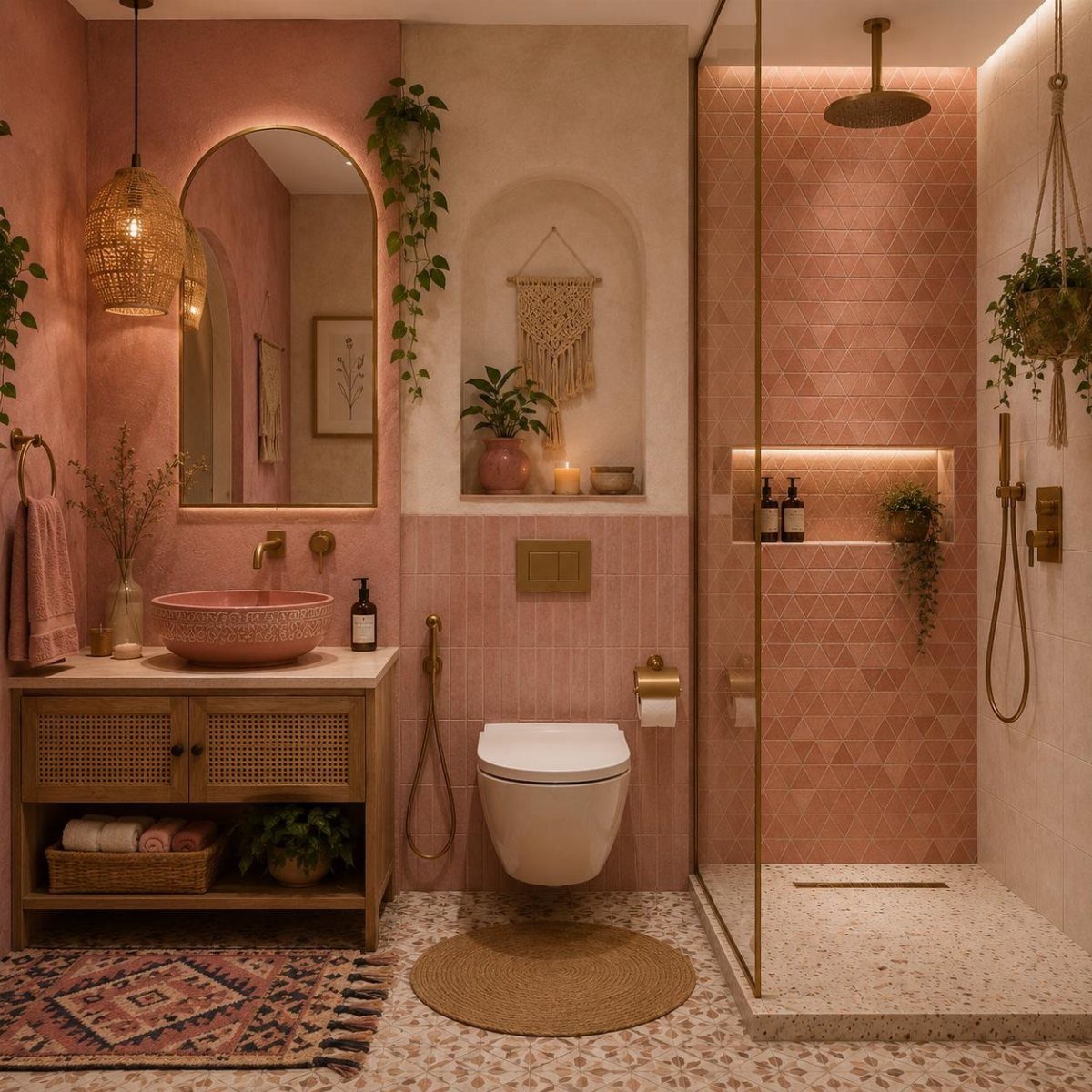
Plants make a bathroom feel like a retreat, and a pink and beige palette keeps it soft instead of loud.
Place a few potted plants on the vanity and a ledge, and tuck macrame into a wall niche for texture. Woven rugs warm the floor.
Humid rooms suit leafy plants, but choose ones that tolerate your light level. Start with 2 or 3 pots.
12. Earth Tones
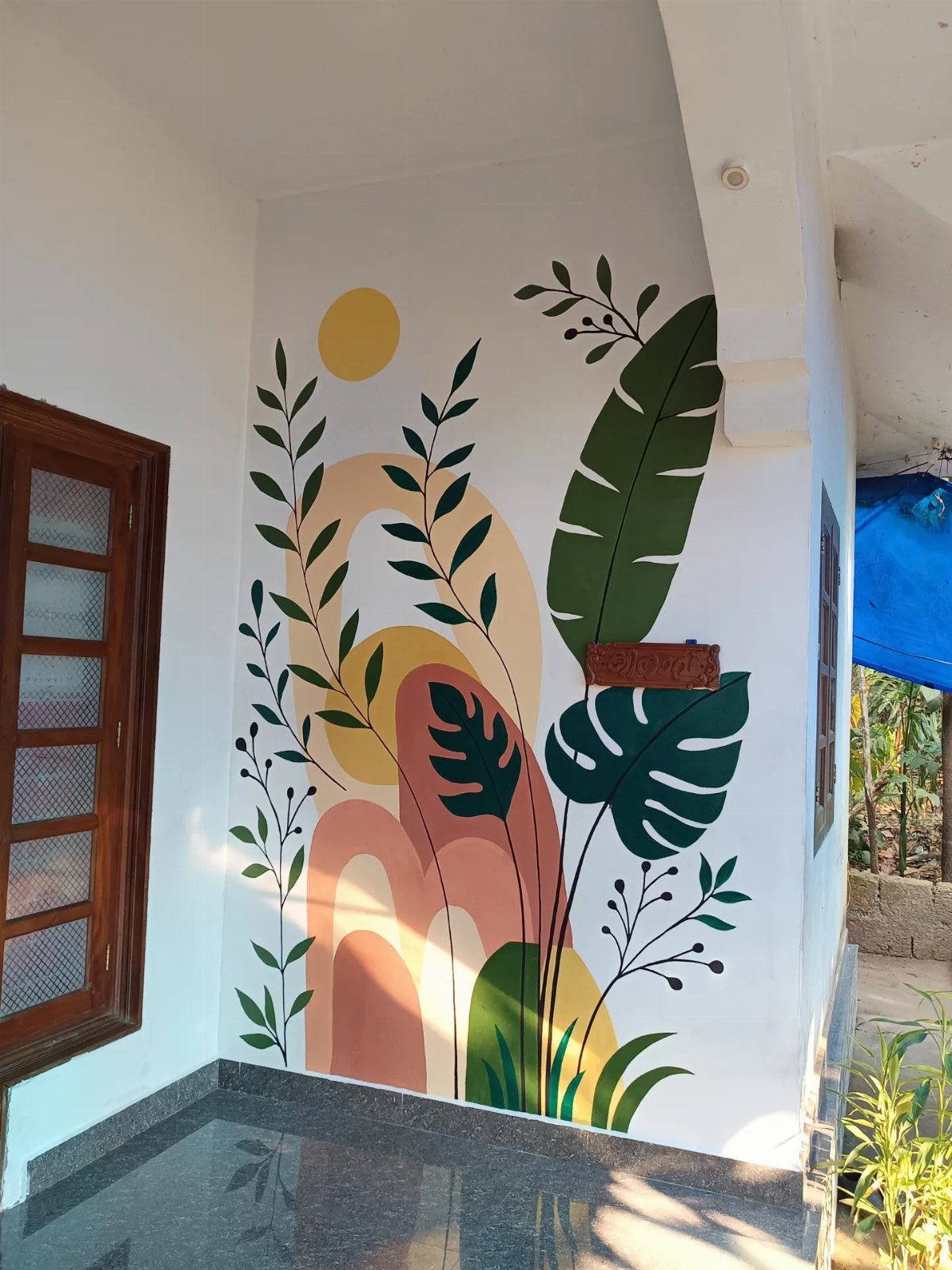
Terracotta, ochre and green belong together because they all come from soil, clay and leaves. A painted mural on a porch wall puts them to work for the price of a few cans of paint.
Keep the shapes simple: arches, big leaves and a round sun are easy to paint freehand. Use warm yellow for the sun and let the green leaves carry the rest.
If a mural feels like too much, paint one arch. I’d rather see one confident shape than a wall full of timid ones.
13. Indoor Plants
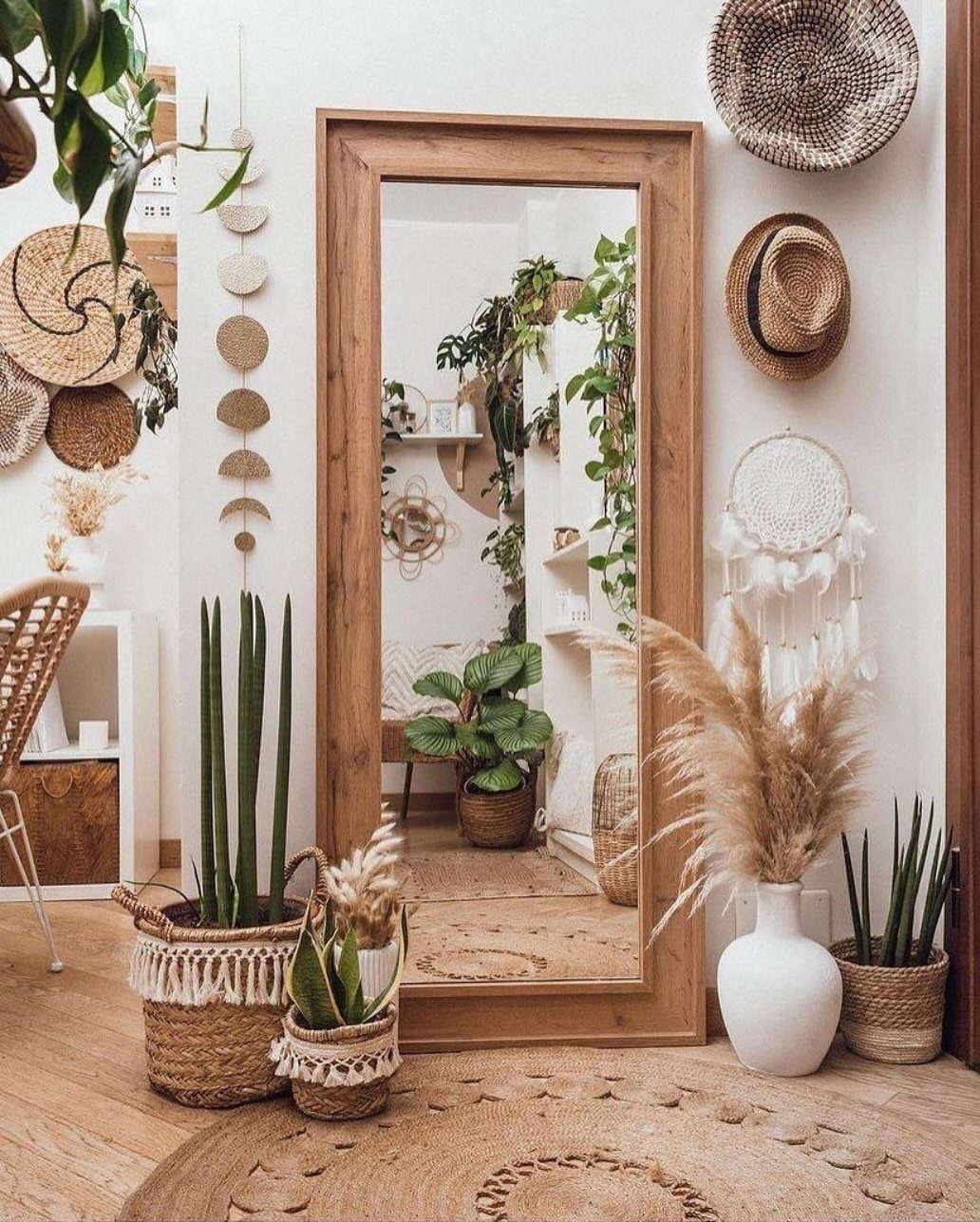
Snake plants are the easy pick here: upright, sculptural and happy in a woven basket.
A jute rug underneath ties the greens to the baskets.
I’d keep the plant count to what you will actually look after. A few healthy pots beat a crowd of sulking ones.
14. Gallery Walls
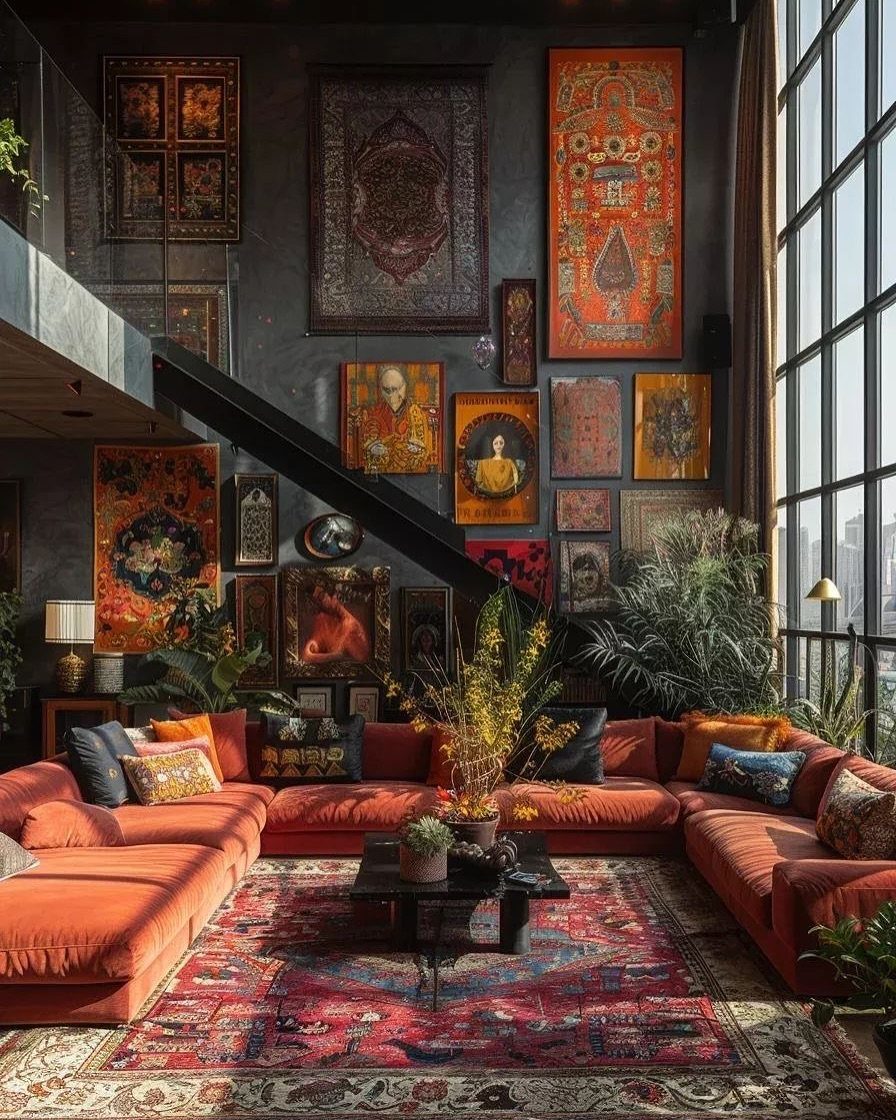
A dark wall makes mixed frames look intentional. Paintings, textiles and odd little artworks all read as one collection once they share that backdrop, and nothing has to match.
Lay everything on the floor first and move pieces around until the gaps feel even.
Then hang the largest piece first and build outward from it. Thrifted frames keep the cost low.
I’d mix in one woven hanging among the paintings, since it breaks up the flat rectangles.
15. Layered Bedding
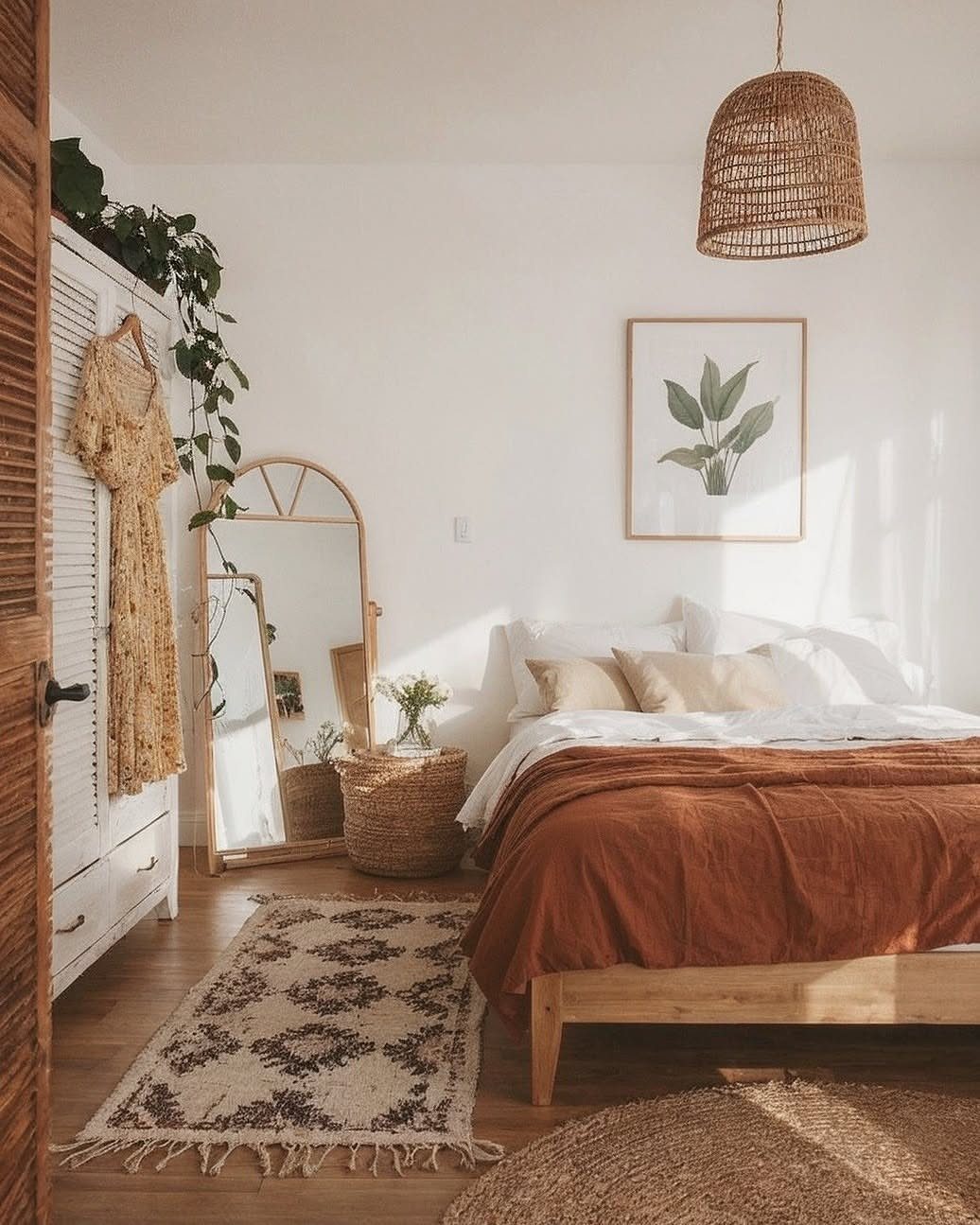
Bedding gets cozy when each layer has a different texture: smooth white linens as the base, a terracotta layer over them, then throw pillows on top.
Start with the white set, fold the terracotta cover across the lower third of the bed, and stack 2 or 3 pillows against the headboard. Mixing a linen finish with a chunkier weave gives the layers something to show.
A woven rug beside the bed means your feet land on texture too. Swap the colored layer when you want a new look; the white stays put.
16. Fabric Canopy
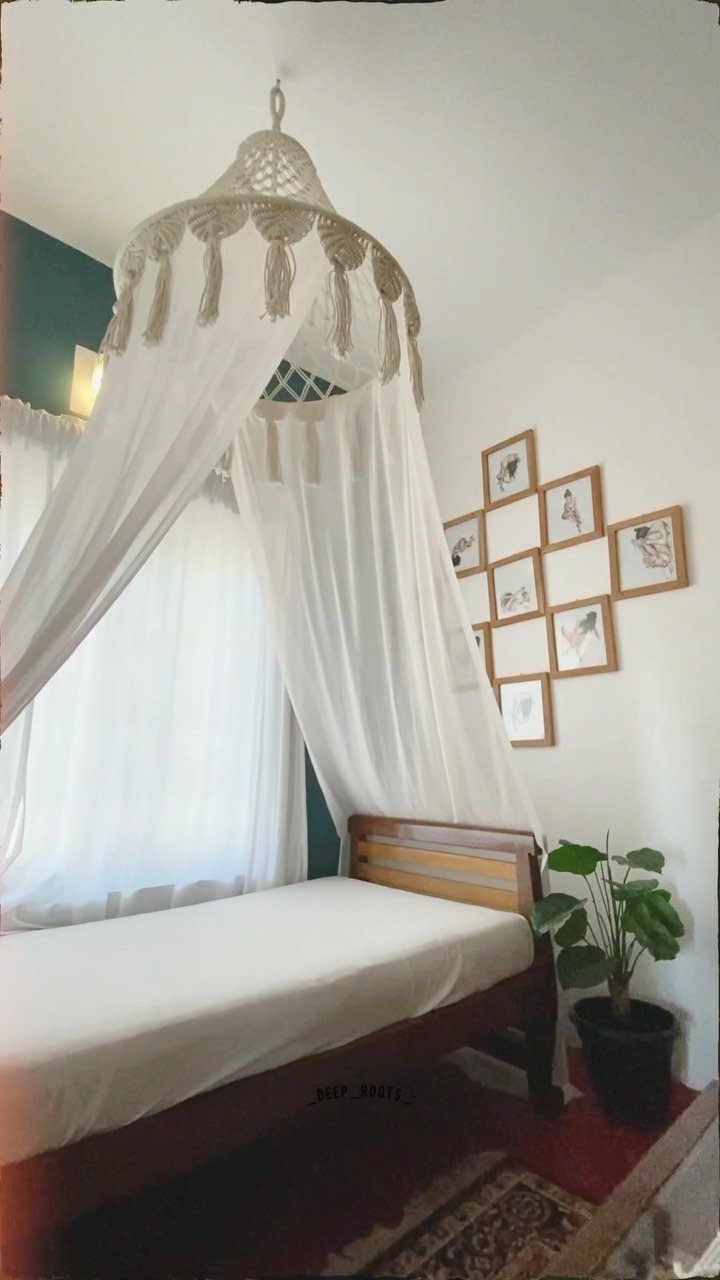
Hang a length of white fabric above a bed or daybed and the spot becomes a small room of its own. Sheer cloth lets light through, and macrame tassels along the edge add the boho texture.
Fix one ceiling hook above the center of the bed and let the fabric fall to each side. Keep the wall beside it simple, as with the framed art and plant here, so the canopy stays the focus.
This is a cheap project, since the main cost is fabric and a hook.
17. String Lights
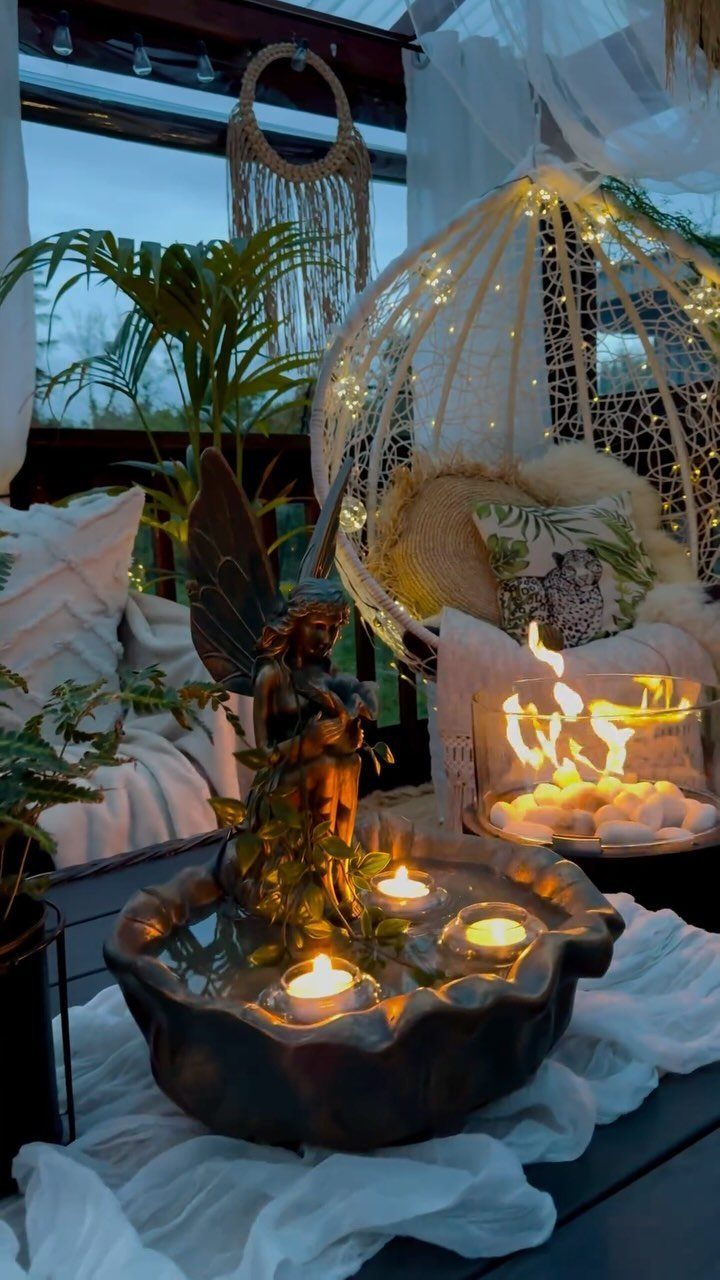
Wrap string lights around a hanging egg chair and a patio corner starts to glow at dusk. Warm white bulbs suit the look better than cool ones.
Twist the strand loosely around the frame instead of pulling it tight, and hide the plug end behind a plant. Candles in a bowl and a small fire pit add light at table height.
One strand is enough.
Boho Style History
Boho has 3 roots, and knowing them tells you what to buy.
The Romani people came first. The Romani people, who trace back to India, traveled west through several countries and reached Central Europe by the 1200s, and the global details they picked up along the way still show in boho today.
Next came the artistic, countercultural mood of post-revolutionary France.
In the 19th century, Parisian bohemians lived a wandering life, and the places they visited shaped how they decorated. Artists later brought that look into their studios.
In the 1960s and 1970s, the look picked up a relaxed, retro, nature-minded streak that has stuck around. Free-spirited Americans traveled across Europe and came home with a mix of cultural influences.
If a room feels like a mix of places and eras, it is following the original recipe.
Boho style remains a free-spirited, eclectic style all about celebrating your individuality.
— Bob Vila
Personal Expression in Decor
A boho room works when it reads as yours, so start with what you already own and care about.
Artwork that means something to you and objects you found along the way do more than anything bought to match a photo.
Wood, rattan and leather make a good base for those pieces, since natural materials ground everything layered on top. Mix vintage items with newer ones and anything handmade that you are fond of.
You can also choose your own volume. Go loud with saturated color or keep a room quiet in muted earth tones; either one reads as boho.
I’d judge each piece by one test: would you miss it if it left? Keep what passes, and the space ends up feeling collected and lived in, not staged.
Mixing Patterns
The Romani, Bohemian and Hippie cultures behind the style were all about living simply, so a costly showpiece works against the spirit.
Mixing assorted pieces has a useful side effect: the room looks collected over time, even if you pulled it together in a month.
Layer colors and patterns casually, without a formula. Textiles are the easiest place to experiment, since a pillow or throw is cheap to swap if a combination fails.
Treat your own eye as the designer. If a pairing makes you smile, keep it.
Frequently Asked Questions
What is boho style?
Boho style is a relaxed, mixed way of decorating that pulls from different places and eras. It traces back to the Romani people, 19th-century Parisian bohemians, and free-spirited Americans who traveled Europe in the 1960s and 1970s.
Boho at its core means a room put together slowly from different places and eras, never bought as one set.
What are some ideas for bohemian bedroom decor?
Start with the bed: crisp white sheets underneath, a terracotta throw folded over the bottom third, and 2 or 3 pillows stacked against the headboard.
Add a woven rug beside the bed, or hang a length of sheer white fabric from one ceiling hook for a canopy.