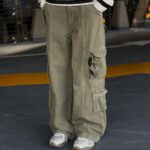
Your school’s dress code and your grade level decide which of these outfits works, because a rule against sneakers or a day spent on the carpet rules out the corduroy suit with sneakers or the wide-leg pants before taste comes into it.
The list runs from a sweater vest over a T-shirt to a corduroy suit with sneakers, and from a cardigan layered with a blazer to wide-leg pants.
1. Wide-leg Pants
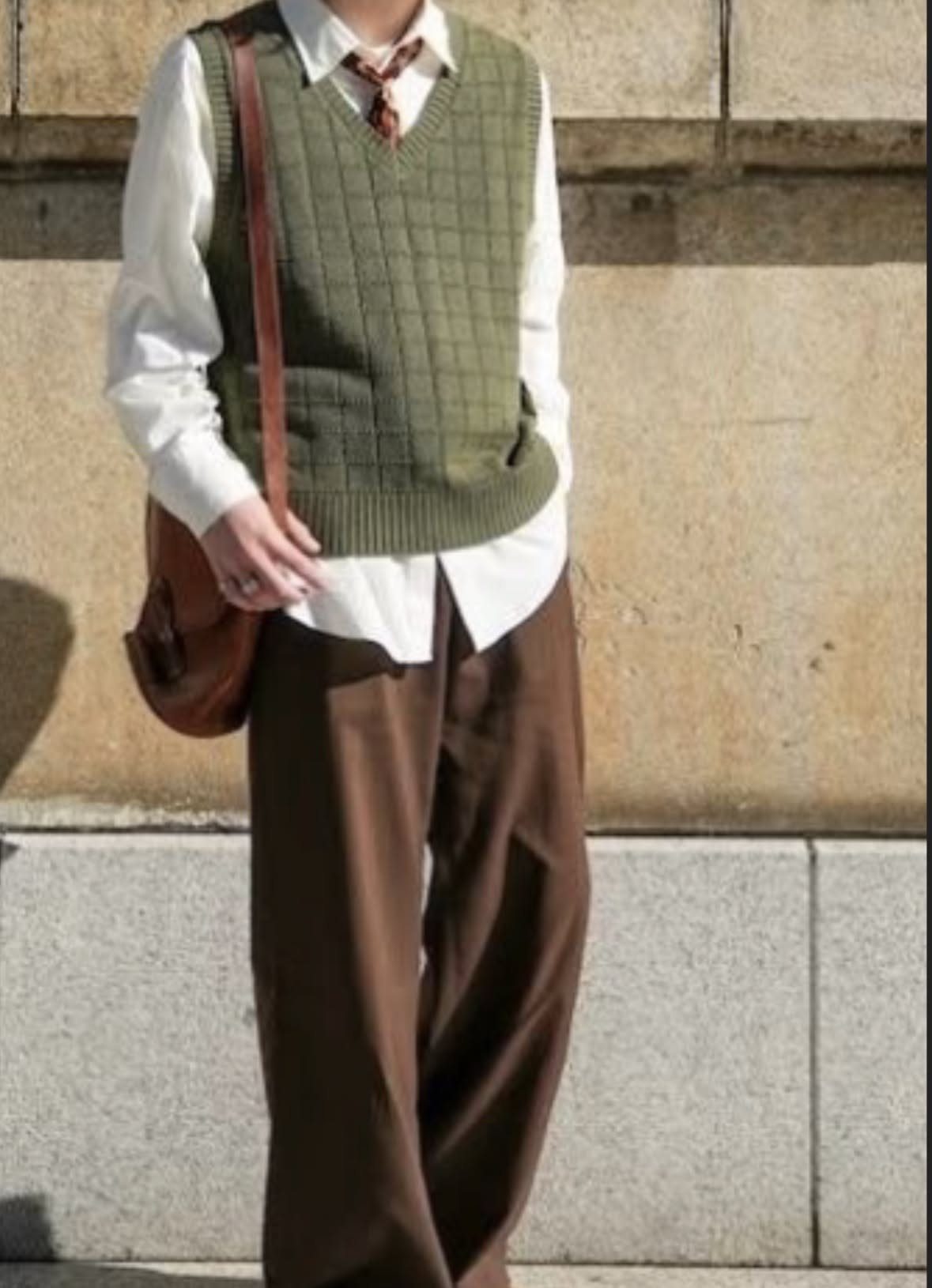
Wide-leg trousers in brown read as a deliberate choice, not a fallback. The extra fabric through the leg moves easily when you crouch beside a desk or cross a playground.
Keep the top half tidy so the volume below looks planned. A white button-down under a knit vest does that job with wide-leg pants, and a tie finishes it for days with observations or parent meetings.
Pick a hem that clears the top of your shoes. Wide legs that pool on the floor catch on everything.
2. Button-down Shirts

A long-sleeved button-down with a bold print is the quickest way to look pulled together without adding a single layer. Worn with plain black trousers, the shirt does all the talking.
One good shirt carries the look, which is why I like this approach. Leave the collar open and the sleeves down for a normal teaching day, then add a tie if the schedule calls for it.
Let the shirt do the talking and keep the trousers, shoes and accessories quiet. Black trousers and simple shoes let a patterned shirt look confident instead of loud.
3. Sweater Vest Over Collared Shirt
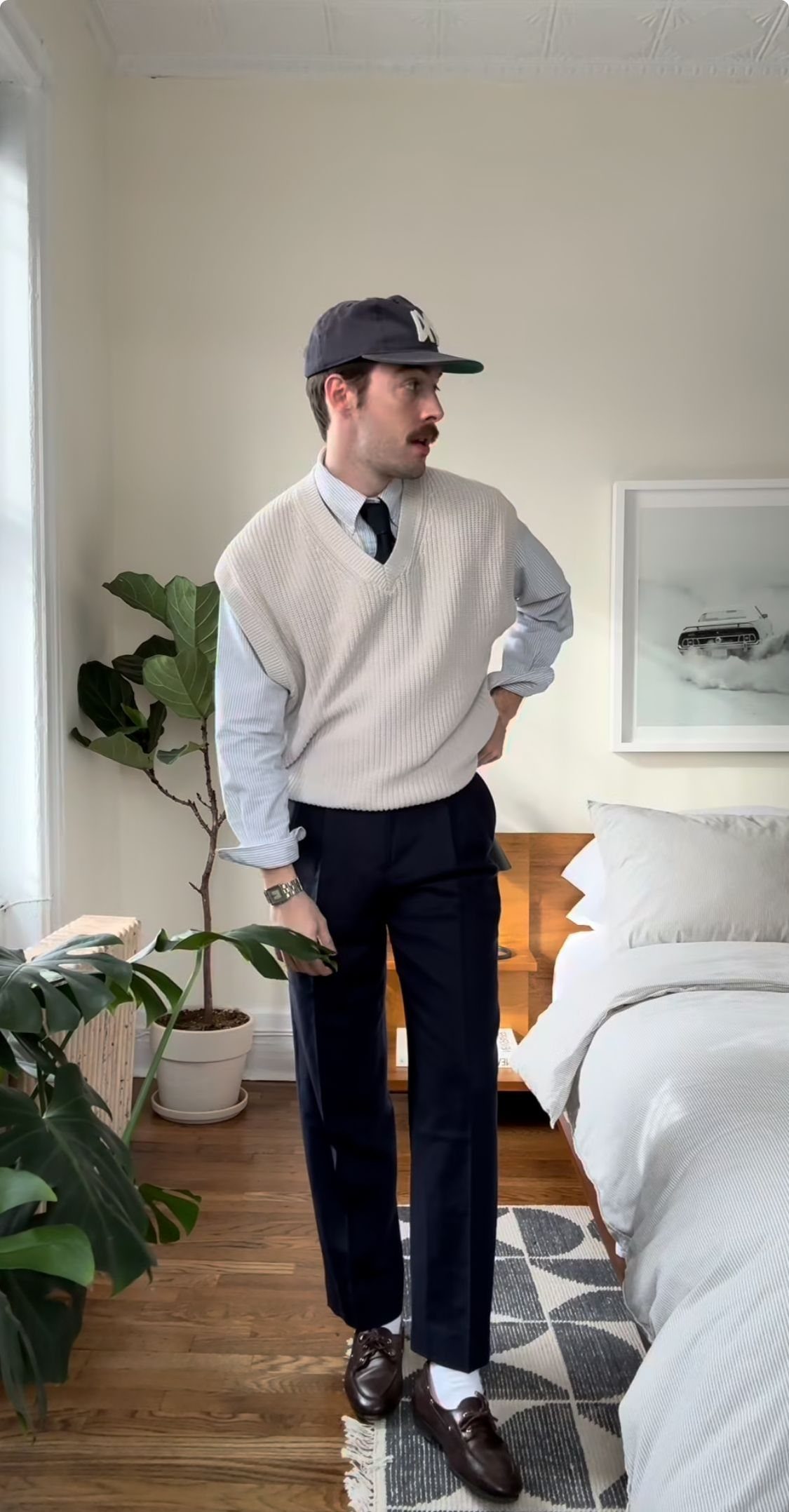
Over a collared shirt, a knit vest adds warmth at the core while leaving your arms free to write on a board. That is its main practical advantage over a full sweater.
A light blue shirt under a cream vest, with a tie and navy trousers, is the version I would copy: soft colors, low contrast, nothing fighting for attention. Tuck the shirt in so the vest sits flat.
Loafers keep it comfortable through a long day on your feet.
4. Sweater Vest Over a T-shirt
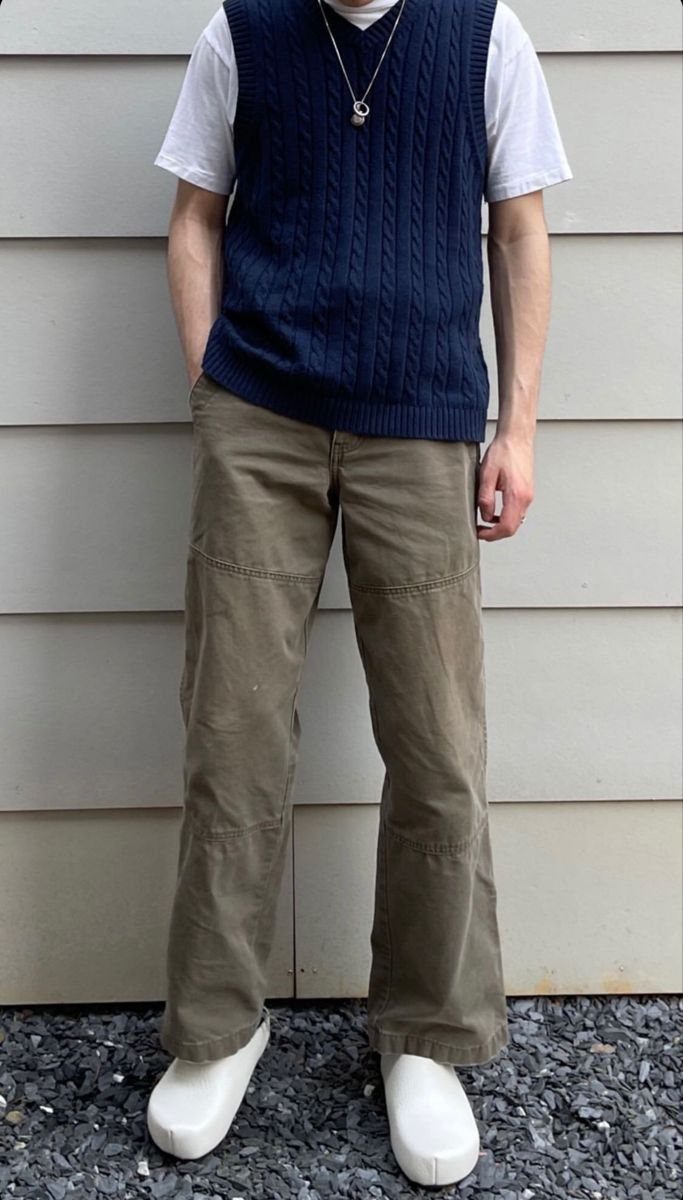
Swap the dress shirt for a basic white tee and a sweater vest turns relaxed while still looking planned. The vest supplies the structure; the tee keeps it easy.
Stick to that range and the outfit looks intentional.
Choose a tee with a clean crewneck and no graphics. Slip-on shoes suit a day of walking the room, though check that your school’s dress code allows them.
5. Sweater Layered Over Collared Shirt
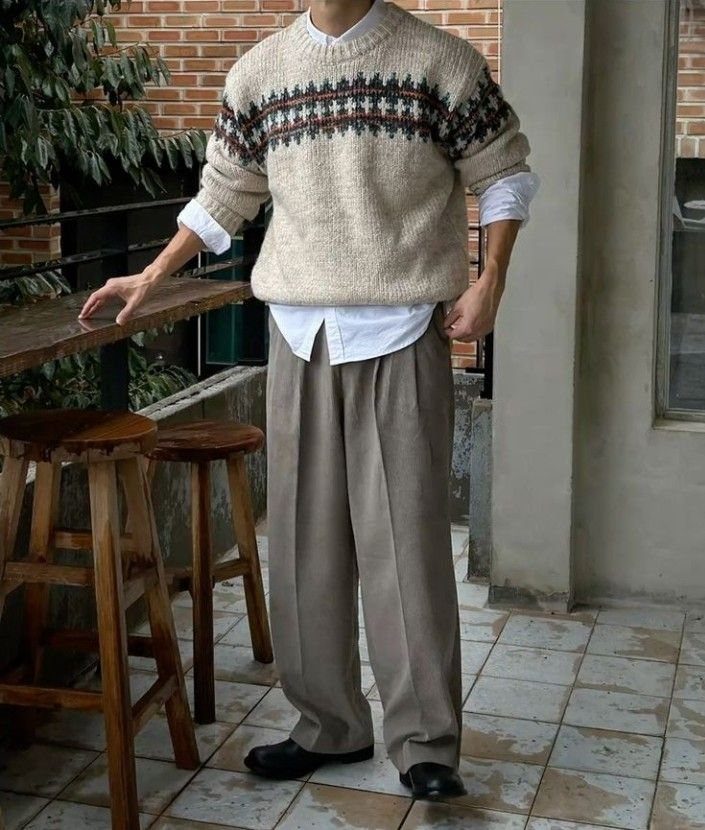
Worn over a collared shirt, a patterned cream sweater gives you a cozy outfit that still shows a proper collar.
Leave the shirt untucked and let the hem peek out below the knit, which suits a roomy sweater better than a tight tuck.
I would stay with light, neutral tones like these, since the sweater’s pattern already provides the interest.
Fold the collar flat over the neckline so it sits neatly.
6. Pleated Trousers with Oversized T-shirt

An oversized cream t-shirt works with pleated brown trousers because the pleats bring the tailoring the tee lacks. Together they look relaxed but not careless.
Leather shoes matter here. They tell the room the outfit is dressed up on purpose, and they carry more weight than any accessory.
Tuck the front of the shirt loosely, or leave it out if it ends at the trouser seat. Pick a tee in a heavy, opaque fabric so it hangs cleanly instead of clinging.
7. Long Coat Over Layered Separates
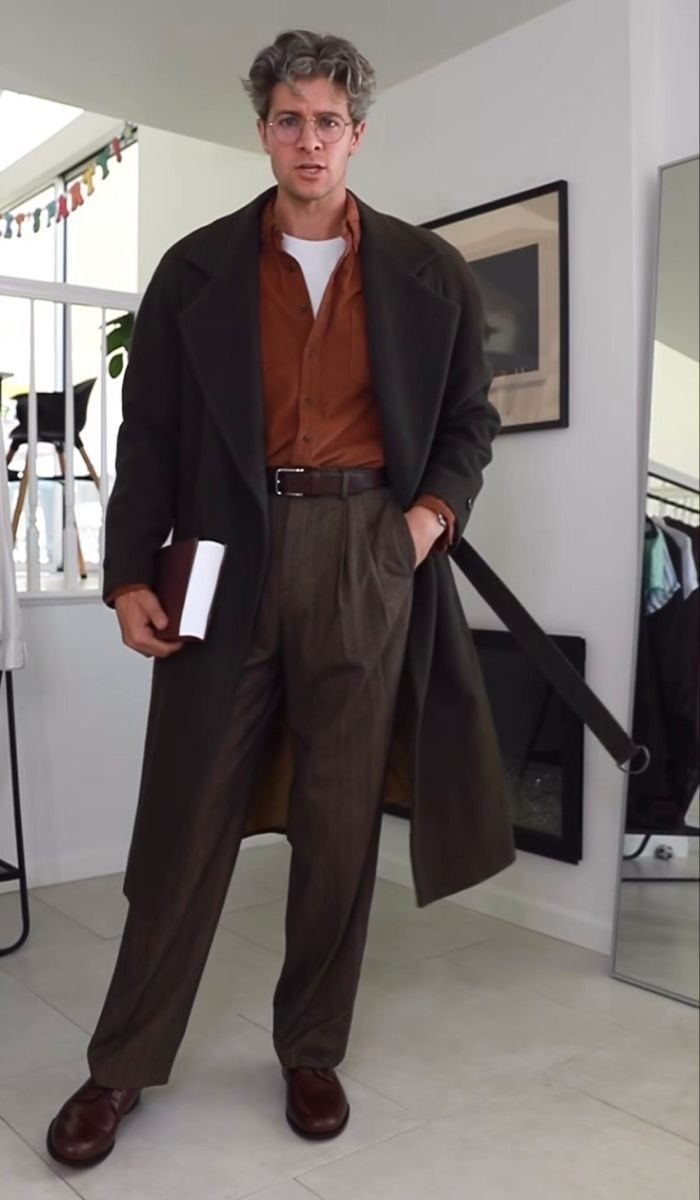
A long coat worn open turns a shirt and trousers into a complete outfit, and a dark olive one pairs well with brown pleated trousers.
Keep the layers underneath in warm tones, as an orange or rust collared shirt over a white tee does.
Check that the coat’s hem falls below your jacket or shirt hem, so the layers read as planned. A pair of plain leather loafers or derbies in brown or black closes the outfit without competing with the coat.
Open is the way I would wear it indoors, where a buttoned coat gets hot fast.
8. Short-sleeved Polo Shirt with Trousers

A knit polo in cream, tucked into olive trousers, gives you a sleeved outfit with no tie and no blazer. The knit adds texture a flat cotton polo lacks.
Tuck it in so the trouser waistband shows; that one move separates this from a weekend look. Brown loafers suit the earthy palette better than black shoes would.
I prefer a polo that sits close to the body without clinging, since a boxy one looks sloppy once tucked.
9. Corduroy Suit with Sneakers
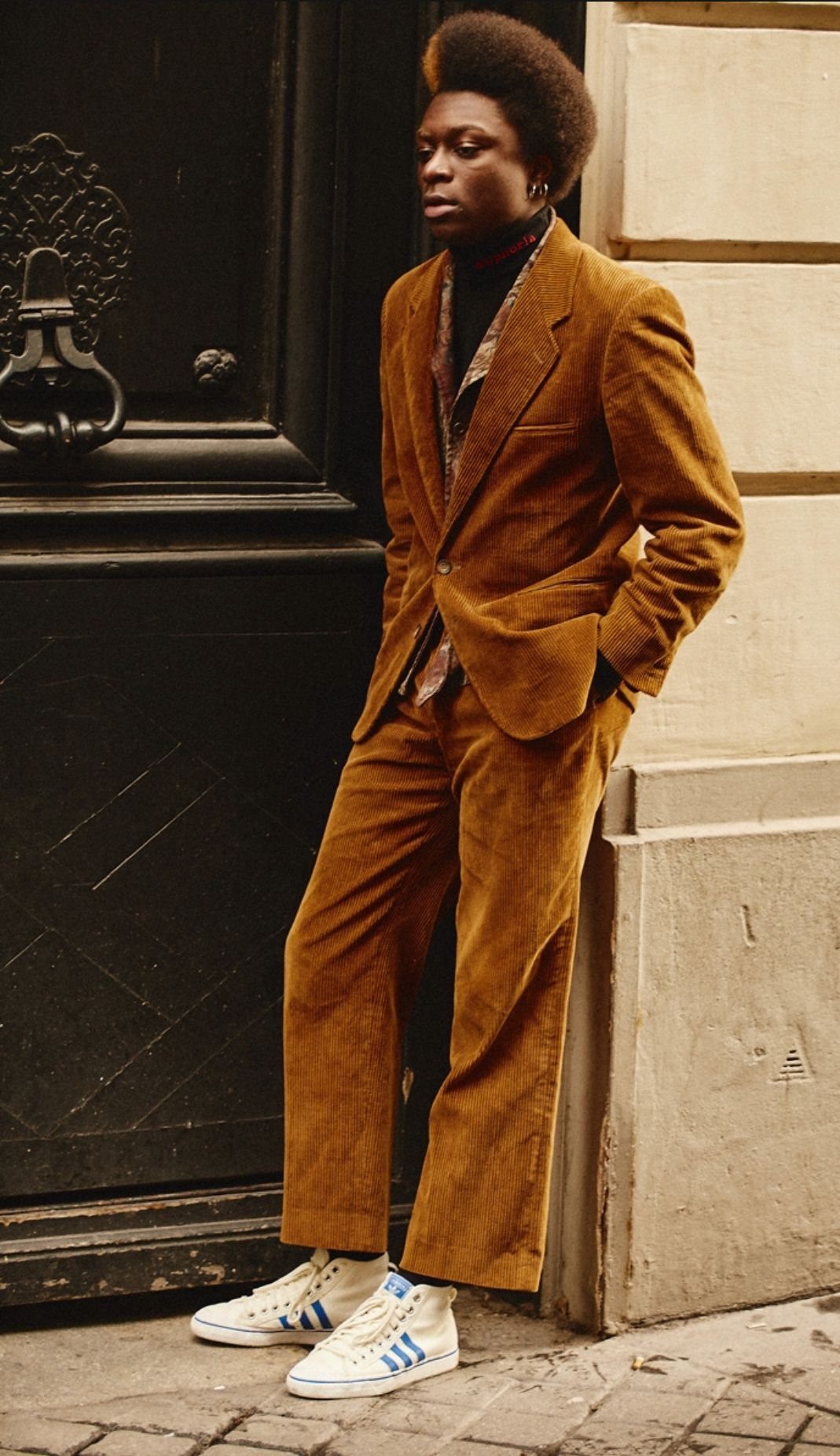
A brown corduroy suit is the relaxed option among suits, and white sneakers make it friendlier still. Wear a dark turtleneck underneath so the cord is the only texture competing for attention.
Matching jacket and trousers look deliberate, which is what keeps sneakers from reading as casual Friday.
Pick clean, bright white pairs and wipe them before school. Scuffed sneakers undo the suit, and your dress code may limit them, so confirm first.
10. Cable-knit Sweater with Trousers

An oversized cable-knit sweater in reddish-brown reads as cozy but not shapeless when the trousers are tan and straight. The knit supplies all the texture, so keep the bottom half plain.
I like a crossbody bag with this outfit: it holds your phone and keys and leaves your hands free for the classroom. Choose a sweater with a snug cuff so sleeves stay put when you write on a board.
11. Cardigans, Blazers, and Denim Jackets
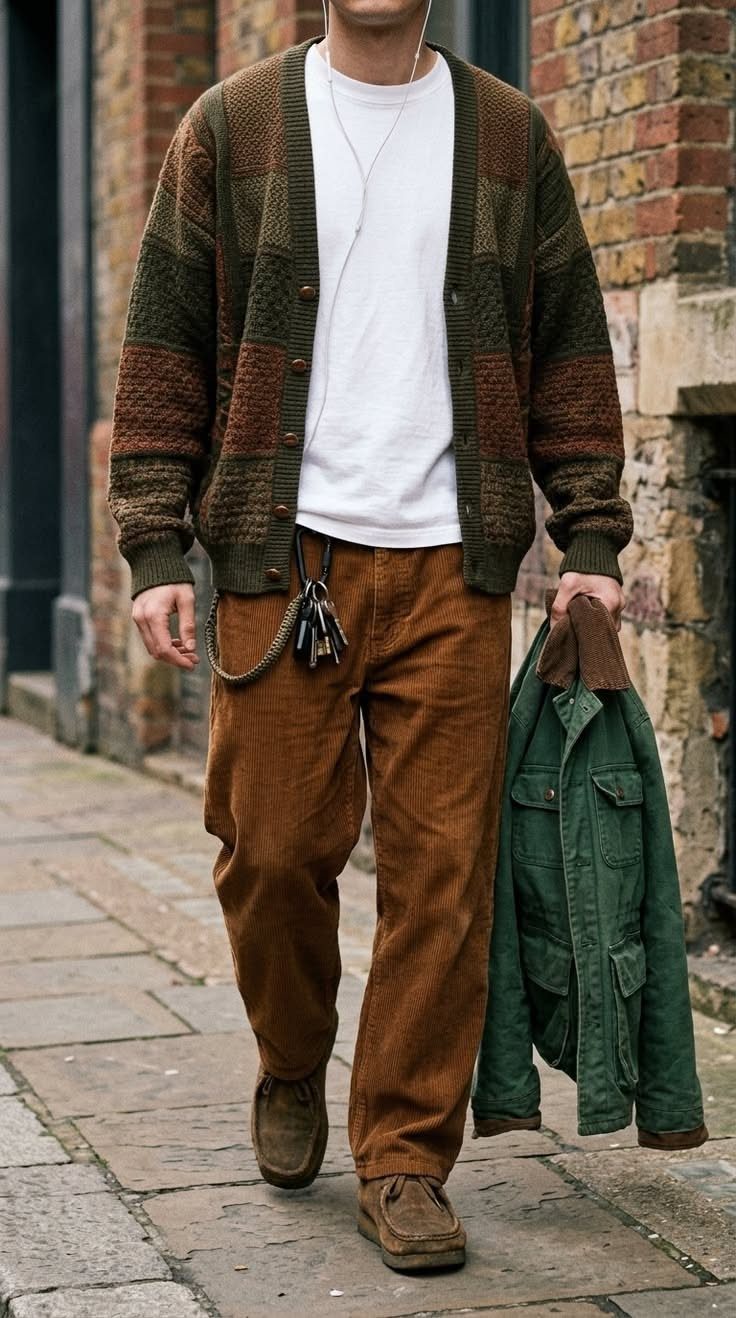
A patterned knit cardigan over a white tee, with brown corduroy trousers and suede shoes, is an outfit of earth tones that agree with each other. The cardigan does the work a blazer would, with less stiffness.
Swap it for a blazer on observation days, or a denim jacket when you want a more casual layer. A jacket carried over the arm helps with changing classroom temperatures.
Keep the tee plain so the cardigan’s pattern leads.
Importance of Comfort
Elementary classrooms ask more of your body than most offices do. You will bend, crouch, sit on the carpet and reach for supplies, so test every outfit through those motions before you wear it to school.
Layers help more than one heavy piece, since you can shed one when the room warms up. Skirts and dresses work best at midi length, since it stays covered when you fold yourself onto a chair built for a 7-year-old.
Pick fabrics that give with movement and shoes you can stand in all day. Crawling under a desk for a crayon should not require a second thought about your outfit.
Dressing for Different Occasions
For a conference day, I dress up one step from what I’d wear to teach on a normal Tuesday. Keep the comfort, and add a layer of polish.
Nothing gets you there faster than a blazer.
Put one over your usual cardigan and trousers, and the whole outfit looks more sophisticated. A sweater blazer deserves a try: it wears like a sweatshirt, yet the shoulders and lapels still hold a tailored shape.
A blazer also works with jeans, trousers or whatever your dress code allows. A printed tee underneath adds a little pattern so the outfit doesn’t read as plain.
For interviews and casual Fridays, the same 2 levers apply: the blazer goes on for the former, and nicer shoes lift the latter.
Building a Capsule Wardrobe
A capsule wardrobe works because every piece pairs with several others. Start by choosing a small set of tops, bottoms and layers in colors that agree with each other, so any combination looks planned.
After that, wear the lineup for one full school week, Monday through Friday, and see what holds up. Lay out 5 outfits from those pieces, and see where you repeat yourself or lack a piece.
Pick the formulas that match how you actually teach, and keep those. Deciding the night before gets easier once the options are limited, and the morning scramble mostly disappears.
Frequently Asked Questions
What to wear to school?
Pick comfortable, polished pieces that fit your school’s dress code, and confirm the code before wearing sneakers or slip-ons.
A collared shirt under a knit vest with trousers and loafers works well, since the vest keeps your arms free and the shoes hold up on your feet all day.
Test the outfit by bending, crouching and reaching before you wear it.
What are the types of dress code?
The usual 4 are business formal, business casual, casual and uniform.
Most schools land on business casual or casual, which is why a shirt, trousers and a cardigan or blazer cover so many days. Check yours first, because shoes like sneakers and slip-ons are often where the limits show up.
What should a teacher wear to a conference or interview?
Dress one step up from a normal teaching day by adding a blazer over your usual cardigan or trousers.
A sweater blazer gives you the comfort of knit fabric with a structured shoulder and real lapels, which is why it suits an interview better than a plain cardigan.
For casual Fridays, nicer shoes lift the look without adding a layer.
What should I wear for an elementary classroom?
Stretch fabric and shoes that hold up through a full day on your feet matter most in a room where you kneel, crouch and sit on the floor.
Where do most teachers shop for clothes?
Popular stores include Old Navy and Loft, along with various online retailers.
Before adding more cardigans or trousers, buy shoes first: 2 pairs that stay comfortable through a full day on your feet will do more for you than any new piece of clothing.