These outfits range from a smart-casual look to an all-black wide-leg set, and what picks yours is the dress code of the place you’re going that day.
The dress code already sets the formality, so start there and choose the look from the list that sits just a notch sharper.
Fit matters more than any single piece: a white blazer, olive cargos and a plain tee all fall apart when the hem or shoulder is off.
1. Smart-casual Style
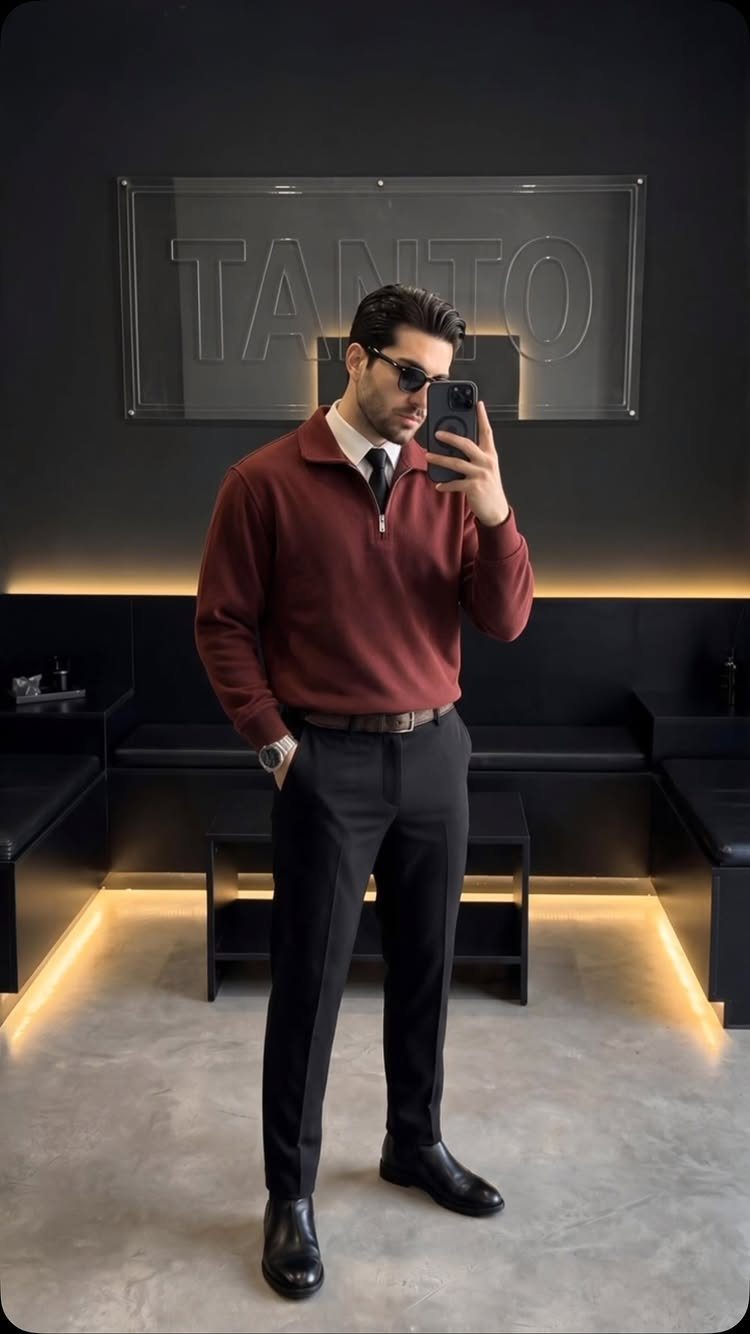
A fine-gauge quarter-zip over a collared shirt and tie keeps the tie while lowering the formality; pick merino in navy or charcoal, and keep the shirt collar flat and the tie slim so the knot sits just above the zipper.
The knit softens the shirt, and black trousers keep the whole thing sharp.
Keep the shirt white or pale so the pullover carries the color.
Tuck the tie into the shirt or keep it short, because a dangling one looks messy under a zip neck. Boots finish it better than sneakers here, and I prefer them dark so they match the trousers.
“Somewhere between a jacket and shirt, an unstructured blazer looks smart enough, but feels relaxed to wear,” explains Oliver Spencer, menswear designer and master of modern smart-casual style. “It’s a wonderful thing to have as part of your smart casual wardrobe.”
— Esquire
2. Minimalist Style
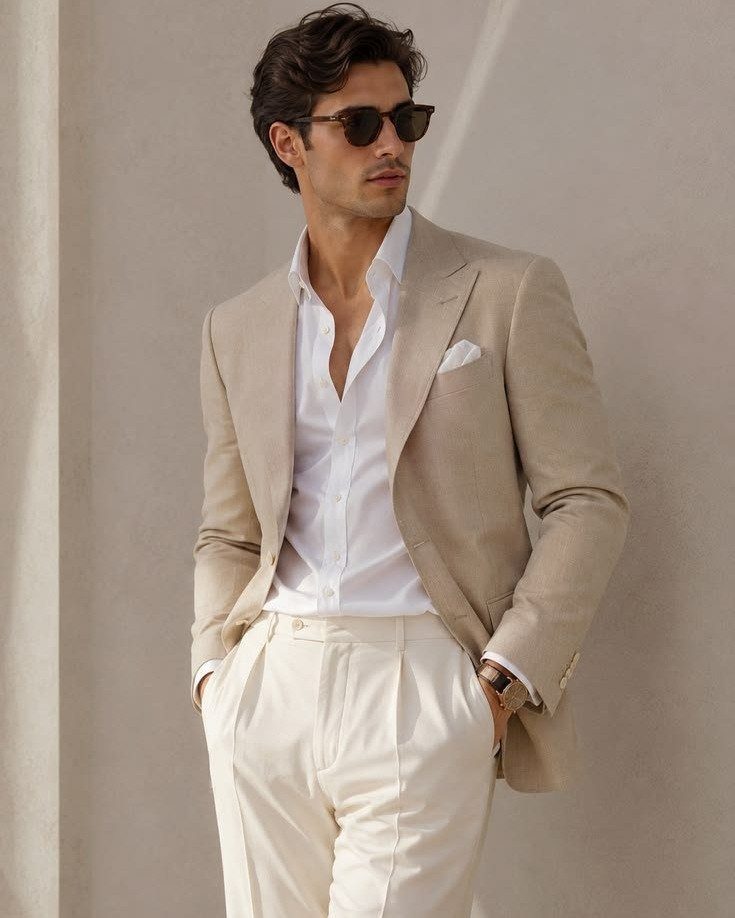
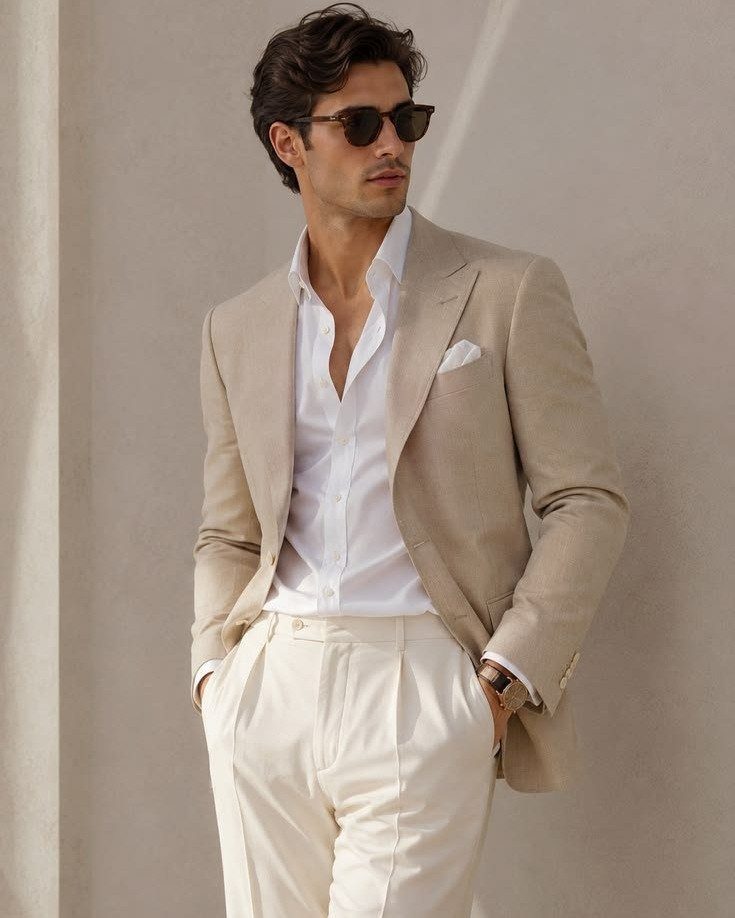
Neutral tones do the work in this look, so fit has to do the rest. A beige blazer, white shirt and cream trousers sit close enough in tone that any sloppy hem or bagging shoulder shows right away.
Open the collar instead of wearing a tie; it keeps things relaxed.
Pleats add room through the leg without adding a single extra color. I would pick one texture, like linen, and stay inside two or three shades.
3. Athletic/sporty Style
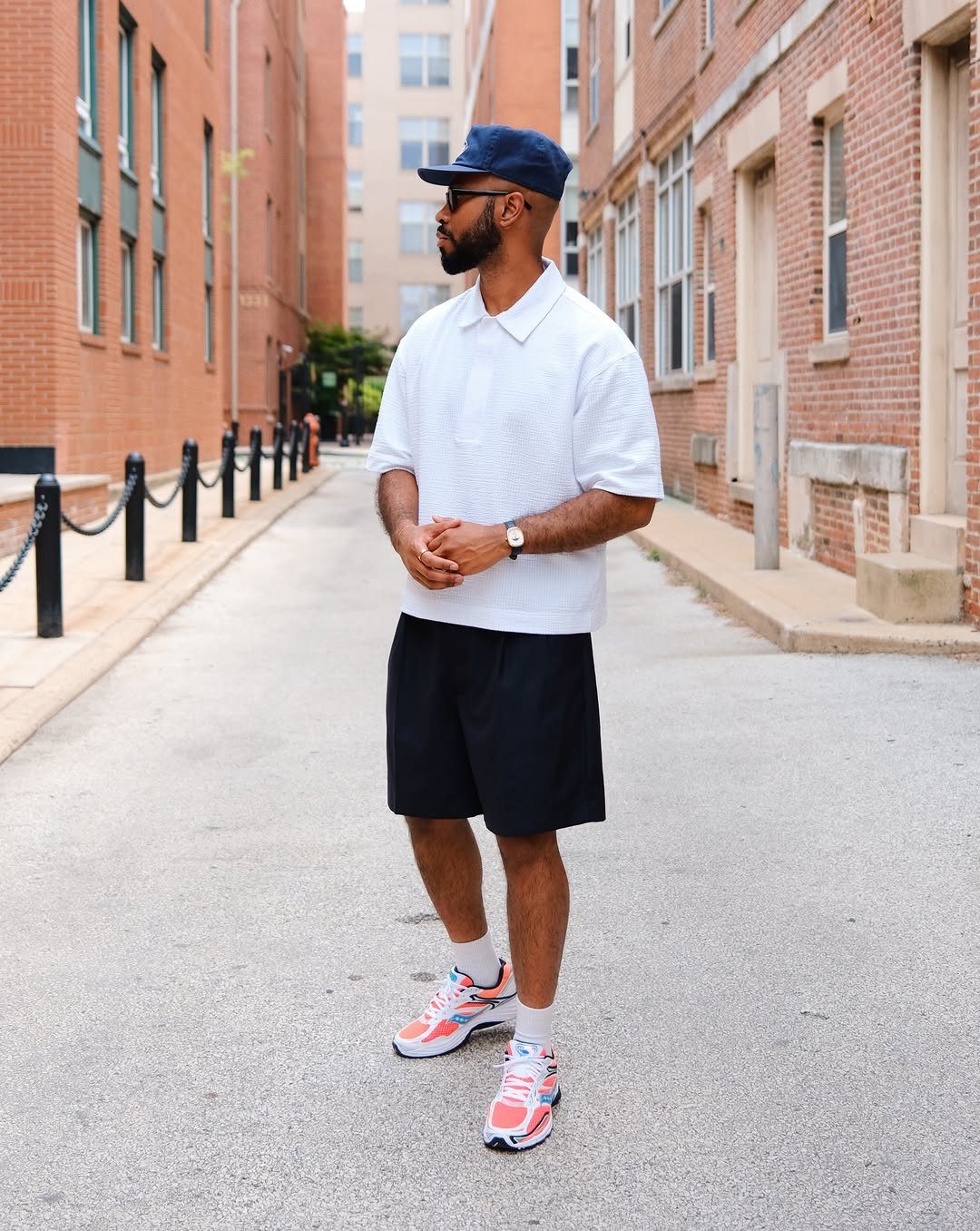
Sporty dressing works best when only one or two pieces carry the athletic feel. A white polo and black shorts are plain on purpose, which leaves room for loud running sneakers to be the focus.
Let the cap and sunglasses stay simple so the shoes don’t compete with them.
A polo reads neater than a tee, and I would choose it for any day that includes more than a walk. Keep the shorts dark and the fit trim, not baggy.
4. Classic Men’s Style
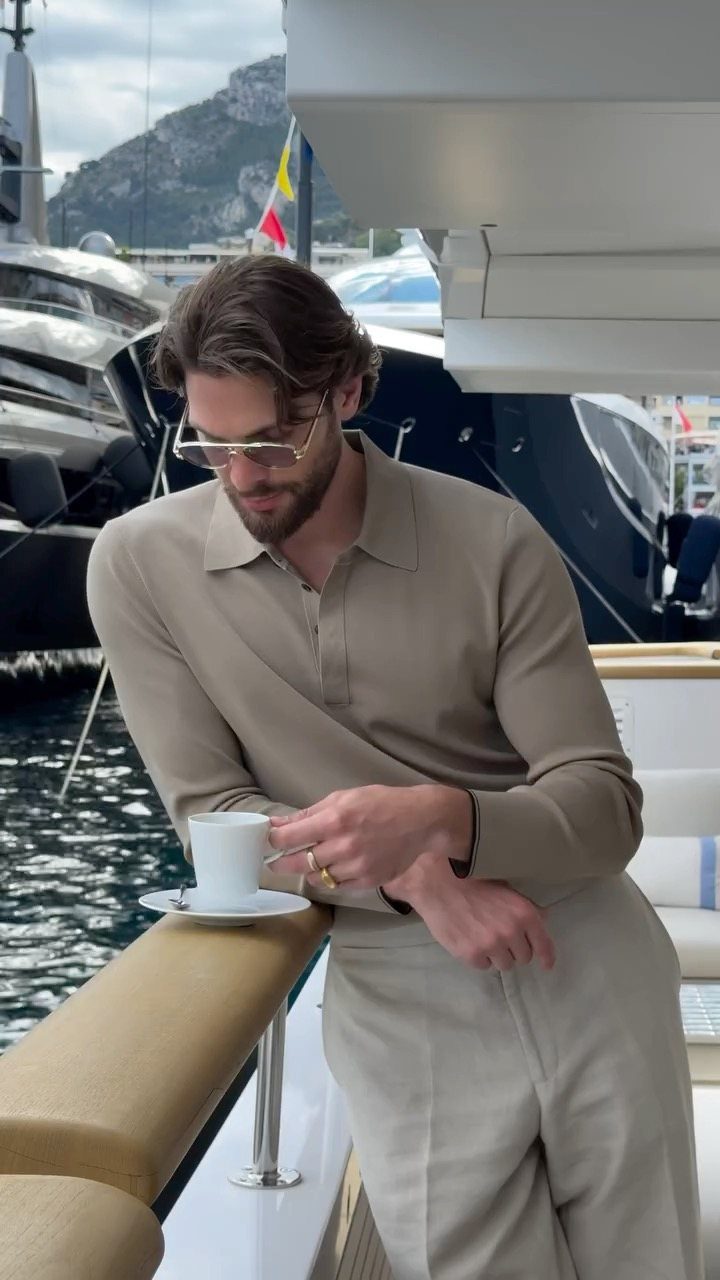
Few outfits hold up as long as a knit polo and tailored trousers. Beige on top with trousers that actually fit the leg gives you something that works at a marina, a lunch or an office with a relaxed code.
Long sleeves make the polo feel dressier than a standard short-sleeve one.
Choose trousers hemmed to a slight break, and keep the shoes plain leather or suede. Buy fewer, better pieces in colors that mix, and this look rarely needs rethinking.
5. Streetwear Style
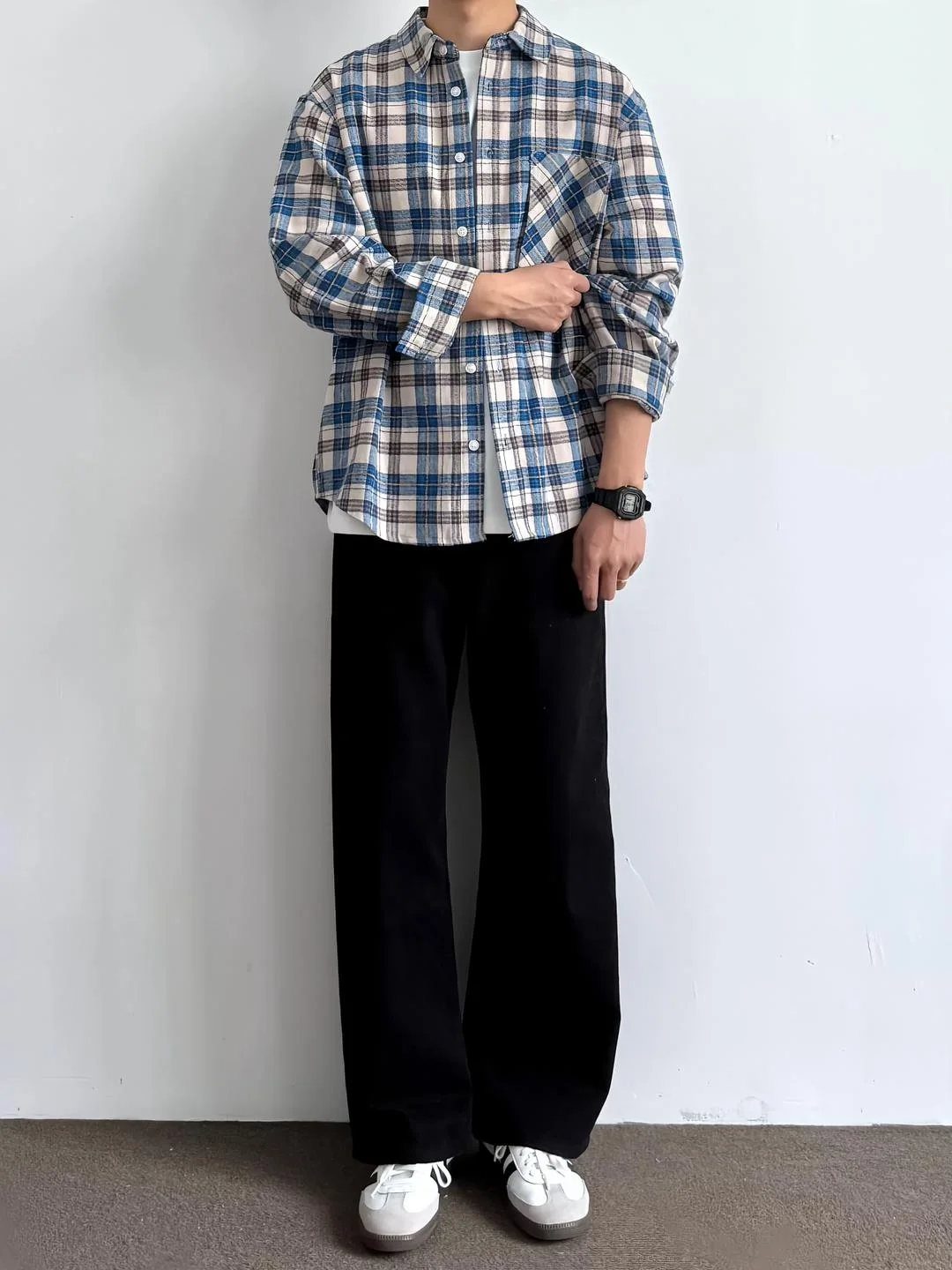
Wide-leg black trousers change the proportions of an easy outfit more than any graphic tee could. Here they sit under a loose plaid shirt worn open, with a white undershirt and white sneakers keeping the palette tight.
Balance is what matters: with a full leg, I like the top roomy but not oversized, and the sneakers clean.
Let the trousers break over the shoe. Plaid is an easy way to add pattern, and it costs far less than a statement jacket.
6. Preppy Style
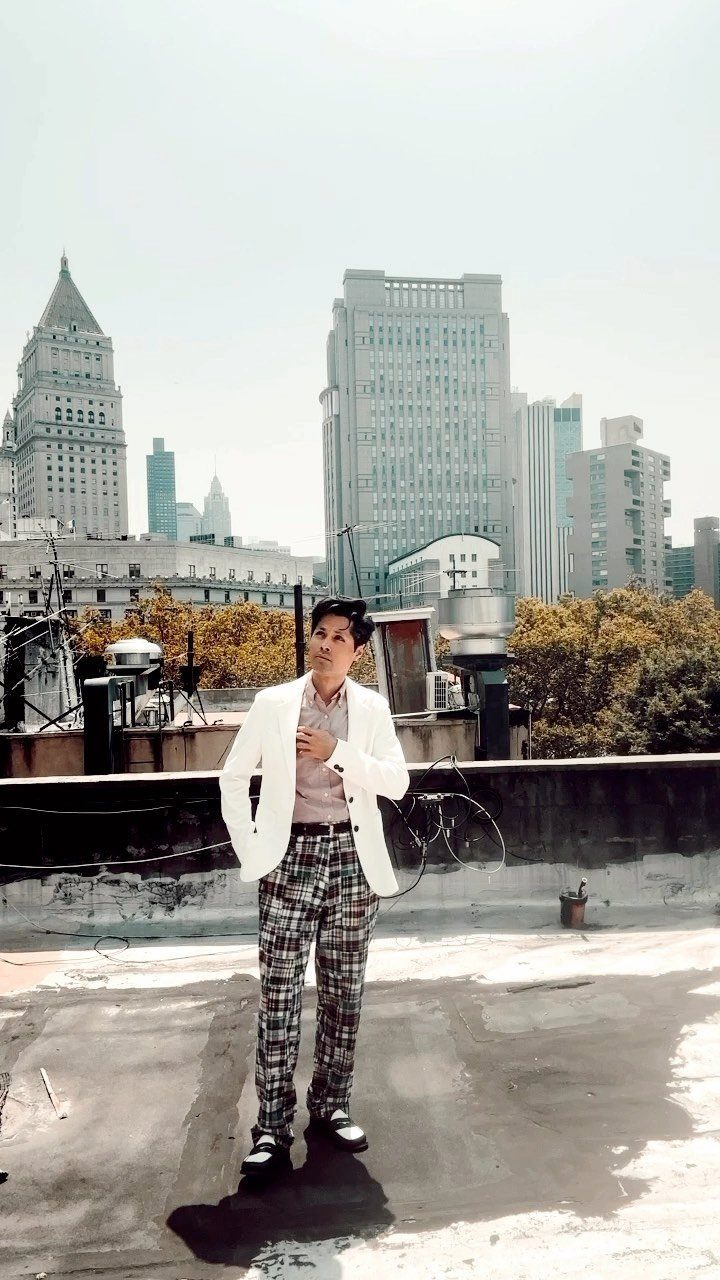
A white blazer is the loudest piece in a preppy outfit, so I keep everything under it traditional: a button-down shirt, loafers, and plaid trousers for the pattern.
Pick one pattern only. If the trousers are plaid, the shirt should be solid, ideally white or light blue.
The blazer should fit across the shoulders, since a white jacket shows every pull and wrinkle. This look works best for warm weather, weddings and rooftop dinners, and it feels a little too dressed for a normal weekday.
7. Layered Denim Shirt Outfit
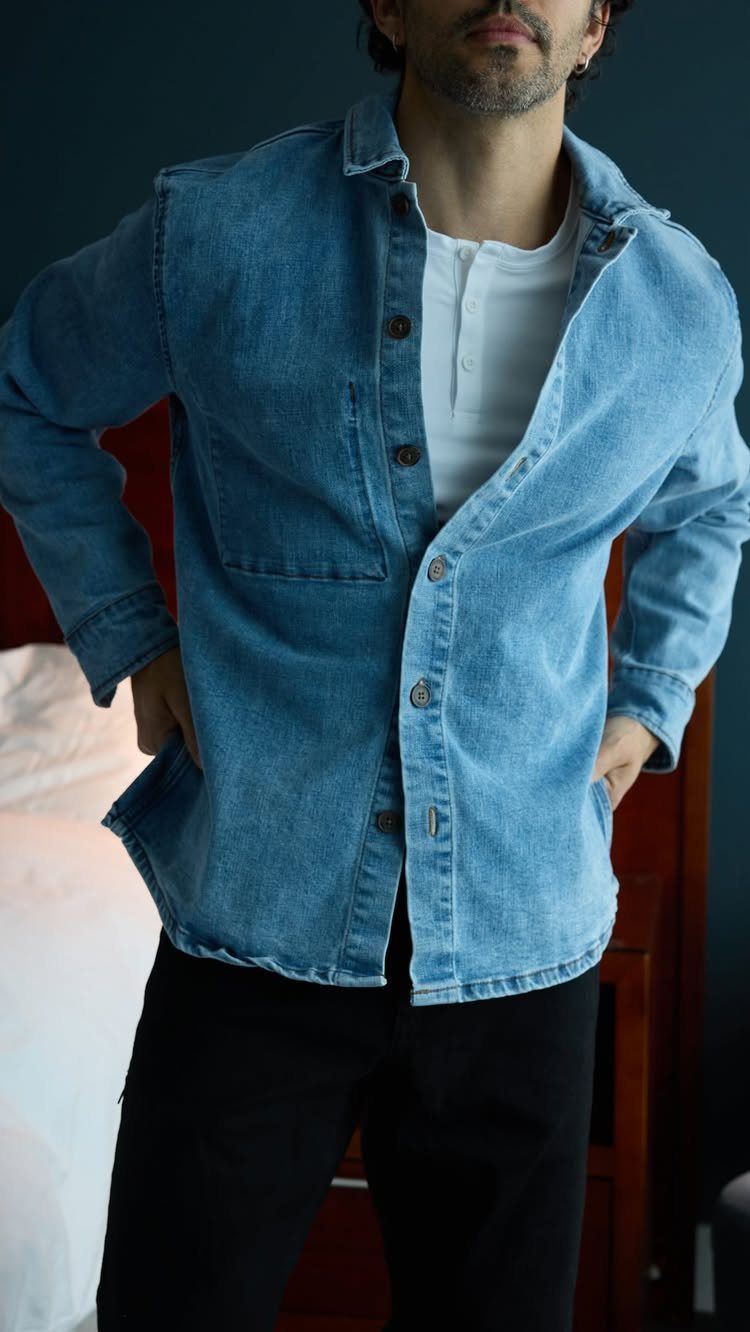
An open denim shirt over a white henley is the easiest way I know to use a shirt as a jacket. Light blue against white and black trousers keeps it clean, and the henley’s placket adds detail without a pattern.
Leave the denim unbuttoned and let it hang straight.
Sleeves pushed to the forearm look more relaxed than fully buttoned cuffs. Black trousers keep it neat enough for dinner.
8. All-black Wide-leg Outfit
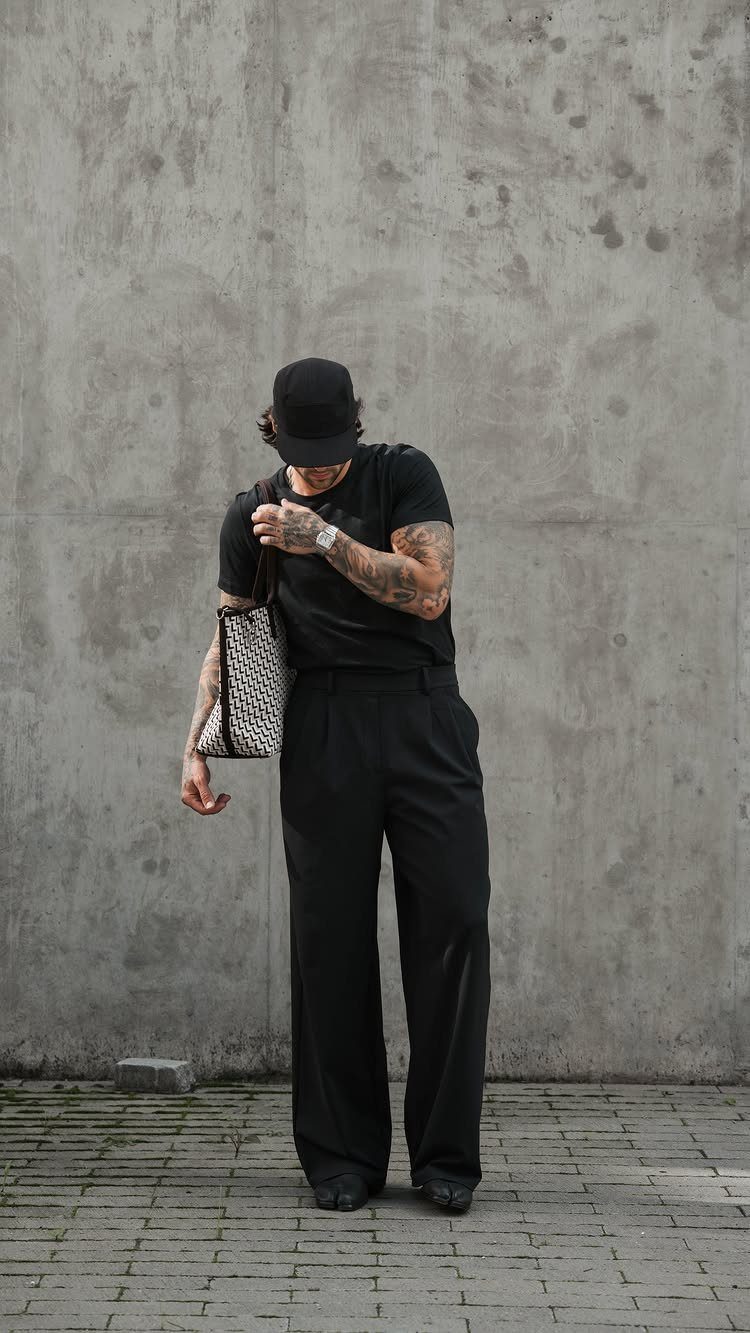
Black on black needs shape, and wide-leg trousers supply it. With a plain tee, the full leg gives the outfit a silhouette, so the look doesn’t read as a uniform.
A cap and a crossbody bag handle the extras. A patterned bag is the one place I would allow contrast, since it breaks up the dark without adding a second color to the clothes.
Choose a tee that sits at the hip, and let the trousers fall over the boot.
9. Olive Cargo Pants Outfit
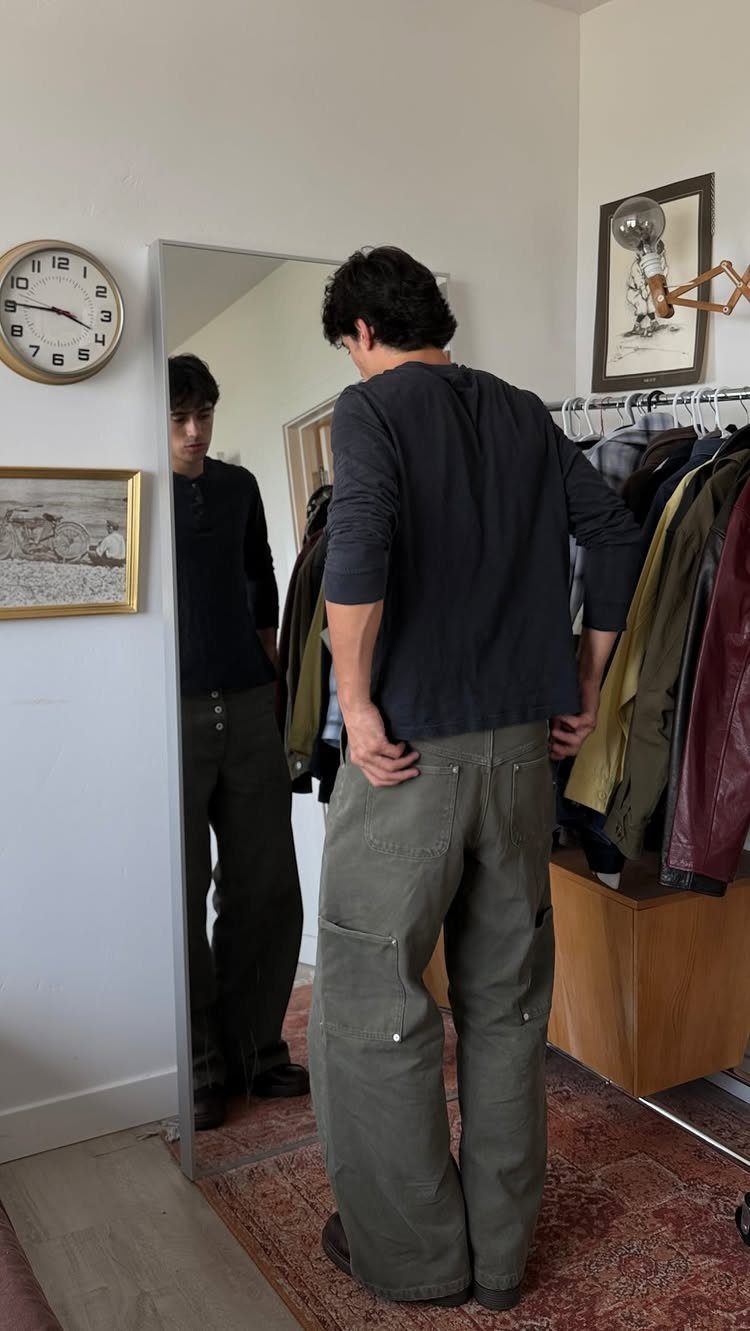
Olive wide-leg cargos pair well with a dark long-sleeve top because olive already works as a neutral. Charcoal keeps the palette quiet and lets the pocket detail on the pants be the interest.
Keep the top fitted or slightly relaxed, so the leg is the only wide part.
I would add white or black sneakers and nothing louder. Check yourself in a full-length mirror before leaving; cargos look best when the hem just touches the shoe.
10. Quarter-zip and White Pants Flatlay
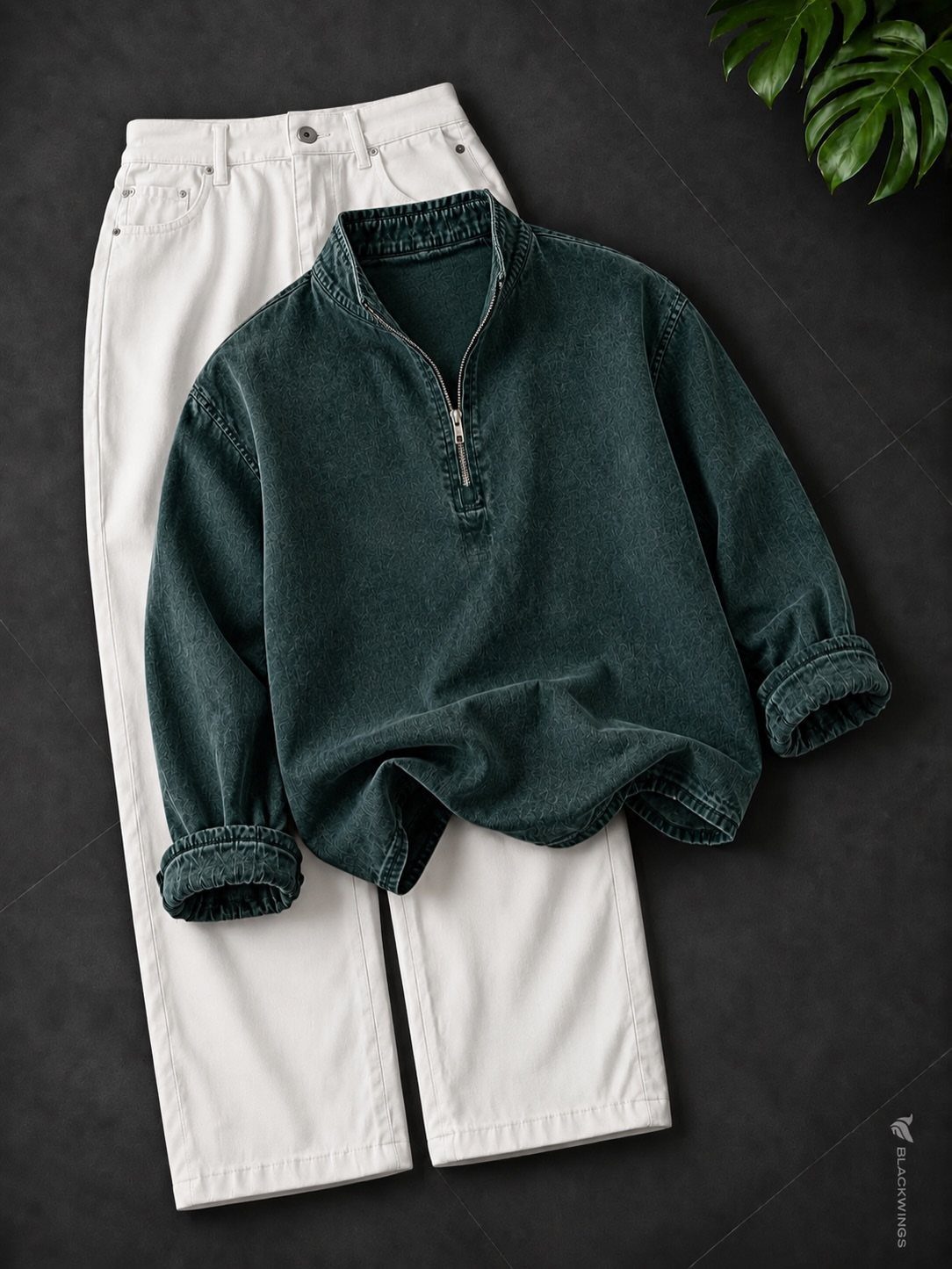
Dark green and white make a pairing that looks planned with almost no effort. A quarter-zip in deep green over clean white trousers gives you contrast without a print or a logo.
I would wear this with white or light sneakers and keep the rest minimal.
White pants show every mark, so I wash and press them before wearing. The faded green here also hides wear better than a bright shade would.
11. Soft Fabrics and Versatile Pieces
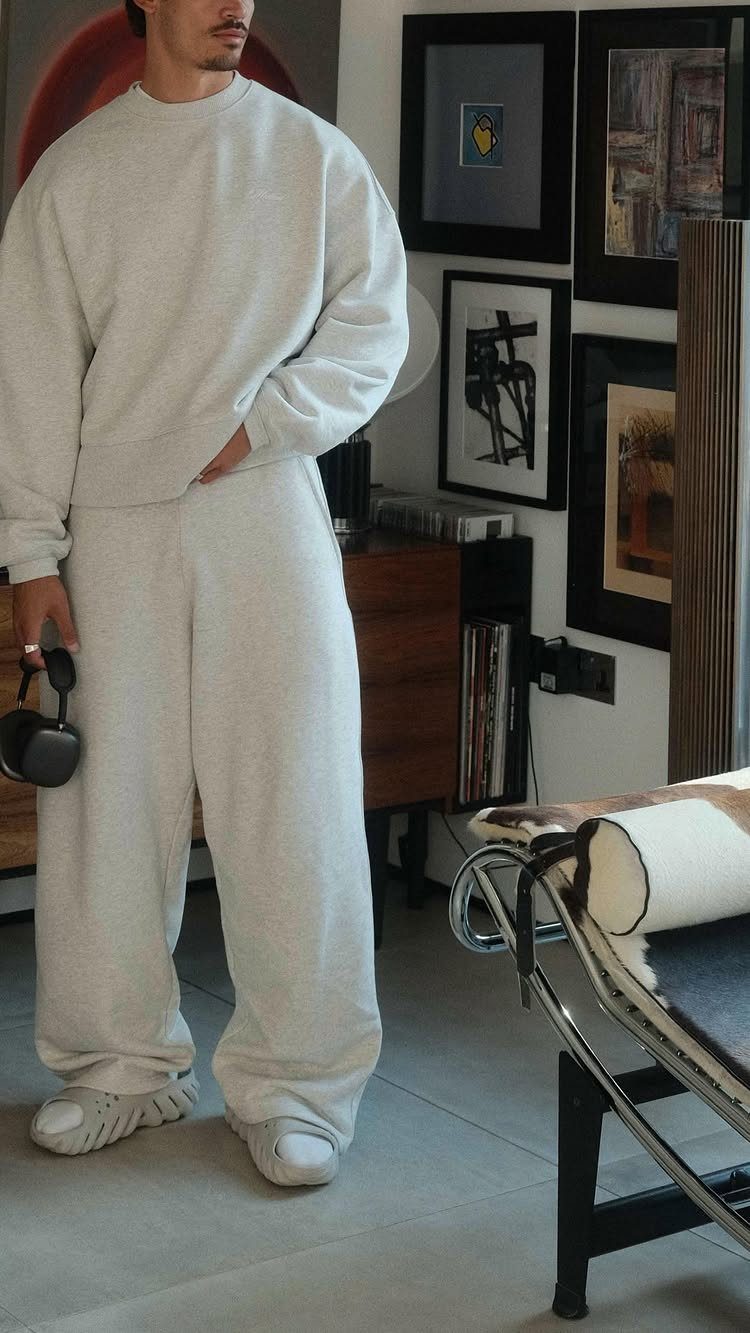
Same fabric, same shade, and nothing to coordinate.
Soft pieces still need shape, so I choose a sweatshirt with a clean hem and pants that hang straight instead of pooling.
Slides keep it casual; clean white sneakers make it feel more like an outfit. Pieces in one color also mix separately with jeans or a shirt later.
Fit Is Crucial
Skip anything so baggy it hides your shape or so skinny it pulls across the thigh, though a relaxed sweatpant worn with a fitted top is the one loose piece I’ll allow.
Slim and regular cuts, whichever flatters your build, will always look sharp, and "timeless" has shifted from decade to decade anyway.
A big overcoat works best over a quiet base, so pair it with trousers and knits that are slim through the leg and body but not tight enough to cling. Balance matters more than any single cut.
A good local tailor, one you can walk in on for a quick hem, will do more for your wardrobe than any single purchase.
Simple outfits stand out mostly because of fit, and small flourishes like high-top sneakers, a colorful beanie or a rugged leather jacket land better when nothing around them competes. It’s the easiest way to make less look like more.
Dress Codes
Follow the dress code. It’s the easiest shortcut to looking good, even if you feel you have no personal style yet, because the rules make most of the choices for you.
Ignoring a code also disrespects the host or the venue, so treat it as basic manners.
Smart casual is my default for most days: chinos or dark denim, a collared shirt or clean knit, and leather shoes or plain sneakers, unless your workplace sets its own rules.
When the dress code is unclear, I’d rather be a notch too sharp than a notch too sloppy, since a jacket is easy to take off and a missing one is not.
Black tie comes in several versions: Classic, Optional, Creative and Summer. Check which one an invitation means before you rent or buy anything.
Seasonal Color Choices
Dress for the season and your outfits look organized. Go brighter in summer, lighter in spring, with earth tones in fall, and darks and winter whites in winter.
If bright colors or pastels feel like too much for summer, earth tones like olive, sand, and stone keep things light without drawing attention. Reach for lighter neutrals like beige and slate blue, or warmer neutrals, and avoid stark black.
Frequently Asked Questions
How to style clothes for guys?
Start with fit, then keep the palette small. Slim or regular cuts that suit your build look sharp in any decade, and a good local tailor who can hem a pair of trousers quickly does more than any single purchase.
Pieces in colors that mix, like beige, white, navy and charcoal, mean you rarely have to rethink an outfit.
What are the types of fashion men?
The main styles are smart-casual, minimalist, athletic, classic, streetwear and preppy. Each one has its own formula.
Smart-casual pairs a quarter-zip with a collared shirt, minimalist stays inside 2 or 3 neutral shades, and preppy uses a button-down, loafers and a single pattern. Settle how formal the occasion is first, then pick the style that fits it.
What is smart casual?
Smart casual sits between formal and relaxed: one sharper piece mixed with something easier.
How do I find my personal style as a man?
Start with a short audit: look at what you actually wear on an ordinary Tuesday, list the places your week takes you, and pick out the outfit where you feel most like yourself.
Build around 10 versatile pieces that work together and add from there. Until then, following the dress code makes most choices for you.