Retro here runs from a single easy idea you can try this week, like a flat cap or a silver watch, to a tailored suit that needs a fitting and a hemmed leg.
The one fact about you that decides where to start is how much of your current wardrobe you’re willing to change. If the answer is little, pick a single older piece and keep everything else plain.
1. Vintage Pants
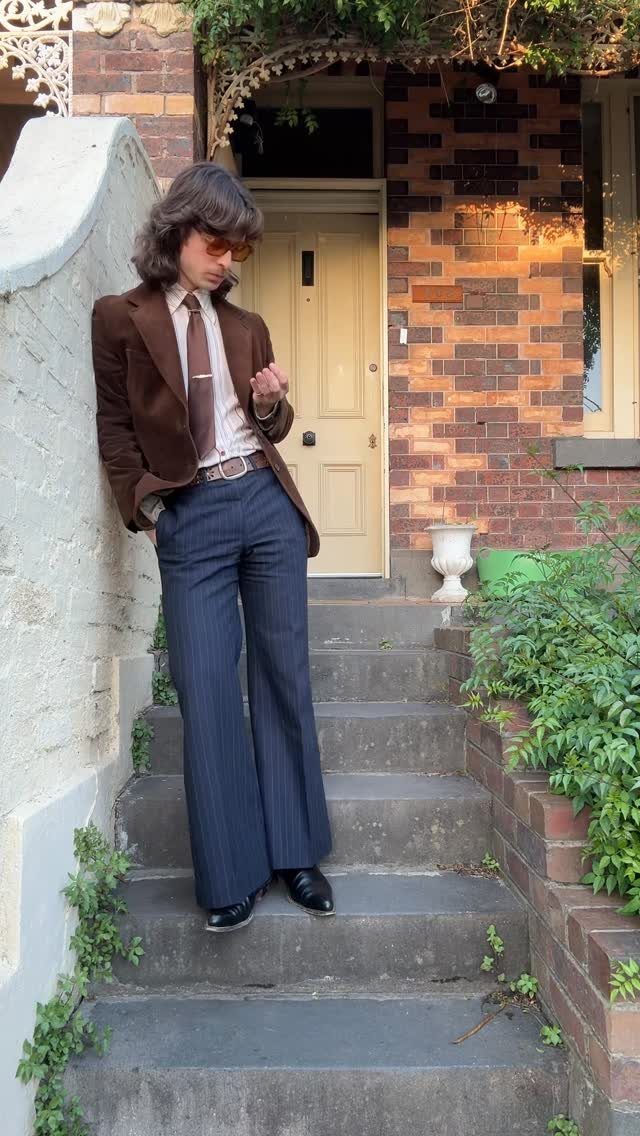
High-waisted trousers with a flare or a wide leg make the whole outfit look longer through the leg, and that is why the 70s cut still works. Pinstripes add vertical lines that stretch the look further.
Let the trousers be the loud piece. Hem them so the cuff just skims the shoe, since a flare that drags on the ground looks sloppy.
Thrift stores and vintage shops are the cheapest place to find them. Try them on before you buy, because the rise matters more than the label.
2. Vintage Accessories
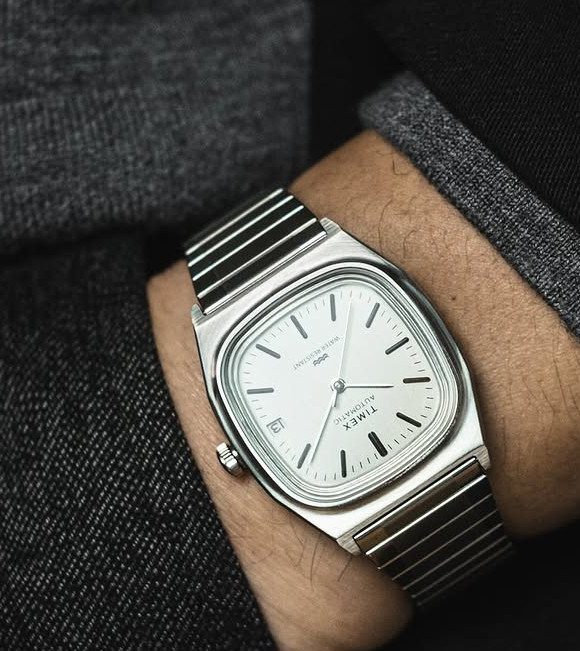
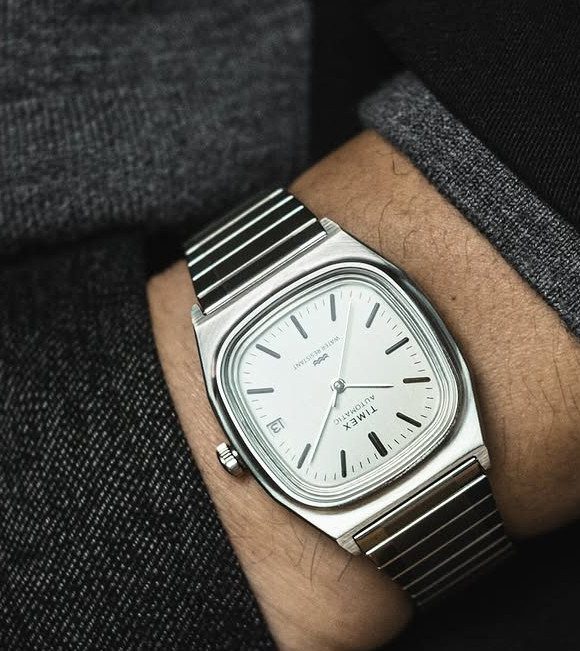
A watch does more for a retro outfit than any other small piece. A silver-tone automatic with a rectangular face and an expansion band reads as vintage without a costume feel, and it sits easily under a jacket cuff.
I would choose one metal and stick with it. Silver watch, silver belt buckle, silver glasses frames: that is enough.
Used watches and old belts are often cheap, so accessories are the easiest way to start on a budget. Buy one piece, wear it for a week, then decide if you want another.
3. Retro Outfits for Men
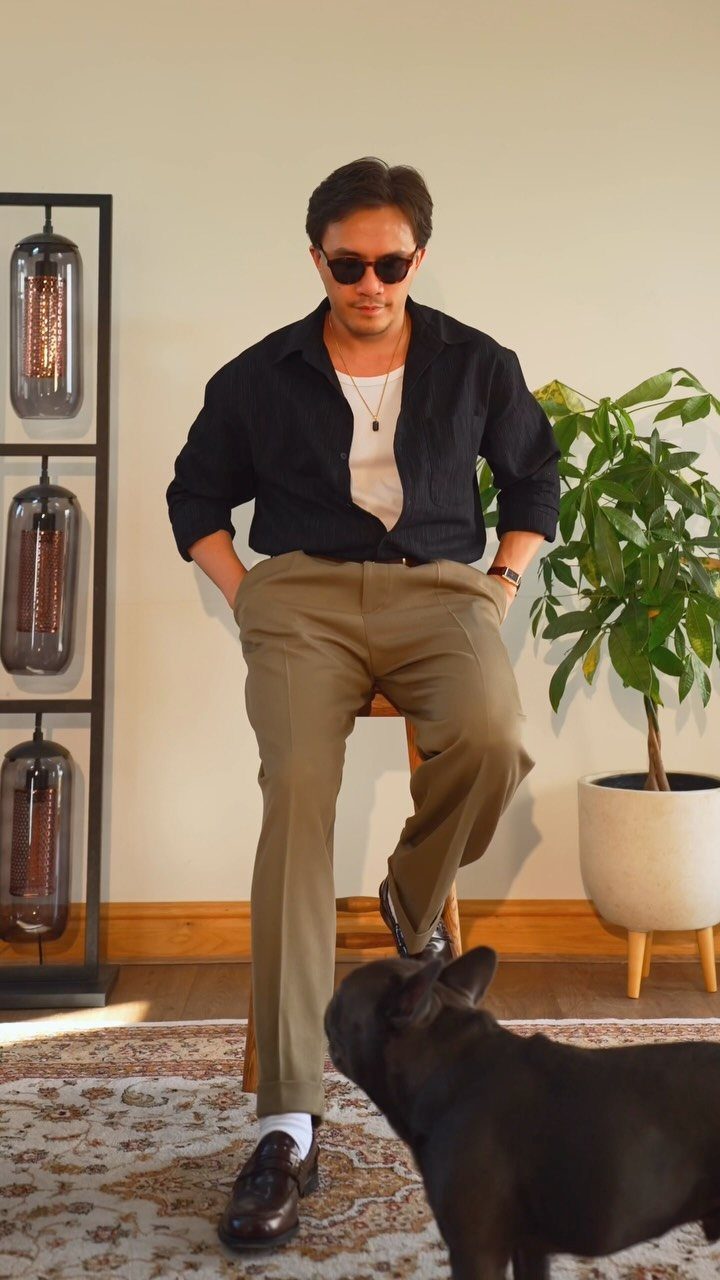
Loose black shirt over a white tank, pleated khakis, loafers: this outfit works because only one piece is doing the retro work. The pleated trousers carry the era, and everything else stays simple.
That is my advice for anyone nervous about vintage. Pick one older-looking item and build around it with plain basics, so you look like yourself and not like a costume party guest.
Leaving the shirt open over a tank also relaxes the whole outfit. Add sunglasses and you are done.
4. Tailored Suits
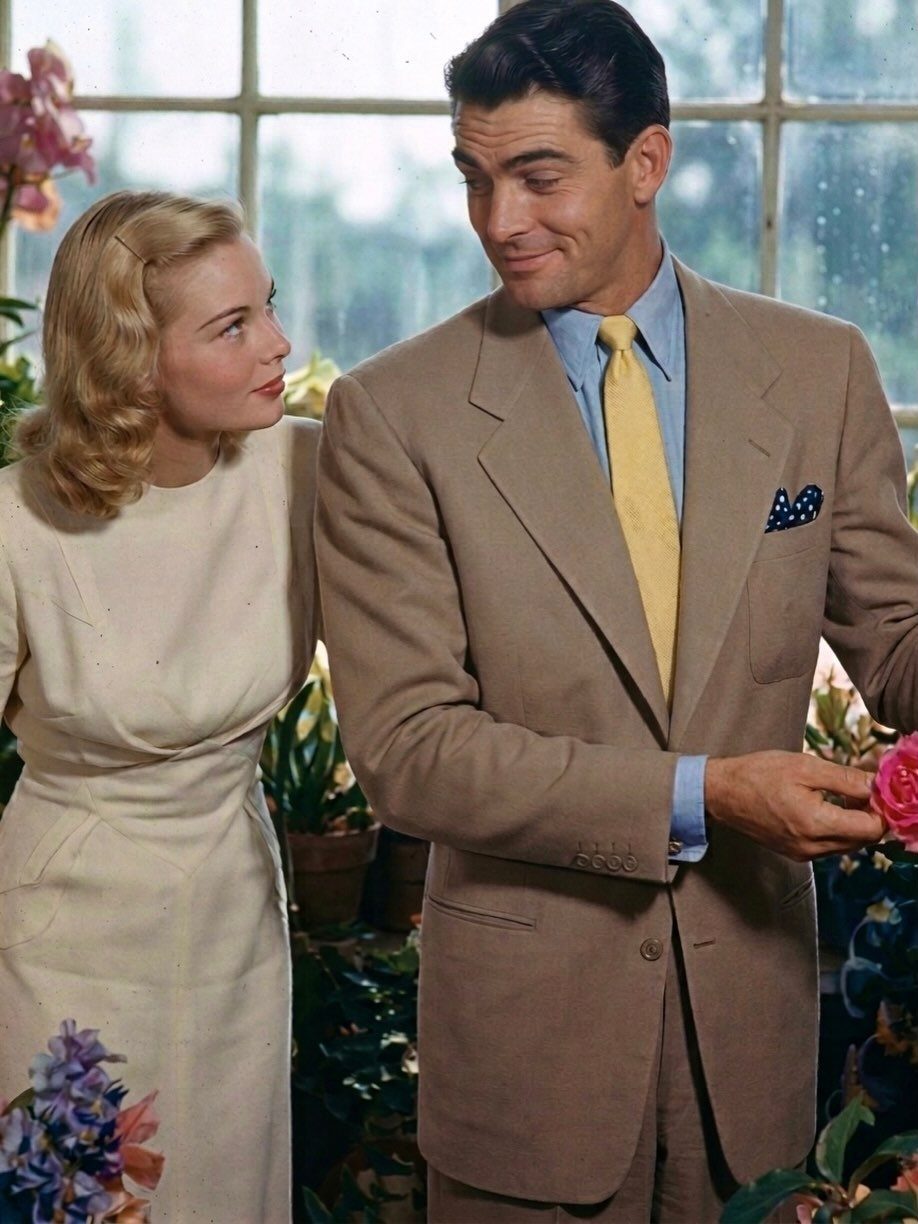
A tailored cut matters more than the fabric or the age of the suit.
Buy for the shoulders first, since a tailor can fix sleeves and waist far more easily. Then have the trousers hemmed to your shoe.
A secondhand suit is the budget route, and a small tailoring bill often turns it into the best-fitting thing you own. Keep the tie as the one bright note.
5. Vintage Hairstyles
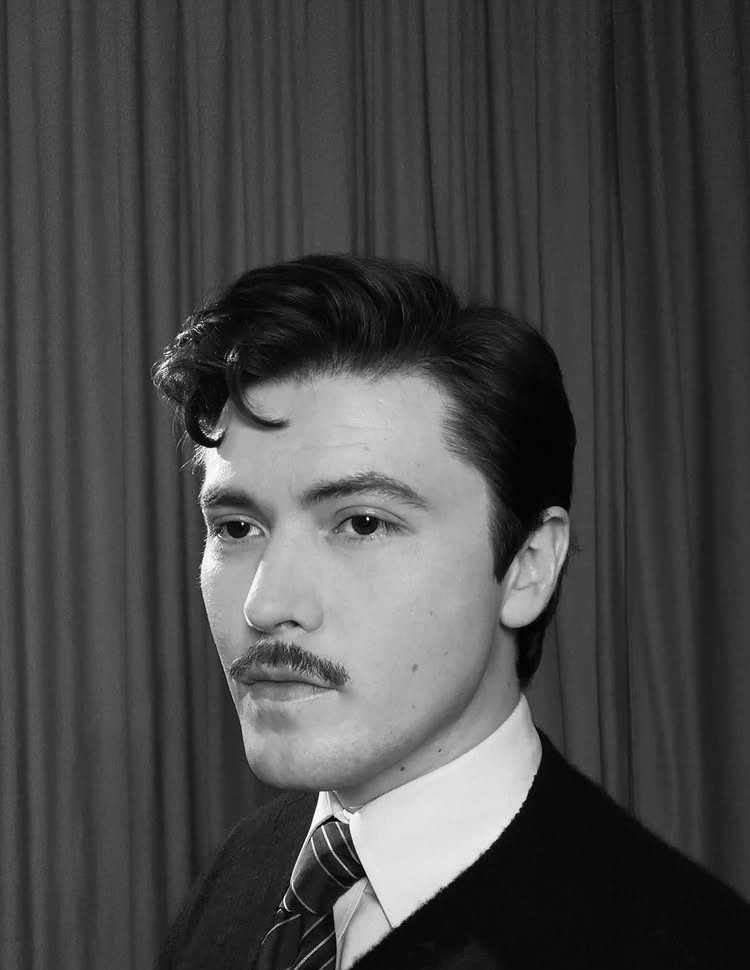
Soft waves, a mustache, and hair left a little long over the ears give the portrait above its period feel. Of all the retro details, hair is the one that changes how you look every day.
I would start with the waves. Let your hair grow out enough to move, then style it with your fingers or a comb instead of fixing it in place.
A mustache is a bigger commitment. Trim it neatly, or it looks like you forgot to shave.
6. Men’s Vintage Fashion Icons
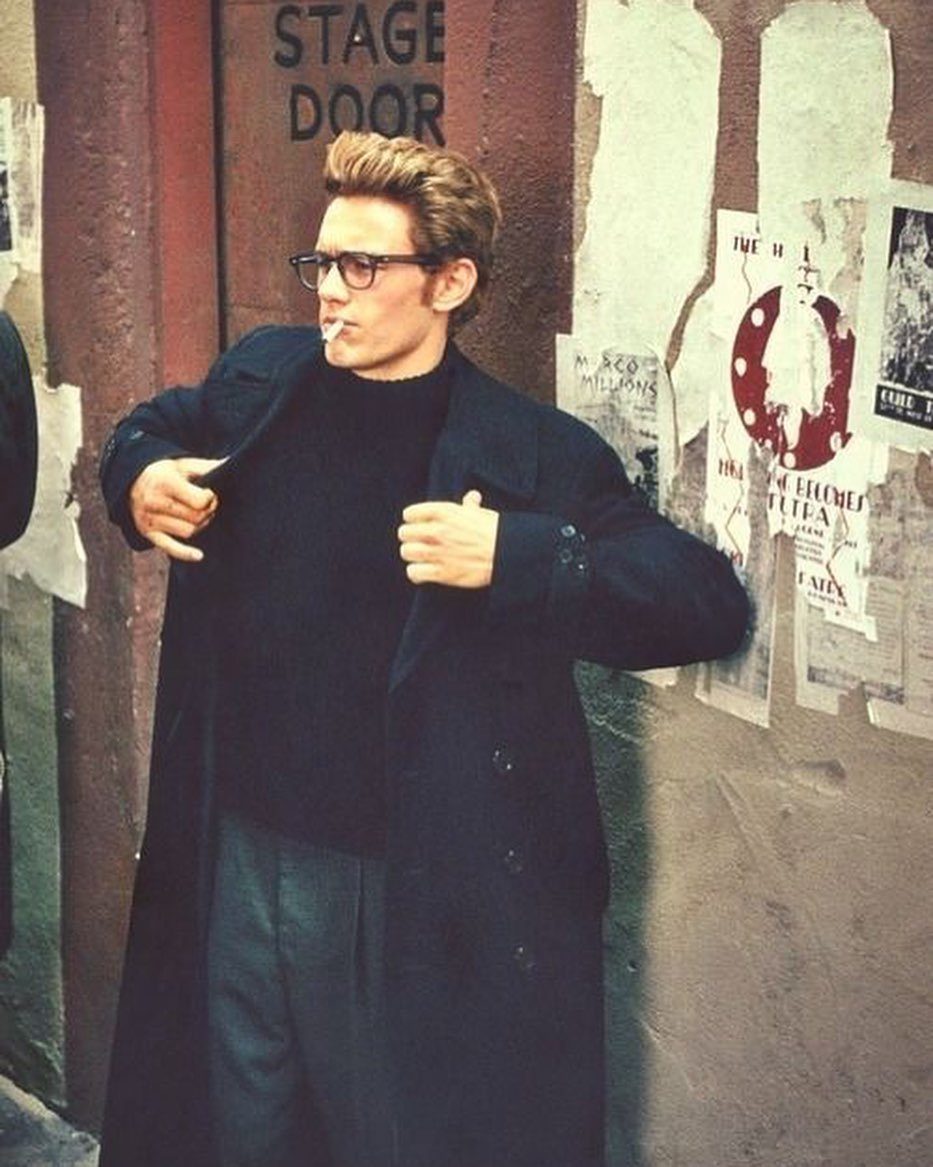
A black turtleneck, a long dark coat, and glasses make a complete look from a few pieces, and that is why vintage icons are worth studying. Their outfits were usually simple, and the details did the work.
Pick one man whose style you actually like, then copy the formula rather than every item. Here that formula is dark layers, a high neck, and one strong accessory in the glasses.
A turtleneck under a coat is easy to wear and costs little. It also means you skip the tie.
7. Hats
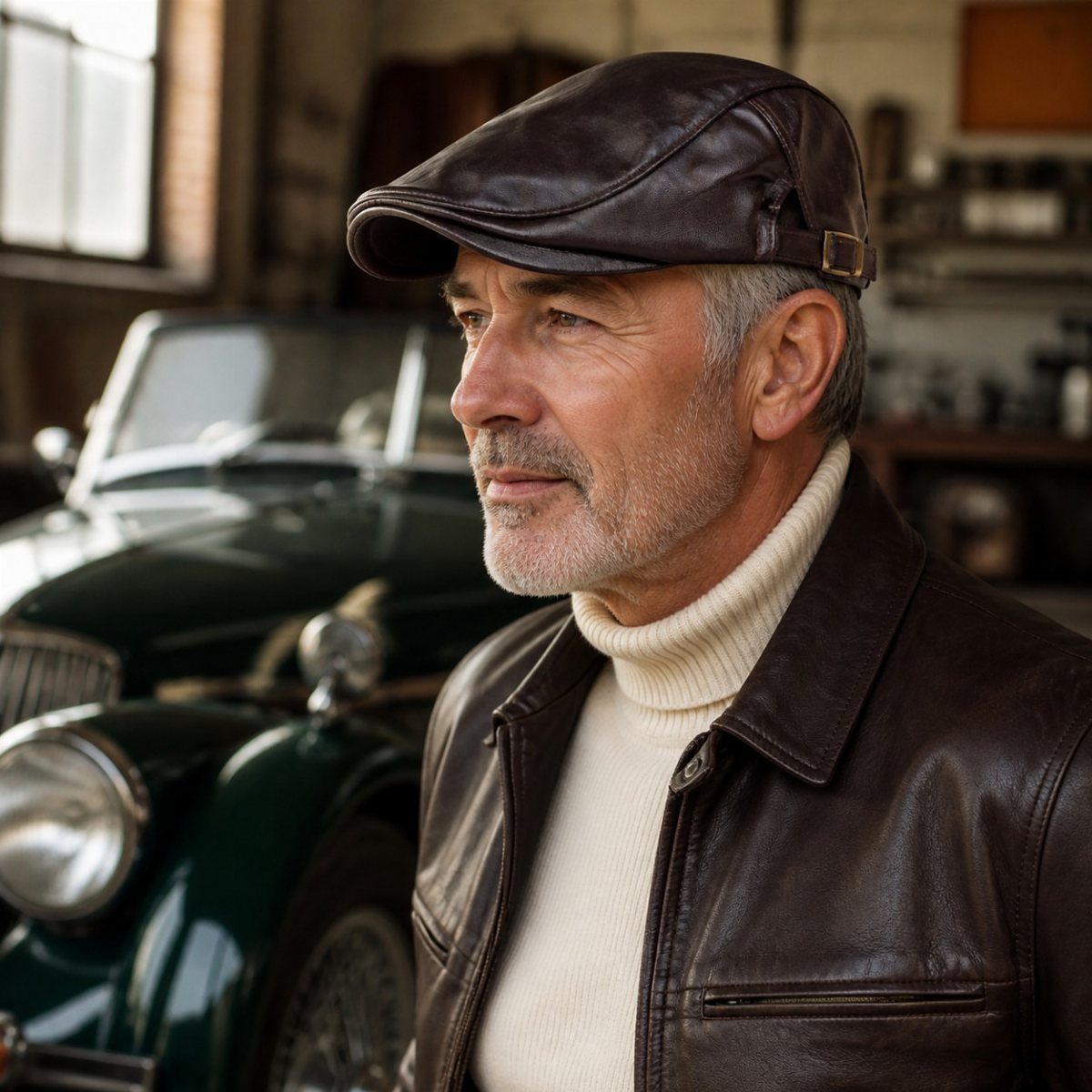
A flat cap in brown leather does the same job as a good jacket collar: it frames the face and finishes the outfit. Worn with a cream turtleneck and a leather jacket, it keeps everything in one warm, earthy range.
I would start with a flat cap because it asks the least of you. Pick a color close to your jacket, and make sure it sits level on your head, not perched on top.
Hats are cheap compared with most clothing, so buy one and wear it a week before deciding.
8. Vintage Fashion Definition
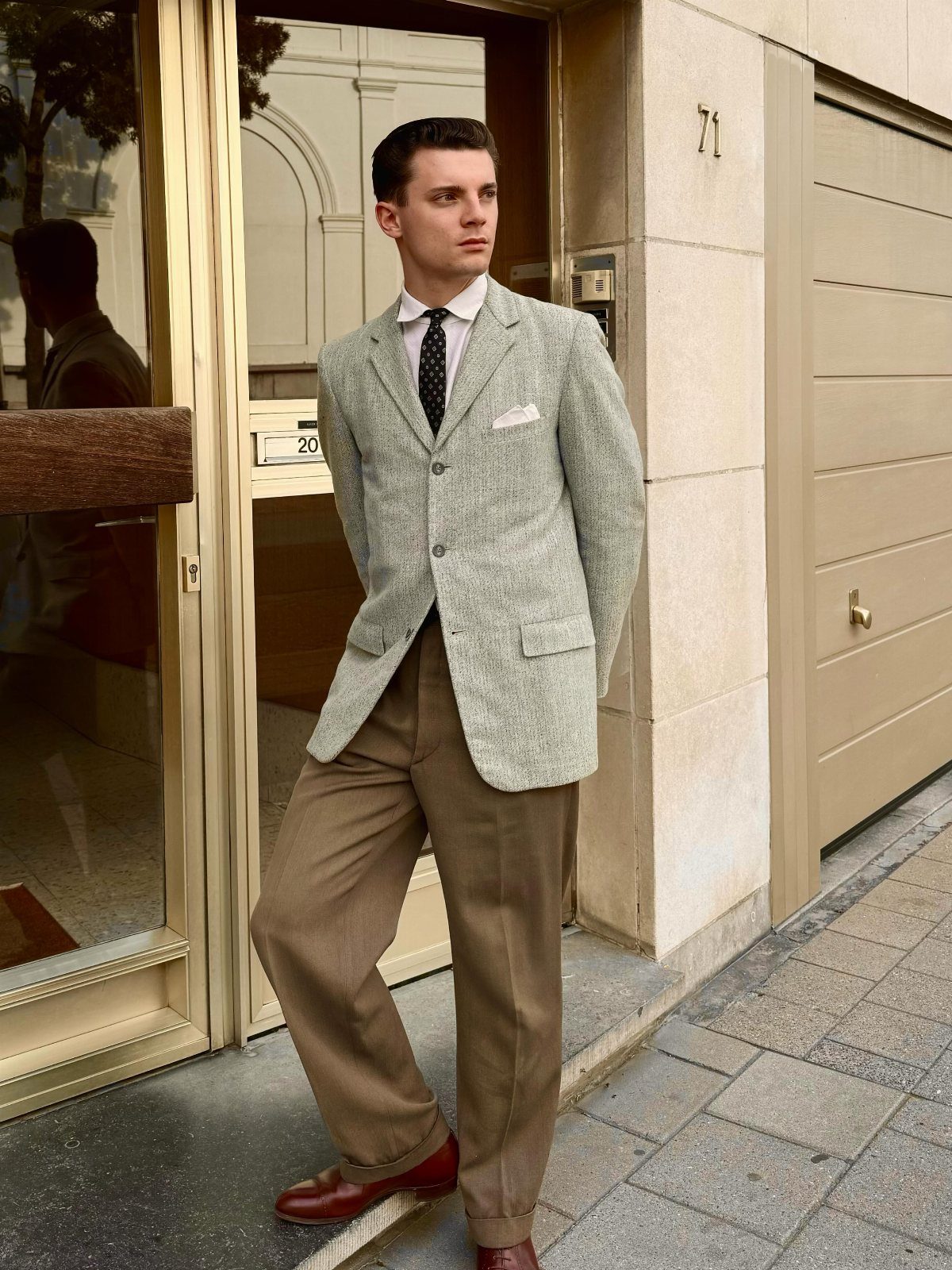
Vintage means real clothing from earlier decades, and you can wear one or two pieces of it without dressing like a movie extra.
Two or three older pieces, say a tweed blazer, wide-leg trousers and a tie, are enough to carry a whole outfit.
Shop for the blazer and trousers separately, since thrift stores rarely sell matched sets. Keep the shoes plain leather so the older pieces stand out.
If a piece fits well, the decade matters less than you think.
9. Classic Cuts Denim
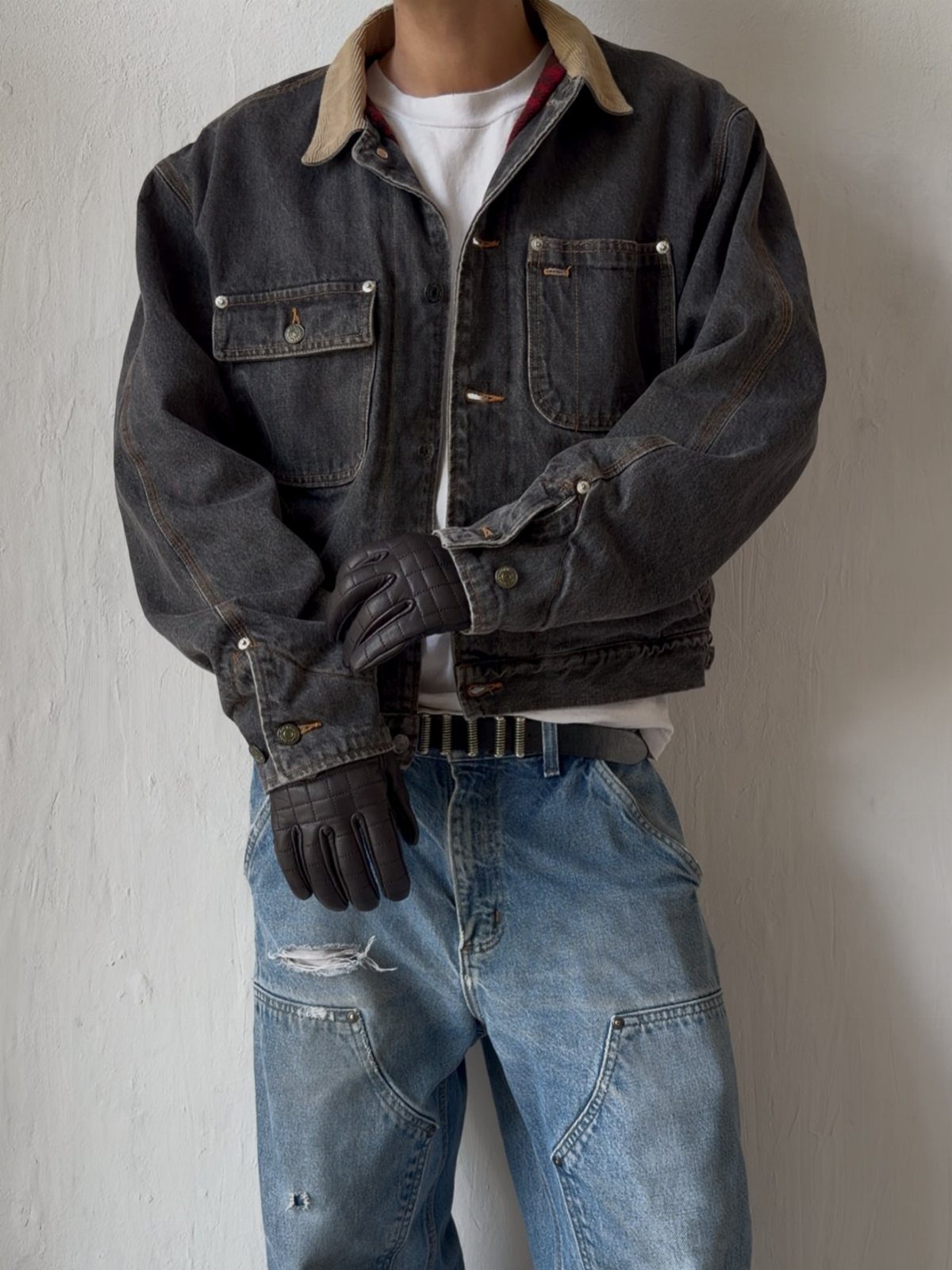
Baggy double-knee jeans and a faded denim jacket with a corduroy collar are the 2 denim cuts I would hunt for first. Both look worn in, and a plain white t-shirt is all they need.
Choose one loud denim piece, not three. Pair a dark denim jacket with light jeans, or the reverse, so the two don’t blend into one block of blue.
Try jeans on before buying, because baggy cuts vary a lot in rise and leg width.
10. Quality Dress Shoes
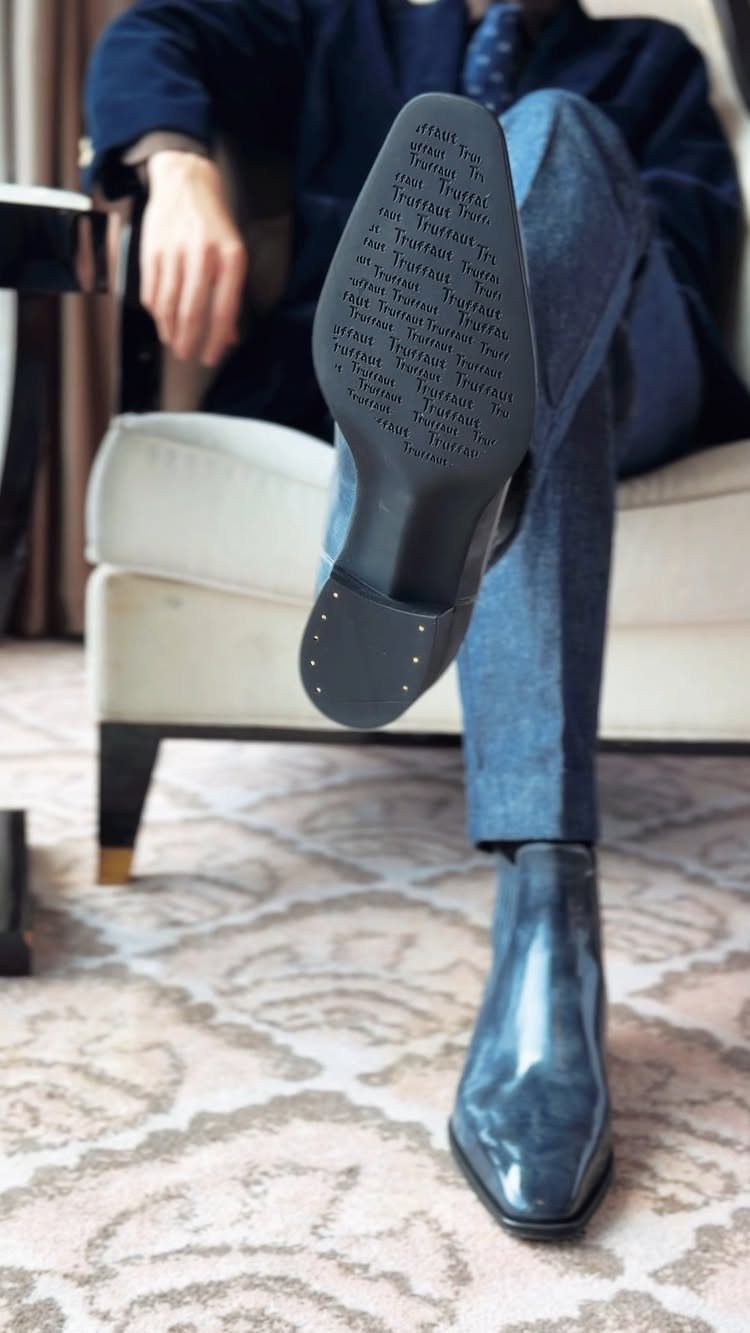
Glossy leather Chelsea boots in a bold color turn a plain suit into something people remember. Matching the boot to a blue suit in the same color family looks deliberate, not like something you grabbed on the way out.
If bold feels like too much, buy the same boot in dark brown or black. The shape does most of the work, and the elastic side panels make them easy to pull on.
Polish them regularly, because a good shine is what makes dress shoes look sharp.
11. Vintage Waistcoats and Vests
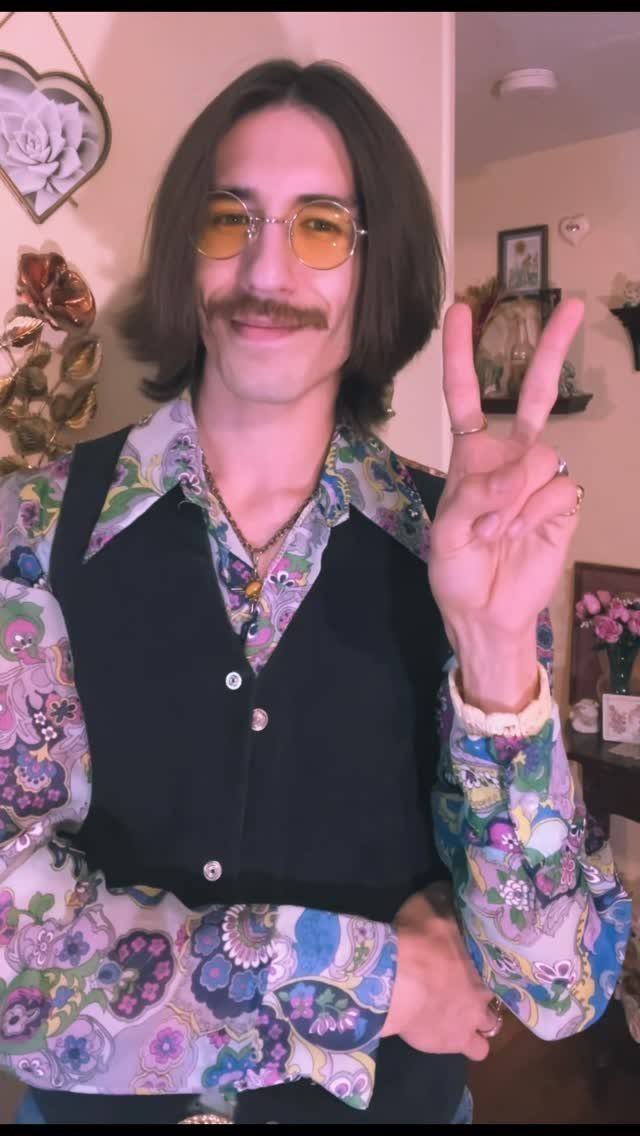
A black waistcoat quiets a loud floral shirt, and that contrast is why this pairing works. The dark vest gives the busy print a clear edge, so the shirt looks deliberate.
I like it best with a pattern you would hesitate to wear alone. Keep the waistcoat solid, and let glasses or a mustache be the only other statements.
Vintage waistcoats are usually inexpensive secondhand. Check that it lies flat across your stomach before you buy.
12. Retro Polo Shirts
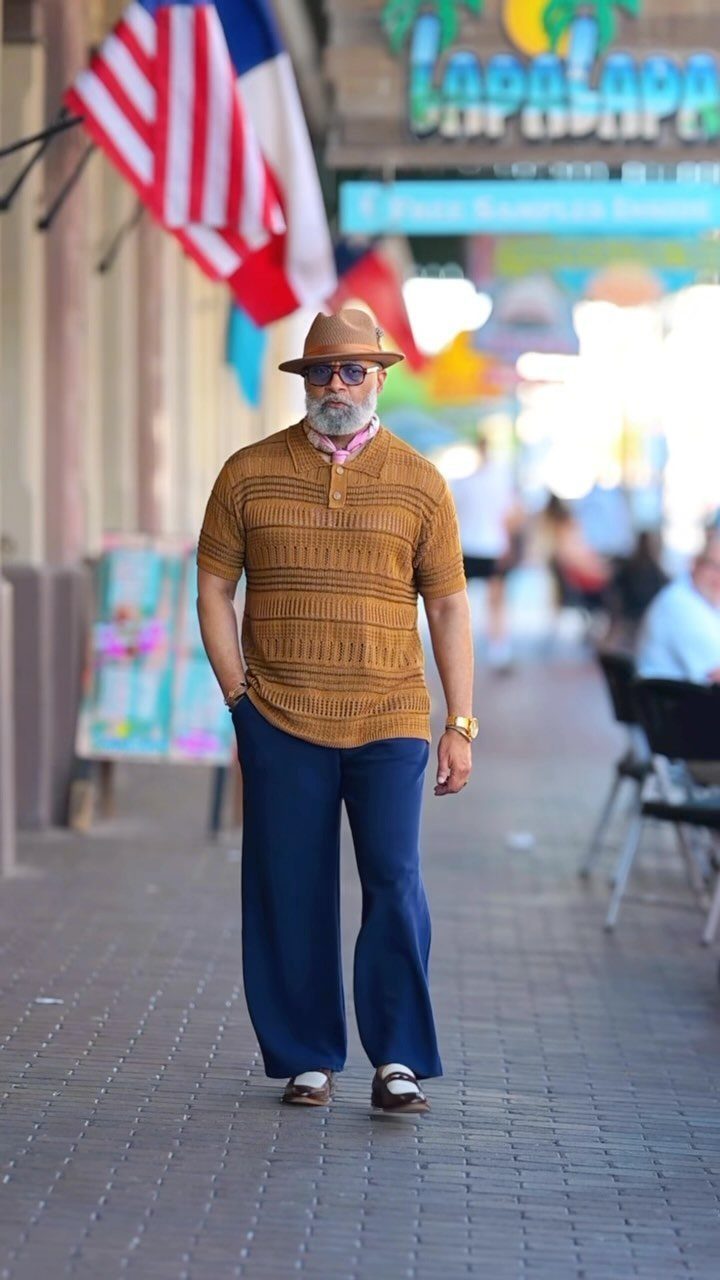
A knit polo in an earthy tan or brown gives wide-leg trousers a soft top half, which balances the extra fabric below. Blue trousers against a tan polo is an easy color pairing that needs no thought.
Tuck the polo in so the trouser rise shows, and add tinted glasses for the period feel. A fedora and a neck scarf push it further, but I would add them one at a time.
Knit polos are a cheap way to try retro without a jacket.
13. Retro Patterned Shirts
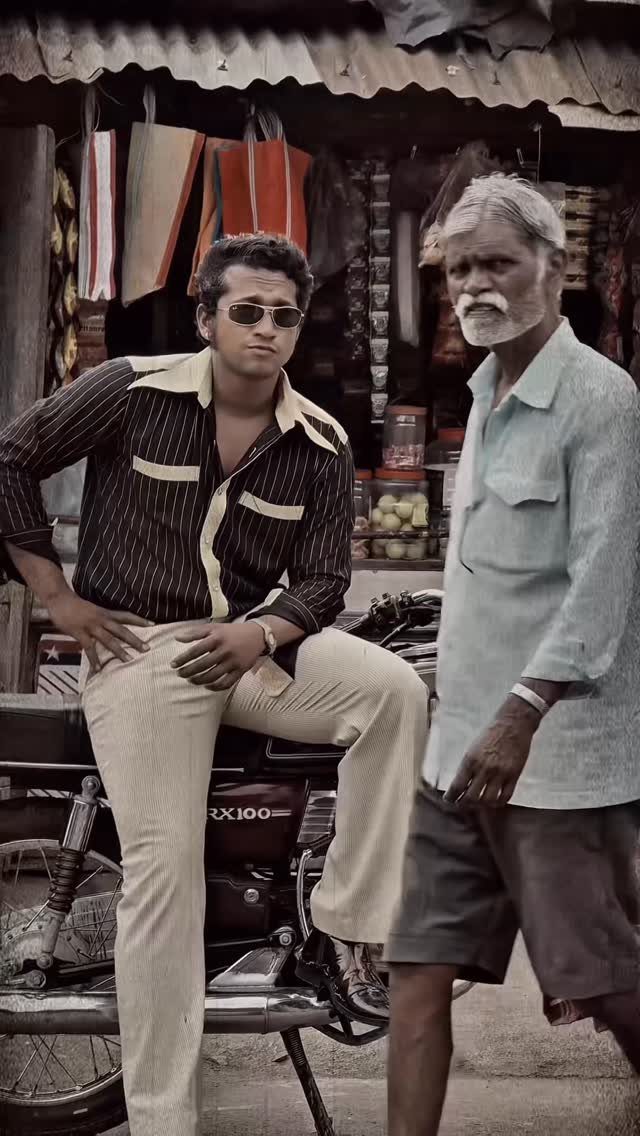
A wide collar and a bold stripe carry the retro look in this shirt, so everything else you wear with it can stay plain. Light trousers and a pair of vintage-style sunglasses are plenty.
Button it high enough that the collar sits open and flat, not crumpled. Leave the shirt untucked if it’s cut straight, or tuck it for a sharper line.
Stripes are the easiest pattern to start with, since they read as retro without clashing with much. Check thrift racks for the collar first, because that shape is what dates the shirt.
14. Retro Streetwear with Track Jackets
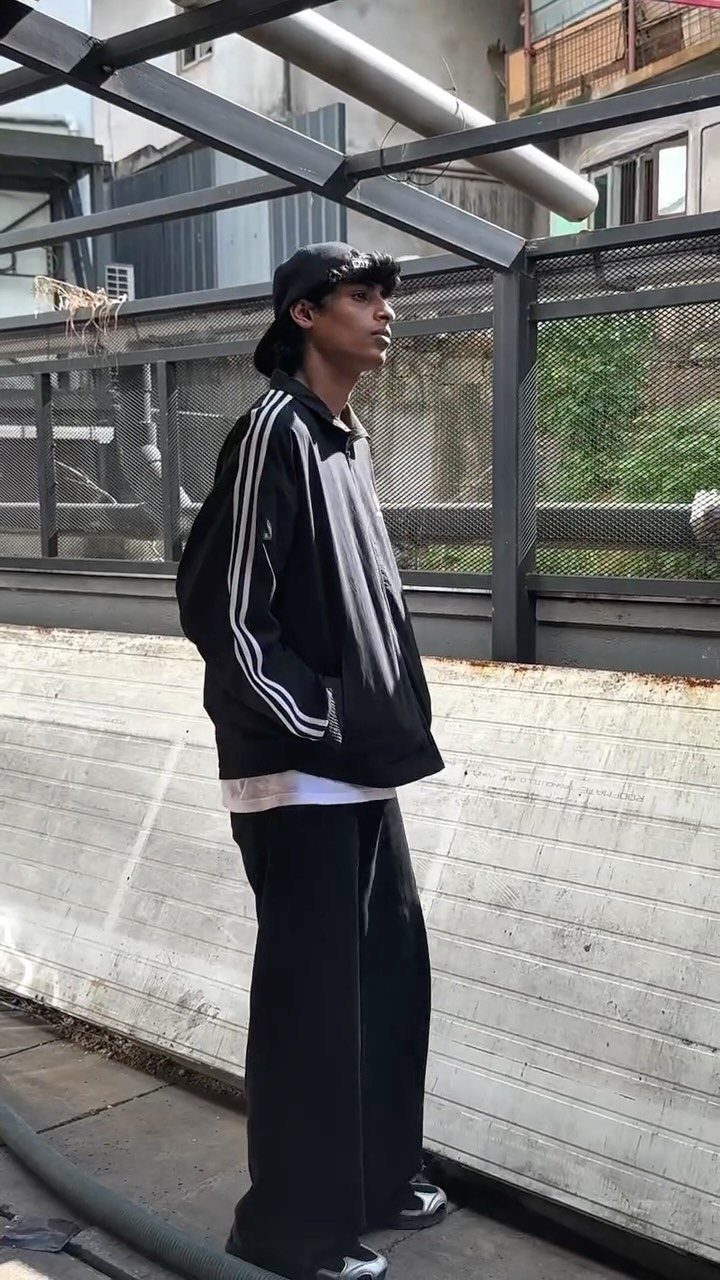
Black track jacket, black wide-leg pants, black cap: one color across all three makes a streetwear look that needs almost no planning. The three-stripe zip-up supplies the old-school feel, and the pants give the outfit its relaxed shape.
I would keep the jacket zipped partway and the shoes simple, so the stripes stay the only graphic detail. A backwards cap fits the mood, though a forward one looks a little tidier.
Wide pants swallow narrow sneakers, so choose a pair with some bulk.
Mixing Vintage with Modern
Vintage and vintage-style are not the same thing, and the difference affects what you pay and how the piece wears.
Most stores call a garment vintage once it is 20 years old or older. Anything made to look old is vintage-style, sometimes called "repro," short for reproduction.
A suede fringe vest and bell bottoms made as proper clothes count as repro, and they are fine to wear.
A Halloween-store hippie outfit is a costume, often a single flimsy piece of cloth with a print on it. Check the stitching and fabric before you pay.
To mix eras, pair one older piece with current basics. Throw a modern blazer over a patterned vintage shirt, add jeans, and the outfit looks relaxed but clearly planned.
Fashion Faux Pas
Accessories can sink a retro outfit faster than a bad fit. Pick one or two statement pieces and keep everything else quiet.
If you are wearing a loud hat and bold glasses, skip the scarf and the extra rings. When you are unsure, take one item off before you leave.
Fit gets the same test. Vintage sizing runs differently from modern sizing, so go by how a piece sits on your shoulders and through the body, not by the number on the tag.
Quality Over Quantity
Buy fewer pieces and buy them well. Retro clothing can cost more, but good materials and solid construction hold up to years of wear, so the higher price often works out cheaper per wear.
Look at the seams, the lining and the fabric weight before you look at the label.
Good 501s and a good leather jacket get better with wear, and the fades, creases and softened edges are what make them look like yours.
I would rather own three pieces that last than ten that fall apart by spring.
Frequently Asked Questions
What are some good 90s-inspired outfits for men?
Start with the pieces that defined the decade: flannel shirts, ripped jeans and combat boots for the grunge side, or an oversized vintage denim jacket, a band tee and chunky sneakers.
Baggy clothes and relaxed denim also ran through hip-hop and rock.
What are classic clothes?
Classic clothes are timeless pieces that never go out of style.
A tailored suit, a pair of well-made 501 jeans and a leather jacket are good examples. Classic pieces are made from sturdy fabric and improve with age, because the fading and softened edges start to look like yours.
What are the types of fashion men?
The main types are casual, formal, business, streetwear, vintage, sporty and smart casual.
Vintage and streetwear overlap more than you might expect: a black track jacket with wide-leg pants and a cap is retro and streetwear at once. Pick the type that fits your normal day, then borrow one piece from another.
What is vintage fashion?
Vintage means actual garments and accessories made in an earlier era, whether that is the 1930s, the 60s or the 90s.
Clothes made to look old are vintage-style, often called repro, and they work fine if the fabric and stitching hold up.
How do you wear vintage without looking like a costume?
Wear one or two older pieces and keep everything else plain and modern. A pleated pair of khakis with a simple shirt and loafers works because only the trousers carry the era.