Skater fashion for men ranges from pulling on an oversized sweatshirt you already own to rebuilding the closet around baggy jeans and cargo pants, and your starting point depends on how much of your current wardrobe is already loose and plain.
If it is, one statement piece such as a slogan tee, a ribbed beanie or the 1970s striped sock is enough.
If you wear slim fits, the fit has to change first, so start with baggy jeans or Dickies work pants worn loose over a pair of skate shoes.
1. Graphic T-Shirts

A slogan tee does the talking, so everything else you wear can stay quiet. White with dark jeans is the easiest base, and the text stays readable.
Pick one shirt with a message you’d actually say out loud, and keep everything else plain. Loud print plus loud pants fights itself.
Size up one notch from your usual for a looser drape. Skater style wants room in the body, though not a tent.
2. Cargo Pants
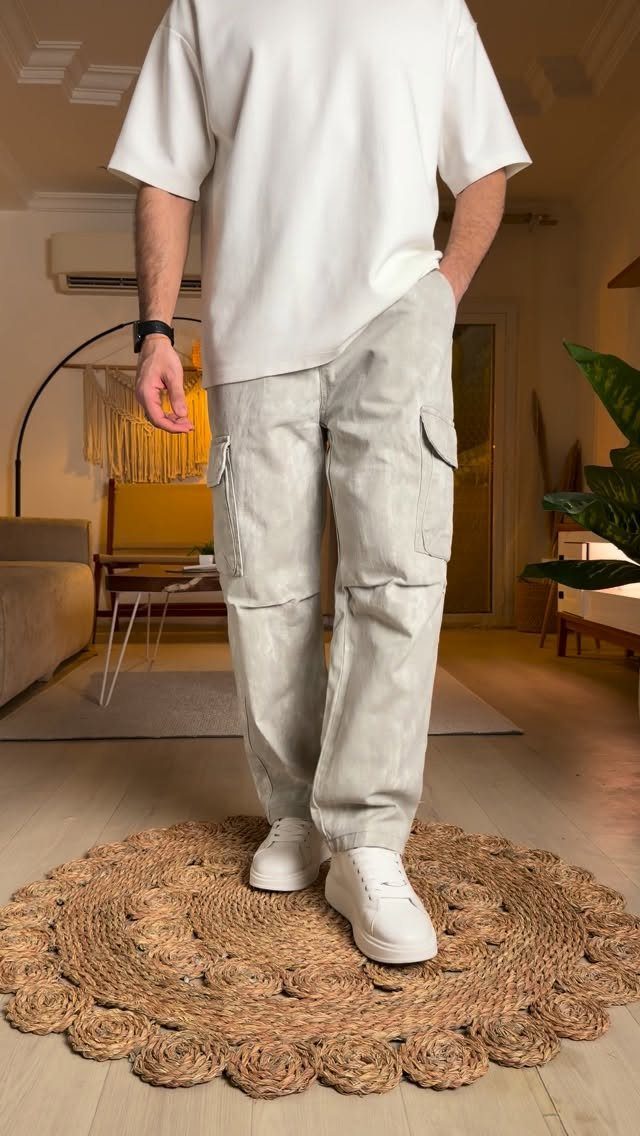
Light gray cargos with a big white tee and white sneakers make a clean, low-effort outfit, and it needs no skateboard. The pockets add shape without any extra pieces.
Loose pants like these suit a beginner because comfort does most of the work. Keep the top just as roomy, or the look tips into sloppy.
Stay in one color family, as here, and the outfit looks planned. Darker cargos hide wear better; I lean toward the lighter pair for summer.
3. Skate Shoes
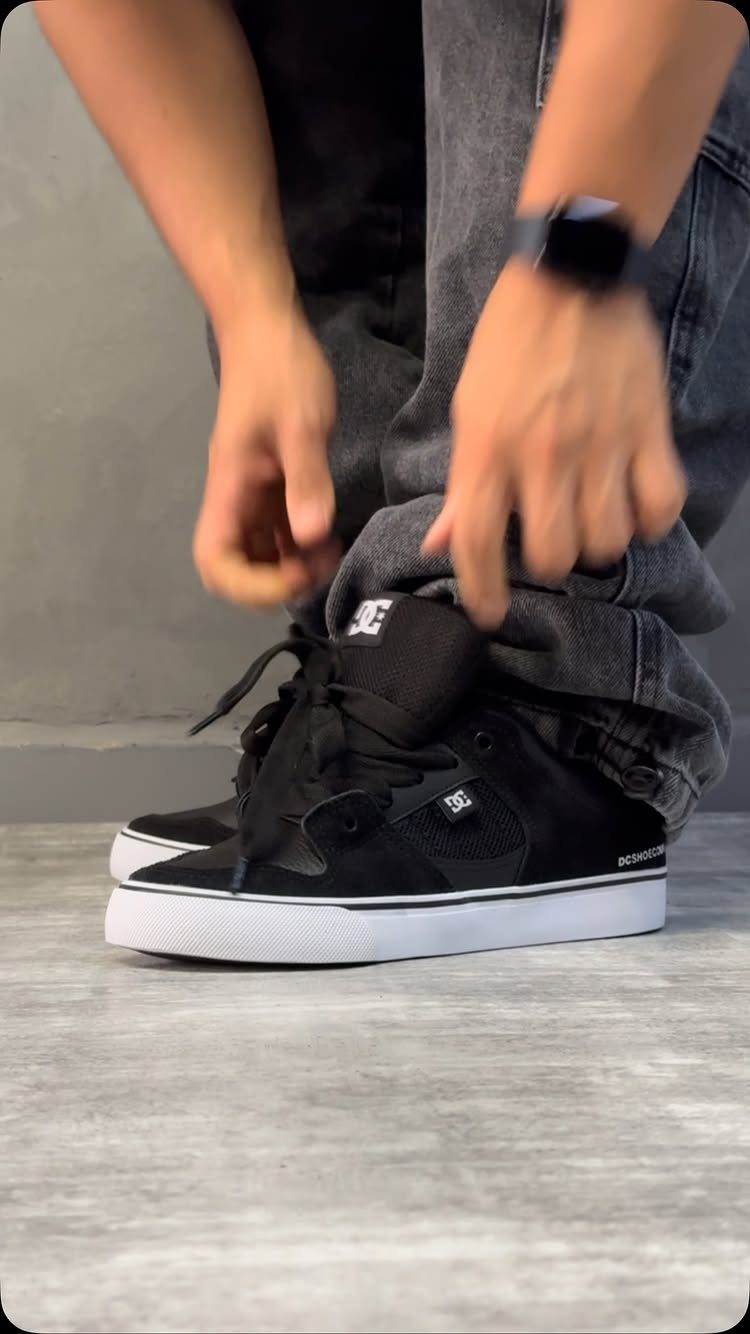
Shoes carry the whole skater look, and a black and white high-top DC is a solid place to start.
Let the jeans fall over the tongue and collar a little, as they do here. Pants that stack slightly at the shoe look relaxed on purpose.
Skate shoes have thick, padded construction, which also makes them comfortable for plain daily walking. High-tops add a bolder look; low-tops are easier with shorts.
4. Baggy Jeans
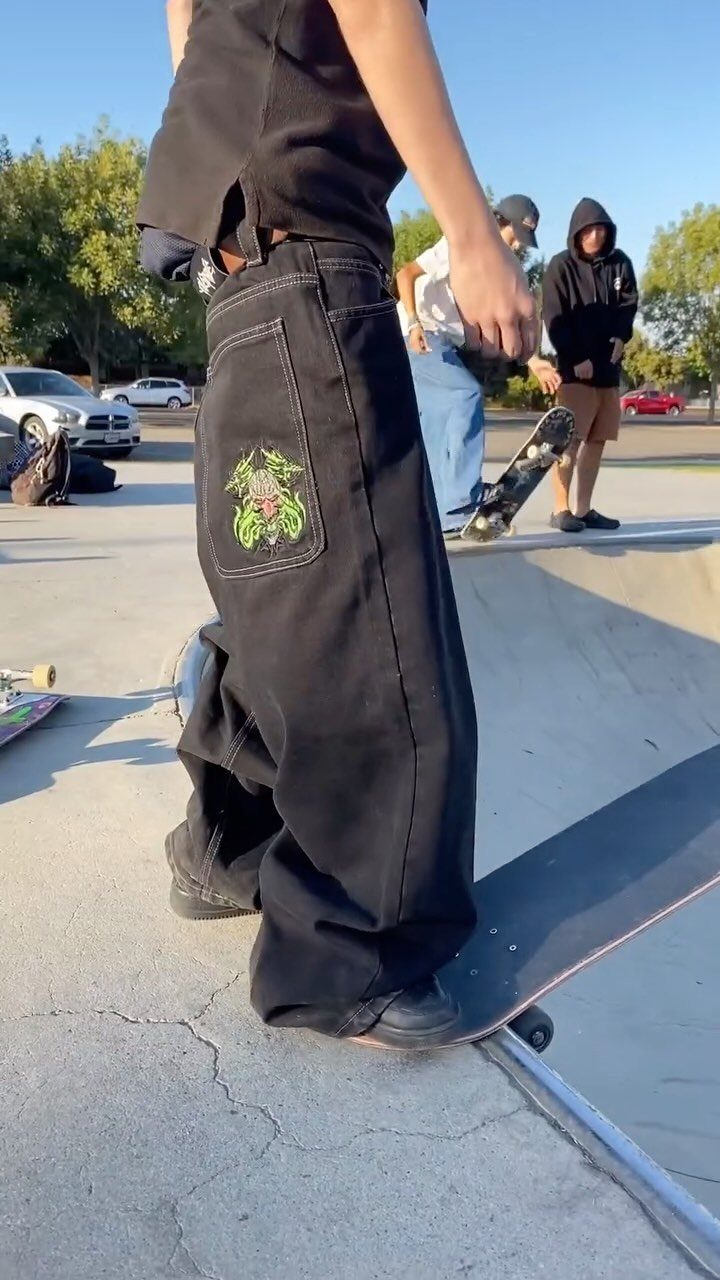
The width does the styling, and the stitching adds detail without any extra pieces.
For a first pair, choose a straight, roomy leg instead of the widest cut, since the fit is easier to balance with shoes. Black hides dirt and fades well.
Wear them with a fitted or regular tee so the pants stay the focus. Hem them so the cuff just skims the shoe, not the pavement.
5. Layering
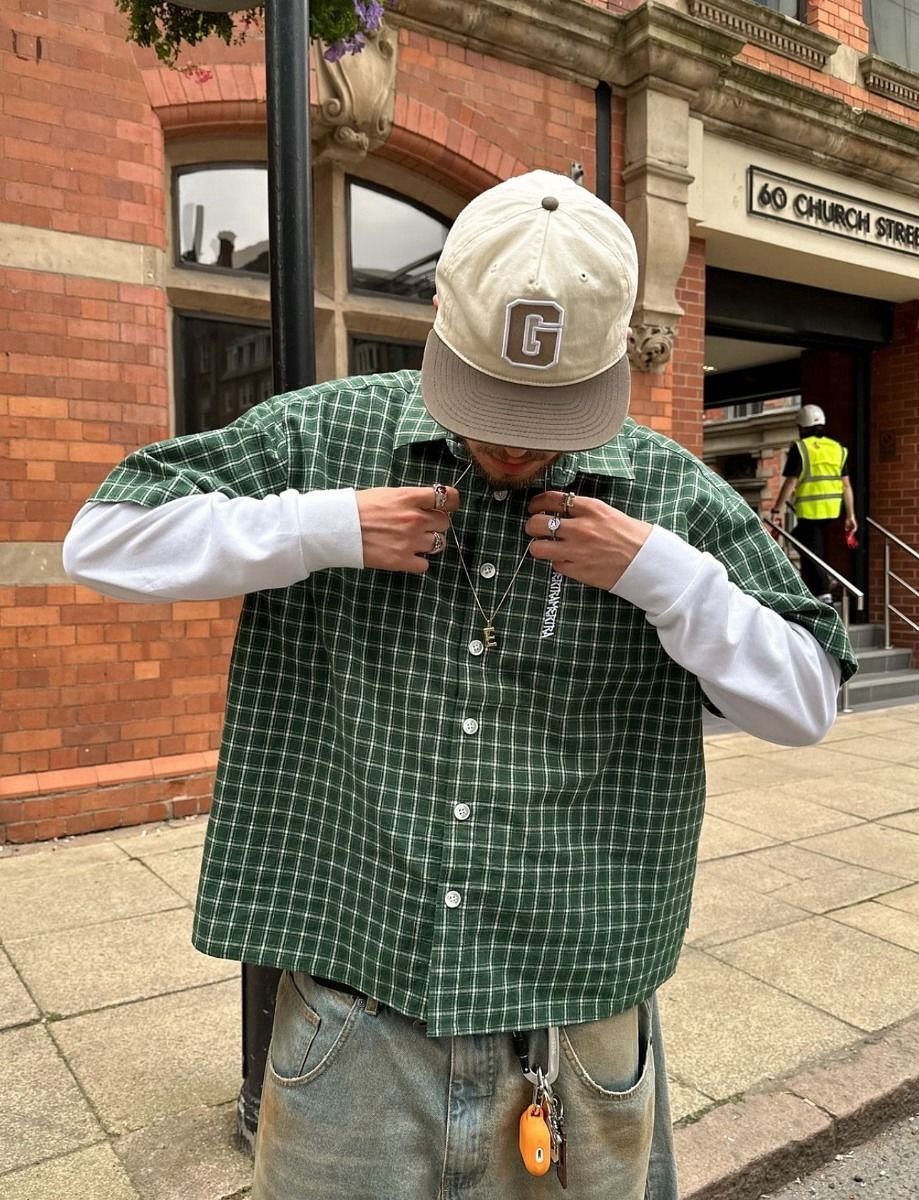
A short-sleeve plaid shirt worn open or buttoned over a white long-sleeve gives you two layers of pattern and color from just two pieces. Add baggy jeans and a cap, and the look is done.
Keep the base layer plain and let the top layer carry the print. Green plaid over white is easy to repeat with other colors.
Sleeve length matters: the white sleeves should show beyond the short sleeves, so the contrast reads clearly.
6. Beanies

A white ribbed beanie, worn snug and low, is the fastest way to give a basic white tee some skater attitude. It costs little and works with almost anything.
Let the beanie be the loud part and keep everything else plain.
Pick a color that matches or contrasts with your top, not both. White suits light outfits; black is the safer pick if most of your closet is dark.
7. Plaid Shirts with Shorts
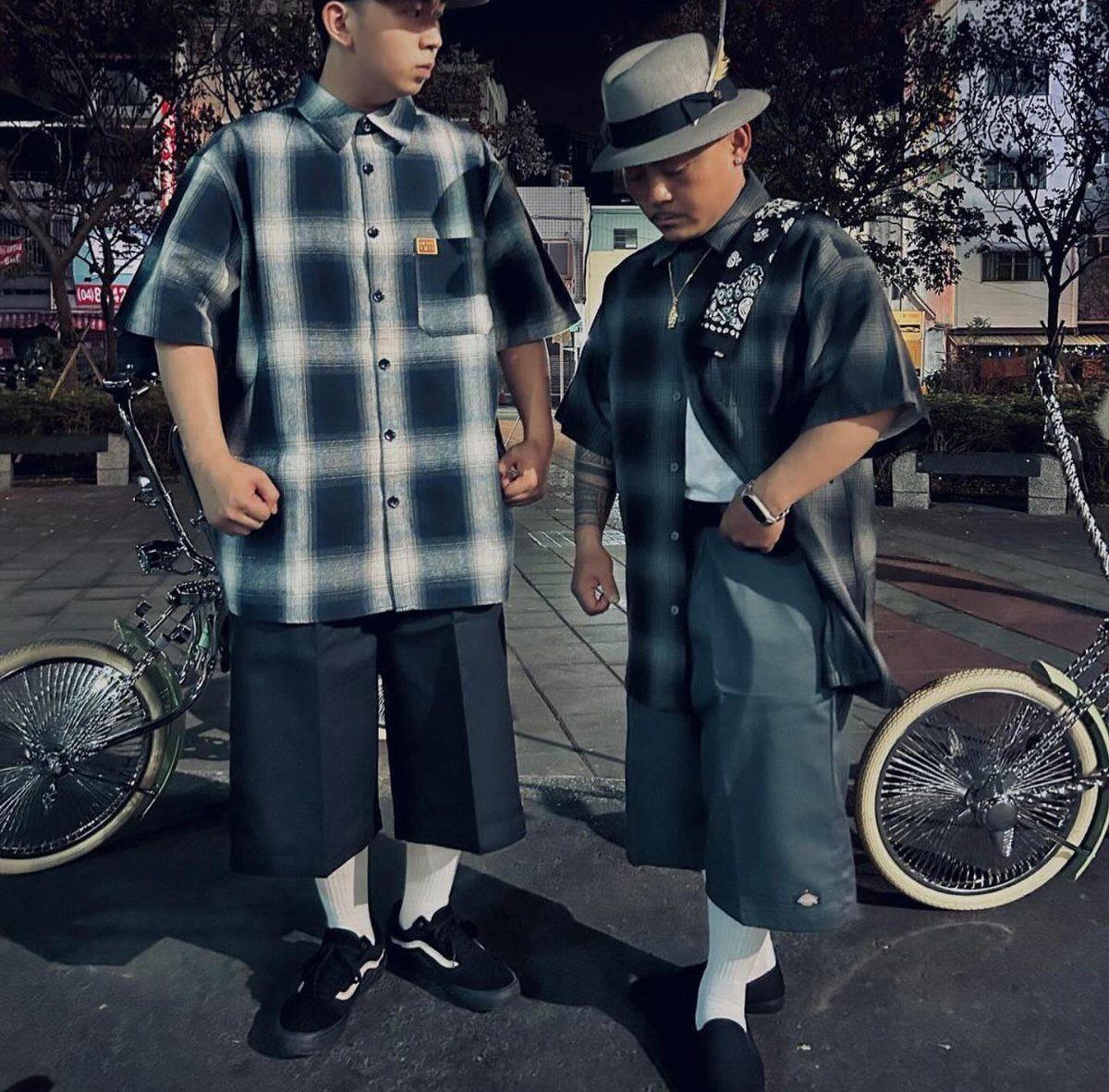
Short-sleeved plaid worn loose with knee-length dark shorts is about as easy as skater dressing gets, and high white socks finish it. Skip the skateboard; the outfit works on any warm evening.
Let the shirt hang untucked and roomy, and keep the shorts a solid dark color so the plaid is the only pattern. Classic skate sneakers suit the look better than running shoes.
Shorts that reach the knee look more deliberate than shorter ones.
8. Oversized Sweatshirts
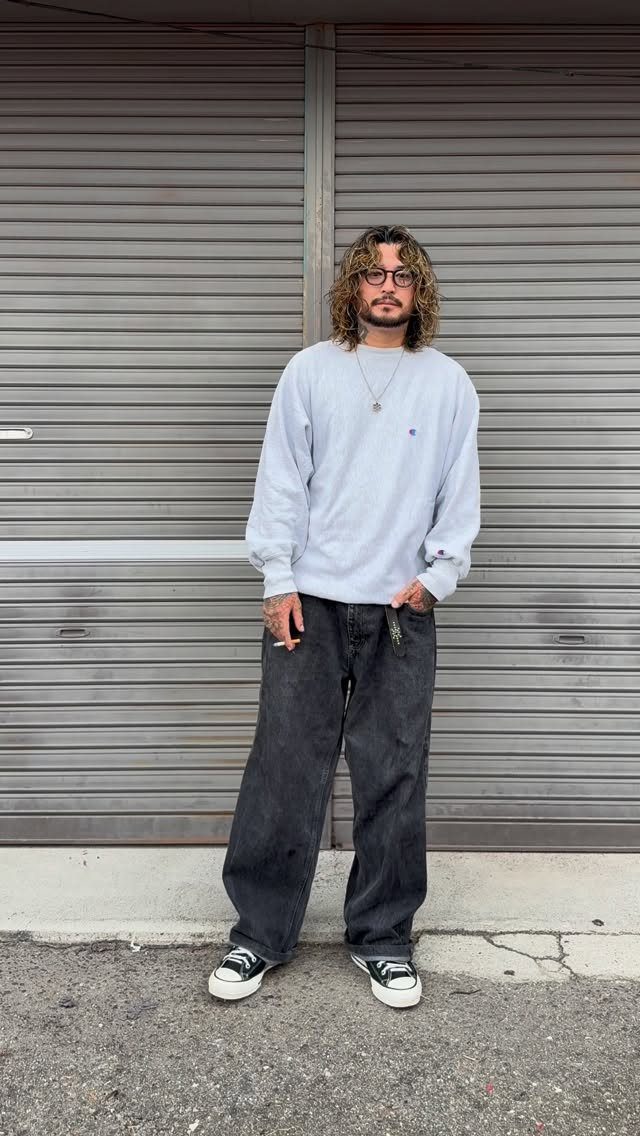
An oversized sweatshirt in light gray does the same job as a baggy tee, with more warmth and no effort. It’s the easiest top here for a beginner.
Pair it with loose black jeans, as the contrast keeps the big shape from looking shapeless. I prefer light gray on top and dark below; swap the pieces around and the outfit gets heavier.
Black-and-white sneakers tie the two together. Choose a sweatshirt that is loose through the body and sleeves, not just long.
9. Dickies Work Pants
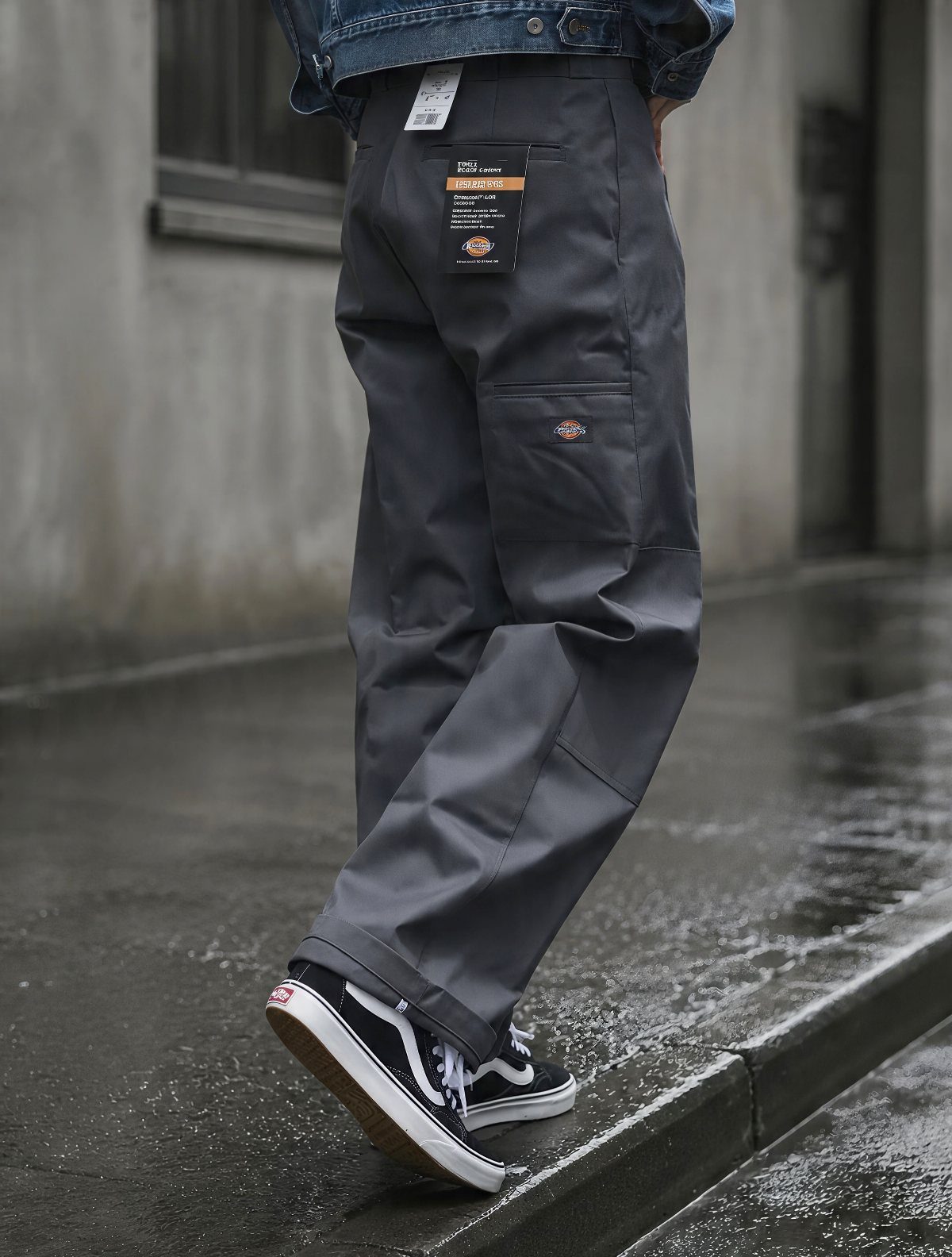
Dickies work pants cost little and look right on a skater outfit because they were built as work trousers, not fashion. Dark gray goes with nearly any top and shoe.
Wear them loose with black Vans or similar skate sneakers, and let the hem rest on the shoe. A denim jacket on top keeps the look in the same workwear spirit.
Buy them in your normal waist and skip tailoring; the straight, roomy fit is what you want. Pull the tags off before wearing.
10. Casual Utility Jackets
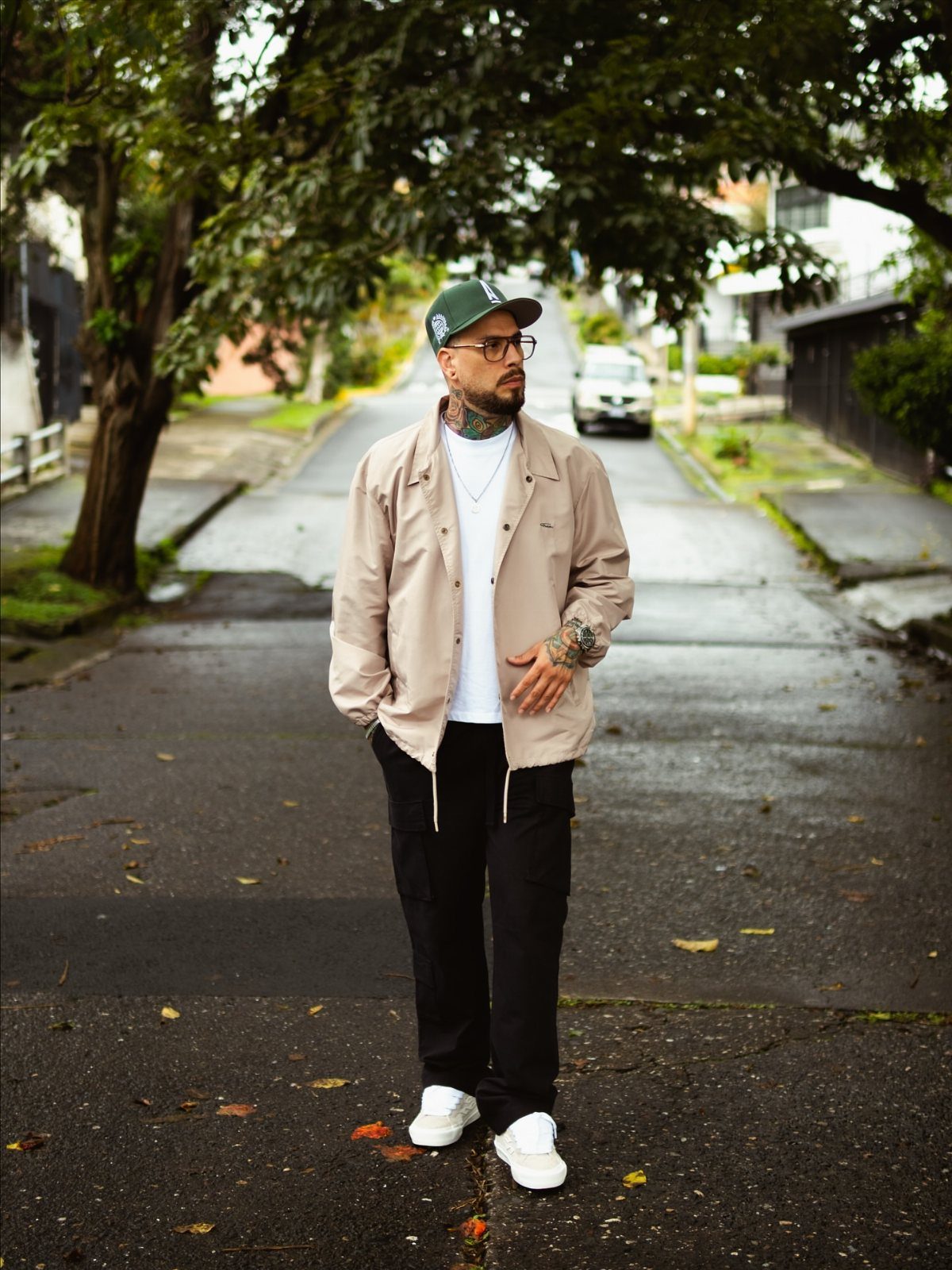
A lightweight tan coach jacket over a white tee is the quickest way to add a layer without adding bulk. It sits well with black cargo pants and white skate shoes.
Keep the jacket neutral and let a baseball cap bring a bit of color. Green works nicely against tan.
I like a jacket that stops around the hip, so the tee and pants still show. Thin enough for mild weather, it’s an outer layer you can wear on a normal day.
Comfort and Functionality
Clothes for this style have to move with you and survive wear, so test any piece by squatting, reaching overhead and walking a few blocks before you commit to it.
Footwear is where not to cut corners. Skate shoes take a beating from grip tape and rough concrete, so buy a pair with a sturdy suede or canvas upper and a vulcanized sole, because thin soles wear through within weeks.
Scuffs are part of the look. Skater dressing is street style, not something to keep pristine, so wear your clothes hard and don’t baby them.
Keep the outfit simple. Comfort beats effort here, and a plain, easy outfit usually looks better than an overworked one.
Evolution of Skater Fashion
Skater style has been moving since the 1970s, and knowing the timeline helps you borrow from it on purpose.
In the 70s, skaters wore short shorts, snug tees and tank tops, with tall striped socks pulled up over a pair of Vans or Converse.
The 1980s pulled closer to punk, with band tees, dark colors and tighter, more worn-in denim becoming the look.
The 1990s went bigger: denim jeans, bulkier shoes and larger tees. The 2000s mixed hip-hop with punk and brought boxy hoodies, chino shorts and puffy skate shoes.
If you want a retro edge, the 1970s striped sock is the easiest piece to borrow. Everything else you wear with it should look current, so the vintage piece reads as a choice and not a costume.
Mixing Styles
Mixing styles works best when you change one thing at a time. Start with a streetwear base, then add a single vintage piece, such as a flannel or a faded denim layer.
Texture is the easy way to add interest. Denim, graphic tees, flannel and hoodies sit well together, so you can layer them without buying anything unusual.
Accessories personalize the outfit fast. A bag, hat, belt or bold piece of jewelry gives a basic look your own stamp.
If you want a piece nobody else has, distress it yourself with a few rips, sew on some patches, or flick paint across it.
Do it to a piece you already own and don’t mind changing, and stop after a few marks so it doesn’t look overworked.
Frequently Asked Questions
What are the current fashion trends for skateboarding?
Skatewear has merged with mainstream fashion, and comfort and practicality drive it.
That means baggy jeans, roomy cargo pants, oversized sweatshirts, graphic tees and padded skate shoes. Plenty of men wear these on a normal day with no skateboard in sight.
How to look like a skater boy?
Start with baggy jeans, a graphic tee and a pair of skate shoes, and keep everything else plain.
Pick one loud piece, like a slogan shirt or a beanie, so the outfit doesn’t fight itself. Let the jeans stack slightly over the shoe and wear your clothes hard, since scuffs are part of the look.
What is the skater clothing style called?
It’s usually called skater fashion or skatewear.
Some people call it skater boy style, though most shops just file it under skate or streetwear. It sits under the wider streetwear umbrella, and it has been changing since the 1970s.
What did skaters wear in each decade?
In the 70s, skaters wore short shorts, snug tees and tank tops with tall striped socks over Vans or Converse. The 80s leaned toward punk, which meant band tees, dark colors and beat-up denim.
What shoes should I wear for skater style?
Skate shoes with a sturdy suede or canvas upper and a vulcanized sole are the best choice.
A thin sole can wear through in a few weeks, so skip the cheap pairs. High-tops look bolder and cover the ankle; low-tops sit cleaner under shorts, and I wear them more often.